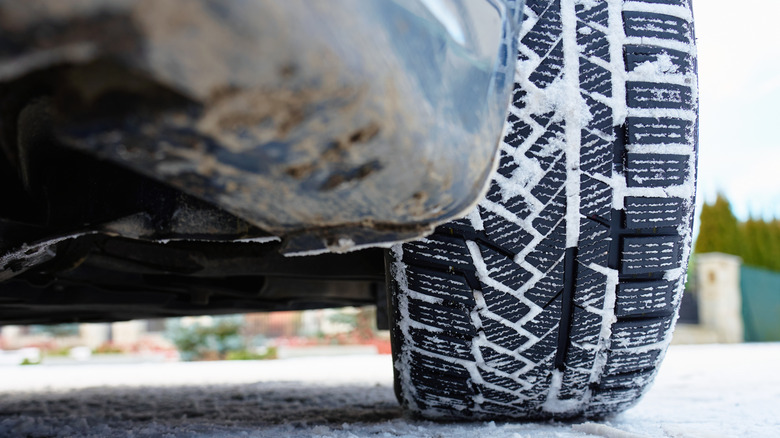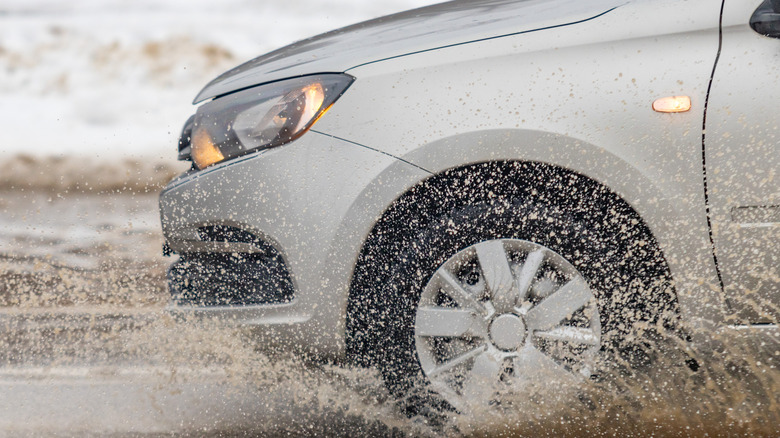

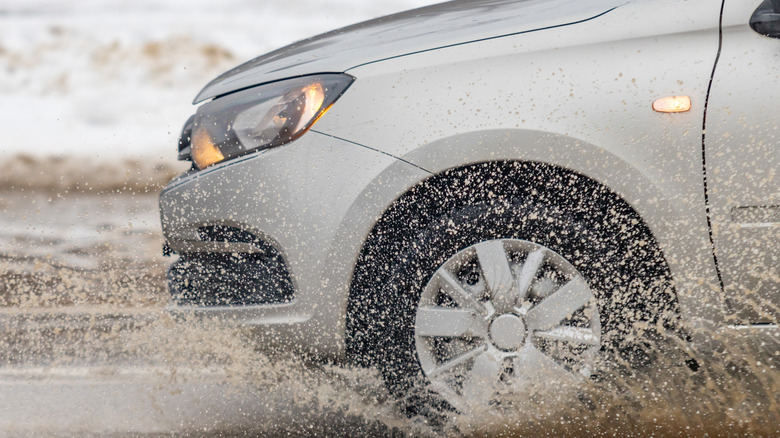
It can be dangerous to drive with worn out tires for multiple reasons. The right tire tread depth helps your vehicle grip the road, ensuring you don’t go slipping and sliding in various weather conditions. The right tire tread depth also, and very importantly, helps you brake properly during these situations.
Whether the road is slippery with rain, hiding black ice, or slick from humidity, you will need a good amount of tread depth to control your braking distance. That’s because you need the right amount of tire on the road to create pressure — if your tires can’t hold the road, the force from your brakes will propel you forward since your tires can’t stabilize, especially in certain weather. With rain, for example, that shallow tread depth can’t clear water fast enough, since worn tire grooves restrict the amount of water that can pass through. This makes it even more likely that you’ll slide while braking, and it could even lead to hydroplaning.
When should you replace your tires to ensure you brake properly?
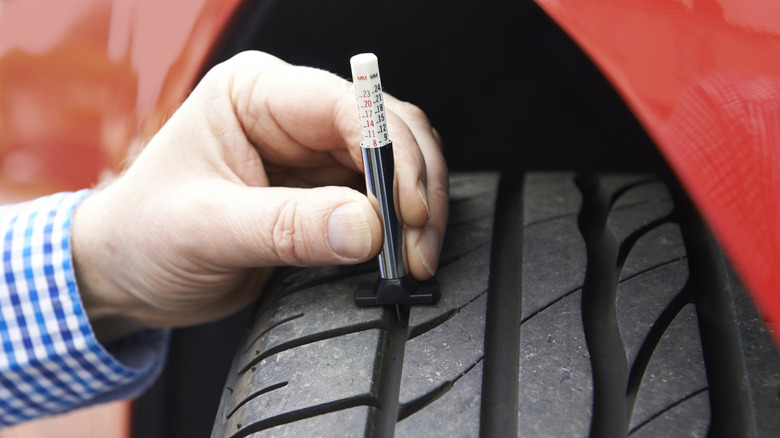
The fact of the matter is that you won’t always be driving with new tires, especially in your commuter, so when should you switch them out to ensure you can brake safely? The experts at Tire Rack suggest that you should replace your tires when they reach 3.175mm remaining tread depth (a sentiment you’ll see repeated across the internet). You can check your tire tread at home with a few gadgets — or even a penny.
If you wait until then, you should have your set of tires for at least a few years — or about 70,000 miles. Your tires may last shorter or longer depending on your driving habits, brand, and vehicle weight. Meanwhile, ensure your tires last longer by checking the tire pressure, rotate your tires at the correct intervals — about every 3,000 to 5,000 miles — and avoiding harsh braking and aggressive turns.

Stephan is the sports journalist for the Maple Grove Report.