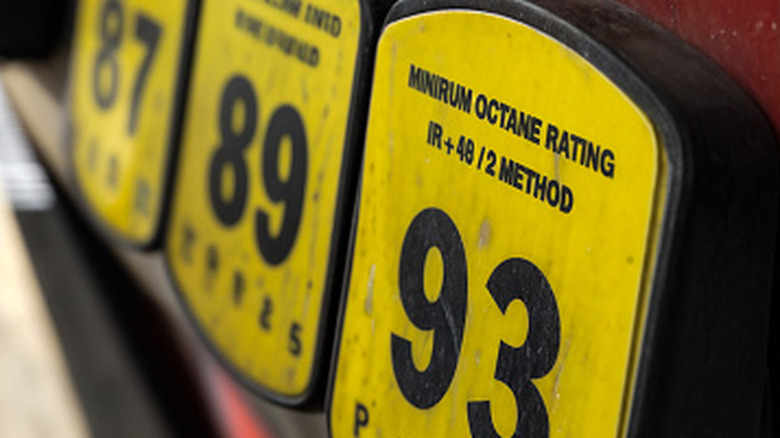

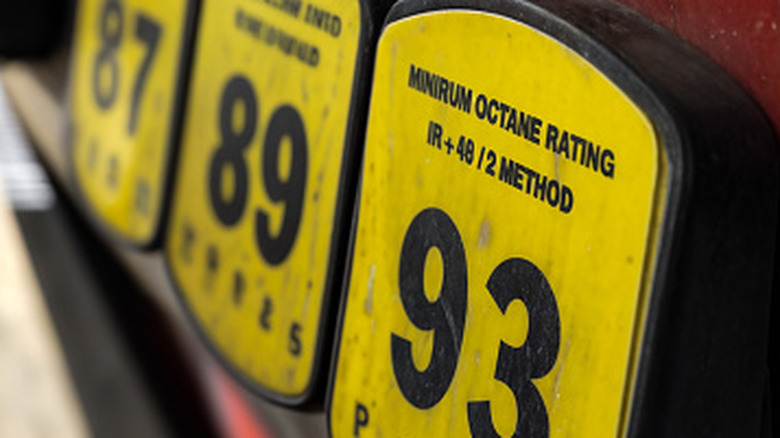
A lot of people treat premium gasoline like it’s a little treat for their car, the automotive equivalent of replacing the usual vegetable oil with some nice, healthier olive oil for your cooking. As we are going to learn here, that’s far from the truth. Premium gas is the stuff that’s rated at 91 or 93 octane, which is slightly higher than 87 octane regular gas. Its whole point is that it resists igniting, which may sound counterproductive at first, but that’s actually to prevent premature ignition, known as knocking.
It typically manifests as a pinging sound while accelerating hard. There are actually several things that cause engine knocking, but low octane fuel in an engine that requires higher octane is one of the more common reasons. As for the type of engines that need premium gas, it’s typically the kind with high compression ratios or turbochargers.
Because premium is built for a certain kind of engine, it doesn’t mean it contains more energy than regular. It won’t make a basic commuter car faster or cleaner or more efficient. So ultimately, picking between the two comes down to what the manufacturer recommends. Your owner’s manual will say one of two pretty self-explanatory things about premium fuel – Recommended and Required.
Is Recommended merely a suggestion?
Recommended means that regular gas won’t cause any harm, even in the long run, but premium should help you squeeze out peak horsepower and maybe a hair more efficiency. This is especially common with turbocharged engines, which benefit from premium gas. In those, boost pressures can benefit from higher octane, but the engine management system is still smart enough to compensate either way.
That said, real-world testing has shown somewhat varied results even across cars that recommend premium. Consumer Reports ran track tests on an Acura TLX and a Nissan Maxima, both of which recommend premium. Surprisingly, they found identical fuel economy and acceleration times. Then there’s Car and Driver, which saw similar results with the Dodge Charger R/T.
The 5.7-liter Hemi is a little different here because it recommends mid-grade gas (89 octane). Still, there are vehicles that do benefit from following the recommended fuel rule. The same Car and Driver test put a Ford F-150 twin-turbo EcoBoost V6 through its paces, and dropping from 93 to 87 octane cost about 20 horsepower at the wheels. It could be noticeable on the track, but still not exactly a dealbreaker for most drivers on their daily commute.
Required actually means required
Then there are cars that label premium gas as Required. These are typically high-performance vehicles — think BMW M-series, AMG Mercedes models, most Porsches – with engines whose compression and tuning genuinely depend on higher-octane gas to function correctly. Engine compression ratio affects performance across all cars, but in these, the ratios are pushed far enough that regular fuel simply can’t keep up.
Therefore, running regular can trigger persistent knock, force the engine computer to constantly pull timing back, and eventually lead to carbon buildup, rougher performance, and potentially even warranty headaches. Now, one tank of regular won’t blow anything up since many of these cars feature knock sensors that adjust timing on the fly, but doing it repeatedly can be counterproductive.
Ultimately, things come down to what your car’s manual says. If it recommends premium, you should be fine with either. The best approach in such a case is to try both fuels and track your mileage. If the savings on regular outweigh whatever tiny performance gap you notice, then keep your money. But for cars that require you to use premium, give them the better gas that they need.

Stephan is the sports journalist for the Maple Grove Report.