Hide Your Washer Hook Up & Add Storage With This DIY Solution


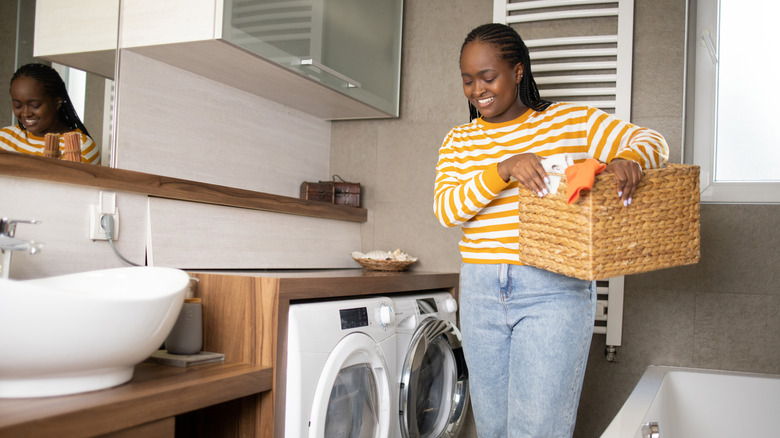
One day, you start doing laundry for the first time, and you realize that it never really stops. There are just days in between when the next load is due to be washed. While some homes are large enough to have elaborate laundry room setups, some of us work with limited spaces to get the job done. However, this doesn’t mean you have to stare at your ugly laundry hook ups the whole time.

@anewgo

This scrappy little solution I came up with to hide our laundry hookups turned out to be one of my favorite DIYs that I’ve done! It just feels more polished in here and it was cheap and easy to do! For those who are curious, YES, the washing machine lid opens all the way without removing the shelf. Credit: @homewithjanny #laundryroom #laundry #newconstruction #laundryroominspo #newhome

♬ original sound – AnewGo

In a viral TikTok, creator anewgo shares a hack for hiding laundry hook ups with a removable shelf. Made of two parts, it has a normal-looking shelf unit and a back panel that matches the wall behind it. Since it can be removed, this means you’ll still be able to access the hook ups when you need them, while having the flexibility to keep them away from view. The TikToker placed decorative boxes, candles, and incense on top to add to the aesthetics, but you can also opt to use the space more practically.

To copy this setup, you’re going to need to measure both the space that you want to cover, as well as the length of the shelf with a measuring tape. At this point, it’s also a good idea to use a stud finder, so you know how wide you can make your back panel without obstructing the brackets. Make sure to also check your horizontal clearance, so the shelf doesn’t obstruct any top load washing machines.

How to make a shelf for your laundry room
Once you have the right dimensions, you can proceed to cutting the wood. If you have extra lumber lying around your house, you can use a handsaw or circular saw to get the job done. The good news is that even if you don’t own a saw, you can simply ask the staff at Home Depot to cut the wood for you, as long as you have the right dimensions. Alternatively, you can also get your lumber cut at Lowe’s, wherein it’s just one of the many free perks you get to enjoy in-store. If you don’t have any leftover paint to match your laundry room, you can also bring a sample to Lowe’s, where they have special machines that can help generate a similar color. With this, you can make the back panel of your shelf blend in with the wall seamlessly. For the shelf, you can also buy either stains for the wood or your color of choice. Once they’re dry, you can start attaching the units together with screws.

Afterward, you’ll need to grab your L-shaped brackets. Next, you’re going to find the studs on the wall and proceed to screw in the L-shaped brackets, which you can do with a regular screwdriver or even an electric drill. Then, you can place the wooden shelf on the bracket without securing it to keep it removable. Lastly, you can decorate it to your heart’s content.

Practical ways to upgrade your laundry room

Apart from adding a sneaky shelf, there are plenty of other ways to get more storage in your laundry room. For example, while Home Depot’s Prepac Elite Wood Freestanding Garage Cabinet isn’t marketed for the laundry, the unit is sleek enough to fit small spaces and gives your laundry detergent, fabric softeners, wool dryer balls, and other items a home. This can be a good solution if you’re not very handy and can’t be bothered with manual measurements.

If you want to add some smart features to your laundry room, one genius way you can use smart devices in your home is by programming Alexa to announce when a load is finished. With this, you can avoid the hassle of having to wash clothes again after leaving them overnight or fighting with your roommates because they didn’t empty the machine. To make this a reality, you can either employ the use of smart plugs or NFC tags. You can also utilize a range of different sensors to create money-saving smart home automations, such as those designed to alert you if they detect leaks or when the lights haven’t been switched off. For people with a little more budget, adding a Samsung AirDresser lets you clean a few clothes with steam without having to run a whole load.


Source link

Leave a Reply

Subscribe to Our Newsletter

Get our latest articles delivered straight to your inbox. No spam, we promise.

Recent Reviews


In the ever-shifting geopolitical sphere, China’s growing military presence and the ongoing tensions over Taiwan and the South China Sea continue to be a closely watched topic — particularly in regard to China’s ambition for naval power. In recent years, much speculation has been made over the country’s rapid military development, including the capabilities of the newest Chinese amphibious assault ships.

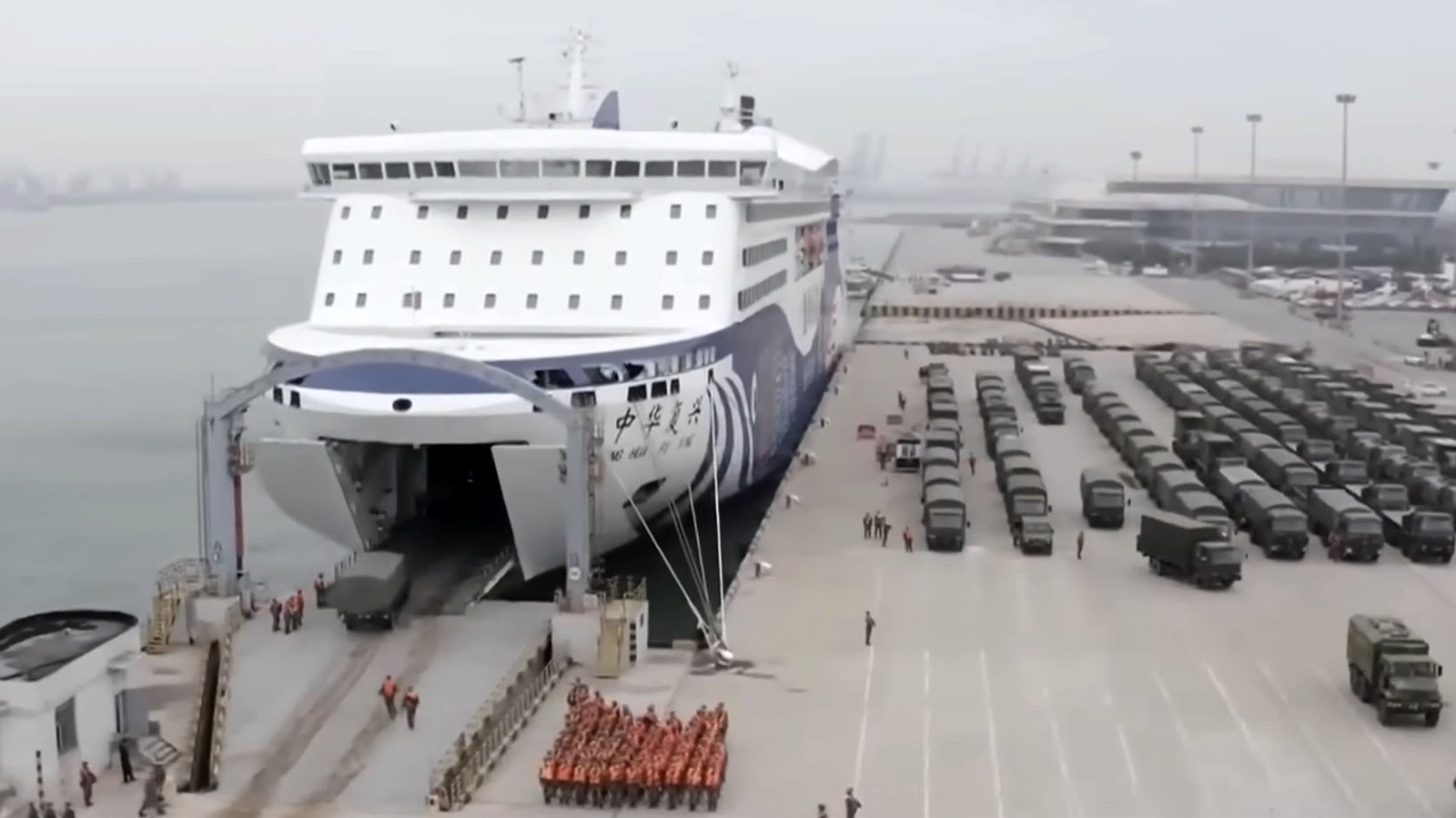
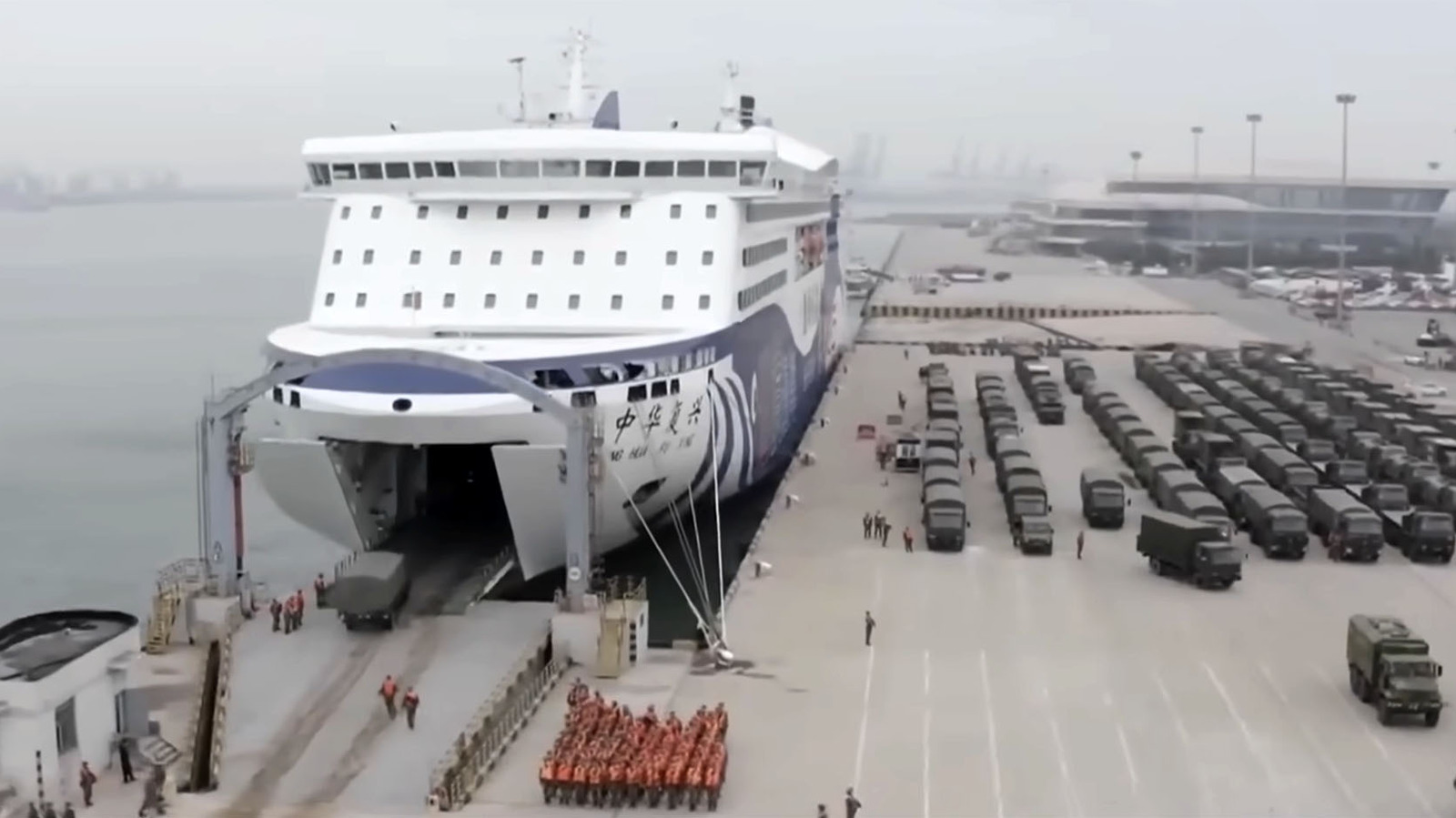
While there’s no denying its military advancements and buildup, much has been made about the logistical and military difficulties that China’s People’s Liberation Army (PLA) would face if it launched an amphibious invasion of Taiwan. However, there’s growing concern that if a Taiwan invasion were to happen, it wouldn’t just be military vessels taking part in the action, but a fleet of commercial vessels, too — including a massive new car ferries that could quickly be repurposed into valuable military transports.

While the possibility of the PLA using commercial vessels for military operations has always been on the table for a potential Taiwan invasion, the scale with which China has been expanding its commercial shipbuilding industry has become a big factor in the PLA’s projection of logistical and military power across the Taiwan Strait. It’s also raised ethical concerns over the idea of putting merchant-marked ships into combat use.

From car ferry to military transport

The rapid growth of modern Chinese industrial capacity is well known, with Chinese electric vehicle factories now able to build a new car every 60 seconds. Likewise, China has developed a massive shipbuilding industry over the last 25 years, with the country now making up more than half of the world’s shipbuilding output. It’s from those two sectors where China’s latest vehicle-carrying super vessels are emerging. 

With a capacity to carry over 10,000 new vehicles for transport from factories in Asia to destinations around the world, these ships, known as roll-on/roll-off (Ro-Ro) ferries, are now the biggest of their type in the world. The concept of the PLA putting civilian ferries into military use is not a new one, or even an idea China is trying to hide. Back in 2021, China held a public military exercise where a civilian ferry was used to transport both troops and a whole arsenal of military vehicles, including main battle tanks.

The relatively limited conventional naval lift capacity of the PLA is something that’s been pointed out while game-planning a Chinese amphibious move on Taiwan, and it’s widely expected that the PLA would lean on repurposed civilian vessels to boost its ability to move soldiers and vehicles across the Taiwan Strait. With these newer, high-capacity Ro-Ro ferries added to the fleet, the PLA’s amphibious capacity and reach could grow significantly.

A makeshift amphibious assault ship

However, even with the added capacity of these massive ferries, military analysts have pointed out that Ro-Ro ships would not be able to deploy vehicles and soliders directly onto a beach the way a purpose-built military amphibious assault ship can. Traditionally, to deploy vehicles from these ships, the PLA would first need to capture and then repurpose Taiwan’s existing commercial port facilities into unloading bases for military vehicles and equipment.

However, maybe most alarming is that satellite imagery and U.S. Intelligence reports show that, along with increasing ferry production output, the PLA is also working on a system of barges and floating dock structures to help turn these civilian ferries into more efficient military transports. With this supporting equipment in place, ferries may not need to use existing port infrastructure to bring their equipment on shore.

Beyond the general military concern over China’s growing amphibious capability, there are also ethical concerns if China is planning to rapidly put a fleet of civilian merchant vessels into military service. If the PLA were to deploy these dual-purpose vessels into direct military operations, the United States and its allies would likely be forced to treat civilian-presenting ships as enemy combatants. On top of all the other strategic challenges a Taiwan invasion would bring, the U.S. having to navigate the blurred legal lines between military and merchant vessels could potentially give China a strategic advantage amidst the fog of war.


Source link