This Unknown Beach Town Is The Gulf Coast’s New Vacation Hotspot


Share The Article

If you were to guess the trendiest Gulf Coast getaway right now, you’d probably guess Florida, right?

Wrong.

It’s Mississippi.

Formerly, we would’ve told you it’s quite literally the entire Mississippi Coast with the exception of a few unknown gems we dug up.

Other than that, whether it’s the most common landing spot of Gulfport, the seasonal paradise of Ship Island, and of course, Biloxi, the South has indeed risen again in the “Magnolia State” — at least for the coast.
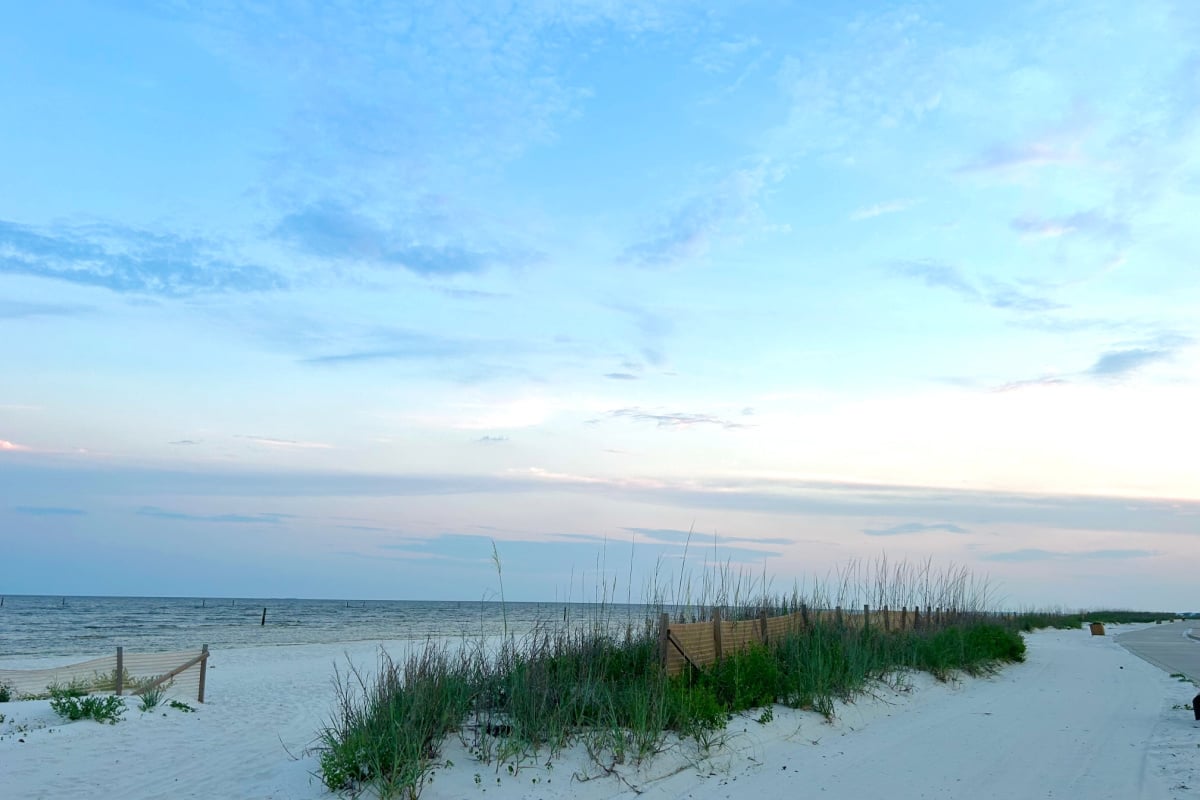
White sand beach in Bay St. Louis, MS

But a new local report claims there’s one town in particular seeing the biggest rise in tourism and locals are torn.

Known for being one of the most hospitable states where every meal begins with a “how ya doin’?” and ends with “have a blessed day”, one can only wonder if the usual southern charm has soured.

With a buzzing new Amtrak route far surpassing expectations, hotel rooms commonly sold out, and white-sand beaches drawing bigger crowds by the day, the unknown town of Bay St. Louis is, well, not so unknown anymore.

Let’s dive in to see if it’s worth visiting, or if you should venture elsewhere in the South’s most sought-after beach state right now.

The ‘Mini Destin’?
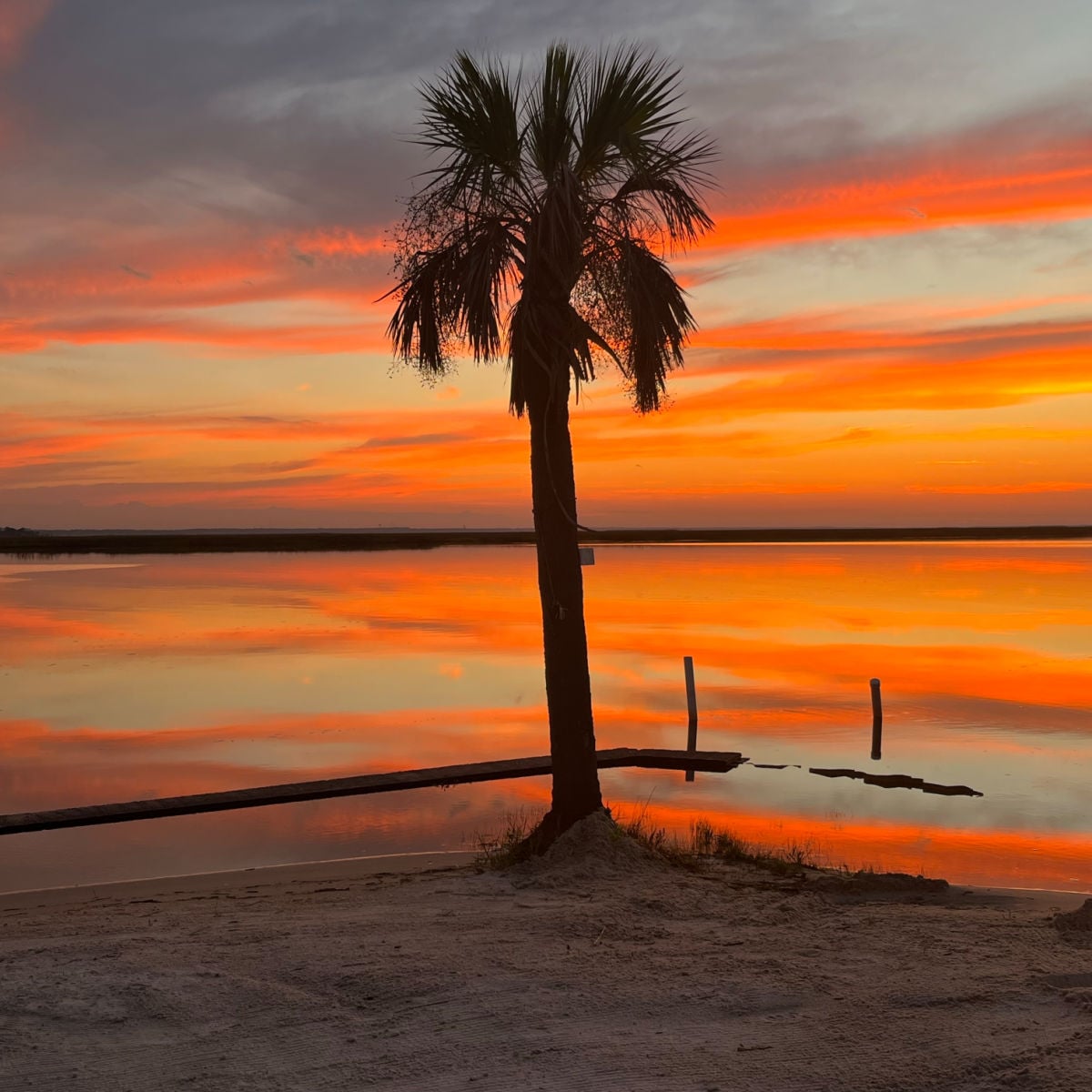
Fiery sunset in Bay St. Louis, MS

Southern locale. Gulf waters. White sand. And what else?

Bay St. Louis has been dubbed a “mini Destin”, which is no short feat, being one of Florida’s most renowned beach destinations.

You see, the comparison actually isn’t a compliment. Locals are complaining that visitors are being disrespectful to what’s typically an etch-in-time town boasting bygone-era storefronts and vintage vibes galore.

But now it’s keg stands and “untz-untzing” on what’s normally blissful shores and livin’ it up on boats instead of the usual fishing charters.

Bench on white sand in Bay St. Louis, Mississippi

It’s not that Bay St. Louis isn’t pretty, but calling it Destin is more like me trying to convince you my hometown of San Diego isn’t expensive to visit — there’s just no way around it.

Even though this small town hideaway is seeing a new type of crowd — the shameless kind — there’s no denying its appeal as it’s less hectic than nearby Biloxi and arguably much safer too.

In fact, to our surprise, Biloxi isn’t seeing the best safety scores right now on our real-time safety index.

Amtrak’s Biggest Success In Ages Puts BSL On The Map

As popular as Amtrak may be, it actually doesn’t launch many new routes.
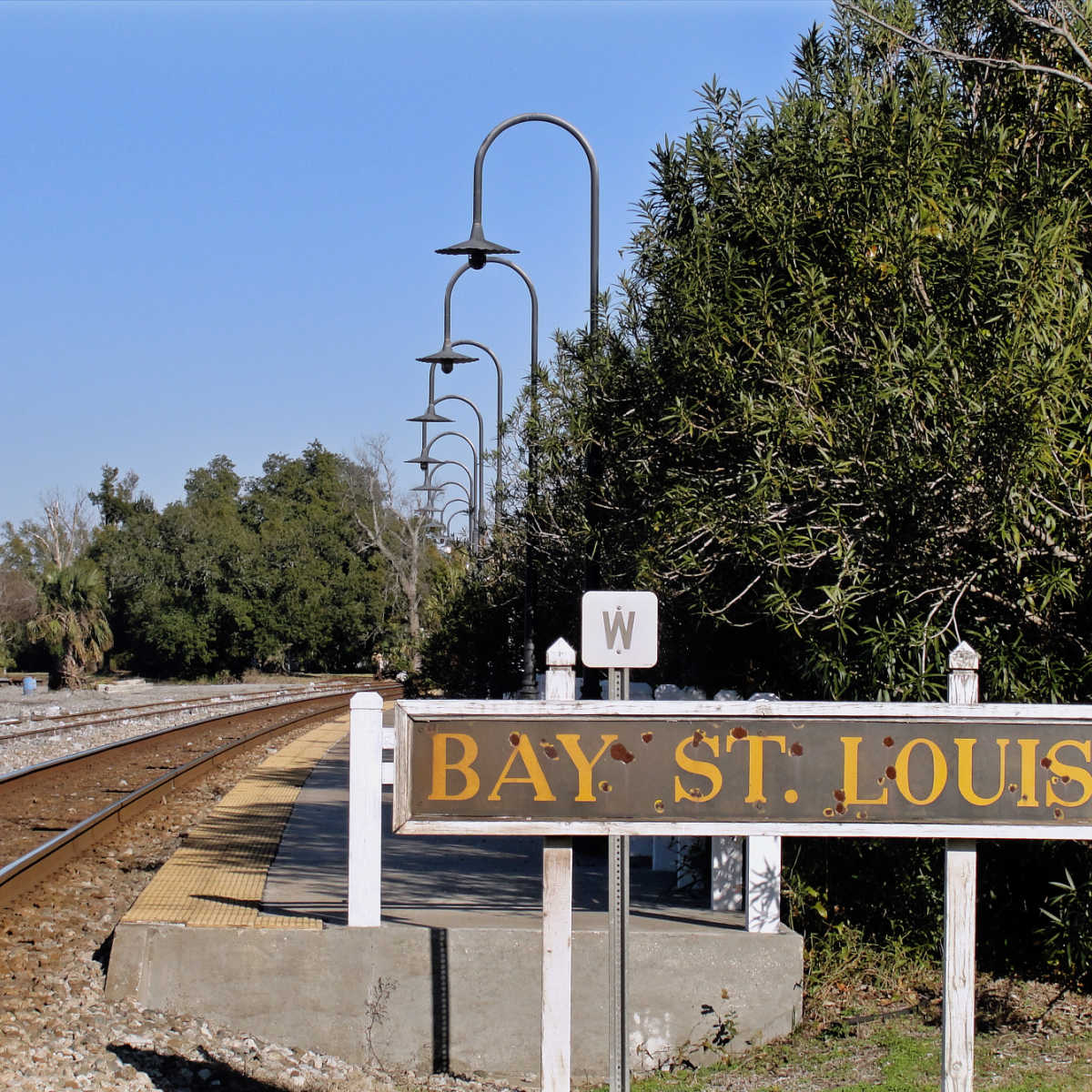
Train tracks in Bay St. Louis, MS

So, when it was announced they were reviving a route for the first time post-Katrina, news spread like butter on a warm biscuit.

Numerous reports claim Amtrak had no idea just how big their Mardi Gras route would become, but it’s become the most convenient and affordable way to explore the gorgeous Gulf without setting foot in Florida.

Taking you from New Orleans to Mobile and 4 Mississippi stops in between, Bay St. Louis has been one of the most popular, given the mystery compared to household names like the aforementioned urban sprawls.

Amtrak train at station.jpg

Travelers aren’t just getting off and heading on to the next town; they’re staying a while, and it’s transforming Bay St. Louis from a postcard townscape to a bona fide destination.

Those fill track with Amtrak’s official Mardi Gras service, which runs between New Orleans and Mobile with Mississippi stops in Bay St. Louis, Gulfport, Biloxi, and Pascagoula.

Is Bay St. Louis Still Worth Visiting?

Locals from our source were quoted as saying that Bay St. Louis is “no longer the little quiet waterfront town” that captured them.

Welcome sign - Bay St. Louis, MS

It may not be as quiet, but it’s certainly not a rowdy resort rager like Biloxi, either, where slots are always jingling, and drinks are always pouring at Margaritaville.

So, what’s the enticement for Bay St. Louis right now?

Simple: it still feels like a charming, walkable waterfront town with artsy soul, great seafood, and easy beach access — just with a lot more people finally catching on.

The storied inns and Mom ‘n Pop shops still remain, the locally sourced seafood is still impeccable, and the white sand isn’t gleaming any less.

What it all comes down to is your tolerance for crowds — and when we say crowds for such a small town, we’re just talking about less space on beaches, more time to find parking, and maybe a popular restaurant has longer wait times.

It’s not sardine-level crowds of Coachella, just more people sharing the same blissful experience of this beloved coastal retreat.

With that said, Pascagoula is our top alternative. Jimmy Buffett’s hometown has yet to catch the same fire as Bay St. Louis, and it’s on Amtrak’s Mardi Gras route, too.


Source link

Leave a Reply

Subscribe to Our Newsletter

Get our latest articles delivered straight to your inbox. No spam, we promise.

Recent Reviews


In the ever-shifting geopolitical sphere, China’s growing military presence and the ongoing tensions over Taiwan and the South China Sea continue to be a closely watched topic — particularly in regard to China’s ambition for naval power. In recent years, much speculation has been made over the country’s rapid military development, including the capabilities of the newest Chinese amphibious assault ships.

While there’s no denying its military advancements and buildup, much has been made about the logistical and military difficulties that China’s People’s Liberation Army (PLA) would face if it launched an amphibious invasion of Taiwan. However, there’s growing concern that if a Taiwan invasion were to happen, it wouldn’t just be military vessels taking part in the action, but a fleet of commercial vessels, too — including a massive new car ferries that could quickly be repurposed into valuable military transports.

While the possibility of the PLA using commercial vessels for military operations has always been on the table for a potential Taiwan invasion, the scale with which China has been expanding its commercial shipbuilding industry has become a big factor in the PLA’s projection of logistical and military power across the Taiwan Strait. It’s also raised ethical concerns over the idea of putting merchant-marked ships into combat use.

From car ferry to military transport

The rapid growth of modern Chinese industrial capacity is well known, with Chinese electric vehicle factories now able to build a new car every 60 seconds. Likewise, China has developed a massive shipbuilding industry over the last 25 years, with the country now making up more than half of the world’s shipbuilding output. It’s from those two sectors where China’s latest vehicle-carrying super vessels are emerging. 

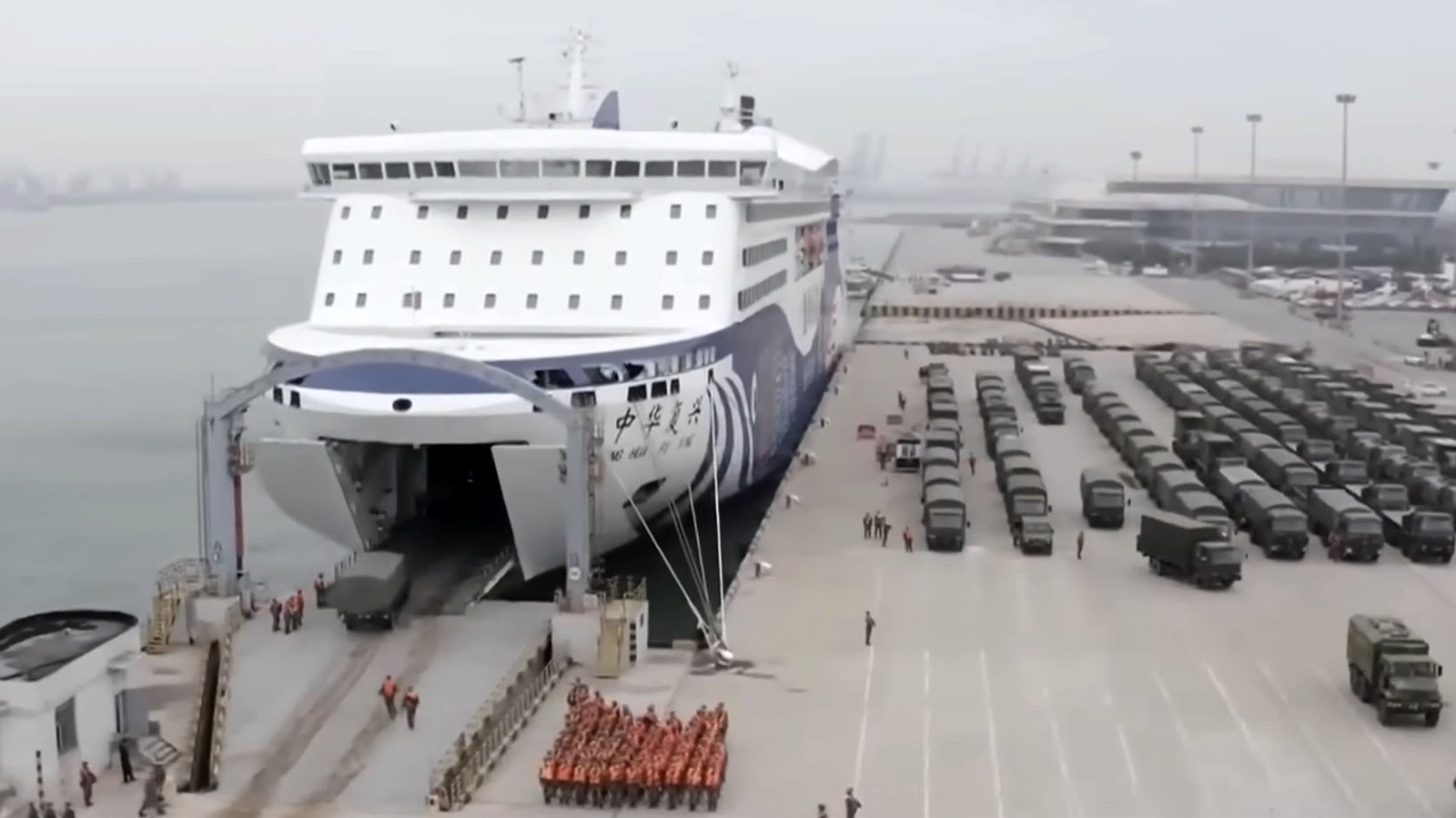
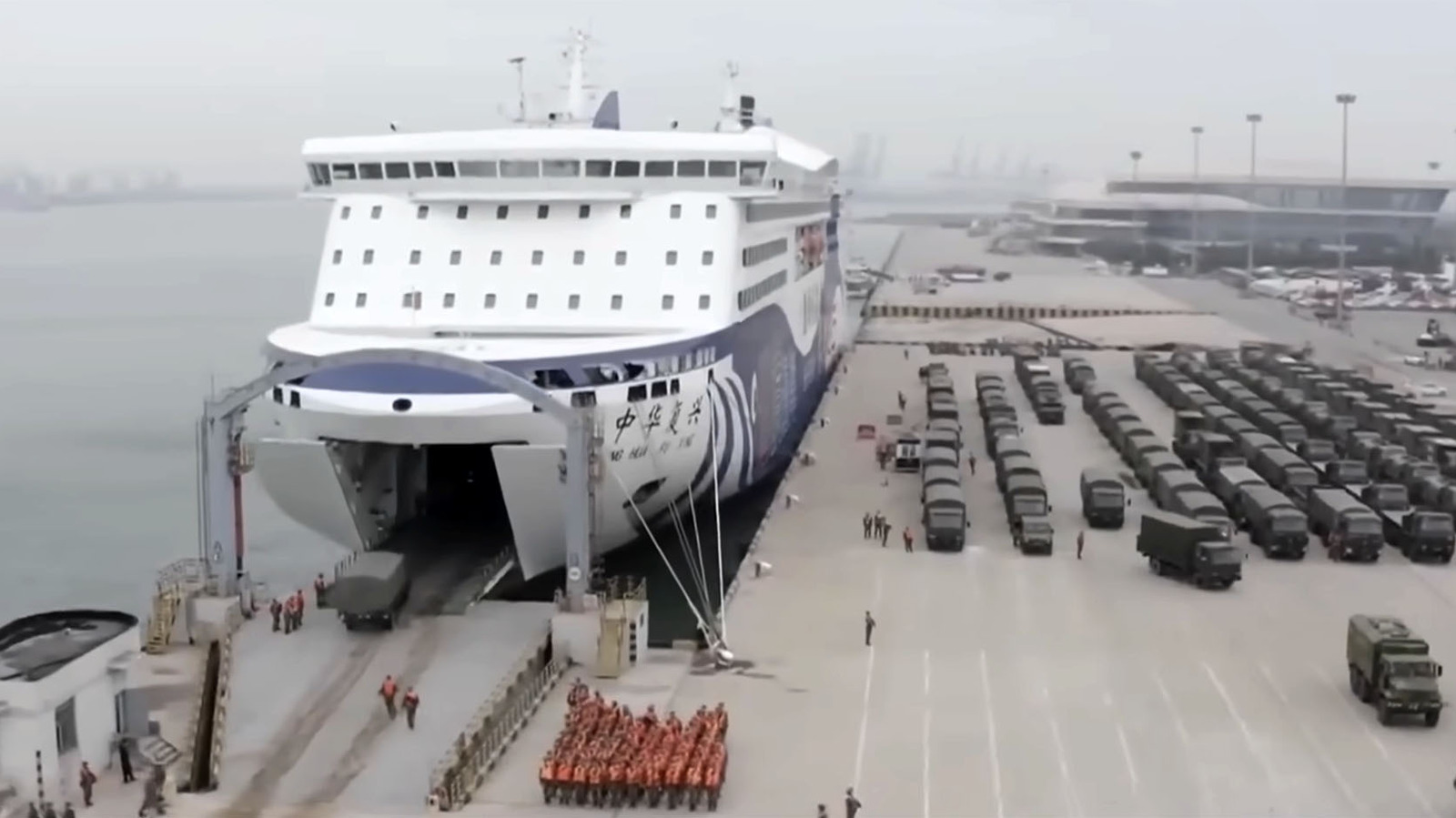
With a capacity to carry over 10,000 new vehicles for transport from factories in Asia to destinations around the world, these ships, known as roll-on/roll-off (Ro-Ro) ferries, are now the biggest of their type in the world. The concept of the PLA putting civilian ferries into military use is not a new one, or even an idea China is trying to hide. Back in 2021, China held a public military exercise where a civilian ferry was used to transport both troops and a whole arsenal of military vehicles, including main battle tanks.

The relatively limited conventional naval lift capacity of the PLA is something that’s been pointed out while game-planning a Chinese amphibious move on Taiwan, and it’s widely expected that the PLA would lean on repurposed civilian vessels to boost its ability to move soldiers and vehicles across the Taiwan Strait. With these newer, high-capacity Ro-Ro ferries added to the fleet, the PLA’s amphibious capacity and reach could grow significantly.

A makeshift amphibious assault ship

However, even with the added capacity of these massive ferries, military analysts have pointed out that Ro-Ro ships would not be able to deploy vehicles and soliders directly onto a beach the way a purpose-built military amphibious assault ship can. Traditionally, to deploy vehicles from these ships, the PLA would first need to capture and then repurpose Taiwan’s existing commercial port facilities into unloading bases for military vehicles and equipment.

However, maybe most alarming is that satellite imagery and U.S. Intelligence reports show that, along with increasing ferry production output, the PLA is also working on a system of barges and floating dock structures to help turn these civilian ferries into more efficient military transports. With this supporting equipment in place, ferries may not need to use existing port infrastructure to bring their equipment on shore.

Beyond the general military concern over China’s growing amphibious capability, there are also ethical concerns if China is planning to rapidly put a fleet of civilian merchant vessels into military service. If the PLA were to deploy these dual-purpose vessels into direct military operations, the United States and its allies would likely be forced to treat civilian-presenting ships as enemy combatants. On top of all the other strategic challenges a Taiwan invasion would bring, the U.S. having to navigate the blurred legal lines between military and merchant vessels could potentially give China a strategic advantage amidst the fog of war.


Source link