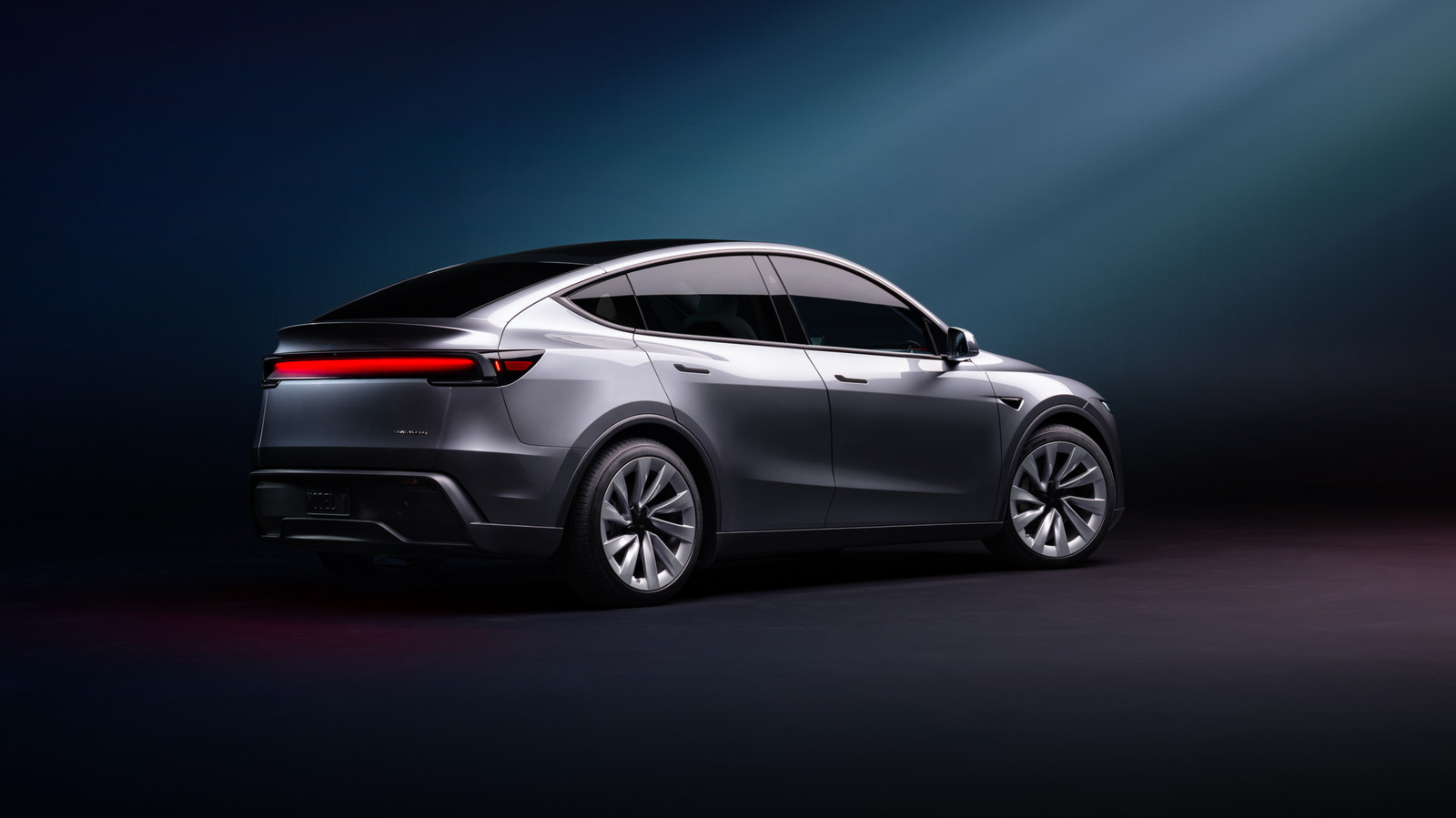

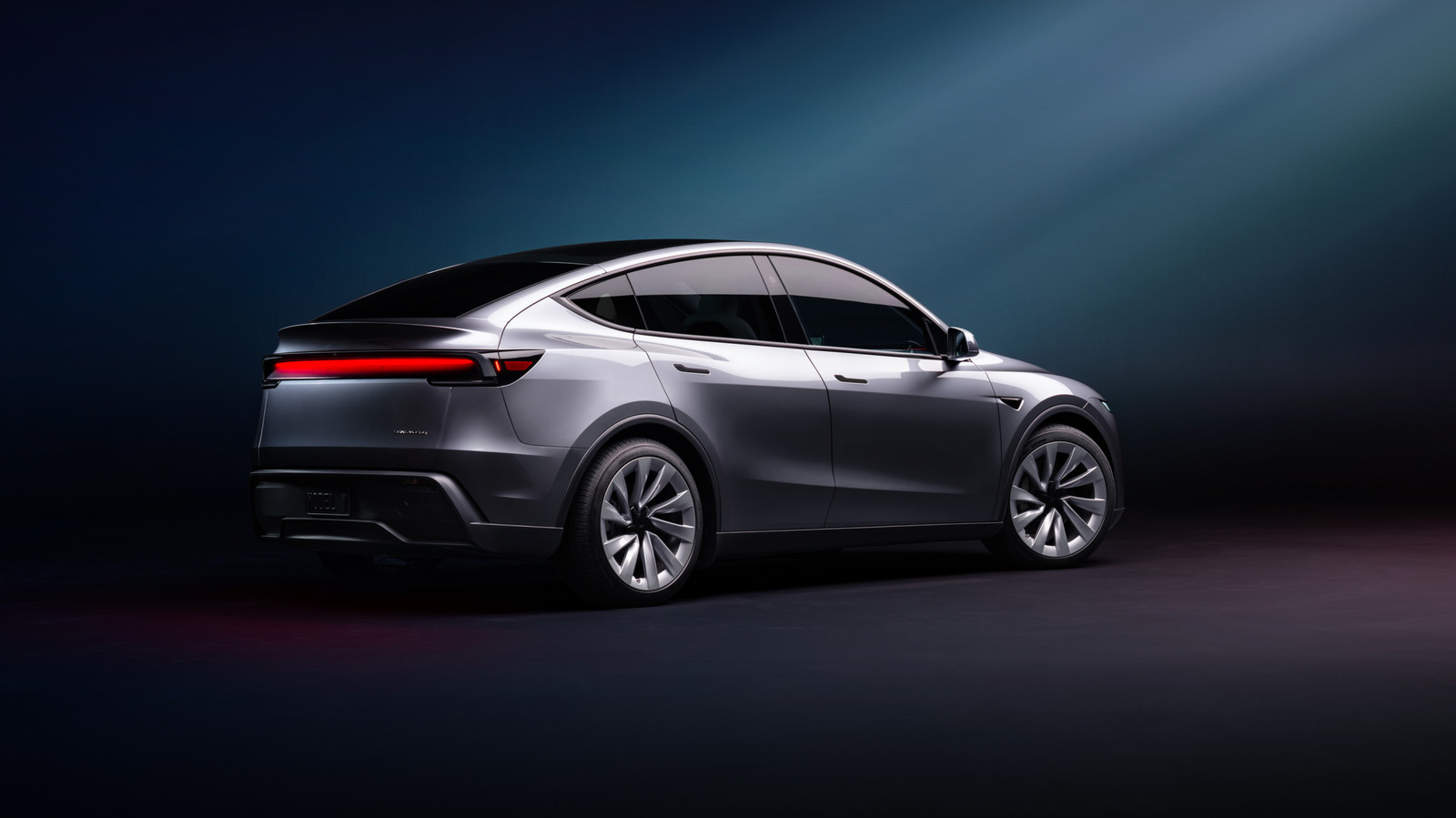
The redesigned Tesla Model Y Juniper builds on the success of the first generation car, but it’s mostly evolutionary rather than revolutionary. Tesla improved the car’s range and efficiency, as well as giving the exterior a makeover with new headlight and new taillight designs. It’s certainly not a radical departure from the original, but the new taillights were different enough to get one Model Y owner in trouble with law enforcement.
As first reported by Tesla Oracle, one owner said that a police officer pulled them over while they were driving and claimed that their car’s taillights weren’t illuminated. The cop was reportedly confused by the Model Y’s taillight bar, claiming that the light cluster that houses the brake lights should also be illuminated at night. The owner pointed out that the taillight bar was in fact a design feature, and was supposed to serve as the primary taillight, but the officer still wasn’t convinced.
In the end, the driver couldn’t convince the officer that the taillight bar was a factory installation, and they were given a warning to get their car fixed, although they escaped a ticket. Although the officer was ultimately wrong in thinking that the taillight was faulty, it’s not difficult to see where the confusion came from. The taillight bar reflects red light off the surface of the car rather than directly projecting it, which could easily confuse drivers, or cops, about its intended purpose.
Tesla says its taillight meets federal requirements
Despite the potential for confusion, Tesla says that the design meets the necessary federal design requirements. When legendary collector Jay Leno pointed out the unusual design on an episode of Jay Leno’s Garage in 2025, Tesla’s chief designer Franz von Holzhausen said that it was a “first in the industry,” calling the design an “indirect running light.” Leno then questioned the brand’s lead engineer Lars Moravy about the taillight meeting government regulations, and Moravy said that the regulation stipulates “how much lumens come off the surface, but it never defines what kind of surface that has to be.”
Moravy added that the taillight design was so unusual that Tesla had to work with its suppliers to source entirely new machines to construct it, since nothing like it had been built before. It’s certainly innovative, but the question is whether that innovation is coming at the cost of safety. While an ugly taillight can ruin a car’s design, they still need to be able to fulfill their primary purpose as a safety feature, regardless of styling. If a cop can’t figure out how the Model Y’s taillights are supposed to work, there’s a chance that other drivers who aren’t as familiar with modern car design won’t know what they’re looking at either.

Stephan is the sports journalist for the Maple Grove Report.