
We may receive a commission on purchases made from links.
Harbor Freight has several private-label brands, including Daytona — which is primarily a car jack brand — and Hercules, which offers premium-grade hardware that targets professionals. One of the best Harbor Freight brands is Bauer, which offers power tools, outdoor equipment, workshop gear, and similar products that are more prosumer-grade than more casual options.
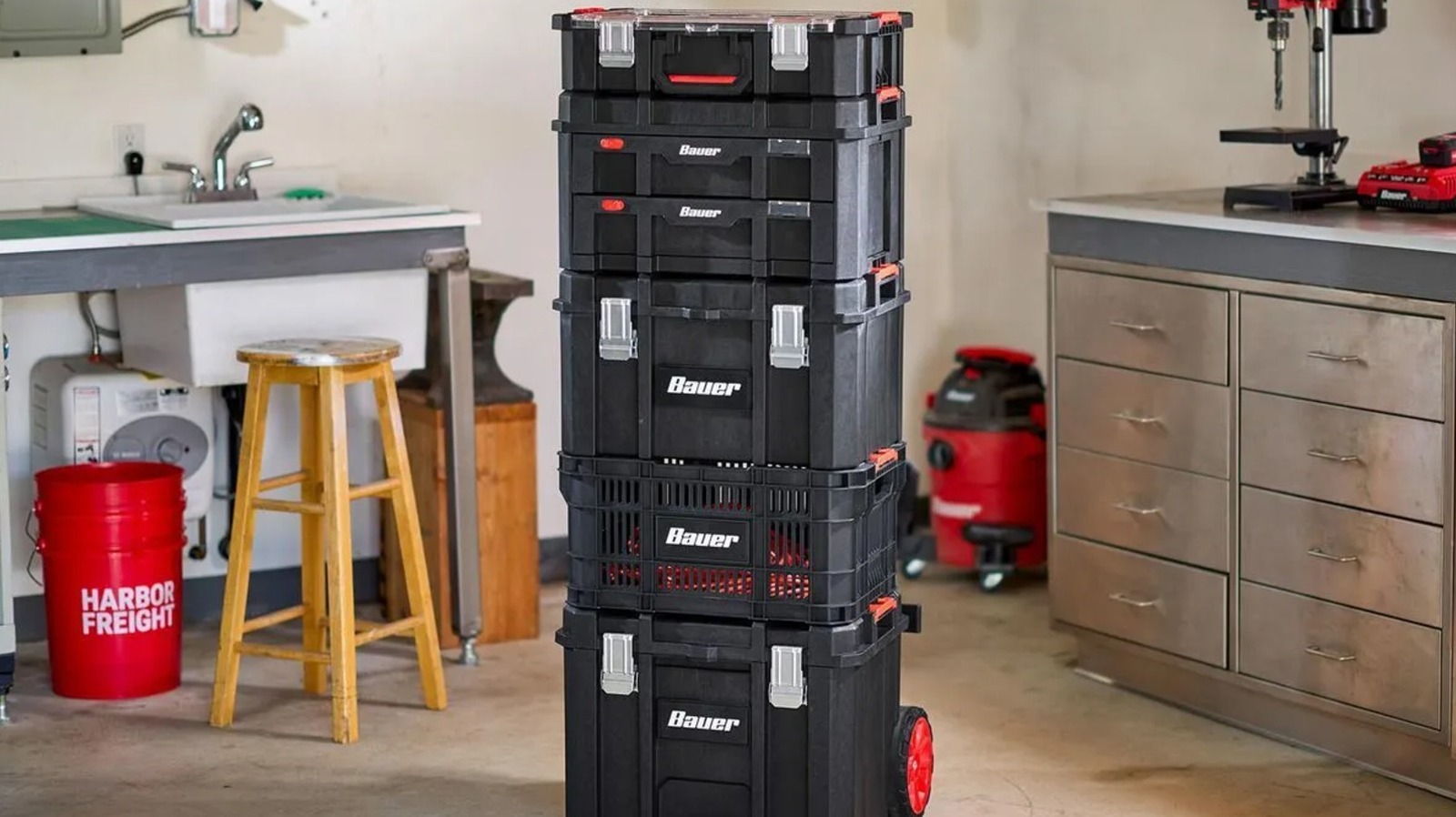
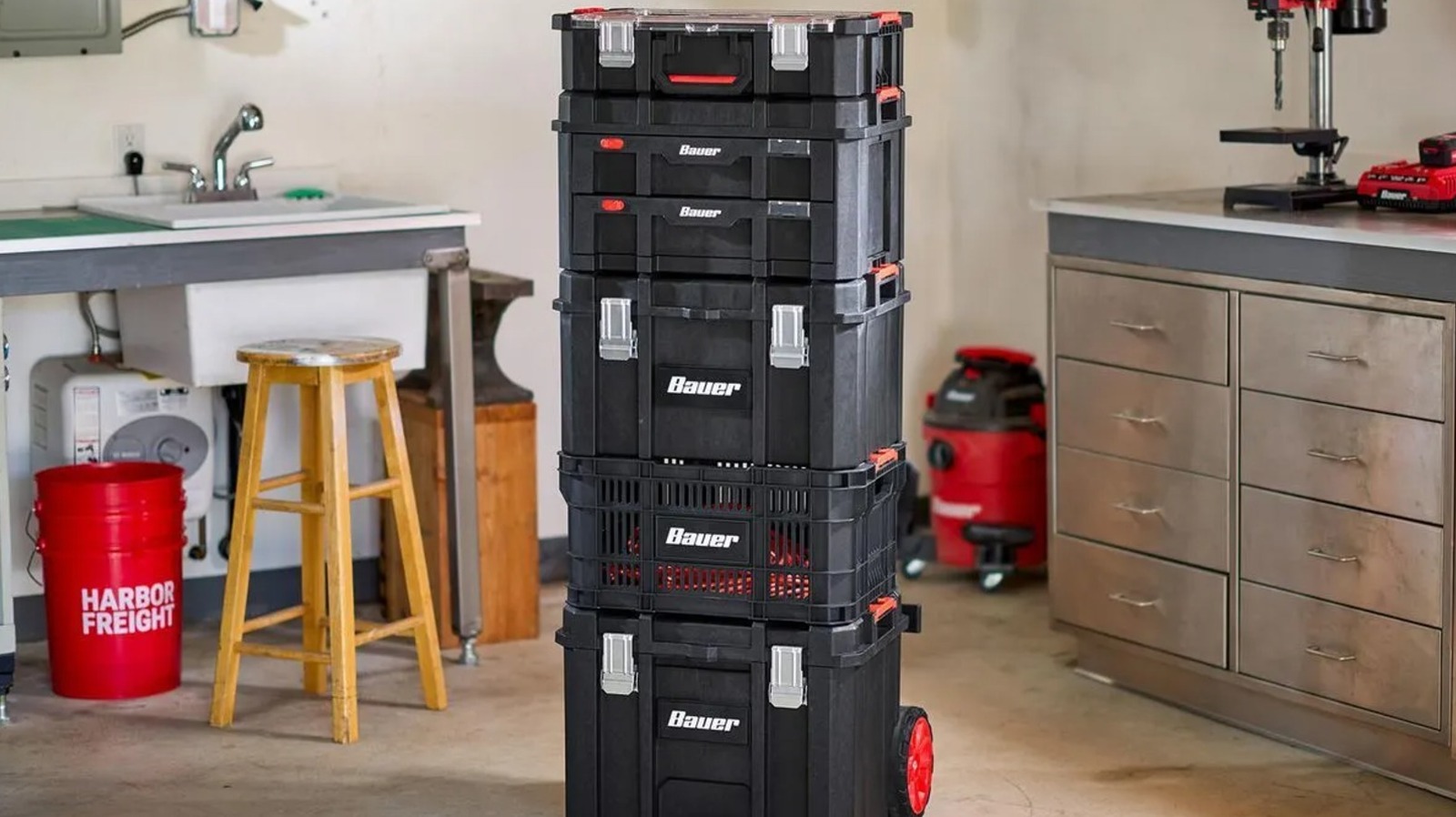
Along with tools and equipment, Bauer also makes storage solutions to hold and protect this gear — or any other hardware you might own. These storage options come in different shapes, sizes, and functionalities, though they are all relatively inexpensive compared to similar products from heavy hitters like Milwaukee or DeWalt. The Bauer Small Modular Toolbox (model 201327M-B), for instance, costs $30, whereas DeWalt’s comparable Tstak Small Parts & Tool Storage Organizer (model DWST17808) is $33 on sale — with an actual list price that is $20 more than that.
While both have similar widths and lengths and essentially do the same thing, the two differ in several areas. These include load capacity and durability, which are tied to the cases’ construction. While price is definitely a factor in choosing one product over another, it isn’t everything, and the DeWalt’s advantage may influence your mental math when considering these two products.
DeWalt’s heavy-duty construction gives its toolbox an advantage over Bauer’s
Both the Bauer Small Modular Toolbox and DeWalt Tstak Small Parts & Tool Storage Organizer offer removable bins with lids that offer good organization. Bauer’s lid has six removable compartments, but DeWalt’s has seven inserts (although they’re not removable). Each also offers the full width of the case without the bins for larger tools. Comparing the two boxes, Bauer’s toolbox is slightly larger, with Harbor Freight listing the maximum storage space of its toolbox as 1,110 cubic inches. DeWalt says its organizer has a volume of 3.7 gallons, which equates to about 855 cubic inches.
However, DeWalt has Harbor Freight beat in load capacity. The working load of the Bauer Small Modular Toolbox is 25 pounds, whereas the DeWalt Tstak Small Parts & Tool Storage Organizer tops out at 66 pounds, meaning it can safely carry over 1.6x more weight. That’s a big difference and may be the biggest reason a user would choose DeWalt’s case over Harbor Freight’s cheaper option. Plus, Bauer’s toolbox is significantly heavier than DeWalt’s at 9.1 versus 5.57 pounds, which may be another factor in its favor.
Part of the reason DeWalt’s case can carry more weight but has less space than Bauer’s is its heavy-duty construction. The DeWalt box is made out of thermoplastic polypropylene and strong, rust-resistant metal latches that can bear heavier loads. It also has a large, top-mounted handle for better portability than the Bauer.
Compatibility with other storage options should also be considered
Both cases are part of their brand’s proprietary systems and only connect to other cases and accessories from the same system (at least, without adapters). This could sway you in one direction or another; if you own a DeWalt Tstak Rolling Toolbox or Tstak Stackable Utility Cart, the DeWalt Tstak Small Parts & Tool Storage Organizer might be worth the higher cost, since it’ll be compatible with the products you already have. The cheaper Bauer Small Modular Toolbox would need to be used separately from any DeWalt stack, though it works perfectly with Harbor Freight’s new and improved rolling toolbox.
It’s important to note that DeWalt currently has two separate modular storage systems: Tstak and ToughSystem. Without an adapter, DeWalt’s Tstak and ToughSystem 2.0 products are not compatible with one another. ToughSystem caters more to professionals who require storage that can withstand harsher jobsite environments. Tstak, on the other hand, is better suited for DIYers and more casual users. You can, of course, purchase whichever you prefer.
Compared to Bauer’s cheaper toolbox, Tstak’s is the more durable, heavy-duty option, which may justify its higher price tag for some. Those buyers will also be able to take advantage of DeWalt’s other Tstak products and build out a solid storage setup for their tools.

Stephan is the sports journalist for the Maple Grove Report.