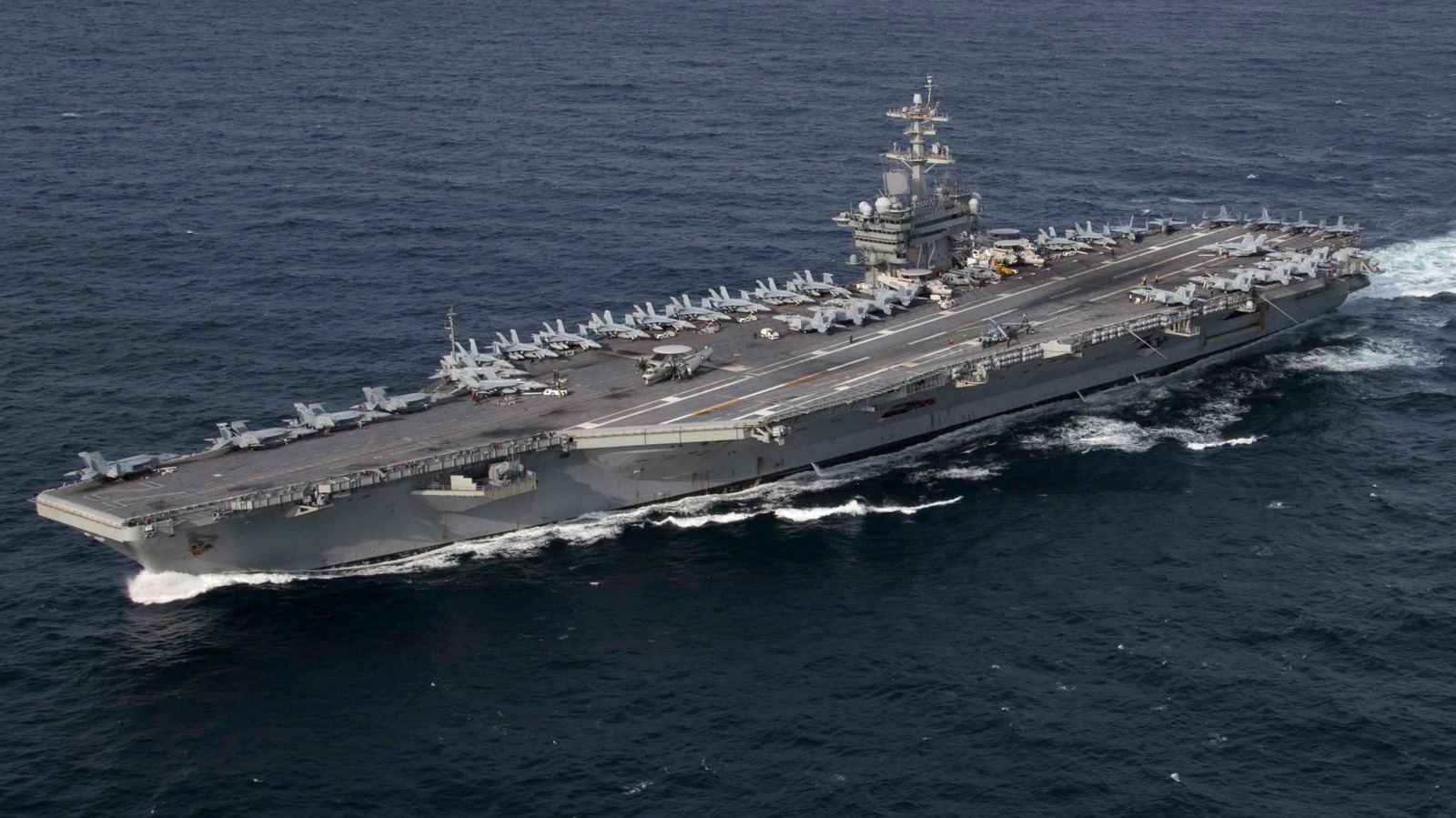

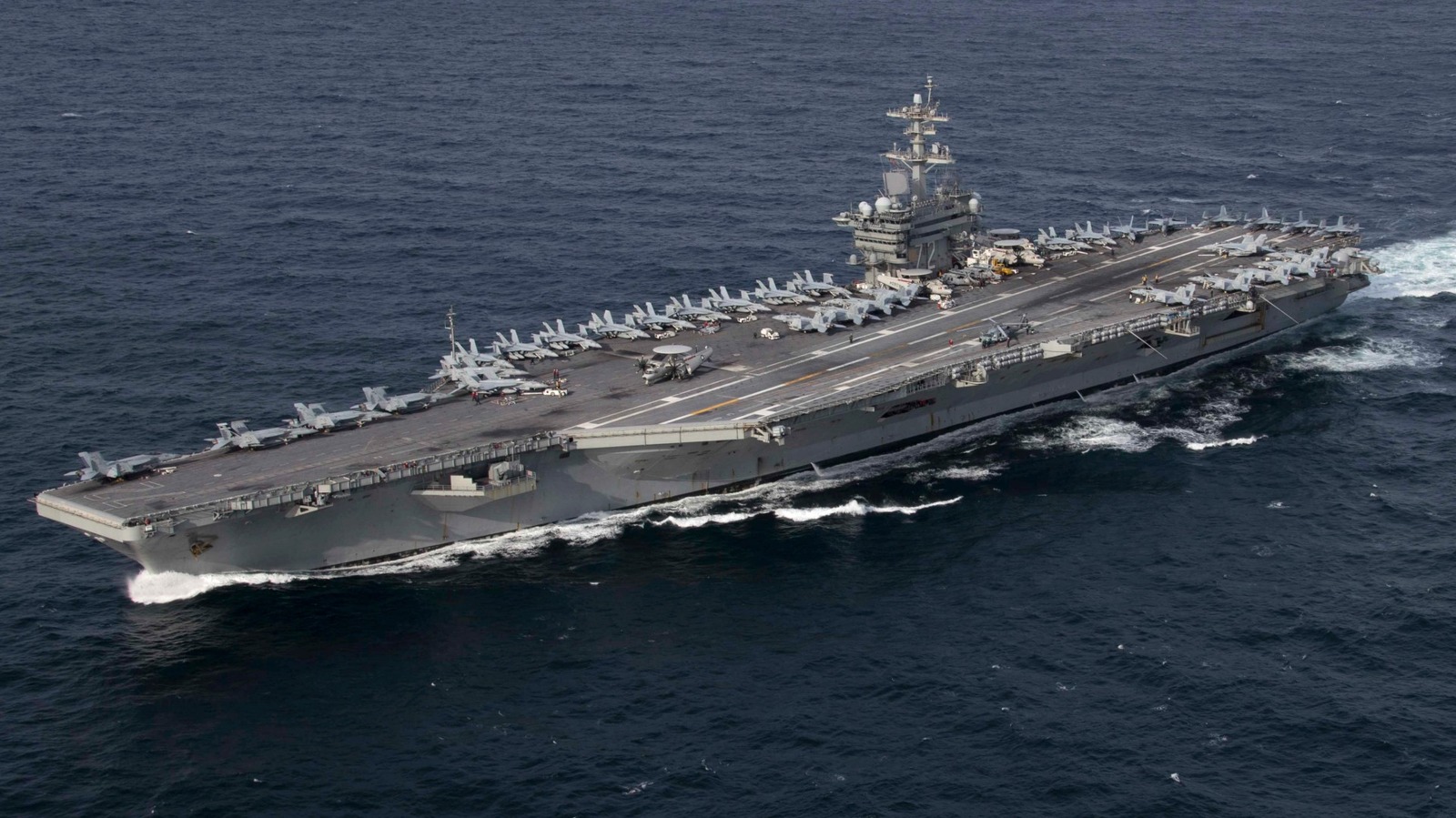
All 11 U.S. aircraft carriers employ what is called a “Five-Mile Rule,” which is rarely broken. The rule is a 5 nautical mile (5.75-mile) exclusion zone established around aircraft carriers, and its purpose is essentially force protection. Aircraft carriers are huge machines that can be dangerous to get close to, as colliding with one will always end in the carrier’s favor. Additionally, the constant need for flight operations ensures the safety of both the pilots and crew. Essentially, a five-mile buffer serves to further protect the carrier from threats.
It’s almost unfathomable how large carriers like the Lincoln are, as it displaces over 100,000 tons of seawater. When moving, it can’t turn or stop on a dime, as its inertia is considerable. Getting too close means that a collision can be unavoidable, so the exclusion zone’s purpose is essentially all about safety. While you might see pictures showing tight formations with the Lincoln among the vessels that comprise its Carrier Strike Group, that’s not normal during combat and flight operations, as breaking the Five-Mile Rule is a big naval no-no … until it isn’t.
Violating the exclusion zone isn’t common, but it happens. Think of it more as a rule that’s allowed to be broken than an unwavering law because there are conditions that warrant its violation. Typically, an emergency, where someone falls overboard, an unforeseen issue that arises during combat or flight operation, or any emergent situation might compel an aircraft carrier’s captain to chuck the exclusion zone into the drink and move the carrier or another ship closer than normal. Everyone onboard is trained for these situations, but it’s nonetheless dangerous since exclusion zones are there for good reasons.
The Five-Mile Rule and why it’s necessary
First and foremost, all U.S. aircraft carriers have a five-mile rule, and it’s all for the same reason. In 2000, the USS Cole (DDG-67) was attacked by a small vessel, causing widespread damage to its hull while killing 17 sailors and wounding almost 40 additional personnel. Since then, the U.S. Navy has been wary of small vessels, and a five-mile buffer ensures that none can get close to the carrier, as the Cole bombing proved the danger that explosive-laden craft could pose in potentially sinking an aircraft carrier. Another reason is flight operations, which is dangerous in and of itself.
The danger is elevated when an approaching aircraft has problems with onboard weapon systems or fuel. This can endanger surrounding ships, so the buffer offers added protection. Also for flight operations, the carrier must turn into the wind, requiring a large turn radius, making it imperative that its surrounding waters are devoid of any vessels. Air operations also require a bubble of airspace for recovering aircraft low on fuel, which the exclusion zone provides. The rule is only violated when combat action requires it, but under normal conditions, breaking the buffer can be hazardous.
Another aspect of carrier operations results in high-powered radar and electronic warfare radio signals. These can disrupt communications and electronics, especially with commercial, civilian vessels. Keeping them away limits potential damage to their navigation and communications equipment. The carrier is further protected by a series of submarines, cruisers, and guided-missile destroyer escorts, ensuring that no vessels stray too close. This ensures that everyone on or around an aircraft carrier like the Lincoln remains safe and secure.

Stephan is the sports journalist for the Maple Grove Report.