You’re Using Your Exercise Bike Wrong if You Do These 9 Things


An exercise bike is one of the most effective tools for building endurance and burning calories, but it’s also one of the easiest to use incorrectly. Just because the motion feels repetitive doesn’t mean it’s foolproof; whether you’re a first-timer or a seasoned cyclist, small errors in setup or form can stall your progress. Instead of maximizing your cardio, poor habits can lead to unnecessary strain and keep you from seeing the results you’re working for.

To ensure you’re using your exercise bike with the proper form, adjustments and technique, so you can get the most out of your workouts, I spoke with several cycling experts to learn more about mistakes you’re likely making when on an exercise bike.

1. Your seat is too low

One of the first lessons I learned when I started taking group cycling classes was that you need to properly adjust the seat height. Aviron coach and certified indoor cycling instructor John Steventon says the right seat height is key. 

“[If the seat is] too low, they won’t be able to get full extension of the legs, often needing to cycle with their knees splayed outward to make room for them,” Steventon explains. This leads to a loss of potential power and a compressed and uncomfortable pedal stroke. “If the seat is too high, the rider will risk bouncing from side to side as they lean off the side of the saddle, trying to get the right extension of the legs.” 

Group fitness class on exercise bikes

According to Matt Wilpers, the saddle should be positioned high enough that your knee is slightly bent and not locked.

Erik Isakson/Getty Images

Peloton instructor Matt Wilpers offers a couple of tips to keep in mind when setting up your seat. “When riding, bring your one foot to the bottom of the pedal stroke (6 o’clock),” he says. “The saddle should be positioned high enough that there is a slight bend in the knee so that the knee is soft and not locked.” This will prevent you from feeling cramped or having to reach for the bottom of the pedal stroke.

Steventon points out that how the foot sits on the pedal is important, too. “The center spindle that the pedal rotates around should be underneath the ball of the foot because I’ve seen people who ride on their toes, and people who ride on their heels — both reduce power and efficiency of the stroke.”

Wilpers advises trying the “heel test,” which is when you unclip the foot at 6 o’clock to see if your heel can touch the pedal when your leg is straight.

Woman adjusting exercise bike

You don’t want the seat too far or too close to the handlebars.

Andrii Borodai/Getty Images

2. The saddle isn’t the right distance from the handlebars

Another factor to consider when setting up your exercise bike’s saddle is its distance from the handlebars. Wilpers says the goal here is to get the knee stacked over the pedal, especially when the pedal is at 3 o’clock. “I usually start with the saddle pushed toward the handlebars and then adjust accordingly when I ride,” he recommends. The problem is that when your seat is too far forward, your knees take on the pressure, and if it’s too far back, the stress lands on the heels.

3. The handlebars are too high

Besides the seat, make sure the handlebars are at the right height. “In general, it’s recommended to keep the handlebars at the level of your saddle or just above,” says Wilpers. “Many competitive cyclists like their handlebars at or slightly below saddle height because it better optimizes both performance and aerodynamics when cycling outdoors.” 

Handlebars of an exercise bike

Make sure the handlebars are aligned with the saddle on your bike.

Konstantin Ushakov/Getty Images

However, Wilpers says that in some cases, such as if you have back problems, raising your handlebars even further is advised. 

4. You skip the warm-up or cool-down

If you’re eager to jump on your bike and get a quick workout in, chances are you’re skipping a warm-up or cool-down. Steventon says that if you want to get your body ready for your workout, spending 10 minutes increasing resistance and cadence before a longer or more intense ride will prime the muscles. 

“Rather than slowly working up from 60 revolutions per minute to 110 rpm during the warmup, 30-second bursts at gradually higher reps in between 30 seconds of easy pedalling will allow the warmup to be effective without draining energy before the main workout,” he explains.

Some warm-up exercises Wilpers recommends include: 

  • Hip openers like 90/90s (a stretch that uses internal and external hip mobility), pigeon pose and lateral lunges 
  • Quadruped thoracic rotations (this exercise stretches out your spine)
  • World’s Greatest Stretch (a full body mobility exercise that targets hips, hamstrings, and spine)
  • Exercises to wake up the ankles and feet, such as ankle-controlled articular rotations (slow rotational movement of the ankle to improve ankle mobility) and performing the downward dog stretch while pedaling out the calves

woman cycling intensely on exercise bike

If you skip a warm-up or cool-down, you’re missing out on some important steps.

Wera Rodsawang/Getty Images

The cool-down shouldn’t be neglected either. “In some cases, after a particularly hard workout, stopping suddenly can cause the blood to pool in the legs, and the cyclist may get dizzy,” warns Steventon. He recommends spending 5 minutes slowing your cadence to help the muscles keep pumping blood and oxygen as you ease out of the strain of the main workout. 

You should also stretch the muscles used during a ride, such as your hamstrings, quads, hip flexors and calves. “Triceps, shoulders and wrists shouldn’t be ignored either,” Steventon says. “These muscles are soaking up the mass of the upper body, bouncing up and down, left and right on the handlebars.” 

If you’re riding a bike with a screen, the screen’s position can sometimes lead to neck pain. In those circumstances, Steventon recommends gentle neck stretches to ease off the tension after a workout.

5. Your bike workouts aren’t planned out 

If you don’t have a general workout program or structure, you may be using your bike inefficiently. It’s important to make sure that you’re riding with intention if you want to get the most out of it. “Everyone has the same three training variables to manipulate in order to get what they want out of their training: frequency, duration and intensity,” Wilpers says. 

Frequency relates to how often you work out, since it’s important to have a consistent riding schedule. “Cycling is great because it’s low impact, meaning it’s easier to recover from it and therefore you can ride more often without much fear of injury,” Wilpers says. 

If you’re a newbie, it’s best to focus on easy rides. Steventon recommends new riders aim for two to three rides per week and take a rest day between each cycling workout to let their bodies recover from the workout the day before. “Not only for the muscles, but depending on the length of the ride, there’s an element of saddle discomfort that rest will help,” Steventon explains. 

Once you have a riding schedule established, you can focus on duration. This is when you start increasing the length of your sessions. 

Finally, once you’ve become comfortable with your bike, you can increase the intensity to improve your fitness. Steventon says more experienced riders are capable of putting in four to five workouts a week. 

“The importance of foundation building zone 2 heart rate [exercise performed at 60% to 70% of your maximum heart rate] during longer rides is the same for all riders, but with three more workouts to play with,” Steventon explains. “They can add in some tempo and sprint interval workouts too, pushing the cardio harder, and working at a mix of cadence and resistance through these workouts.” 

Below are different ways you can structure your workout depending on your goals:

Person sitting crosslegged on the floor with workout journal

You should have a plan, whether cycling is your main form of cardio or your choice of cross-training.

Westend61/Getty Images

As the main form of cardio

If cycling is your main focus, Wilpers recommends riding three to five days per week, with one to two intense days, one long day and the remainder as easier rides. Aim to ride for 30 minutes to 2 hours or longer.

As part of a strength-training program

If you’re prioritizing strength training but want to include cycling as your preferred form of cardio, Steventon and Wilpers advise aiming for two to three sessions at a zone 2 heart rate for 20 to 45 minutes.

As part of a cross-training plan

You can also use an exercise bike for cross-training. This could be ideal for runners or other athletes who want a hybrid workout schedule during the week. Steventon says, “Cross-training utilization of cycling can be a very effective way to keep cardio topped up without the impact problems of constantly running.” Wilpers recommends cross-training once or twice per week for 20 to 45 minutes, as long as you’re healthy.

If you have injuries or certain aches from running, you can shift your training to cycling two to four times per week for 20- to 45-minute sessions. Steventon recommends that runners cycle whenever their bodies need to recover from running. “Long, slow rides will keep your fitness foundation strong, with harder sprint intervals tapping into VO2 max improvements,” Steventon says. VO2 max is the maximum rate at which your body consumes oxygen during exercise.

Person texting on smartphone while sitting on an exercise bike

Riding distracted is just as bad as doing too much during a ride.

DaniGonzalez/Getty Images

6. Doing too much or too little on the bike 

One of the biggest mistakes people make when riding an exercise bike is either doing too much too soon or coasting while distracted. “Many people seem to think that unless they wake up sore, nothing was accomplished, and on the other end of the spectrum, I see people just pedaling and texting,” says Wilpers. 

When riding, remember to focus on the workout at hand. Distractions like texting or answering emails can get in the way of making progress. “Have a purpose and plan before getting on the bike so that your time is structured,” Wilpers suggests. “This will help you stay focused and get the most out of your time.”

Steventon notes that the best way to use a bike or any fitness machine is to mix up the intensities to avoid hitting a plateau. “Long, slow rides, short sprint intervals and tempo rides (moderately hard ride) including hard, long intervals will improve the mitochondria-building, zone 2, foundation end of fitness, while the shorter sprints will help improve the VO2 max end, and the tempo rides are where mental resilience is built,” he says.

7. Wearing the wrong cycling shoes

Wearing the right cycling shoes can improve your riding experience. Depending on the bike, you may need specific cycling shoes, like carbon-fiber cleats, road bike shoes, clip-in shoes, mountain bike shoes or even everyday shoes. 

When choosing a cycling shoe, you want to make sure it’s comfortable because they don’t come cheap. Steventon recommends mountain bike shoes if you aren’t sure what to pick. “These are a little bit more flexible and have recessed cleats, making it a lot easier to move around, providing stability in situations where ‘off bike’ moves like squats or weights are included in a cycling class.”

Up-close shot of a cycling shoe on an exercise bike

The right shoes can improve your cycling experience.

Getty Images

Wilpers favors clip-in cycling shoes because they’re stiff and lead to better energy transfer from the body to the bike. However, the shoe you pick will depend on the type of bike you’re using, and most importantly, you want the shoe to fit well. 

Steventon says everyday gym sneakers are acceptable, but that they may not be the best option. “The pedal efficiency may be compromised even with toe clips that hold these shoes in place on the pedal,” he explains, pointing out that because these shoes tend to be soft-soled, it can be uncomfortable to use for long periods of time. 

Wilpers notes that some cycling shoe brands are much narrower than others, so it depends on your needs and comfort. “Lastly, I think it’s worth noting that a good set of road cycling shoes can cost hundreds of dollars, but these shoes typically last up to five years,” he says.

8. You’re not braking correctly

Usually, when you stop an exercise bike, you’re either pressing down the emergency brake or using the resistance knob to slow it down. “Trying to suddenly stop the flywheel or unclip feet while the heavy flywheel still wants to turn has great potential for injury,” warns Steventon. “Always use the resistance knob or emergency brake to slow things down properly, and wait until the flywheel has stopped before unclipping.”

Brake button in the middle of an exercise bike

If you aren’t properly braking, you risk injuring yourself.

D_Zheleva/Getty Images

9. You don’t maintain or clean your bike

It’s easy to forget that you need to do maintenance and clean your bike every so often. Wilpers reminds us that all bikes need to be cleaned and maintained. “Cyclists are known for constantly cleaning and occasionally replacing parts on their bikes because this is what it takes to keep your bike working great for many years,” he explains. 

Person holding a spray bottle and a rag while cleaning exercise bike in workout class

Keeping your bike in good condition is important if you want it to last a long time.

Getty Images

One thing people often overlook is adjusting their bike settings annually. “Think about how much your body can change in a year,” explains Wilpers. “You may get stronger, weaker, heavier, lighter, tighter, more flexible and so on.” By adhering to bike settings, you’ll not only have a more comfortable ride but also one that’s customized to your changing needs. 


Source link

Leave a Reply

Subscribe to Our Newsletter

Get our latest articles delivered straight to your inbox. No spam, we promise.

Recent Reviews


Do you ever wake up in the morning still feeling exhausted, causing you to wonder if you truly got a good night’s sleep? You may then go about your day feeling just as tired as you were the night before. Getting enough sleep every night is extremely important for your body’s overall health and is just as important as eating well, exercising regularly, and staying hydrated. Without adequate rest, your physical and mental health will suffer, as sleep impacts your mood, energy levels, and even your body’s immune system.

Unfortunately, there is no one-size-fits-all formula for how much sleep a person needs to feel well-rested, as various factors play into the amount required for optimal health. However, some guidelines are available to help you achieve better sleep. Keep reading to discover how much sleep you really need and some practical tips to improve your sleep quality.

Why Sleep Is Essential for Your Health

Sleep is a vital part of both physical and mental health as well as everyday life. In fact, Reproductive Biology and Endocrinology reports that the average person will spend a third of their life sleeping. Take a look at how sleep affects all aspects of health.

Mental and Cognitive Health

Good quality sleep plays a role in many functions of the body that affect mental and cognitive health. For example, proper sleep helps support healthy brain functions, allowing you to concentrate on your daily tasks while giving you the mental clarity to do so. It also improves the way nerve cells communicate with each other. The opposite is also true – when your body lacks sleep, focus and response time slow down, and the brain is unable to build or retain memories.

Physical Health

Getting the proper amount of sleep also plays a part in physical health. In fact, according to the CDC, studies have shown that a lack of sleep can impact the immune system in a variety of ways, which can later lead to the development of certain disorders. Individuals experiencing inadequate sleep are more likely to get sick, as fewer natural immune cells are produced. The CDC found that approximately 72% of immune cells are produced during a full night of sleep, but those with less sleep produced well below this quota.

Sufficient sleep also impacts the body’s hormonal balance as it is released following the individual’s circadian rhythm or the sleep-wake cycle. Women can experience greater disturbances in sleep because of hormonal changes, such as during a menstrual cycle, pregnancy, or menopause. Insufficient sleep can affect the levels of the estrogen and progesterone hormones while also slowing down the thyroid and impeding metabolism. Finally, losing sleep can also increase the production of inflammatory cytokines, which can lead to cardiovascular and metabolic issues.

As you can see, hormone imbalances caused by inadequate sleep can negatively affect your health. When this occurs, hormone replacement therapy may be necessary.

How Much Sleep Do I Need?

How Much Sleep Do I Need?

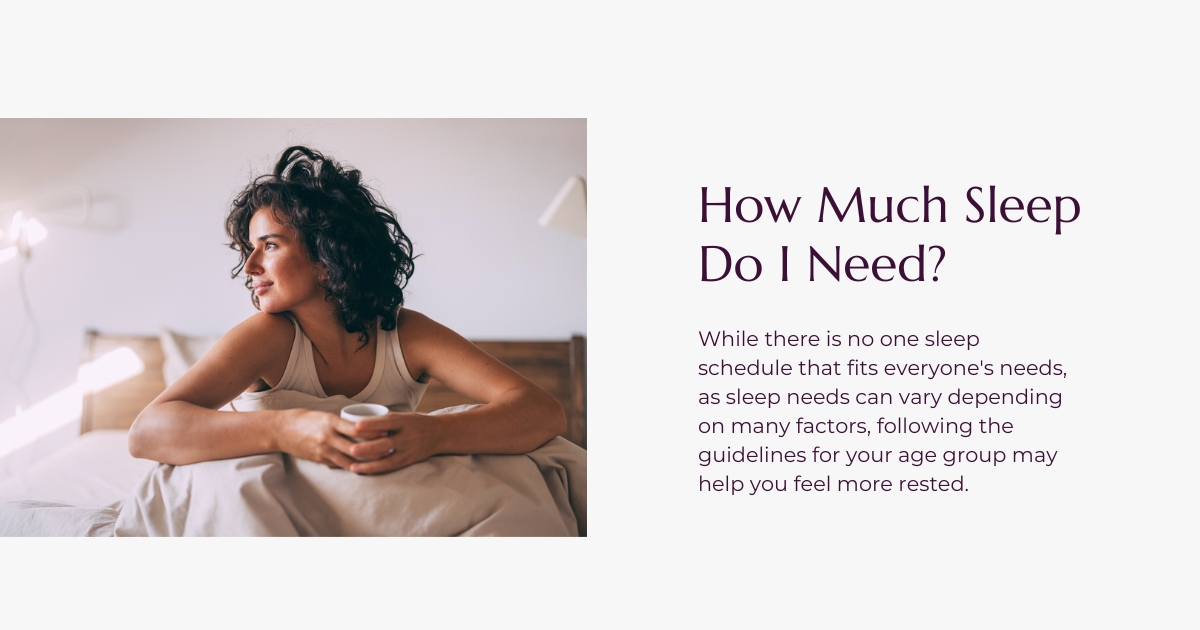
If your constant sleepiness is beginning to affect your physical and mental health, it’s time to begin determining how much sleep you truly need. While there is no one sleep schedule that fits everyone’s needs, as sleep needs can vary depending on many factors, following the guidelines for your age group may help you feel more rested.

Here are the most current sleep recommendations by age:

  • Newborns (0-3 months) – For the first three months of life, newborns need between 14-17 hours of sleep throughout the day, as they do not typically sleep through the night.
  • Infants (4-12 months) – Between four and twelve months of age, an infant requires 12 to 16 hours of sleep. This usually includes daytime naps.
  • Children (1-12 years) – Toddlers and children require between 9-14 hours of sleep during the night and may sometimes need daytime naps.
  • Teens (13-18 years) – As children become teenagers, they don’t need as many hours of sleep, and between 8-10 hours per night is sufficient.
  • Adults (18-64 years) – The recommended number of hours of sleep needed each night for adults is between 7 and 9 hours.
  • Seniors (65+ years) – Sleep is essential to aging gracefully, especially for women. Getting 7-8 hours per night is recommended.

While these amounts are the general recommendations for each age group, every person’s needs will vary. In fact, the number of hours required may evolve and change within these age brackets, depending on current conditions. For example, young children may need more sleep when going through a growth spurt, while older children may need more sleep if they are experiencing hormonal changes. Pregnant women often need more rest, especially when experiencing disruptions in their ability to sleep at night.

Other factors that can impact your need for sleep include your current lifestyle. For example, if you have a particularly busy lifestyle, you may find yourself becoming exhausted during the day even if you do achieve the recommended hours of sleep. Additionally, high stress levels caused by family, work, health, and other factors may leave you feeling tired and in need of more rest.

Signs You’re Not Getting Enough Sleep

Feeling sleepy can be normal as an occasional occurrence after a night of little sleep, but it’s important to watch for signs of sleep deprivation. Even if you seem to be able to function normally on a regular basis while achieving less sleep than recommended, you can still experience negative side effects.

Some of the most common signs that you’re habitually not getting sufficient rest include:

  • Chronic fatigue
  • Irritability
  • Trouble focusing and staying alert
  • Frequent illness due to a weakened immune system
  • Sudden weight gain
  • Increased blood pressure

If you continue to experience insufficient or poor-quality sleep, the above signs can eventually result in long-term issues. The most common issues resulting from the long-term effects of inadequate sleep involve chronic conditions like heart disease and diabetes. Poor sleep can also impact your mental health, resulting in depression. The cognitive impacts of poor sleep mentioned above may leave you with difficulty concentrating on important tasks, which can have dangerous consequences.

Why Should Women Prioritize Healthy Sleep?

According to a study published in Sleep Medicine, women are more likely to experience trouble sleeping and have a higher risk of developing sleep issues such as insomnia. Women are also more likely to struggle with poor-quality sleep, especially when they are experiencing hormonal changes. In addition, a woman going through extreme changes in their hormones due to pregnancy may have even more trouble sleeping due to feeling uncomfortable or frequently waking to urinate. Menopause may also disrupt sleep, as it can cause night sweats or hot flashes.

Unfortunately, for women, poor sleep can be a vicious cycle. Insufficient sleep can disrupt hormone production, as the release of hormones is affected by the circadian rhythm. It may also impact the menstrual cycle by disrupting the hormones used to help regulate sleep, such as melatonin.

How to Improve Your Sleep Quality

Improve Sleep Quality

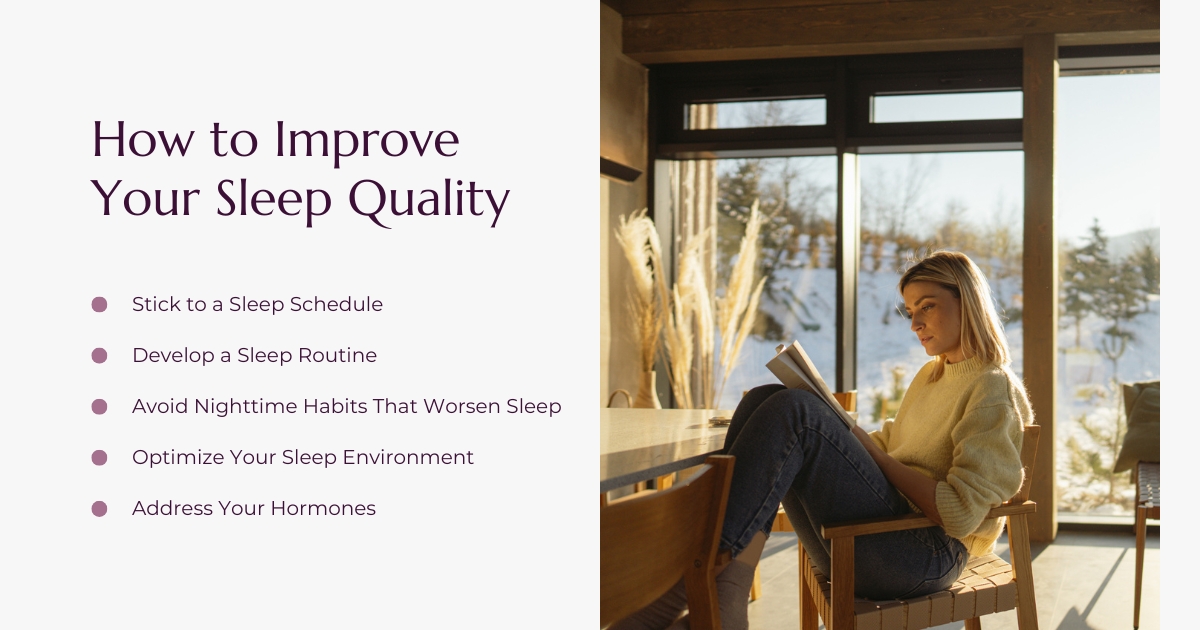
There are many ways to achieve better rest and have better health as a result. Below are some tips on how to improve sleep quality.

Stick to a Sleep Schedule

First, it is important to create an optimal sleep schedule. Keep in mind that when you are trying to implement a new habit, consistency is key, so make sure that your new schedule is one that you can follow every night. Start with your desired wake-up time, determine how many hours are ideal for a person your age, and work backward from there. Then, set your bedtime about half an hour before that to give yourself time to wind down and complete your sleep routine.

Develop a Sleep Routine

Determine what will help you to relax and unwind, preparing yourself mentally and physically for sleep. Many women choose to promote relaxation by practicing certain techniques, such as yoga or meditation, before bed, but simply making an effort to empty their mind of any anxieties can be enough.

Consider adding these relaxing activities earlier in the evening to help you release stress before bed:

  • Journaling before bedtime
  • Drinking a cup of herbal tea
  • Reading a book or watching a relaxing television show
  • Listening to instrumental music

Avoid Nighttime Habits That Worsen Sleep

In addition to partaking in relaxing activities before bed, it’s important to avoid activities or habits that can negatively affect your sleep. Before preparing for bed, make sure to avoid eating heavy meals, as they can keep you awake. Similarly, caffeine and alcohol can disrupt your ability to sleep. Finally, consider disconnecting from social media and ongoing text conversations in the hour leading up to bedtime.

Optimize Your Sleep Environment

Optimizing your sleep environment means that you are creating an environment that promotes sleep. The room should be dark without any distracting lights, which includes ensuring all television screens and smartphones are turned off. Keep the room cool so that you won’t wake up due to feeling too hot or sweating throughout the night. Ensure that you create a peaceful and quiet space, free of any loud or persistent noises; however, for some people, a sleep machine or some kind of white noise, such as a fan, can be soothing.

Address Your Hormones

Remember that hormonal imbalances are a major cause of sleep disturbances. Two primary hormones that have a large impact on your quality of sleep are progesterone and estrogen. These hormone levels can vary widely due to the menstrual cycle, pregnancy, perimenopause, and menopause. If you are looking to regulate your hormone levels, consider seeking treatment from Arizona Gynecology Consultants.

When to Seek Help for Sleep Problems

In many cases, sleep issues can be resolved by implementing a better sleep schedule or trying relaxation techniques before bed, but certain sleep problems require the help of a medical professional.

Common sleep disorders, such as insomnia, sleep apnea, and restless leg syndrome (RLS), typically require medical attention to resolve.

  • Insomnia – This sleep disorder is marked by difficulty achieving sleep. Chronic insomnia can cause trouble performing normal tasks and mental health issues, and the NHS reports that approximately 1 in 3 adults experience this common condition.
  • Sleep Apnea – This disorder occurs when a person frequently stops breathing while sleeping, which typically results from blocked airways or the brain failing to control the breathing process properly. Without treatment, the heart can begin to show potentially deadly signs of stress.
  • Restless Leg Syndrome (RLS) – This disorder is characterized by extreme urges to move the legs while trying to rest, which can make it difficult to fall asleep or stay asleep. Those who suffer from this condition usually feel itching, crawling, or throbbing sensations in the legs, which can be temporarily resolved by moving.

If you know you are experiencing any of the above disorders, it’s crucial to seek medical attention to address them and get a doctor’s help with working toward better sleep.

If you’re unsure whether you need medical assistance, look for the following warning signs that your sleep issues cannot be addressed on your own:

  • Constant fatigue, even if you have slept a sufficient amount of time the night before
  • Difficulty staying awake while performing daily tasks, such as driving or reading
  • Memory issues or trouble concentrating
  • Waking up frequently in an attempt to regain your breath

In addition, hormone issues may be affecting the quality or quantity of your sleep. If you suspect that a hormone imbalance is causing your sleep disturbances, it is important to consult with a doctor to explore hormone regulation for better quality sleep. Schedule a consultation with Arizona Gynecology Consultants to explore solutions.

Achieve Better Quality Sleep with the Help of Arizona Gynecology Consultants

Get Better Quality Sleep with Arizona Gynecology Consultants

Getting good quality sleep is vital for your overall health and is as essential as getting enough food and water. For most people, achieving better sleep is possible when you implement healthy sleep schedules, engage in relaxing habits while eliminating those that can cause poor sleep, and ensure that you create an environment that promotes rest rather than distractions. However, for others, these efforts are not enough to achieve healthy sleep patterns.

It’s important to monitor any concerning symptoms that may indicate a sleep disorder. Avoid ignoring warning signs, as continued poor sleep can result in more serious health issues. If you’re experiencing poor sleep that isn’t remedied by better sleep habits, be sure to notify your physician.

Are you struggling to get good quality sleep each night? Don’t let chronic sleep issues and the resulting fatigue or physical and mental health effects continue to negatively impact your life. Contact Arizona Gynecology Consultants to schedule a consultation and develop personalized solutions to improve your sleep and overall health.

*Editor’s Note: This article was originally published May 9, 2017 and has been updated April 24, 2025.


Resources:

  1. Centers for Disease Control and Prevention. (n.d.). About sleep. U.S. Department of Health & Human Services. https://www.cdc.gov/sleep/about/index.html
  2. Centers for Disease Control and Prevention. (n.d.). Work hours, sleep and fatigue: Training for nurses – Module 2: Impact of long work hours. National Institute for Occupational Safety and Health (NIOSH). https://www.cdc.gov/niosh/work-hour-training-for-nurses/longhours/mod2/05.html
  3. Cleveland Clinic. (n.d.). Restless legs syndrome (RLS). https://my.clevelandclinic.org/health/diseases/9497-restless-legs-syndrome
  4. Cleveland Clinic. (n.d.). Sleep apnea. https://my.clevelandclinic.org/health/diseases/8718-sleep-apnea
  5. Healthline. (n.d.). Hormonal insomnia: Symptoms, causes, and treatment. https://www.healthline.com/health/insomnia/hormonal-insomnia-symptoms#causes
  6. Mayo Clinic Staff. (n.d.). How many hours of sleep are enough?. Mayo Clinic. https://www.mayoclinic.org/healthy-lifestyle/adult-health/expert-answers/how-many-hours-of-sleep-are-enough/faq-20057898
  7. National Heart, Lung, and Blood Institute. (n.d.). Why is sleep important?. U.S. Department of Health & Human Services. https://www.nhlbi.nih.gov/health/sleep/why-sleep-important
  8. National Institute of Neurological Disorders and Stroke. (n.d.). Brain basics: Understanding sleep. National Institutes of Health. https://www.ninds.nih.gov/health-information/public-education/brain-basics/brain-basics-understanding-sleep
  9. National Library of Medicine. (2020). Physiology, sleep stages. In StatPearls. https://www.ncbi.nlm.nih.gov/books/NBK526136/
  10. Parthasarathy, S., Vasquez, M. M., Halonen, M., Bootzin, R., Quan, S. F., Martinez, F. D., & Guerra, S. (2012). Persistent insomnia is associated with mortality risk. Sleep, 35(5), 585–592. https://doi.org/10.1016/j.sleep.2012.01.011
  11. Zhou, E. S., Haack, M., Nguyen, J., & Mullington, J. M. (2022). The impact of sleep on mental and physical health. Journal of Clinical Sleep Medicine, 18(2), 509–520. https://www.ncbi.nlm.nih.gov/pmc/articles/PMC8764829/

The post How Much Sleep Do You Really Need? A Guide to Healthy Rest appeared first on AZGyn.


Source link