Better than the Mini 4K in every way


Verdict

The DJI Lito series delivers exactly what budget-conscious beginners need: comprehensive safety features, impressive battery endurance and surprisingly capable cameras. Neither model pushes creative boundaries, but both nail the fundamentals brilliantly. The X1’s 10-bit D-log M support and forward LiDAR justify its modest premium over the Lito 1, making it the smarter choice for most buyers. Outstanding value overall.

  • Strong video quality, particularly from the X1’s 1/1.3-inch sensor

  • Omnidirectional obstacle sensing on both models

  • Up to 36 minutes flight time beats Neo 2 comfortably

  • Remarkably quiet operation despite 81dB rating

  • Camera gimbal doesn’t rotate for vertical 9:16 content

  • Digital zoom quality deteriorates noticeably

  • Lito 1 lacks internal storage

Key Features

  • Trusted Reviews Icon

    Review Price:
    £299

  • C0/UK0 classification

    Sub-250g weight allows flight almost anywhere including over uninvolved people – a huge advantage for beginners.

  • Advanced obstacle sensing

    Both models feature omnidirectional vision-based detection, whilst the X1 adds forward-facing LiDAR for superior hazard perception.

  • Professional colour profiles

    The X1 supports 10-bit D-log M recording with 14 stops of dynamic range, giving videographers real post-production flexibility.

Introduction

The DJI Lito series is an all-new addition to DJI’s drone line-up, even if the two models it currently contains – the barebones DJI Lito 1 and slightly more premium DJI Lito X1 – look almost identical to recent DJI Mini drones.

In fact, there’s nothing particularly new about either of these drones: their cameras, software, safety features and more are all things we’ve seen before on other DJI models. 

However, the real appeal of the Lito models seems to lie in how they bring all of that together in an affordable package. There’s 4K 60fps video capture, 48MP photography, full omnidirectional object detection, ActiveTrack and over 30 minutes of battery life, all in a sub-250g drone that starts at under £300.

Advertisement

During several days of testing both models in conditions ranging from calm mornings to breezy coastal afternoons, I found them stable, responsive and genuinely easy to operate. The cameras both deliver impressive results for the price, though the X1’s 10-bit D-log M capability gives it a clear edge for anyone who enjoys colour grading. Neither drone breaks new ground, but both execute the fundamentals brilliantly.

Read on for a full breakdown on why I think these are the new best beginner drones on the market.

Price and availability

Launched on 23rd April 2026, the Lito series slots into the bottom tier of DJI’s drone range alongside models like the Neo 2 and Flip. The base Lito 1 costs £299, whilst the premium Lito X1 sits at £369, positioning both as aggressively-priced entry-level options.

The two Fly More Combo bundles add more value if you’re starting from scratch. The Lito 1 Fly More Combo (£429) includes two extra batteries, a three-battery charging hub, an RC-N3 controller and a carry bag. The Lito X1 Fly More Combo (£599) offers the same but swaps the RC-N3 for the superior touchscreen-equipped RC 2 controller.

US availability is an issue. Like recent DJI products, the Lito series won’t officially launch on the American market, although buyers based there may have some joy via the grey market. Elsewhere, buyers face no such restrictions – both models are available immediately through DJI’s website and authorised retailers.

Advertisement

Design and build quality

  • Folding quadcopter design
  • Weighs under 250g
  • 42GB of built-in storage on Lito X1

Both models weigh under 250g, earning C0 certification in Europe and UK0 status in the United Kingdom. This places them in the most permissive regulatory category: you can fly over uninvolved people, operate in built-up areas and launch from parks without special permission. For beginners baffled by complex drone regulations, this classification keeps things delightfully simple.

dji lito x1 landed
Image Credit (Trusted Reviews)

As I mentioned in the introduction, the Lito models borrow heavily from DJI’s Mini series design language. The arms fold inward for transport, resulting in a small package that could fit in a large coat pocket. The X1 and Lito 1 are virtually identical in appearance, with only a slight difference in body colour allowing me to tell the two review samples apart.

I found the build quality solid, despite the low weight. The plastic body is durable, with integrated landing gear protecting the underside sensors when grounded. The props do remain somewhat exposed, so some care is required when stashing the drone in a bag or the aforementioned jacket pocket. DJI supplies a protective cap for the gimbal, but you’ll need to upgrade to a Fly More Combo for a real padded carrying case.

DJI Lito X1 folded in hand
Image Credit (Trusted Reviews)

Advertisement

Batteries slot into the rear housing, where there’s also a USB-C port (for charging and data transfer) and a microSD card slot. The Lito X1 model also comes with 42GB of internal storage, which I found to be a welcome quality-of-life feature.

Controller choice depends on which model you select. The Lito 1 is packaged with the RC-N3, whilst the X1 comes with the RC 2. Both are proven designs I’ve evaluated in previous DJI reviews: they’re solidly constructed, comfy in the hands, and, in the RC 2’s case, equipped with an excellent integrated touchscreen that eliminates the hassle of mounting a smartphone.

DJI Lito X1 RC 2 controller
Image Credit (Trusted Reviews)

Features and performance

  • Both Lito models feature vision sensors in all directions
  • Up to 36 minutes of battery life
  • 50MB/s wireless QuickTransfer connectivity

Flight stability impressed me throughout testing, particularly during my coastal sessions where the wind proved challenging. DJI claims wind resistance up to 10.7m/s, but I flew comfortably in stronger conditions without total loss of control or camera stability. Both drones respond crisply to control inputs whilst maintaining a steady hover, and the GPS lock proved consistently reliable for position holding and return-to-home.

Obstacle sensing represents the Lito’s most significant advantage over similarly priced competitors. Full omnidirectional coverage means the drones actively spot and avoid hazards in all directions. The Mini 4K, despite similar pricing, manages only a downward sensor. The Lito X1’s forward LiDAR takes things even further, providing enhanced hazard detection even in dim conditions where the Lito 1’s vision-based system struggles.

Advertisement

DJI Lito X1 in flight
Image Credit (Trusted Reviews)

The battery performance exceeds that of DJI’s Neo 2 (substantially) and Flip. In my experience, the claimed 36-minute flight time translates to approximately 25 minutes of anxiety-free flying before the DJI Fly app begins needling you to land, which is still excellent endurance for entry-level models. That extended runtime means less time swapping batteries and more time actually flying, which feels particularly valuable while you’re in that learning phase.

Autonomous flight features include ActiveTrack for following moving subjects (people and vehicles), Spotlight mode for keeping the camera trained on targets whilst you pilot, and QuickShots and MasterShots for executing eye-catching preprogrammed camera movements. All of these worked reliably during testing, with the obstacle avoidance system successfully navigating around hazards whilst maintaining subject pursuit.

DJI Lito X1 in flight
Image Credit (Trusted Reviews)

While not related to flight, QuickTransfer deserves mention for practical convenience. The Wi-Fi 6-based system moves large video files from the drone to your mobile device at speeds up to 50MB/s, drastically shortening what can otherwise be a long, drawn-out process. For quick social media posts or immediate review of footage, I found it really useful.

Camera performance

  • 4K 60fps recording on both Lito models
  • Lito X1 supports 10-bit D-log M recording
  • Both models shoot 12MP and 48MP still photos

Advertisement

The £70 price difference between these models largely comes down to camera specifications and supporting features.

DJI Lito X1 camera module
Image Credit (Trusted Reviews)

The Lito 1 uses a 1/2-inch sensor capturing 8-bit 4K 60fps video, which I found perfectly adequate for casual daytime use and a step up from the Mini 4K’s 1/2.3-inch chip shooting 4K 30fps. The Lito X1 employs a larger 1/1.3-inch sensor recording 10-bit 4K 60fps with D-log M colour profile support and 14 stops of dynamic range. That spec matches the sensors found in pricier DJI drones like the Flip, Mini 4 Pro, and Avata 2.

I think that, for most buyers, the Lito X1 represents the smarter investment. That extra £70 brings not just the better sensor and 10-bit recording, but also forward-facing LiDAR and 42GB of internal storage. The 10-bit D-log M capability particularly matters if you enjoy colour grading; I spent time working with X1 footage in DaVinci Resolve, and the files held up well to aggressive colour correction and exposure adjustments. The dynamic range provides more headroom for recovery work that 8-bit footage simply can’t match.

That said, the Lito 1’s camera shouldn’t be dismissed. In good lighting conditions, it produces clean, detailed 4K footage that will satisfy most beginners. The limitations become apparent in challenging scenarios: the narrower dynamic range struggles with high-contrast scenes, and low-light performance lags behind the X1. But for daytime flying in decent conditions, it delivers impressive results for the price.

Advertisement

Both models share some weaknesses. The X1 tends to overexpose lighter colours when using default settings on a sunny day – something you can correct by adjusting exposure compensation, though ideally DJI would address this in firmware.

Digital zoom proves disappointing on both drones, with noticeable quality degradation as you zoom in tighter. At maximum digital zoom shooting 4K, images turn decidedly soft. And neither camera gimbal rotates for vertical 9:16 content (a feature you’ll find on the Mini 4 Pro), forcing you to crop from horizontal footage if you need portrait orientation for social media.

Both models take 12MP and 48MP still photos, with RAW DNG support alongside standard JPEG, and photos are ideal for social media or casual use. As with the video, cropping (or zooming) quickly reveals the limitation of the sensors, with detail and sharpness dropping off quickly.

Neither model will match flagship camera drones like the Mini 5 Pro or Air 3S for pure image quality. But for entry-level pricing, both Lito cameras punch well above their weight, with the X1 in particular delivering performance that rivals drones that cost considerably more.

Should you buy it?

You want a capable entry-level drone

With the X1 boasting omnidirectional hazard detection, 4K video and built-in storage, it’s an excellent budget option.

You want the best zoom quality

While you can zoom in for photos and videos, the quality degrades rather quickly.

Advertisement

Final Thoughts

DJI hasn’t reinvented entry-level drones with the Lito series – it’s simply built two models that hit all the main fundamentals brilliantly whilst undercutting competitors on price. The omnidirectional obstacle sensing, extended battery life and surprisingly capable cameras combine to create drones that suit beginners perfectly.

The Lito X1 emerges as the clear recommendation for most buyers. That price premium over the Lito 1 gets you LiDAR, 10-bit D-log M recording, 42GB internal storage and a noticeably better image sensor, which I think is collectively worth the modest additional investment. The Lito 1 remains viable for absolute budget-conscious buyers, but the X1’s extra capabilities justify its price for anyone planning to take aerial photography seriously.

Neither model breaks creative ground or challenges DJI’s premium offerings, but that’s not their purpose. They’re affordable, safe, quiet and capable, which is exactly what newcomers to aerial photography need.

How We Test

We thoroughly test every drone we review. We’ll always tell you what we find and we never, ever, accept money to review a product.

  • Tested the battery life
  • Looked at the flight safety features
  • Tested the camera quality

FAQs

What’s the difference between the DJI Lito 1 and Lito X1?

The Lito X1 has a larger sensor, 10-bit D-log M video, forward LiDAR and 42GB of built-in storage. The Lito 1 is cheaper, but has fewer advanced features.

Is the DJI Lito X1 good for beginners?

Yes. Its sub-250g weight, strong safety features and easy automated flight modes make it a great beginner-friendly drone.

Does the DJI Lito X1 shoot vertical video?

No. Its gimbal doesn’t rotate for native vertical shooting, so you’ll need to crop standard horizontal footage for 9:16 social clips.

Full Specs

  DJI Lito X1 Review
UK RRP £299
Manufacturer DJI
IP rating IP57
Size (Dimensions) x x INCHES
Weight 249 G
Release Date 2026
First Reviewed Date 23/04/2026
Sensor Type 1/1.3-inch sensor
Image stabilisation Yes
Wi-Fi Yes
Bluetooth Yes
Number of Memory card slots 1


Source link

Leave a Reply

Subscribe to Our Newsletter

Get our latest articles delivered straight to your inbox. No spam, we promise.

Recent Reviews


Do you ever wake up in the morning still feeling exhausted, causing you to wonder if you truly got a good night’s sleep? You may then go about your day feeling just as tired as you were the night before. Getting enough sleep every night is extremely important for your body’s overall health and is just as important as eating well, exercising regularly, and staying hydrated. Without adequate rest, your physical and mental health will suffer, as sleep impacts your mood, energy levels, and even your body’s immune system.

Unfortunately, there is no one-size-fits-all formula for how much sleep a person needs to feel well-rested, as various factors play into the amount required for optimal health. However, some guidelines are available to help you achieve better sleep. Keep reading to discover how much sleep you really need and some practical tips to improve your sleep quality.

Why Sleep Is Essential for Your Health

Sleep is a vital part of both physical and mental health as well as everyday life. In fact, Reproductive Biology and Endocrinology reports that the average person will spend a third of their life sleeping. Take a look at how sleep affects all aspects of health.

Mental and Cognitive Health

Good quality sleep plays a role in many functions of the body that affect mental and cognitive health. For example, proper sleep helps support healthy brain functions, allowing you to concentrate on your daily tasks while giving you the mental clarity to do so. It also improves the way nerve cells communicate with each other. The opposite is also true – when your body lacks sleep, focus and response time slow down, and the brain is unable to build or retain memories.

Physical Health

Getting the proper amount of sleep also plays a part in physical health. In fact, according to the CDC, studies have shown that a lack of sleep can impact the immune system in a variety of ways, which can later lead to the development of certain disorders. Individuals experiencing inadequate sleep are more likely to get sick, as fewer natural immune cells are produced. The CDC found that approximately 72% of immune cells are produced during a full night of sleep, but those with less sleep produced well below this quota.

Sufficient sleep also impacts the body’s hormonal balance as it is released following the individual’s circadian rhythm or the sleep-wake cycle. Women can experience greater disturbances in sleep because of hormonal changes, such as during a menstrual cycle, pregnancy, or menopause. Insufficient sleep can affect the levels of the estrogen and progesterone hormones while also slowing down the thyroid and impeding metabolism. Finally, losing sleep can also increase the production of inflammatory cytokines, which can lead to cardiovascular and metabolic issues.

As you can see, hormone imbalances caused by inadequate sleep can negatively affect your health. When this occurs, hormone replacement therapy may be necessary.

How Much Sleep Do I Need?

How Much Sleep Do I Need?

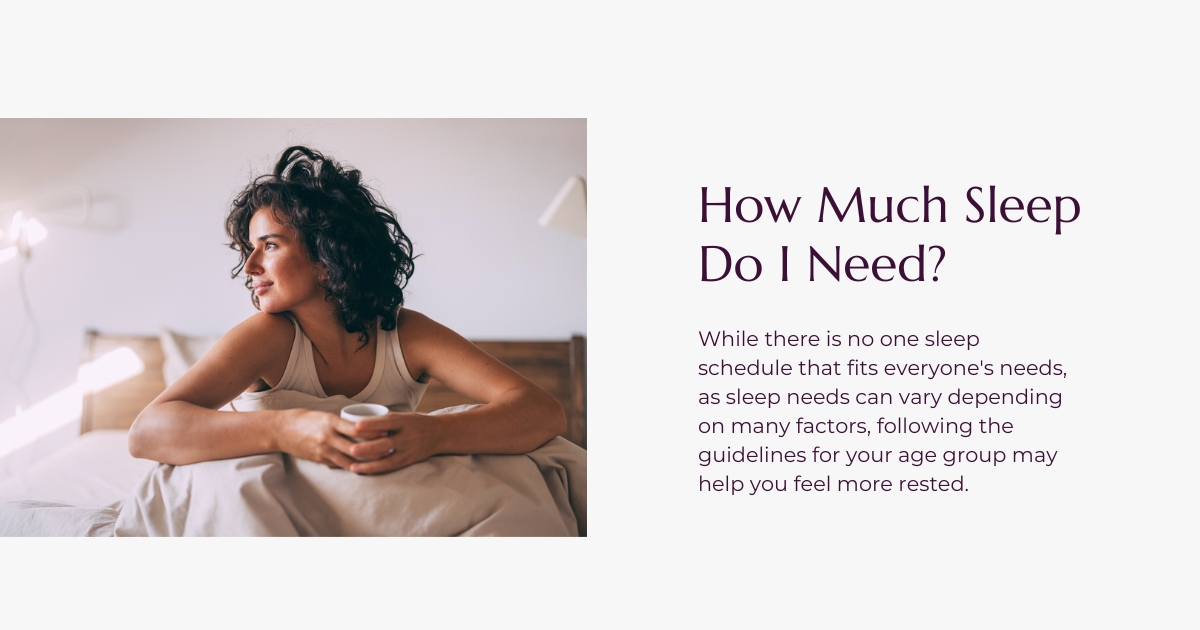
If your constant sleepiness is beginning to affect your physical and mental health, it’s time to begin determining how much sleep you truly need. While there is no one sleep schedule that fits everyone’s needs, as sleep needs can vary depending on many factors, following the guidelines for your age group may help you feel more rested.

Here are the most current sleep recommendations by age:

  • Newborns (0-3 months) – For the first three months of life, newborns need between 14-17 hours of sleep throughout the day, as they do not typically sleep through the night.
  • Infants (4-12 months) – Between four and twelve months of age, an infant requires 12 to 16 hours of sleep. This usually includes daytime naps.
  • Children (1-12 years) – Toddlers and children require between 9-14 hours of sleep during the night and may sometimes need daytime naps.
  • Teens (13-18 years) – As children become teenagers, they don’t need as many hours of sleep, and between 8-10 hours per night is sufficient.
  • Adults (18-64 years) – The recommended number of hours of sleep needed each night for adults is between 7 and 9 hours.
  • Seniors (65+ years) – Sleep is essential to aging gracefully, especially for women. Getting 7-8 hours per night is recommended.

While these amounts are the general recommendations for each age group, every person’s needs will vary. In fact, the number of hours required may evolve and change within these age brackets, depending on current conditions. For example, young children may need more sleep when going through a growth spurt, while older children may need more sleep if they are experiencing hormonal changes. Pregnant women often need more rest, especially when experiencing disruptions in their ability to sleep at night.

Other factors that can impact your need for sleep include your current lifestyle. For example, if you have a particularly busy lifestyle, you may find yourself becoming exhausted during the day even if you do achieve the recommended hours of sleep. Additionally, high stress levels caused by family, work, health, and other factors may leave you feeling tired and in need of more rest.

Signs You’re Not Getting Enough Sleep

Feeling sleepy can be normal as an occasional occurrence after a night of little sleep, but it’s important to watch for signs of sleep deprivation. Even if you seem to be able to function normally on a regular basis while achieving less sleep than recommended, you can still experience negative side effects.

Some of the most common signs that you’re habitually not getting sufficient rest include:

  • Chronic fatigue
  • Irritability
  • Trouble focusing and staying alert
  • Frequent illness due to a weakened immune system
  • Sudden weight gain
  • Increased blood pressure

If you continue to experience insufficient or poor-quality sleep, the above signs can eventually result in long-term issues. The most common issues resulting from the long-term effects of inadequate sleep involve chronic conditions like heart disease and diabetes. Poor sleep can also impact your mental health, resulting in depression. The cognitive impacts of poor sleep mentioned above may leave you with difficulty concentrating on important tasks, which can have dangerous consequences.

Why Should Women Prioritize Healthy Sleep?

According to a study published in Sleep Medicine, women are more likely to experience trouble sleeping and have a higher risk of developing sleep issues such as insomnia. Women are also more likely to struggle with poor-quality sleep, especially when they are experiencing hormonal changes. In addition, a woman going through extreme changes in their hormones due to pregnancy may have even more trouble sleeping due to feeling uncomfortable or frequently waking to urinate. Menopause may also disrupt sleep, as it can cause night sweats or hot flashes.

Unfortunately, for women, poor sleep can be a vicious cycle. Insufficient sleep can disrupt hormone production, as the release of hormones is affected by the circadian rhythm. It may also impact the menstrual cycle by disrupting the hormones used to help regulate sleep, such as melatonin.

How to Improve Your Sleep Quality

Improve Sleep Quality

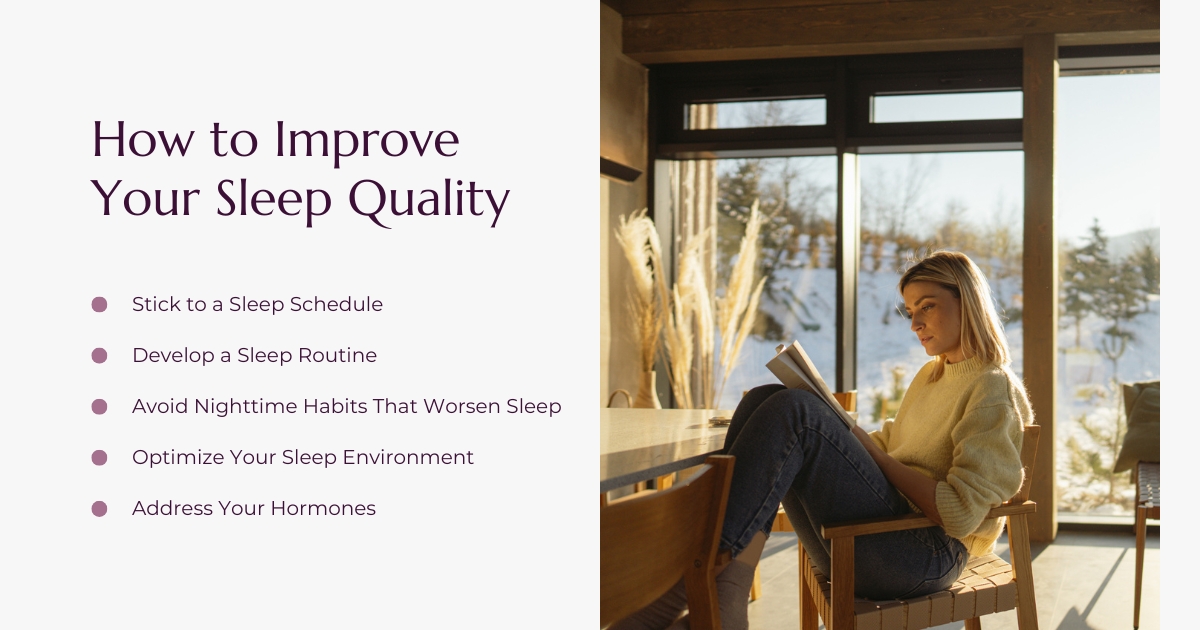
There are many ways to achieve better rest and have better health as a result. Below are some tips on how to improve sleep quality.

Stick to a Sleep Schedule

First, it is important to create an optimal sleep schedule. Keep in mind that when you are trying to implement a new habit, consistency is key, so make sure that your new schedule is one that you can follow every night. Start with your desired wake-up time, determine how many hours are ideal for a person your age, and work backward from there. Then, set your bedtime about half an hour before that to give yourself time to wind down and complete your sleep routine.

Develop a Sleep Routine

Determine what will help you to relax and unwind, preparing yourself mentally and physically for sleep. Many women choose to promote relaxation by practicing certain techniques, such as yoga or meditation, before bed, but simply making an effort to empty their mind of any anxieties can be enough.

Consider adding these relaxing activities earlier in the evening to help you release stress before bed:

  • Journaling before bedtime
  • Drinking a cup of herbal tea
  • Reading a book or watching a relaxing television show
  • Listening to instrumental music

Avoid Nighttime Habits That Worsen Sleep

In addition to partaking in relaxing activities before bed, it’s important to avoid activities or habits that can negatively affect your sleep. Before preparing for bed, make sure to avoid eating heavy meals, as they can keep you awake. Similarly, caffeine and alcohol can disrupt your ability to sleep. Finally, consider disconnecting from social media and ongoing text conversations in the hour leading up to bedtime.

Optimize Your Sleep Environment

Optimizing your sleep environment means that you are creating an environment that promotes sleep. The room should be dark without any distracting lights, which includes ensuring all television screens and smartphones are turned off. Keep the room cool so that you won’t wake up due to feeling too hot or sweating throughout the night. Ensure that you create a peaceful and quiet space, free of any loud or persistent noises; however, for some people, a sleep machine or some kind of white noise, such as a fan, can be soothing.

Address Your Hormones

Remember that hormonal imbalances are a major cause of sleep disturbances. Two primary hormones that have a large impact on your quality of sleep are progesterone and estrogen. These hormone levels can vary widely due to the menstrual cycle, pregnancy, perimenopause, and menopause. If you are looking to regulate your hormone levels, consider seeking treatment from Arizona Gynecology Consultants.

When to Seek Help for Sleep Problems

In many cases, sleep issues can be resolved by implementing a better sleep schedule or trying relaxation techniques before bed, but certain sleep problems require the help of a medical professional.

Common sleep disorders, such as insomnia, sleep apnea, and restless leg syndrome (RLS), typically require medical attention to resolve.

  • Insomnia – This sleep disorder is marked by difficulty achieving sleep. Chronic insomnia can cause trouble performing normal tasks and mental health issues, and the NHS reports that approximately 1 in 3 adults experience this common condition.
  • Sleep Apnea – This disorder occurs when a person frequently stops breathing while sleeping, which typically results from blocked airways or the brain failing to control the breathing process properly. Without treatment, the heart can begin to show potentially deadly signs of stress.
  • Restless Leg Syndrome (RLS) – This disorder is characterized by extreme urges to move the legs while trying to rest, which can make it difficult to fall asleep or stay asleep. Those who suffer from this condition usually feel itching, crawling, or throbbing sensations in the legs, which can be temporarily resolved by moving.

If you know you are experiencing any of the above disorders, it’s crucial to seek medical attention to address them and get a doctor’s help with working toward better sleep.

If you’re unsure whether you need medical assistance, look for the following warning signs that your sleep issues cannot be addressed on your own:

  • Constant fatigue, even if you have slept a sufficient amount of time the night before
  • Difficulty staying awake while performing daily tasks, such as driving or reading
  • Memory issues or trouble concentrating
  • Waking up frequently in an attempt to regain your breath

In addition, hormone issues may be affecting the quality or quantity of your sleep. If you suspect that a hormone imbalance is causing your sleep disturbances, it is important to consult with a doctor to explore hormone regulation for better quality sleep. Schedule a consultation with Arizona Gynecology Consultants to explore solutions.

Achieve Better Quality Sleep with the Help of Arizona Gynecology Consultants

Get Better Quality Sleep with Arizona Gynecology Consultants

Getting good quality sleep is vital for your overall health and is as essential as getting enough food and water. For most people, achieving better sleep is possible when you implement healthy sleep schedules, engage in relaxing habits while eliminating those that can cause poor sleep, and ensure that you create an environment that promotes rest rather than distractions. However, for others, these efforts are not enough to achieve healthy sleep patterns.

It’s important to monitor any concerning symptoms that may indicate a sleep disorder. Avoid ignoring warning signs, as continued poor sleep can result in more serious health issues. If you’re experiencing poor sleep that isn’t remedied by better sleep habits, be sure to notify your physician.

Are you struggling to get good quality sleep each night? Don’t let chronic sleep issues and the resulting fatigue or physical and mental health effects continue to negatively impact your life. Contact Arizona Gynecology Consultants to schedule a consultation and develop personalized solutions to improve your sleep and overall health.

*Editor’s Note: This article was originally published May 9, 2017 and has been updated April 24, 2025.


Resources:

  1. Centers for Disease Control and Prevention. (n.d.). About sleep. U.S. Department of Health & Human Services. https://www.cdc.gov/sleep/about/index.html
  2. Centers for Disease Control and Prevention. (n.d.). Work hours, sleep and fatigue: Training for nurses – Module 2: Impact of long work hours. National Institute for Occupational Safety and Health (NIOSH). https://www.cdc.gov/niosh/work-hour-training-for-nurses/longhours/mod2/05.html
  3. Cleveland Clinic. (n.d.). Restless legs syndrome (RLS). https://my.clevelandclinic.org/health/diseases/9497-restless-legs-syndrome
  4. Cleveland Clinic. (n.d.). Sleep apnea. https://my.clevelandclinic.org/health/diseases/8718-sleep-apnea
  5. Healthline. (n.d.). Hormonal insomnia: Symptoms, causes, and treatment. https://www.healthline.com/health/insomnia/hormonal-insomnia-symptoms#causes
  6. Mayo Clinic Staff. (n.d.). How many hours of sleep are enough?. Mayo Clinic. https://www.mayoclinic.org/healthy-lifestyle/adult-health/expert-answers/how-many-hours-of-sleep-are-enough/faq-20057898
  7. National Heart, Lung, and Blood Institute. (n.d.). Why is sleep important?. U.S. Department of Health & Human Services. https://www.nhlbi.nih.gov/health/sleep/why-sleep-important
  8. National Institute of Neurological Disorders and Stroke. (n.d.). Brain basics: Understanding sleep. National Institutes of Health. https://www.ninds.nih.gov/health-information/public-education/brain-basics/brain-basics-understanding-sleep
  9. National Library of Medicine. (2020). Physiology, sleep stages. In StatPearls. https://www.ncbi.nlm.nih.gov/books/NBK526136/
  10. Parthasarathy, S., Vasquez, M. M., Halonen, M., Bootzin, R., Quan, S. F., Martinez, F. D., & Guerra, S. (2012). Persistent insomnia is associated with mortality risk. Sleep, 35(5), 585–592. https://doi.org/10.1016/j.sleep.2012.01.011
  11. Zhou, E. S., Haack, M., Nguyen, J., & Mullington, J. M. (2022). The impact of sleep on mental and physical health. Journal of Clinical Sleep Medicine, 18(2), 509–520. https://www.ncbi.nlm.nih.gov/pmc/articles/PMC8764829/

The post How Much Sleep Do You Really Need? A Guide to Healthy Rest appeared first on AZGyn.


Source link