
Follow ZDNET: Add us as a preferred source on Google.
ZDNET’s key takeaways
- I found Bose and Sony’s headphones to be exceptional in their own right.
- Bose’s option appeals more to laid-back listeners who prioritize comfort and simplicity.
- Sony’s option appeals to headphone enthusiasts who prioritize customization and utility.
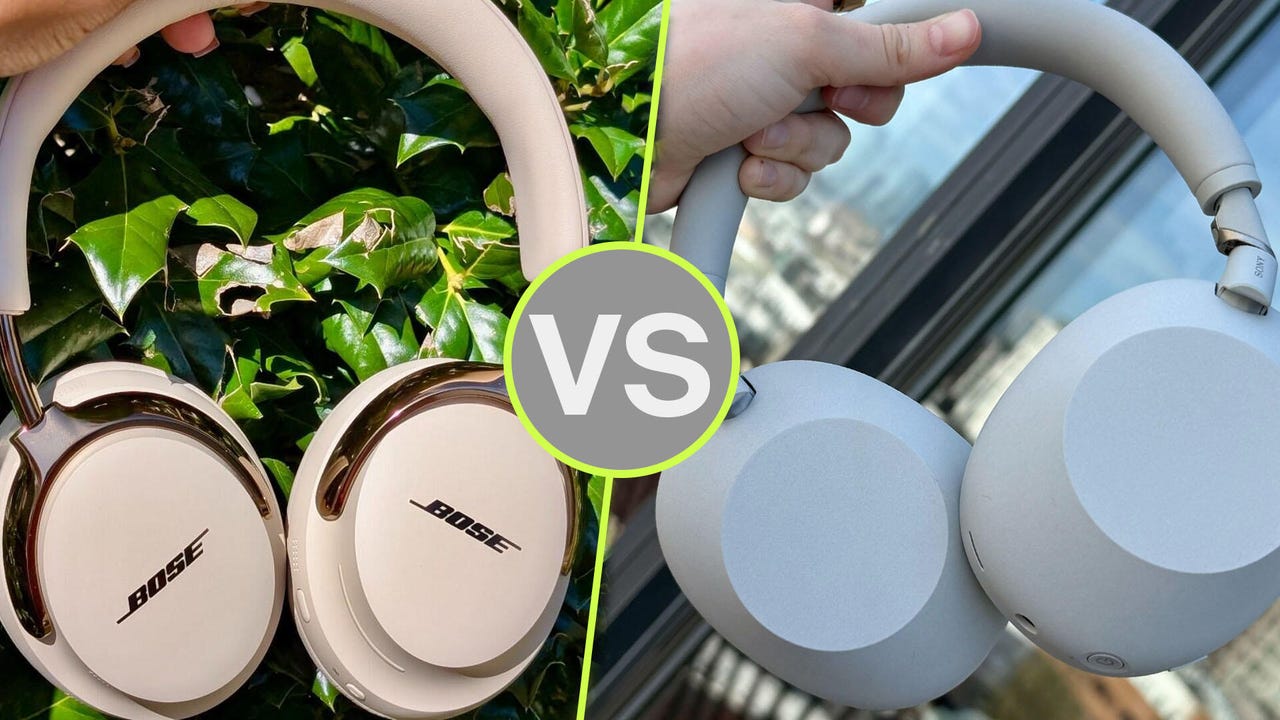
Sony’s and Bose’s latest flagship headphones have some of the best noise-canceling performance we’ve tested at ZDNET. But which one is better if you’re deciding between the two?
Also: Sony just shook up the Bose rivalry with these earbuds, and I wasn’t prepared for it
Having spent months testing both the Sony WH-1000XM6 and the Bose QuietComfort Ultra 2, I can confidently say there are distinct differences between the two models.
For example, if you want headphones with granular audio customization, smart features, and performance that improves the more you tweak them, you’ll appreciate Sony’s WH-1000XM6. If you want headphones that require minimal decision-making and deliver a high-performing experience without toggling many features, the Bose QuietComfort Ultra (2nd Gen) are up your alley.
But there’s more to the headphones you should consider before you fork up the cash. Here’s my in-depth breakdown.
1. Comfort and fit
The QuietComfort Ultra 2 live up to their name with a more comfortable fit than the WH-1000XM6. Their plushy ear pads and roomy earcups just result in a more relaxed overall fit. Although I found the first-generation QuietComfort Ultra headphones more comfortable than the second, both are more comfortable than Sony’s.
Also: This tiny USB-C mic is the iPhone accessory I didn’t know I needed (and it’s beginner friendly)
Conversely, Sony’s WH-1000XM6 have thinner ear pads and a tight clamping force that puts pressure on my jaw, and their tight fit pushes my glasses against the sides of my head. I found that the WH-1000XM6 perform best for users who wear their headphones to complete a specific task, say, grind out a presentation, get through a flight, or complete a workout.
Bose’s relaxed fit is ideal for people who wear their headphones throughout the day, perhaps through the airport and on the plane, or on their daily commute and while they work.
Winner: Bose
2. General sound performance
The WH-1000XM6 stay true to Sony’s commitment to delivering detailed sound with several higher-quality codecs to appease enthusiasts. Sony’s flagship headphones support LDAC and LC3 codecs for improved audio quality over wireless connections. The WH-1000XM6’s sound is defined by more balanced tuning, tighter bass, clearer mids, and shinier highs, compared to Bose.
Also: Should you buy Google Pixel Buds Pro 2 in 2026? I invested in a pair, and don’t regret it
If you value consumer headphones that prioritize sound clarity and a tone geared toward more critical ears, you’ll like what Sony has to offer. On the other hand, Bose’s sound is very mellow, making it easy on the ears for long-term listening for podcasts, movies, or traveling.
Winner: Sony
3. Features and customization
The Sony Sound Connect app is the home of the WH-1000XM6’s features, many of which feature granular customization. You can access an elaborate equalizer, adjust the headphones’ noise-canceling optimizer, and modify noise cancellation levels based on your location and certain behaviors. Additionally, Sony offers Auracast and DSEE Extreme, which restore audio quality to compressed files.
Also: These fashion-forward headphones have no business sounding this good for the price
If you toggle all of these features and customize them to your taste, you’ll get the most out of these headphones. But getting some features right is tedious, and can easily overwhelm you if you’re unfamiliar with them. If you consider yourself a headphone power user and enthusiast, Sony will give you the opportunities you want to make your headphones truly yours.
However, if making that many decisions to elevate your headphones to their highest potential sounds exhausting, stick with Bose. If you want to throw your headphones on, forget about the companion app and still be highly pleased with their performance, go with the QuietComfort Ultra 2.
Winner: Sony
4. Noise cancellation
I hate to be ambivalent, but the bottom line is that both headphones have exceptional noise cancellation, and if that’s your highest priority, you’ll be happy with either option. However, both Sony and Bose use noise cancellation in different ways, which could satisfy different users.
Also: I listened to earbuds with Bose’s AI noise cancelling, and can’t go back to regular ANC
Sony’s noise cancellation is strong, dynamic, and intelligent. The adaptive noise-canceling algorithm responds to sudden noises swiftly and cancels low frequencies exceptionally well, which is useful in environments like coffee shops, airplanes, or train stations. Dynamic environments require dynamic noise cancellation, though I found it aggressive and fatiguing after an hour.
Bose’s noise cancellation is smooth and consistent, and it’s better than Sony’s at dampening voices, which is useful in the same environments for different reasons. Bose’s adaptive noise-canceling algorithm is also intelligent, but it responds more gently than Sony’s.
Winner: Tie
ZDNET’s buying advice
If you value future-forward headphones with a long list of features that deliver top-end performance before reaching the $600+ price range, go with the Sony WH-1000XM6. If you want a pair of headphones with a more relaxed, albeit limited, vibe across every category, offering an experience that gives you the most without requiring many adjustments, buy the Bose QuietComfort Ultra (2nd Gen).