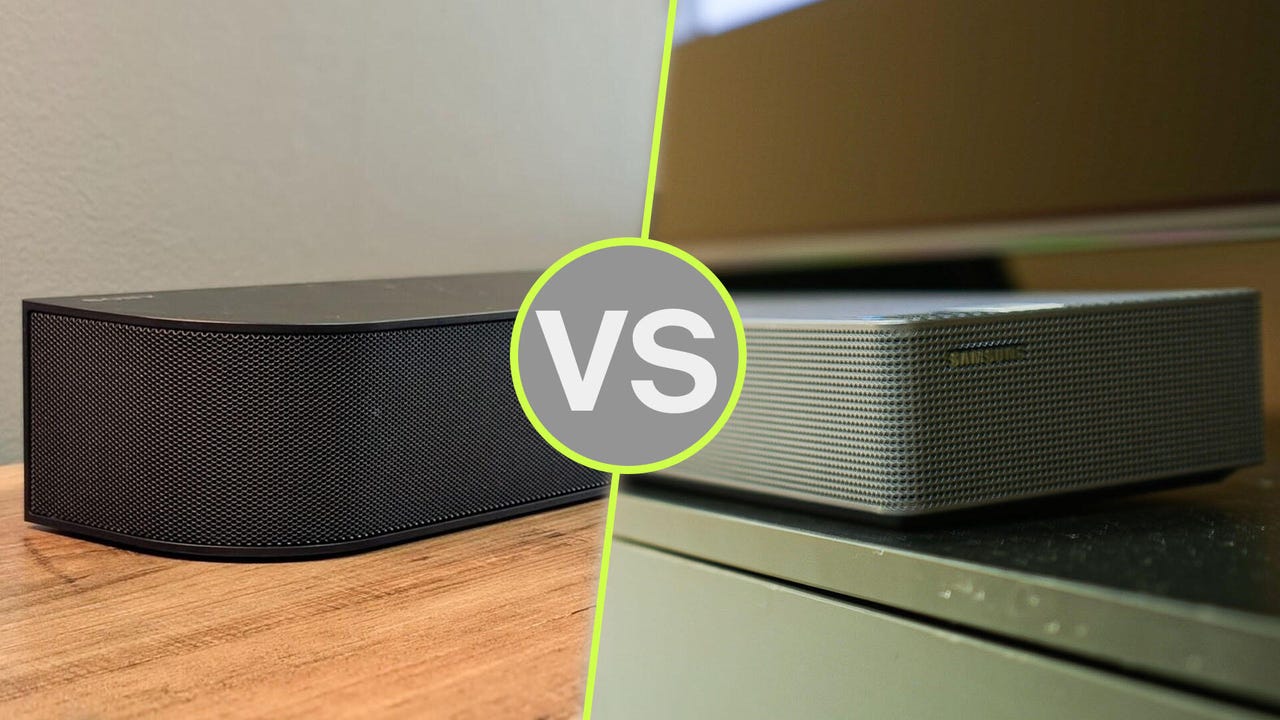
Sony vs. Samsung: My buying advice after testing both home theater systems


Sony vs Samsung soundbars

Kerry Wan and Jada Jones/ZDNET

Follow ZDNET: Add us as a preferred source on Google.


When building a home theater, you’ll likely consider Samsung or Sony. Both companies offer immersive home theater solutions to upgrade your watching experience. Before choosing a company’s home theater products, consider which company’s TVs you prefer. A TV from either of these companies serves as an anchor device, and your home theater will revolve around it.

Each company’s home theater products integrate with their TVs, and some features will be locked behind ecosystem walls if you mix and match manufacturers. 

Also: Forget the soundbar: How I upgraded my TV audio with spare Bluetooth speakers

Generally, Sony offers modular options to build over time, with a focus on a cinematic experience and tight integration with PlayStation. On the other hand, Samsung is ideal for people who have a one-and-done approach to home theater, preferring to buy one complete system and stick with it for years. Samsung is also best for people with several Samsung smart appliances in their house, as your TV can act as a hub to monitor and control SmartThings-connected devices. 

Which home theater solution best fits your needs? Let’s compare.

You should build a Sony home theater if…

Sony System 6 soundbar

Jada Jones/ZDNET

1. You game on PlayStation 5

Sony is the home of PlayStation, and its home theater products are optimized for its latest-gen gaming console. Compatible Sony TVs and soundbars work together to automatically reduce picture and audio latency and improve picture quality when gaming on the PlayStation 5. 

Compatible Sony TVs also support variable refresh rate, adjusting the refresh rate while gaming on the PlayStation 5 to reduce latency. Sony’s upper-midrange and premium soundbars promise Sony 360 Spatial Sound Mapping to create phantom speakers throughout your room, creating the illusion of a surround sound system.

Both Sony’s and Samsung’s premium soundbars promise 4K/120Hz pass-through via HDMI 2.1, but Sony’s top TV and home theater products are specifically optimized for PlayStation.

2. You want to build over time

Sony’s Bravia home theater lineup includes several modular options, allowing you to build a system over time based on your space and budget. Sony offers six soundbars compatible with its modular product line, priced from $600 to $1,500. Four pairs of rear speakers are compatible with those six soundbars, along with five subwoofers that are compatible with the same six soundbars, in addition to the Bravia Theater Quad.

Also: I traded my Sonos Era 300 for Denon’s new home speaker – and see no reason to go back

On the other hand, Samsung’s home theater systems are typically sold in a single box, meaning its flagship soundbar, rear speakers, and subwoofer come together in one purchase. Though Samsung’s method may be more cost-effective than Sony’s, you don’t have nearly as much control over tailoring home theater systems specifically to your liking.

3. You want to bring the cinema home

Sony’s home theater products focus on delivering a cinematic feel in your living room. Purchasing individual products reinforces this idea, allowing for sonic accuracy and precision. Additionally, Sony’s home theater products are typically compatible with Dolby Atmos and DST:X, which is the spatial audio format used in IMAX Enhanced content for at-home viewing.

While Dolby Atmos is more accessible within hardware and is more frequently used on streaming services, DTS:X is encoded at a higher bitrate and is commonly found on Blu-ray discs. Some of Samsung’s older and upper-midrange soundbars have DTS:X, but its newer, premium soundbars have dropped the spatial audio format in favor of Samsung and Google’s proprietary Eclipsa Audio. 

You should build a Samsung home theater if…

Samsung HW-Q990F soundbar

Kerry Wan/ZDNET

1. You want a connected smart home

A compatible Samsung TV can behave as a SmartThings hub, allowing you to view and manage the devices on your SmartThings network. If you have Samsung smart appliances or Matter home automation products, your Samsung TV can keep you up to speed on your home’s smart statuses.

Also: 60Hz vs. 120Hz vs. 165Hz: I’ve tested dozens of TVs, and here’s what’s best for your home

Samsung’s home automation platform, SmartThings, serves as the hub for all your connected devices. Here, you can access compatible doorbell cameras, view the status of your compatible Samsung washing machine, track your pet’s Galaxy Tag, or look into your compatible refrigerator. 

If you want your living room to be connected to the rest of your home’s compatible devices, rather than be an isolated area strictly for watching, then consider Samsung.

2. You’re a one-and-done person

Samsung’s premium and upper-midrange soundbars are sold in bundles: premium models include the soundbar, two rear speakers, and a subwoofer, while upper-midrange models include the soundbar and a subwoofer.

If you’re not interested in curating a system over time, you’ll appreciate that Samsung offers great home theater-in-a-box options. You can purchase a system once, have everything you need, and stick with it for several years.

Also: Why the ‘Subwoofer Crawl’ is the only way I found the bass sweet spot in my living room

If you have a Samsung TV, Samsung’s soundbars will work better with it, especially with Q-Symphony. Q-Symphony is a feature that enables your compatible Samsung TV to simultaneously deliver audio through its TV speakers and your soundbar. Otherwise, as long as your TV has HDMI eARC, you can access all the other features Samsung’s soundbars offer.   

Writer’s choice

Though both Sony and Samsung deliver great home theater products, each company serves different consumer profiles. I don’t have an expansive smart home network, so I prefer Sony’s products over Samsung’s. Sony often leverages its involvement in the audio recording, motion picture, and gaming industries to incorporate more advanced technologies into its home theater products. As a result, Sony’s products tend to sound more balanced than Samsung’s.



Source link

Leave a Reply

Subscribe to Our Newsletter

Get our latest articles delivered straight to your inbox. No spam, we promise.

Recent Reviews


Gemini on Android Auto

Kerry Wan/ZDNET

Follow ZDNET: Add us as a preferred source on Google.


ZDNET’s key takeaways

  • Gemini is now widely available in Android Auto.
  • It can integrate with Google services and other apps.
  • The AI answered both simple and complex, multi-step questions. 

Despite Google’s insistence on packing artificial intelligence into nearly every conceivable product, I haven’t really found too much day-to-day use for it. That might change now. 

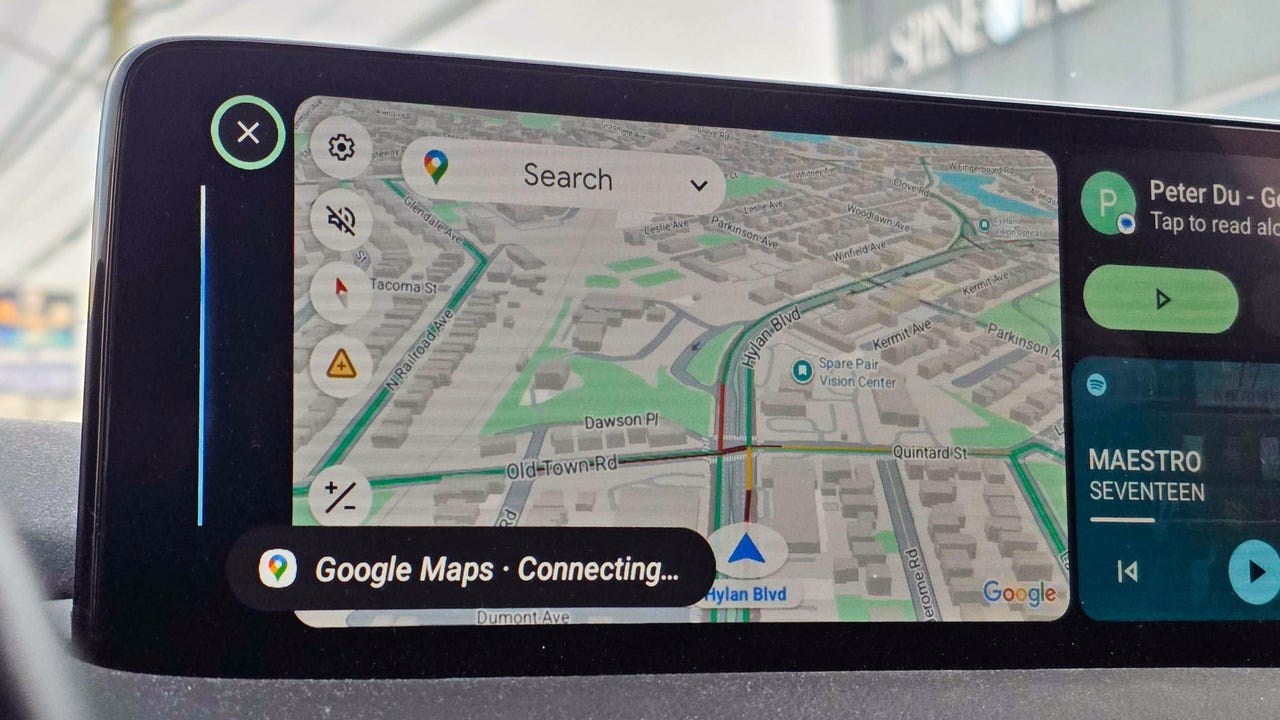
Over the weekend, I noticed my Android Auto had updated to include Gemini. I decided to give it a quick test, and it deftly answered my questions. When I started to dive deeper, though, I was surprised by just how much it could do and how easily it handled what I thought were more complex asks.

Also: Your Android Auto just got 5 useful upgrades for free – and Google isn’t done

Here are some of the best ways I’m using the new Gemini integration. To get started for yourself, you can either use the mic button on your steering wheel or say “Hey Google.” 

1. Finding hours or other information about local businesses

When using my phone in the car, most of the time I’m checking hours for a local business or researching nearby restaurants or stores. I found that Gemini is perfect for quick, simple questions like, “What time does Tony’s Ice Cream close?” But it’s also great for diving a little deeper.

I’m the type of person who likes to do a lot of investigating when I’m trying to find a new restaurant. I like to know what makes each one special and what people recommend — before I decide. Gemini does very well in situations like this. 

Also: Google just gave Android Auto its most significant update yet – and we tested it on the road

I asked for the best local spots to find ice cream. Instead of just showing a list, Gemini began detailing each spot, noting that the number one recommendation was “a legendary local spot with more than 100 years of history scooping up happiness.” It went down the list, offering up recommendations about each option, and then it even asked which one I wanted to navigate to.  

2. Tracking down info deep in your email

My wife and I had tickets to a show this weekend, and while I knew where I was going, I decided to see if Gemini would help. Without mentioning the theater or the show’s name, I just asked, “What’s the address for the show tonight?” Gemini thought for a few seconds and then replied that my confirmation email didn’t mention an address before asking, “Do you want me to find that information online?” When I said I did, it quickly found the address and offered to start navigation.  

I asked Gemini several other email-specific questions like “What’s coming in the mail today?” (thanks to USPS Informed Delivery) and even some vague ones like “When is that thing I ordered from the TikTok shop arriving?” or “I remember a coupon for a haircut in my email, when does that expire?” It handled each one perfectly.

Also: How to clear your Android phone cache – and why it greatly improves performance

Instead of opening my Gmail app, scrolling to find what I need or searching, and then opening the message, I can now get this info quickly with Gemini’s help.

3. Getting answers on the go, and keeping the conversation going

I’m the type of person who immediately looks up the answers to random questions that pop in my head — things like, “Where is the Australian Shepherd dog breed from,” “How do I make polymer clay earrings?” (my wife had seen some at a vendor fair), or “How do I make an electromagnet for an elementary school science project?”

Instead of Googling these queries, I asked Gemini. I wasn’t surprised to get a response, but I was surprised by how Gemini offered to keep things going. Every time Gemini offered an answer, it would ask if I wanted to talk more. I found myself having a conversation about my dog and why he doesn’t shed nearly as much as my other one, about the best way to present my son’s electromagnet, and even about different ways to make clay earrings and which option was best. 

4. Saving reminders and notes

I live by my Google Calendar, and if I don’t have something saved there, there’s a good chance I’ll forget it. The same goes for my reminder list in Google Keep. Quite often, while I’m driving, I’ll have a thought I want to remember later. Gemini, through Android Auto, was able to add things to my Keep lists and add things to my Calendar. It also gave me a rundown of what’s on my calendar and even asked if I wanted help getting ready for a meeting tomorrow (which was actually my wife’s event on our shared calendar). 

Also: The best AI chatbots: Expert tested and reviewed

5. Picking the perfect playlist

When it comes to the radio in my car, I’m constantly bouncing between podcasts, the song that got stuck in my head because it was viral on TikTok, whatever my kids request, or a huge variety of other songs. That means I’m often bouncing between Spotify, YouTube, and my XM radio. 

I often want to hear a specific song or album, and I was able to get Gemini to pull up specific songs using Spotify and YouTube and to stick to songs from that album. When I was in a more general mood, I got Gemini to tune to a specific XM station for me. 

I haven’t stumped AI yet

Overall, I’m finding that Gemini can handle at least 90% of tasks I’d otherwise pick up my phone for, from basic questions to more in-depth, multi-level questions. It was able to integrate with Google services like Gmail and apps, but also several other apps. 

Also: Google’s Gemma 4 model goes fully open-source and unlocks powerful local AI – even on phones

The basic questions are more common, but the ones that require research are where Gemini shines. I kept trying to think up new things to ask, and I had trouble finding something that would genuinely stump the AI. If, like me, you haven’t really embraced Gemini yet, Android Auto might just be your ticket in. 


Source link

