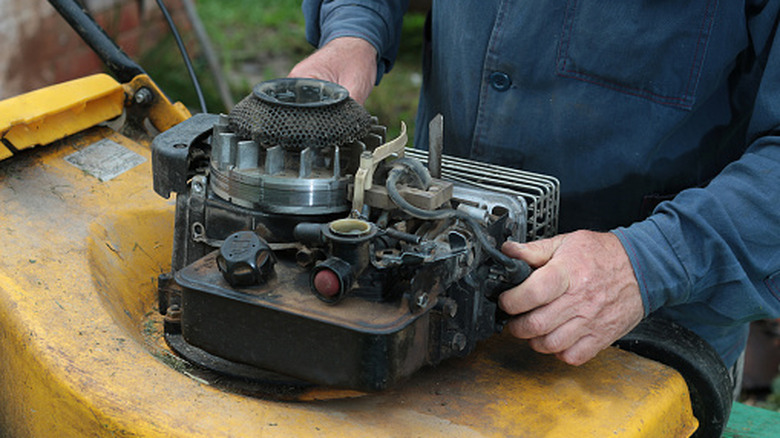
What’s The Average Lifespan Of A Lawn Mower Engine?


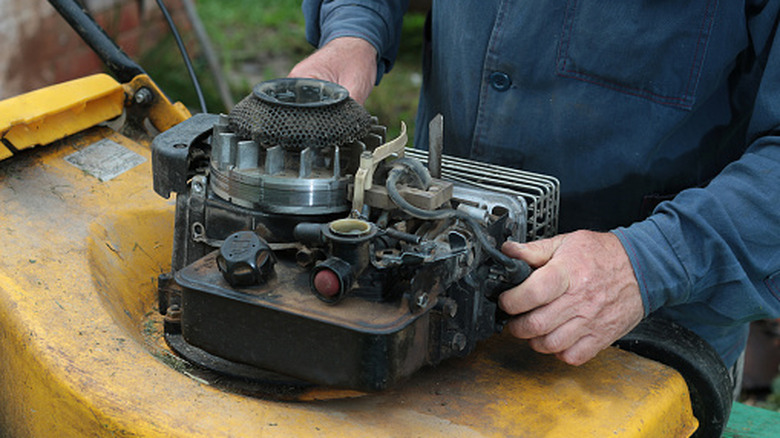
The arrival of spring means that many homeowners are heading back outside to take care of their yard. But unless your lawn mower is brand new, you might be wondering how much life it has left before you’ll need to replace the engine or the entire mower. The answer to the question can vary, based on the type of mower you’re using, and there is no single standardized lifespan across all manufacturers.

Some sources expect a gas-powered residential push mower engine to last anywhere from 450 to 1,500 hours, depending on the brand; this can equate to 10 years or more. Gas-powered riding lawn mowers can last anywhere from 5 to 9 years, or 500 to 1,500 hours — again, depending on the model. Electric lawn mowers can last anywhere from 5 to 7 years, but the Lithium-ion batteries they use can last longer, potentially 7 to 10 years.

Commercial gas-powered lawn mower engines are different because those mowers are built to be more durable than their residential counterparts. That’s because they typically cover larger areas and have to handle more challenging conditions. So in terms of hours, these mowers can last from 1,200 up to 2,500 hours, or more, depending on the brand. That can work out to anywhere from 8 to 12 years.

How to get the most life out of your lawn mower engine

There are ways to ensure your mower engine lasts as long as possible, and it begins with regular maintenance. This includes keeping the blades sharp, so the engine isn’t forced to work harder than necessary. Keeping the deck clean also plays a part, because grass build-up can restrict airflow and put more strain on your engine. For gas-powered mowers, routine oil changes are important, as is regular maintenance of the engine and fuel system.

Electric lawn mowers require proper care as well, though they are a bit different from gas mowers. Cords, connections, and especially the battery system, are all important components and must be regularly maintained to ensure maximum life. This means cleaning the battery, charging it as needed, and keeping it in a cool, dry place when not in use.

Proper storage is equally important, and that means keeping it in a dry location that protects the mower from rain, snow, humidity, or direct sunlight. A garage, shed, or other well-ventilated and enclosed space can be ideal. If you don’t have such a space and can only keep your mower outside, you should protect it with a waterproof tarp, although that should only be a temporary solution until you’re able to store it in a better location.


Source link

Leave a Reply

Subscribe to Our Newsletter

Get our latest articles delivered straight to your inbox. No spam, we promise.

Recent Reviews


Google Pixel 10a

Kerry Wan/ZDNET

Follow ZDNET: Add us as a preferred source on Google.


ZDNET’s key takeaways

  • A suit alleges Google transmitted user data without permission.
  • If you have used an Android device since 2017, you may be eligible.
  • You will need a notice ID and confirmation code to file.

Have you used an Android phone to access the internet in the past eight years? You might be in line for payment from a class action lawsuit against Google, but there are some important things you need to know.

Taylor et al. v. Google LLC alleges that Android phones sent information to Google without users’ permission, even when the phones weren’t in use, and all apps were closed, using users’ cell data they paid for. Google could have made these data transfers happen when the device was connected to Wi-Fi, the suit says, but it chose to make them happen at any time.

Also: The best data removal services of 2026: Delete yourself from the internet

Google hasn’t acknowledged any wrongdoing, but agreed to a settlement to avoid the prospect of court proceedings. This is unrelated to the recent $700 million Google Play class action lawsuit. 

How to file a claim

Anyone who used a cellular connection on an Android phone from Nov. 12, 2017, to the date the settlement receives final approval is eligible to participate in this suit. If you’re in this group, you should receive a notice with a code either in the mail or via email — if you haven’t already.

To file a claim, start by going to www.federalcellularclassaction.com. You will need your notice ID and confirmation code. If you believe you are eligible but don’t receive communication, you can email info@federalcellularclassaction.com. I’ve reached out to the settlement administrator to see if there’s a deadline by which you should receive your communication.

Also: Amazon is refunding nearly $1 billion to customers – are you eligible?

It’s not finalized how much each person will get in this suit. There is a $135 million settlement fund for approximately 100 million settlement class members, but since this sort of suit often sees only single-digit percentage participation, your payout can be up to $100. Each class member will receive the same amount after administration costs, taxes, and attorney fees. Eligible settlement class members will receive payment after the court grants final approval. The final approval hearing is June 23, 2026, so you won’t get anything before then.

One important thing to note is that if you’re eligible for this suit but don’t select a payment method, the administrator will still attempt to pay you. But if the administrator does not have your correct information, you may not receive your money.


Source link