What’s The Average Lifespan Of A Lawn Mower Engine?


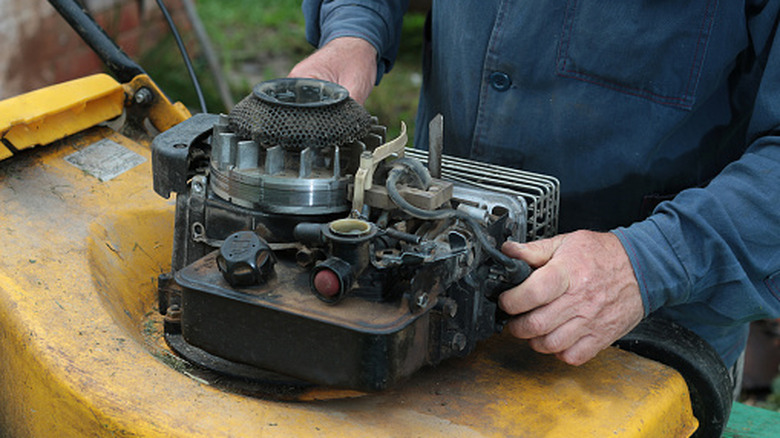
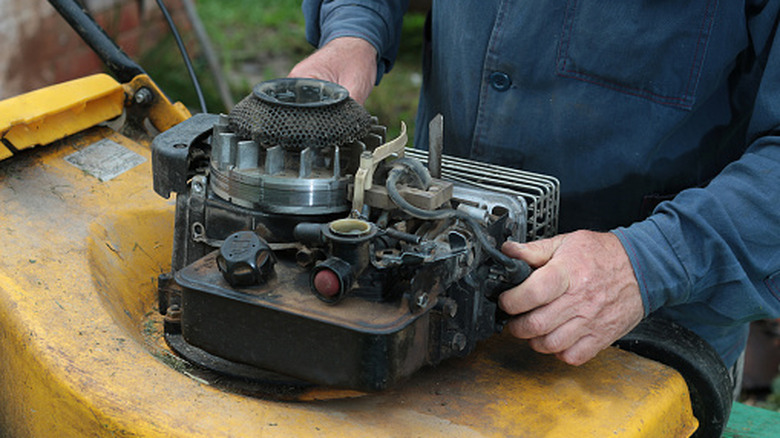
The arrival of spring means that many homeowners are heading back outside to take care of their yard. But unless your lawn mower is brand new, you might be wondering how much life it has left before you’ll need to replace the engine or the entire mower. The answer to the question can vary, based on the type of mower you’re using, and there is no single standardized lifespan across all manufacturers.

Some sources expect a gas-powered residential push mower engine to last anywhere from 450 to 1,500 hours, depending on the brand; this can equate to 10 years or more. Gas-powered riding lawn mowers can last anywhere from 5 to 9 years, or 500 to 1,500 hours — again, depending on the model. Electric lawn mowers can last anywhere from 5 to 7 years, but the Lithium-ion batteries they use can last longer, potentially 7 to 10 years.

Commercial gas-powered lawn mower engines are different because those mowers are built to be more durable than their residential counterparts. That’s because they typically cover larger areas and have to handle more challenging conditions. So in terms of hours, these mowers can last from 1,200 up to 2,500 hours, or more, depending on the brand. That can work out to anywhere from 8 to 12 years.

How to get the most life out of your lawn mower engine

There are ways to ensure your mower engine lasts as long as possible, and it begins with regular maintenance. This includes keeping the blades sharp, so the engine isn’t forced to work harder than necessary. Keeping the deck clean also plays a part, because grass build-up can restrict airflow and put more strain on your engine. For gas-powered mowers, routine oil changes are important, as is regular maintenance of the engine and fuel system.

Electric lawn mowers require proper care as well, though they are a bit different from gas mowers. Cords, connections, and especially the battery system, are all important components and must be regularly maintained to ensure maximum life. This means cleaning the battery, charging it as needed, and keeping it in a cool, dry place when not in use.

Proper storage is equally important, and that means keeping it in a dry location that protects the mower from rain, snow, humidity, or direct sunlight. A garage, shed, or other well-ventilated and enclosed space can be ideal. If you don’t have such a space and can only keep your mower outside, you should protect it with a waterproof tarp, although that should only be a temporary solution until you’re able to store it in a better location.


Source link

Leave a Reply

Subscribe to Our Newsletter

Get our latest articles delivered straight to your inbox. No spam, we promise.

Recent Reviews


Virtually every new SUV will depreciate in value over its life as the miles rack up and components start to wear out. However, some of them depreciate much faster than others. At one end of the spectrum, there are some models from the likes of Cadillac, Tesla, and Infiniti, all of which can lose close to two-thirds of their value after just half a decade on the road. That makes them some of the worst-depreciating SUVs on the market. At the other end, there are SUVs like the Toyota Land Cruiser.

The exact resale value of any used car will depend on factors like its trim, condition, and mileage, but on average, Land Cruiser owners can expect a higher trade-in value than most rivals will fetch. According to data from CarEdge, a new Land Cruiser can be expected to lose around 35% of its original value after five years on the road, assuming it covers around 13,500 miles annually.

Estimates from iSeeCars make for equally encouraging reading for Land Cruiser owners, with the outlet estimating that after five years, a new example will lose just 34.4% of its sticker price. Even after seven years on the road, iSeeCars estimates that the average Land Cruiser will still be worth a little over half of what buyers originally paid for it.

The Land Cruiser holds its value well

The estimate from iSeeCars puts the Land Cruiser slightly ahead of average for value retention in the large hybrid SUV segment, and significantly ahead of the overall market average for new SUVs. According to the same data, the average new SUV can expect to lose 44.9% of its value over the same period, over 10% more than the Land Cruiser. That said, a different Toyota SUV is forecast to retain even more of its value.

Since the 2025 model year, both the Land Cruiser and the 4Runner have shared their platform and hybrid powertrains. However, according to current estimates, the 4Runner is the clear winner when it comes to resale value. Data from iSeeCars forecasts that a new, non-hybrid 4Runner is likely to lose only 25.4% of its value after its first five years, and CarEdge predicts almost exactly the same figure. According to the former outlet, a hybrid 4Runner will lose slightly more of its value over the same timeframe, shedding 28.6% on average.

While the 4Runner is the better choice purely for value retention, that only forms part of the equation for most buyers. The Land Cruiser remains appealing thanks to its mix of off-road capability and on-road refinement, with even the base 2026 trim offering plenty of standard features, despite missing out on the luxuries that higher trims include.


Source link