What Does D/S Mean On An Automatic Gear Shift?


Depending on the make of the car you are in, “D” and “S” are typically marked separately, but they bring one of two things to mind. “D” stands for Drive, while “S” stands for Sport. That said, there are a few cars where D and S are actually marked together on the gear selector, or sometimes as a dedicated button near the center console. It’s one of those things that doesn’t really explain itself, especially considering what S means on a gear shift can vary depending on what you drive. As you may have guessed, the letters do break down to Drive and Sport, but the way they actually behave behind the scenes varies quite a bit from brand to brand.

Again, most cars have the two modes marked separately. But you’ll spot them paired up on Honda and Acura models, plus cars from the VW Group (including Volkswagen, Audi, and a handful of other stablemates). It works a little differently across both brands, too.

What D/S does on Hondas and Acuras

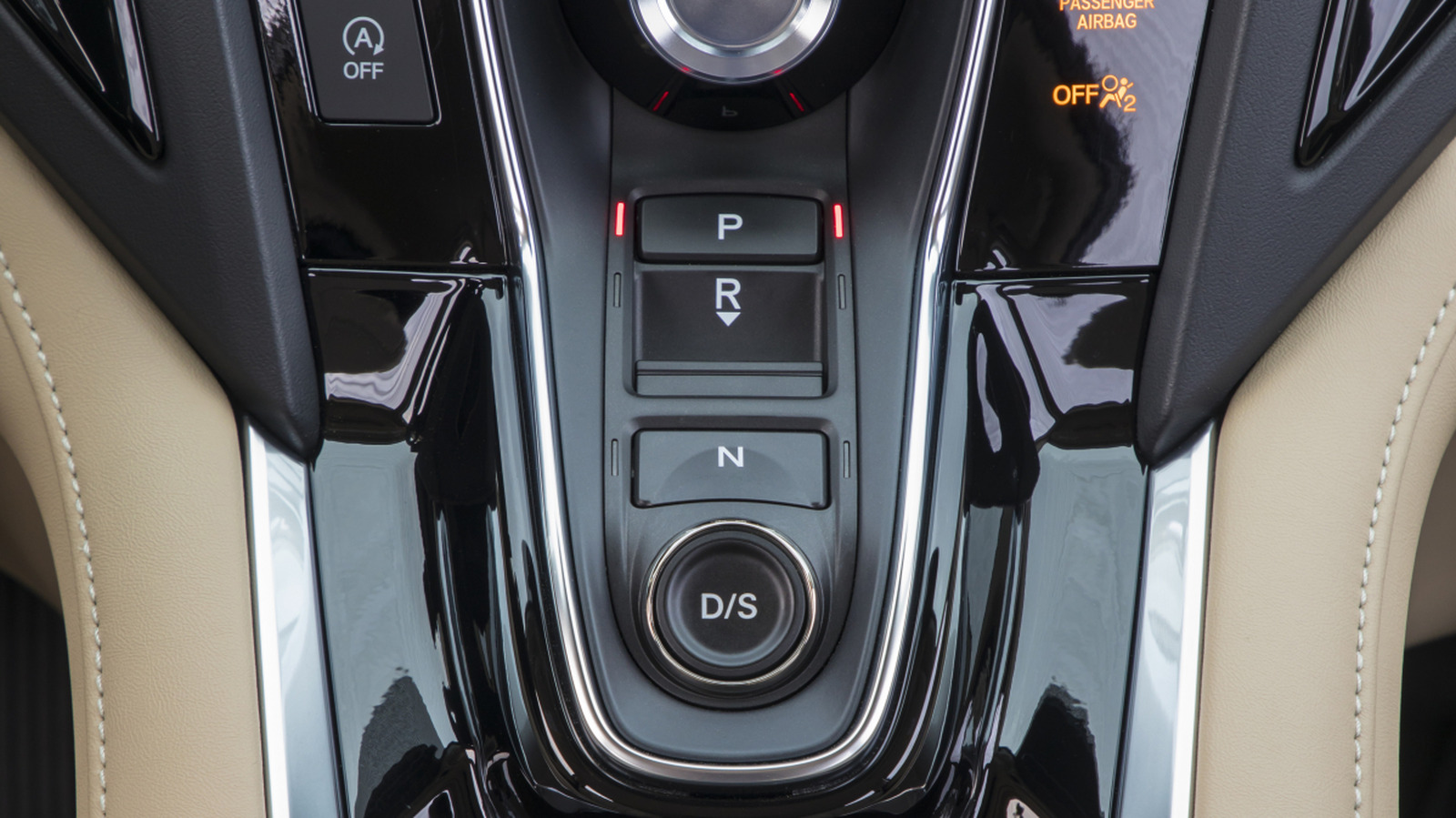
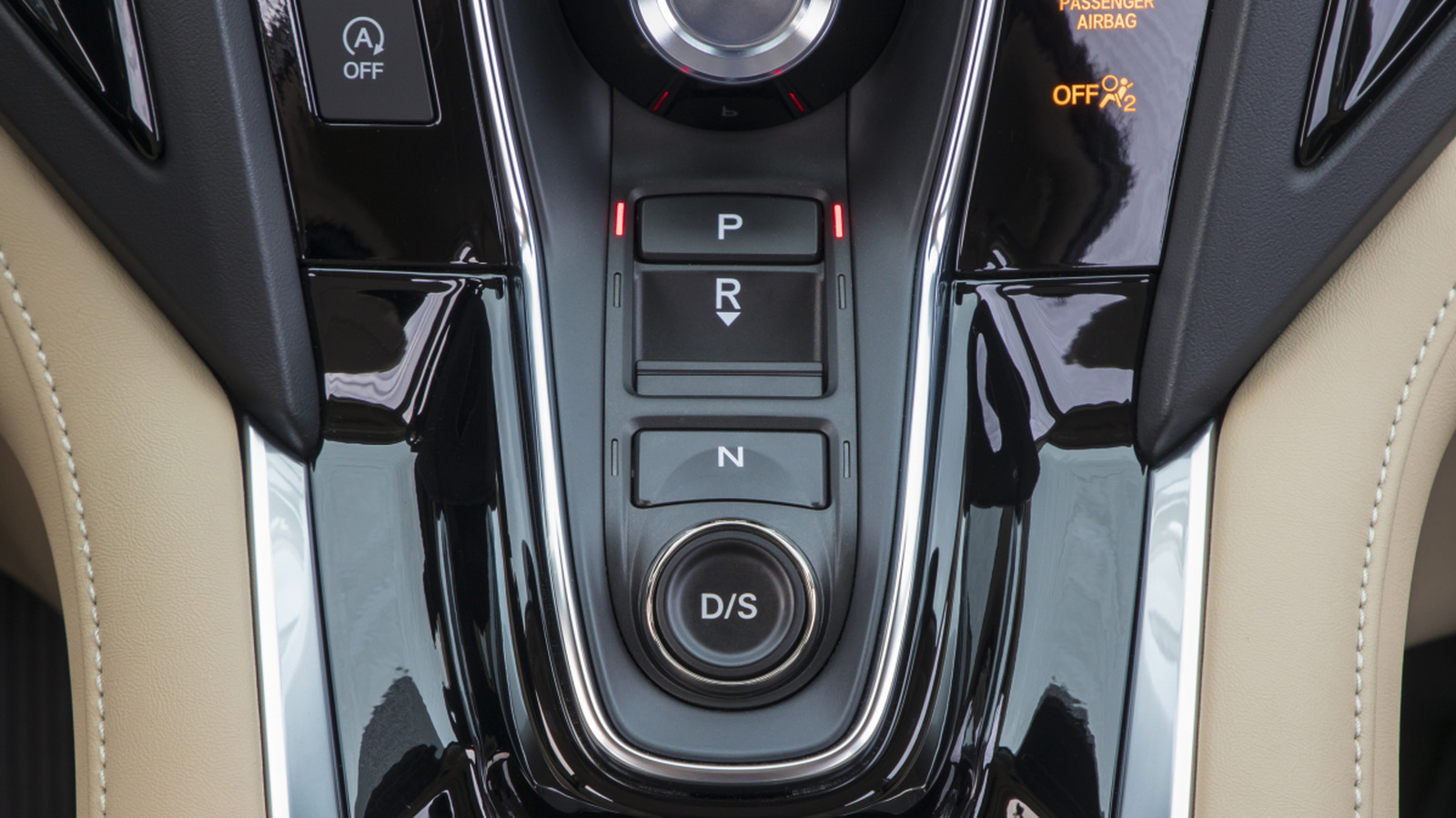
Let’s start with the Hondas first. On Honda and Acura models with 10-speed automatic gearboxes, the S typically points towards a sequential mode that hands you a more involved experience for improved paddle shifting, which some cars feature. Take the 2019 Acura RDX, for example. This luxury SUV runs a 10-speed automatic transmission and lets you shift between modes manually using push buttons. One of these buttons is labeled D/S, and it works like a toggle. Push it once, and you’re cruising in regular Drive. In that mode, you get early upshifts and low engine speeds, which is great for relaxed runs on the motorway. Hit it a second time, and S kicks in, which is officially known as Sequential SportShift.

Sequential SportShift is a special mode built around paddle-shift driving, though it works just fine even if you don’t touch the paddles. The whole point is to give the car a sportier feel, with the transmission holding onto lower gears for longer. Leave the paddles alone and the car still shifts itself, just more aggressively, to favor performance. Pull a paddle, though, and you drop into the automatic car’s manual mode – that’s when you’ll spot an “M” lighting up next to the gear number. Only then do automatic upshifts stop completely, although the car will still drop down a gear if you come to a stop, just so the engine doesn’t stall.

How VW cars handle D/S shifting

On the VW side of things, the setup is a little different. D/S still works like a toggle, except the S behaves much like the Sport mode you’d find on other cars. It also takes a different form physically. Rather than sitting as a separate button like on the Honda, it lives on the selector lever itself. On the 2020 Audi A6, for instance, the gear sequence goes P, R, N, D/S. To swap between D and S, all you have to do is give the lever a quick tug rearward. The mode switches and then clicks back into place. The same goes for other cars like the VW Golf. As for the drive itself, S keeps revs higher, sharpens throttle response, and delays upshifts.

No matter the model, all you have to keep in mind is that D is the arguably boring default, while S helps keep the car a bit keener. And regardless of whether S stands for sequential or sport, D/S works similarly across Honda and Volkswagen Group cars. The only real split shows up when you reach for a paddle, if it’s available. From that point on, Honda hands you manual control, while VW keeps doing its own thing automatically.


Source link

Leave a Reply

Subscribe to Our Newsletter

Get our latest articles delivered straight to your inbox. No spam, we promise.

Recent Reviews


Growing a small business is exhilarating, but the reality of managing its finances can be exhausting. From juggling invoices and tracking expenses to facing year-end taxes, the financial burden often pulls entrepreneurs away from the work they love—and the work that drives growth.

We partnered with BetaKit to showcase the unvarnished stories of two Canadian CEOs who turned their financial operations from a source of stress into a strategic advantage: Emrah Eren of Duco Media and Sean Hoff of Moniker. They share how moving to cloud accounting not only solved their immediate problems but empowered them with the confidence and data to scale their companies.

Hear Their Stories

Emrah Eren, CEO of Duco Media: Conquering the Fear of Year-End

See how Ottawa-based digital marketing agency Duco Media transformed its financial clarity and achieved impressive growth with Xero.

Sean Hoff, CEO of Moniker: Gaining Real-Time Visibility in a Global Business

Discover how Toronto-based corporate retreat company Moniker found the solution to managing complex multi-currency transactions and business growth.

The Chaos of Growth: When Excel Sheets Fail the Entrepreneur

For many small business owners, financial management is a source of anxiety, not confidence. Both Emrah Eren and Sean Hoff faced a common experience: their makeshift financial systems simply couldn’t keep pace with their growing businesses.

For Duco Media, the breaking point wasn’t daily bookkeeping, but a high-stakes funding application during the pandemic. Emrah recalls the painful process of trying to compile the necessary financial statements, which took “hours and hours and hours to produce…”. The sheer difficulty forced him to ask his accountant for a better way.

Moniker’s challenges were amplified by its international scope and rapid expansion—going from 6 or 7 projects to over 20 in a single year. The complex logistics led to a catastrophic lack of visibility. Sean described the feeling of being an entrepreneur without a clear financial view: “You feel like an air traffic controller trying to stay on top of all of these flights that are coming in and out, but half your screens are dark.”

Strategic Relief: Finding the Right Tool for the Job

The key for both CEOs was finding a tool that addressed their specific anxieties and operational complexities.

For Sean Hoff, running a corporate retreat company meant constantly dealing with multi-currency transactions. This complexity demanded a specialized solution, leading Moniker to choose Xero for its core flexibility. Sean highlighted this as a core business enabler: “It was one of the few accounting platforms that allowed multi-currency. We might be getting paid in Euro but taking a group to Mexico, so we’re paying out in Pesos.”.

For Emrah Eren, the impact was deeply personal and immediately psychological. Beyond just the mechanics of bookkeeping, Xero removed the constant worry. He noted a profound relief that many business owners can relate to: “Xero has removed not only the burden of financial management, but I’d also say the fear of a year-end.”

The Outcome: Confidence and Measurable Momentum

Shifting from reacting to financial problems to proactively planning allowed both businesses to accelerate their growth with confidence.

Sean Hoff emphasizes that visibility transforms decision-making, particularly around cash flow. Reliable data now allows Moniker to forecast accurately and set realistic expectations. 

Duco Media saw measurable momentum: their efficiency skyrocketed, with complex, year-over-year financial reports now taking “within a few seconds.” Emrah links this new operational speed directly to their success, resulting in 120% growth in revenue in the first year and a 40% increase in timely payment collection.

For these CEOs, the right financial software wasn’t just about accounting—it was about reclaiming control, easing anxiety, and setting the stage for aggressive, reliable business scaling.

Was this article helpful?

YesNo


Source link