
Follow ZDNET: Add us as a preferred source on Google.
Sonos has cemented itself as the king of multiroom audio, but more companies are joining in on the trend, some offering features that Sonos doesn’t.
Also: Forget the soundbar: How I upgraded my TV audio with spare Bluetooth speakers
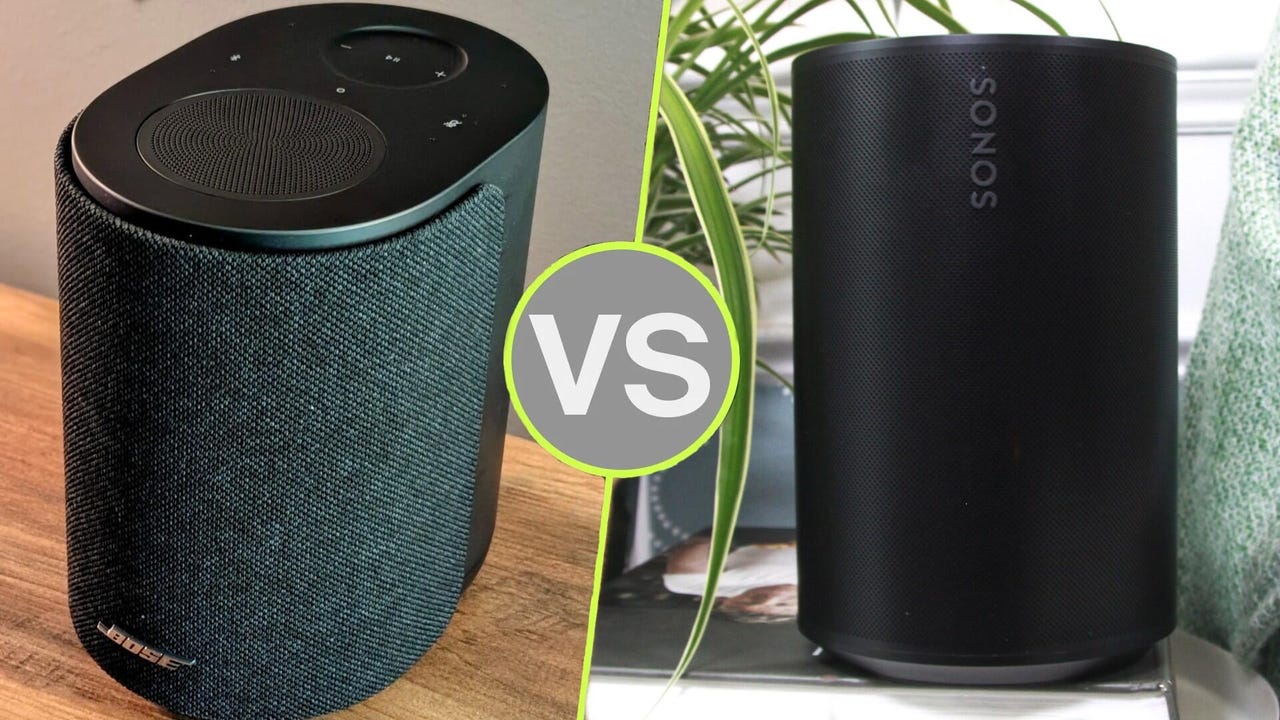
Bose recently joined in on the fun, unveiling its Lifestyle Ultra Speaker, which operates in a way that’s familiar to Sonos’ smart speakers. Both companies offer separately sold smart speakers that can stand on their own around the house, group together for left/right audio, or pair with a compatible soundbar to perform as rear speakers.
Yet, aside from a hard-to-miss $130 price difference, there are other differences to consider regarding ecosystem integration, smart features, and voice assistants. Let’s break them down.
You should buy the Bose Lifestyle Ultra Speaker if…
1. You have Android devices
Bose fitted the Lifestyle Ultra Speaker with native Google Cast, which is a plus for people with Android devices or a mixed-device ecosystem. I’ve tested several new smart speakers this year, and few are equipped with Google Cast built-in.
Review: Bose Lifestyle Ultra Speaker
Google Cast works like Apple AirPlay, allowing users to stream audio from their source device to the speaker, as long as both are connected to the same Wi-Fi network. I use AirPlay to quickly stream a YouTube video to a speaker, and it only takes a few seconds to switch the audio back to my phone.
Note that while the Lifestyle Ultra Speaker has Google Cast, it does not support Google Assistant or Gemini.
2. You don’t like music control apps
Many smart speaker companies prefer to operate their speakers on a proprietary software ecosystem — think Sonos’ S2 platform, Denon’s HEOS, or Apple’s closed ecosystem. Bose took a different approach, offering capable hardware that works well with iOS and Android operating systems.
Instead of offering an all-in-one music streaming app, Bose’s app serves only to change the speaker’s audio source, configuration, and EQ settings. To stream music, users should stream directly from their source device via Apple AirPlay, Spotify Connect, or Google Cast. As a result, users can group Bose’s Lifestyle Ultra Speaker with AirPlay or Google Cast-enabled speakers from other manufacturers for multiroom playback.
You should buy the Sonos Era 100 if…
1. You want to build a home theater one day
One of Sonos’ strengths is its range of speakers in varying sizes, capabilities, and prices, giving you more options to build a home theater that fits your needs. Sonos’ current catalog consists of three soundbars, two subwoofers, two rear speakers, and a pair of headphones that integrate with the soundbars.
Additionally, there are older Sonos products that are no longer sold but are still supported by the current software.
Review: Sonos Play
As a result, you can start with a soundbar and a single Era 100 for listening in another room. Once you’re ready to buy another Era 100, you can configure the two Era 100s as rear speakers. Though Bose’s Lifestyle Ultra lineup operates similarly, only the three products in the lineup are compatible with one another.
Bose’s latest home theater products are not backward compatible with its previous ones; for example, you can’t use your current pair of Bose Surround Speakers with the Lifestyle Ultra Soundbar.
2. You live in Apple’s ecosystem
Sonos’ products favor Apple’s ecosystem over Android’s, offering AirPlay and access to the Apple Music app through the Sonos app. Sonos doesn’t support Google Cast, and instead encourages users to stream music through its companion app.
However, if you have an Apple Music subscription, playing music through Sonos’ app unlocks Dolby Atmos. Though Apple announced in 2024 that iOS 18 would support third-party speakers with Dolby Atmos via AirPlay, the feature is still not implemented on Sonos hardware. At the time of writing this article, I cannot stream in Dolby Atmos to an Arc Ultra soundbar.
Writer’s choice
Not to sound ambivalent, but there are only two reasons to choose one of these speakers over the other: price and ecosystem. Both speakers deliver a similar V-shaped sound profile and support smart features through the Amazon Alexa voice assistant. However, if paying a lower price is your biggest concern, go with the Sonos Era 100. If an open ecosystem is at the top of your wish list, choose Bose.
I prefer the Era 100 because I live in a Sonos household. The Era 100 on my kitchen counter responds to my Sonos Voice Assistant commands and integrates with my other Sonos speakers around my house.
Specifications
| Bose Lifestyle Ultra Speaker | Sonos Era 100 | |
| Connectivity | Apple AirPlay; Google Cast; Spotify Connect | Apple AirPlay; Spotify Connect |
| Wired options | 3.5mm aux-in | USB-C (adapter available for USB-C-to-3.5mm or USB-C-to-Ethernet) |
| Voice assistants | Amazon Alexa; Alexa+ | Amazon Alexa; Sonos Voice Assistant; Google Assistant (via a separate speaker only) |
| Price | $349 | $219 |