
Constructing a deck is a rite of passage for most “handy” DIYers, but building a replica WW II bomber cockpit takes things to a whole new level. Driven by a love of history and vintage aircraft, one British man took on this monumental task just for fun. When he was a child, Léon Ellison of Binfield, Berkshire watched a 1955 docudrama entitled “The Dam Busters”, which is based on the true story of a daring 1943 mission undertaken by Royal Air Force 617 Squadron during World War II.
The squadron, which eventually became known as the Dambusters, were tasked with flying 19 Lancaster bombers to destroy three dams in Möhne, Eder and Sorpe, Germany. These dams were supplying both water and power to factories that were manufacturing weapons. Early in the war, destroying the dams was deemed impossible; Germany tightly controlled the flight route, and there was no bomb that was large enough to destroy the dams.
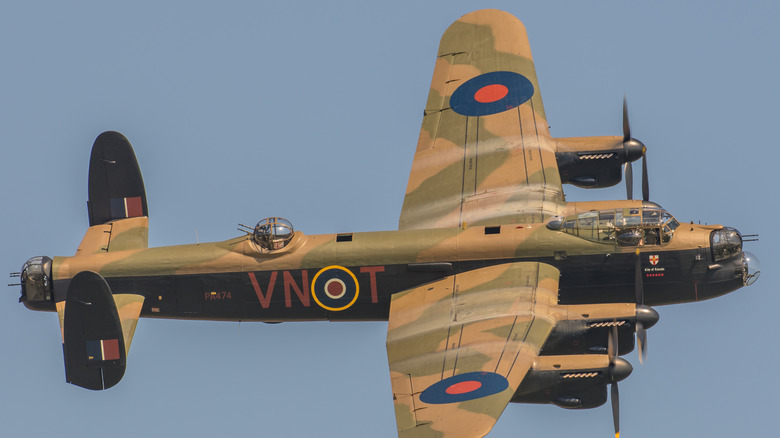
A new weapon dubbed the bouncing bomb changed everything, and the Lancaster heavy bomber was used for the mission. The story enthralled Ellison, who developed a passion for the history. An electronics engineer by day, he spent much of his life researching the bomber. It took him 20 years to build a recreation of a Lancaster cockpit in his backyard using original drawings with parts mostly fabricated in his own workshop. The replica is so meticulously-built that after Ellison passed away, the model was winched out of his yard in May 2026 and donated to the Metheringham Airfield Visitor Centre in Lincolnshire, where it will open as a working simulator.
The Lancaster bomber and the new simulator
The Avro Lancaster was Britain’s most successful heavy bomber during World War II. Built by A.V. Roe & Company, it entered the war in April 1942. The massive aircraft was powered by four Rolls-Royce Merlin engines and had a mid-wing design with a twin tail. It had a 102-foot wingspan and a top speed of 280 mph. England produced 7,377 Lancasters, most of which were used for nighttime bombing of German cities. 19 of the bombers were modified to carry the bouncing bombs underneath the planes for the 617 Squadron’s mission in 1943, and armor was removed from the aircraft to make the planes light enough to reach their targets. Of the 133 aircrew tasked with the bombing, 53 were killed and three were captured, but the mission was considered a success. Only two airworthy Lancasters remain today, and only 15 others have survived.
The Metheringham Airfield Visitor Centre is located near the home of one of the squadrons of Lancasters during the war. Now, it will house Léon Ellison’s replica. He died before he could complete his original goal of turning the replica into a simulator, so his family sought out an appropriate organization to see out his dream. The new display will feature information about Ellison, and the replica, which includes some original parts, will eventually be a fully-working simulator. As of this writing, no opening date has been set by the museum. When it opens, guided tours will be conducted on a one-to-one basis due to the cramped nature of the replica. The cost will be £10 per adult, or about $13.50.

Stephan is the sports journalist for the Maple Grove Report.