10 Years Ago, This Teen Invented A $12 Generator That Draws Energy From The Ocean


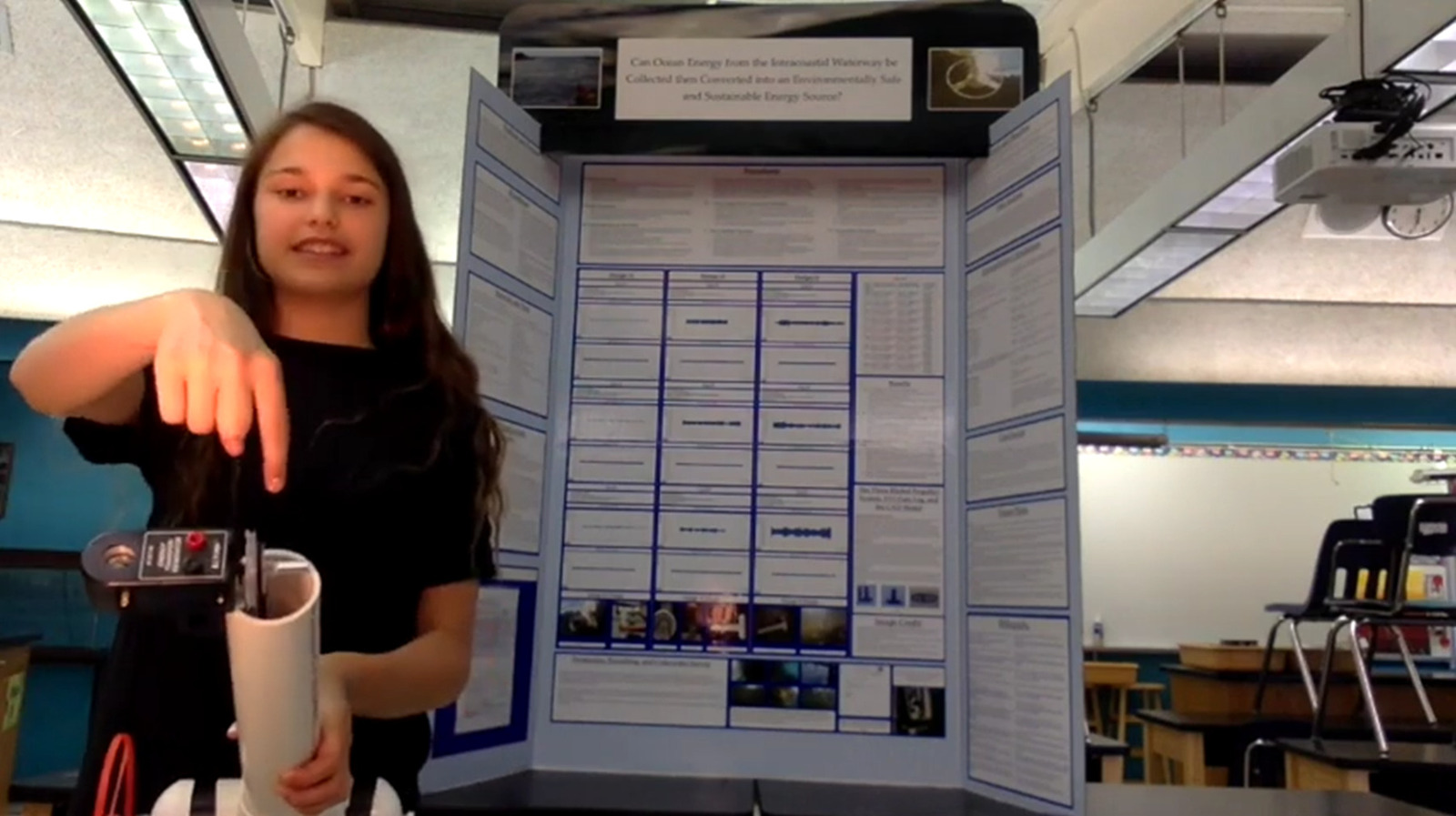
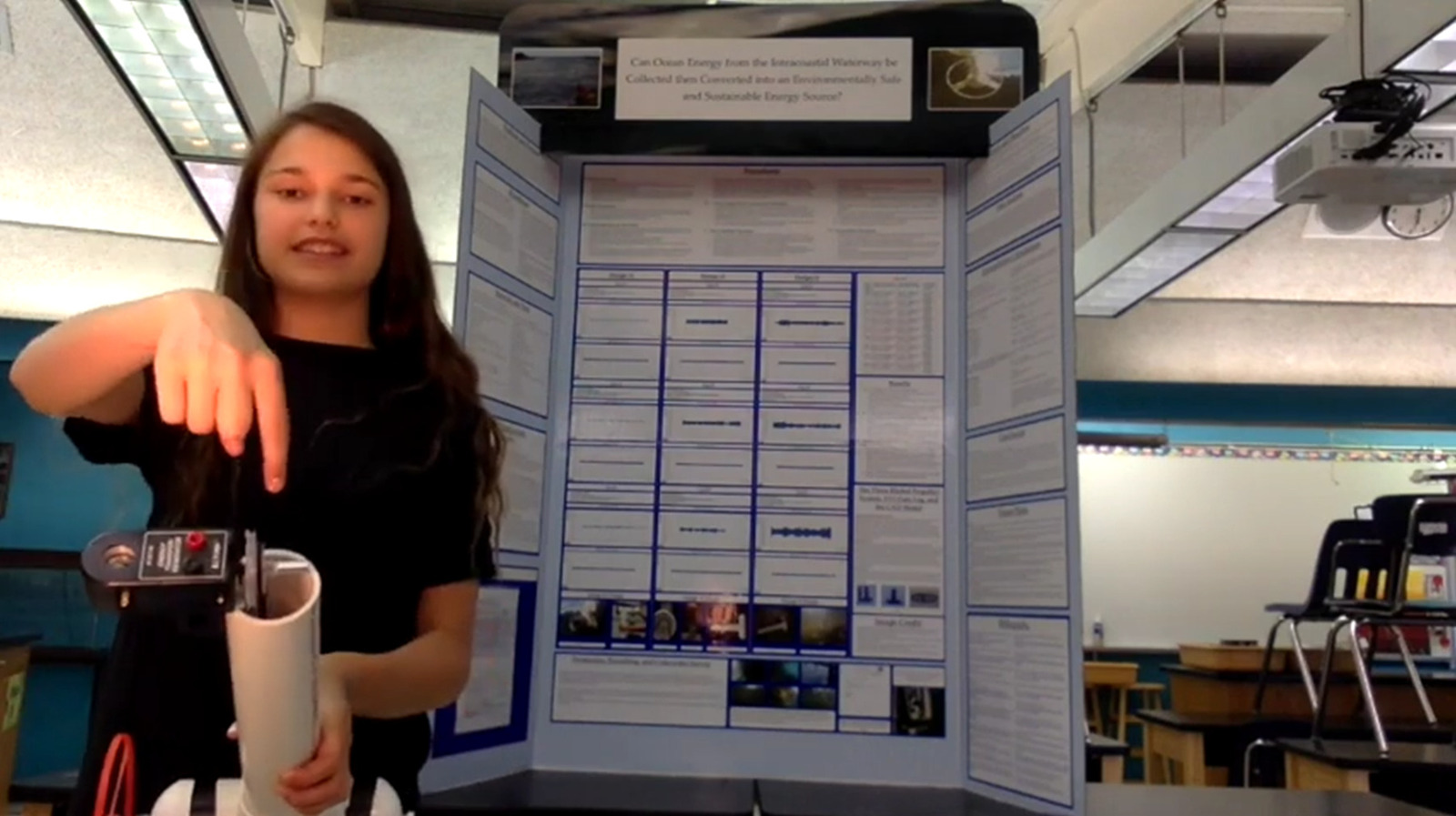
It could just take $12 to bring electricity to homes in developing countries, thanks to a 15-year-old girl from Florida. Hannah Herbst presented the “Beacon” at the 2015 Discovery Education 3M Young Scientist Challenge, with the energy probe winning her “America’s Top Young Scientist” and $25,000. 

Herbst was inspired to create a cheap generator after corresponding with her nine-year-old pen pal in Ethiopia, who didn’t have easy access to electricity. “I can’t even imagine a day without electricity,” she said to Business Insider.  

The Beacon is made from recycled materials, including a 3D-printed propeller connected to a hydroelectric generator by a pulley inside a plastic PVC pipe. It converts water into usable electricity, an idea that came to her while boating with her family and noticing the strong current moving the boat around. An early test allowed her to power two LED lights in this manner. If the design was larger, Herbst predicted, it could power three car batteries in under an hour — exactly the amount of energy needed to power saltwater desalination pumps to produce fresh water. 

Hannah Herbst continued to invent after the 3M Young Scientist Challenge

Herbst was one of nine finalists at the Discovery Education 3M Young Scientist Challenge in 2015, allowing her to be paired with a 3M scientist, Jeffrey Emslander, for a summer mentoring program. Over three months, she was able to take her invention from design to a working prototype. 

After winning the award, Herbst said she wanted to donate part of the prize money to her pen pal in Ethiopia then use the rest of the money to keep working on the device. “When I’m done developing it, I’m going to open source it. Everybody in the world can have access to the materials list and the data I got — everything you need to make this device,” she told Fast Company in 2015. Water has continued to be a valuable power source for inventions, including a water battery out of China that lasts longer than a typical lithium-on battery and Toyota’s continued hydrogen-powered vehicle efforts.

Since 2015, Hannah has won many other honors and rewards. She continued competing in science fairs, including winning the Intel International Science and Engineering Fair in 2016, 2017, and 2019. That same year, she also placed first at the Ashtavadhani Vidwan Ambati Subbaraya Chetty Foundation in the Translational Medical Sciences category. Today, she is the founder and CEO of Golden Hour Medical, a company that develops emergency devices that designed for ease of use by non-medical professionals.  


Source link

Leave a Reply

Subscribe to Our Newsletter

Get our latest articles delivered straight to your inbox. No spam, we promise.

Recent Reviews


Researchers in South Korea developed a wearable system that uses seven smart rings to read finger and hand motions to translate American Sign Language and International Sign Language into text. The purpose is to make communicating easier between those who sign and nonsigners without needing a separate human interpreter. 

AI Atlas

According to the study, published Friday in the journal Science Advances, the system reliably recognized 100 ASL and ISL words during testing. It also performed well with users the system had not seen before, and it didn’t require recalibration for each person. Because the system detects words in sequence, it can produce sentence-level translations without extra training on grammar. 

ASL and ISL are the everyday languages of more than 72 million deaf and hard-of-hearing people. However, most hearing people do not know any words in these languages or have a very basic understanding. That gap makes certain tasks, like ordering at a restaurant or asking for help, much more difficult. 

A graphic shows two illustrated people talking in sign language, ASL and ISL. The graphic also shows the different components of the ring as well as pictures of hands modeling the rings.

A concept of how the rings work in the real world. 

American Association for the Advancement of Science (AAAS)

Existing sign language translator prototypes often rely on bulky gloves that can distract from or block natural hand movement or feel uncomfortable for the wearer, which limits real word adaption. Camera-based technologies can work well in controlled environments but are often limited to those places where a camera can be set up with a clear line of sight, the researchers wrote. 

To solve these problems, the researchers designed sensing rings for each finger that can capture precise motion and finger position while letting the hands move naturally. The rings can detect both signs that involve movement, like the words for “dance,” “fly” and “sun,” and signs that are held still, like “I” and “you.”

“These advances suggest that [the device could enable] barrier-free public translation systems for unseen users and unrestricted daily assistive interfaces,” the authors wrote in the study. 

The authors are affiliated with Yonsei University, Hankuk University of Foreign Studies and the Korea Institute of Science and Technology, among others. While the technology is still experimental, the authors wrote that the technology has the potential to ease communication difficulties. The underlying idea could also help improve controls for other systems, like virtual or augmented reality.

“Beyond sign language translation, the ring-type, wireless, and modular architecture of (wirelessly connected, ring-type sign language translators) may also be extended to other gesture-driven applications such as virtual or augmented reality control, touchless device interfaces, or rehabilitation monitoring systems where fine-grained hand movement tracking is essential,” they wrote.


Source link