
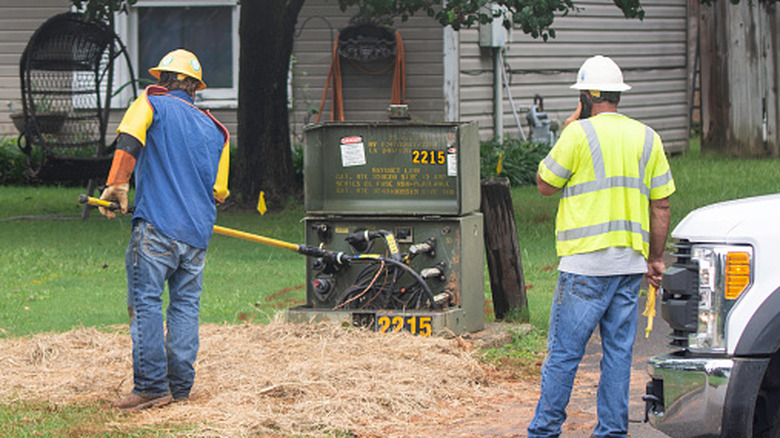

When you purchase a home, it’s important to be familiar with the idea of a “public utility easement”. It is a legal right granted to utility companies that allows them to roll up to your property and begin digging — without ever asking for your permission.
Utility easements are part and parcel of whatever municipality/city/state you live in, and they’ve been around for a long time. They give someone who’s not the property owner access to use your property without your consent.
This is allowed so they can maintain essential services — gas and power lines, water mains, and the like — which may be buried throughout the neighborhood. That’s what those little flags and paint are for. Easements come in all shapes and sizes (express, implied, by necessity, prescriptive, in gross, positive, negative, right of way) and have subtly different yet very specific meanings. Whatever the case, they can continue into perpetuity, even if you sell the land to someone else.
Utility easements can impact property values
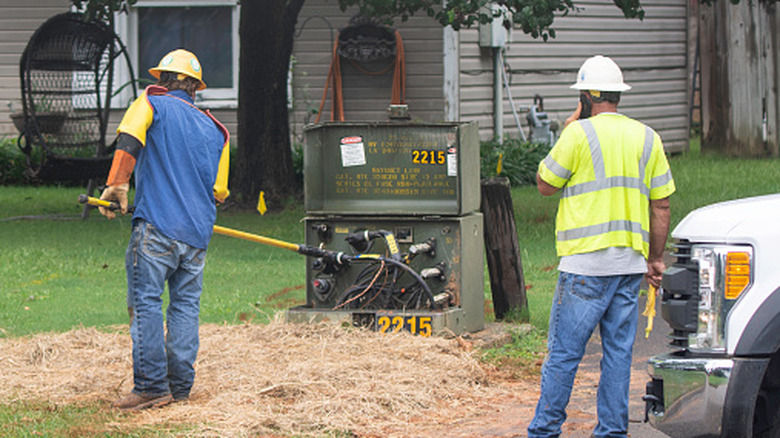
Utility easements can have either a positive or negative impact on property values. Let’s start with what might be considered the glass-half-full variety. Easements allow companies to maintain their services, and properties can be worth more than those without a well-maintained infrastructure.
However, if a new utility easement needs to be established, the owner might be compensated either for the use of the land or for any nuisance that might come with it. Today, most utilities (water, gas, telecom, etc.) are buried underground from the jump, keeping them out of sight, out of mind, and out of weather, so easement use is usually temporary and far less noticeable.
Unfortunately, the negative effect can be far more impactful. Owners might be subject to restrictions that prohibit adding to the home, erecting new fencing, installing a pool, or creating lavish landscape features. Visible utilities, like transmission towers or overhead power/communication lines, might ding the property value because that scenario might be unacceptable to the next home buyer. Plus, those who don’t fully grasp the finer details of what an easement allows may balk at the whole concept.
What’s more, owners won’t be able to prevent utility companies from entering their property and possibly damaging any existing installations (driveway, landscaping, etc.). Of course, anything that gives potential buyers even a hint of hesitation can diminish property value.

Stephan is the sports journalist for the Maple Grove Report.




