The logic behind many phone plans is that people will pay more if it means lots of features such as high-speed data over 5G, mobile hotspot connectivity, international calling and 4K video streaming. AT&T is a prime example: It recently rolled out a new Elite 2.0 plan, which adds even more perks and starts at $110 a month.
But not everyone needs all those extras, and with costs of nearly everything rising, many customers don’t want to pay premium prices. That’s why AT&T today introduced Build-A-Plan, an option on the opposite end of the plan spectrum.
Available May 27, the new wireless plan is intentionally basic. For $15 a month (plus taxes and fees), you get unlimited talk and texting and 1GB of high-speed data (which could slow when the network is congested). That’s it.
If the base plan is too bare for your needs, you can upgrade to either 5GB of data for an extra $5 a month or 15GB for $10 a month on top of the base price. And if you realize that having unlimited data is more in your comfort zone, you can swap out the limited-gigabyte options to unlimited with SD-quality video for an extra $20 a month, or unlimited with 4K video for $35 a month.
Using your phone as a wireless hotspot is not included, but that feature can be added as an optional extra: Add $5 for 5GB, $15 for 25GB or $20 for 50GB of data.
Fully built-out, the Build-A-Plan would cost $70 a month for unlimited data with 4K-quality video streaming and 50GB of data. That’s comparable to AT&T’s Extra 2.0 plan that guarantees 100GB of high-speed data, has the same 50GB of hotspot data and delivers SD-quality video.
Build-A-Plan has no international calling options, no included streaming services and no smartwatch or tablet add-ons. It does come with the standard version of AT&T’s ActiveArmor service for blocking spam calls and safeguarding data.
At launch, the plan is available only as a single line and only to new subscribers who bring their own unlocked, eSIM-capable phone. Customers can either port an existing number or get a new one. An AT&T spokesperson said the company will evaluate options for expanding access to other customers in the future.
Build-A-Plan isn’t a prepaid plan; it’s a subscription service that customers can cancel at any time with no commitment.
Digital marketing changes fast. One minute a platform is hot, the next it’s outdated. Consumer habits shift quickly, and the strategies that worked last year might not work today. If you’re trying to stay relevant in this ever-evolving field, the big question is: how can you level up your skills without going back to school?
Whether you’re brand-new to marketing or a traditional marketer moving into digital, here are seven practical (and proven) ways to sharpen your skills, no formal degree required.
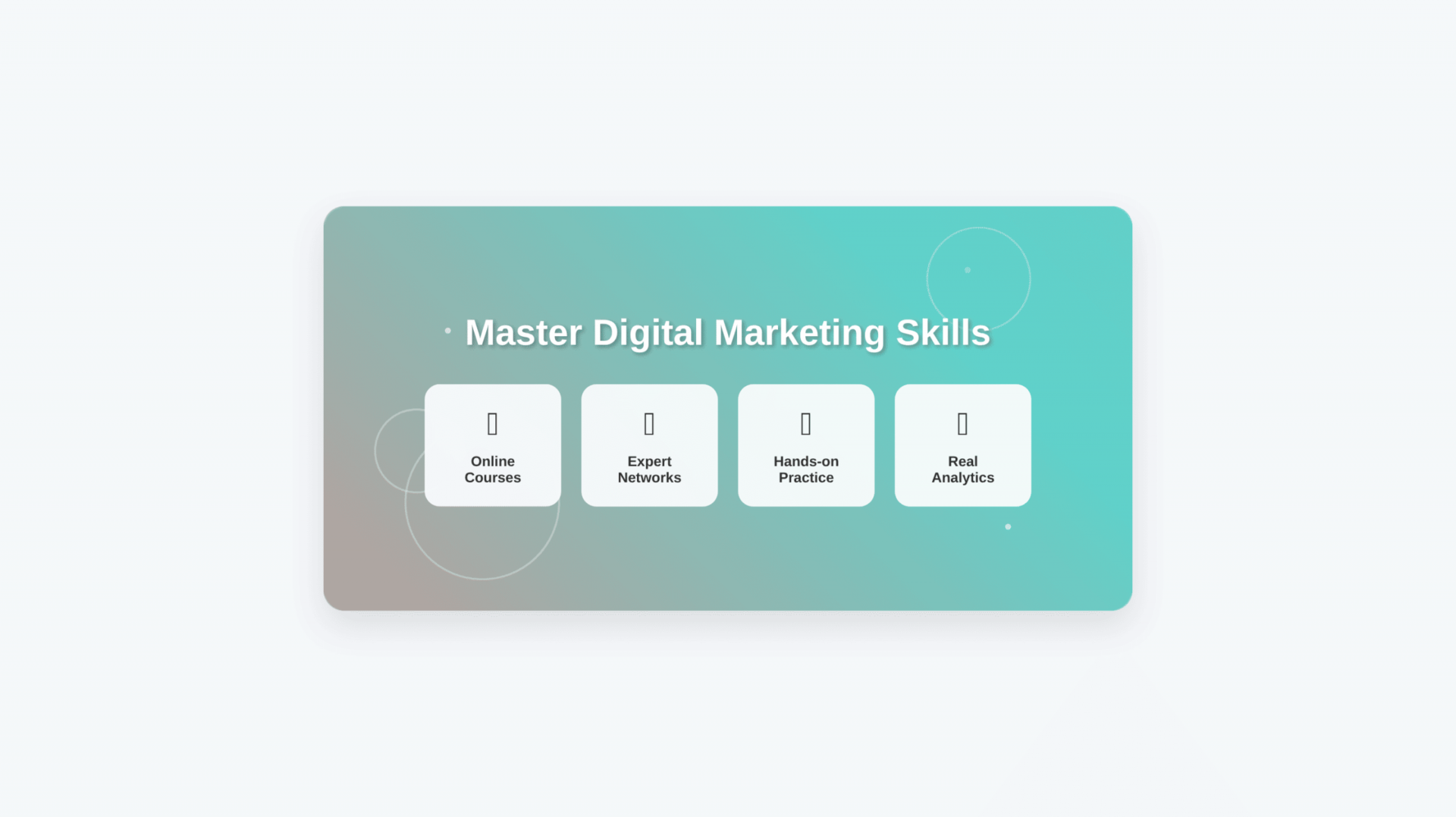
1. Take Online Courses That Actually Teach You Something
Not all online courses are equal. The best ones are built by marketers who actually do this stuff every day not just teach theory. These courses blend hands-on learning with real-world projects that help you build skills employers care about.
What to look for:
Instructors with real industry experience
Projects based on actual campaigns
Updated content that reflects current tools and platforms
Want to know what’s working in digital marketing right now? Follow the experts who are already doing it. They share not just tactics but also insights into the strategy behind successful campaigns. If your goal is to become an SEO expert in Nepal, seek out local professionals who are ranking well or leading agencies you’ll gain insights that are specific to your market.
How to get the most from them:
Follow a mix of global and local thought leaders
Subscribe to their newsletters and podcasts
Ask questions and engage with their content
Join their webinars or virtual events
Tip: Pick experts in areas you want to master—SEO, social media, email marketing, or AI tools.
3. Use Free Resources to Explore and Learn
You don’t always have to pay to learn. There’s a ton of free, high-quality content online that covers everything from the basics to advanced strategies.
Top free resources to check out:
Coursera & edX: Free courses from top universities
Google Digital Garage: Solid fundamentals in digital marketing
YouTube: Tutorials, breakdowns, and real case studies
Blogs: Keep up with Moz, Search Engine Journal, and Content Marketing Institute
4. Get Hands-On with Personal Projects
Reading is helpful, but doing is where the real learning happens. Try testing strategies on a personal blog, passion project, or fictional brand.
Simple project ideas:
Start a blog and learn SEO by optimizing your posts
Run a small Instagram or Facebook campaign
Build an email list for a hobby or passion project
Try a basic Google Ads campaign with a tiny budget
5. Join Online Communities and Connect with Others
One of the best parts of digital marketing is the community. There are countless online (and offline) spaces where marketers help each other grow.
Where to find them:
LinkedIn groups: Look for niche-focused communities
Slack groups: Many cities and marketing niches have active ones
Local events: Don’t underestimate the power of in-person networking
6. Get Certified (It’s Worth It)
Certifications show that you’ve taken the time to learn and understand the tools. They’re especially helpful if you’re transitioning from another field or just getting started.
Top certifications to consider:
Google Ads & Google Analytics
HubSpot Inbound Marketing
Meta (Facebook) Social Media Marketing
Salesforce Marketing Cloud (for advanced roles)
7. Analyze Real Marketing Data
Looking at real-world data helps you understand what works—and what doesn’t. Try working with small businesses or nonprofits to get your hands on real campaign results.
Where to find real data opportunities:
Help a local business improve their online presence
Volunteer for a nonprofit’s marketing team
Freelance on small gigs to build a portfolio
Ask your employer to let you assist on a digital campaign
The Skills That Will Make You Stand Out
To be great at digital marketing, you need a mix of creative and analytical abilities. The top marketers are flexible, data-savvy, and constantly learning.
Here’s what to focus on:
Analytics: Know how to read and act on data
Writing and content: Craft messages that get attention and convert
Tech skills: A basic understanding of HTML, email tools, and CRMs
Strategy: Know how to align marketing goals with business objectives
Adaptability: Be ready to pivot with new trends and tools
Start Small, Learn Fast
You don’t need a fancy degree to break into or level up in digital marketing. What you need is consistency, curiosity, and a bit of creativity. Pick one or two of the strategies above that fit your style, and commit to them for the next month.
Most importantly, don’t just learn—apply. Watch a course, then launch a mini-campaign. Read a blog, then try out the strategy on your own site. Digital marketing rewards action, not just knowledge.
To provide the best experiences, we use technologies like cookies to store and/or access device information. Consenting to these technologies will allow us to process data such as browsing behavior or unique IDs on this site. Not consenting or withdrawing consent, may adversely affect certain features and functions.
Functional
Always active
The technical storage or access is strictly necessary for the legitimate purpose of enabling the use of a specific service explicitly requested by the subscriber or user, or for the sole purpose of carrying out the transmission of a communication over an electronic communications network.
Preferences
The technical storage or access is necessary for the legitimate purpose of storing preferences that are not requested by the subscriber or user.
Statistics
The technical storage or access that is used exclusively for statistical purposes.The technical storage or access that is used exclusively for anonymous statistical purposes. Without a subpoena, voluntary compliance on the part of your Internet Service Provider, or additional records from a third party, information stored or retrieved for this purpose alone cannot usually be used to identify you.
Marketing
The technical storage or access is required to create user profiles to send advertising, or to track the user on a website or across several websites for similar marketing purposes.