Imagine this: Something terrible happens – a fire, an accident, a crime. You call 911 and the first responder to the scene isn’t a police officer, a firefighter or an EMT, but a camera-equipped drone hovering mid-air.
Not sure how to feel? Neither are some members of the Minneapolis City Council, who are in the early stages of considering a “Drones as First Responders” program, which has them balancing a potential boon to public safety with deep unease around security and privacy.
Related: Drones used as first responders in Minnetonka
“I personally found myself oscillating between ‘Wow, this could be extremely useful,’” said Council member Soren Stevenson (Ward 8) after a recent presentation about how the drones could be used, “and ‘Oh my God, this is Big Brother coming to ruin our lives.’”
Faster than a human, and fearless
The country’s first DFR program launched in Chula Vista, CA, in October 2018. While law enforcement agencies had intermittently used drones in specific instances throughout the 2000s, the goal of DFR was to have eyes on the scene as quickly as possible, before the human response.
Drones’ speedy reaction time was certainly the pitch to Minneapolis’ Public Health, Safety and Equity Committee – made up of seven of the Council’s 13 members – who heard about the potential for a pilot DFR program in a staff presentation earlier this month.
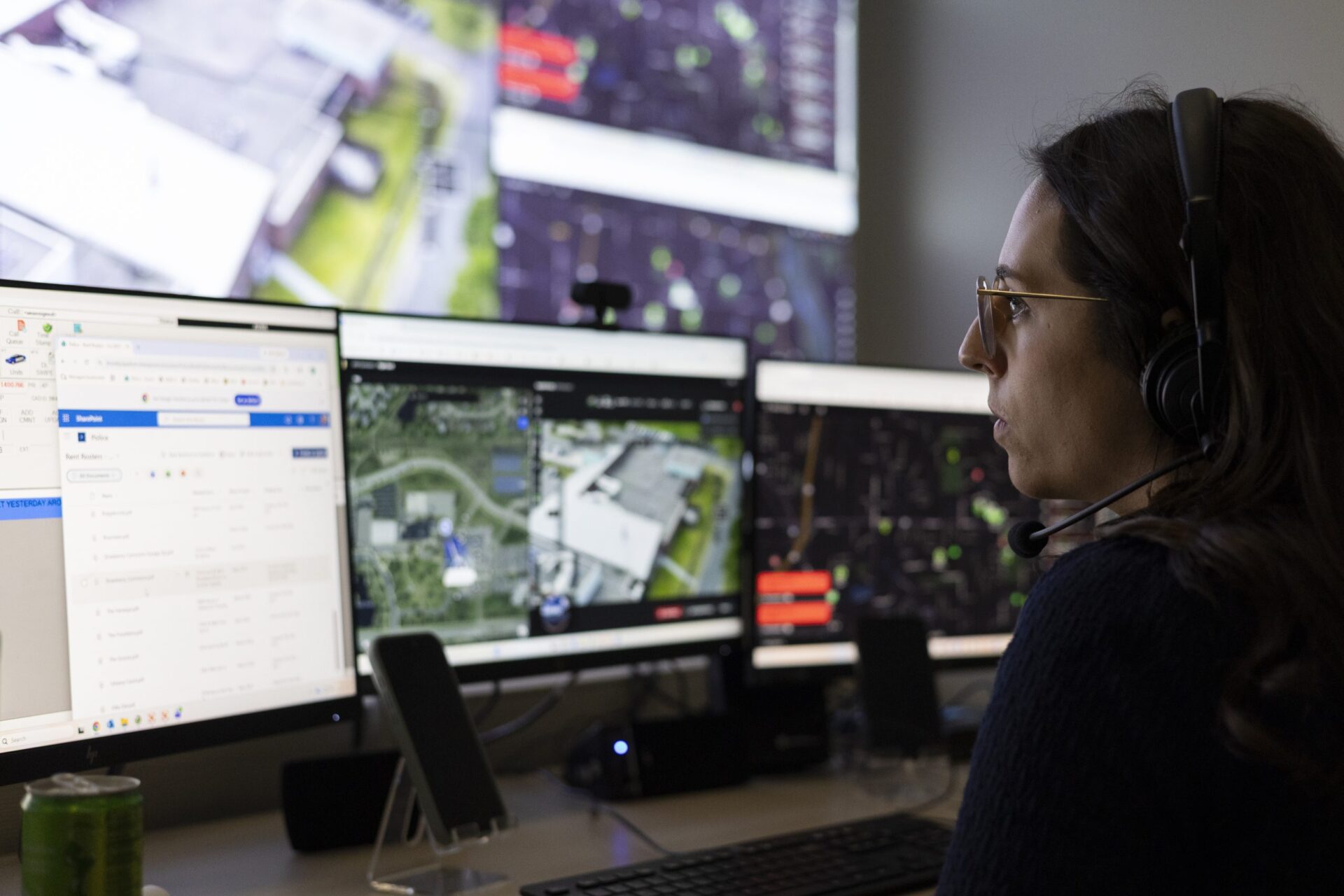
Because drones can arrive on scene before other first responders, their pilots can get a visual on the area and establish where, say, an armed suspect is located, allowing arriving officers to tailor their approach.
The drone operator could also communicate that whatever was reported at a specific location no longer appears to be present, meaning first responders already headed to the scene could be redirected with minimal wasted time.

The pitch was not for police alone. Representatives from the city’s fire, regulatory services and traffic control departments attended the meeting as well and outlined how drones could potentially aid their operations.
A drone could hover over a building fire, for example, and use thermal imaging to watch for hotspots or monitor the structural integrity of the roof. It could inspect the exterior of a high rise building, or the interior of an abandoned grain silo.
To be clear, a drone would not be flying out to every single 911 call, staff said. In fact, without a search warrant, Minnesota state law says that there are only 11 allowed uses for an unmanned aerial vehicle.
Those allowances mostly include emergencies and disasters, though drones can also be used to help search for missing persons, to collect information about “serious or deadly collisions” on roads and to collect information in public areas “if there is reasonable suspicion of criminal activity.”
Drone company’s contracts extend beyond local policing
Council member LaTrisha Vetaw, who represents Ward 4 on the city’s North Side, initiated the process of considering the program with an April legislative directive that called for an outline of how such a pilot program would work.
The answer, per staff, was a 75-day trial period – offered free of charge by Skydio, a California-based company whose drones range in application from inspecting oil rigs to military reconnaissance. The company’s clients include U.S. Immigration and Customs Enforcement, according to a Washington Post investigation published in January.
During the potential trial period, two drones would be docked on the roof of Fire Station 14 and would operate within the 4th Precinct in northwestern Minneapolis.
Data from the 4th Precinct, provided by Skydio, showed that in 2025 there were 33,402 Priority 0 and Priority 1 calls for service – the most urgent calls to receive a first responder. According to Skydio, for more than 4,600 of those calls, the drones could have been on the scene in under two minutes.
Drones get high marks from Minnesota police
Skydio drones buzz the airspace in several other Minnesota cities already running a DFR program, including Brooklyn Park, Minnetonka, Rochester and Duluth.
Minnetonka was the first to launch the program in August 2025, said Police Chief Scott Boerboom in an interview with MinnPost.
Since then, Boerboom said, the city’s six drones have made more than 600 flights. The drone was first on the scene in about 70% of those cases. In about 20% of them, officials were able to clear the call without a patrol response.
Boerboom said the program costs just under $300,000 per year – a fixed cost for the next 10 years.
Compare that to the cost of officer training, wages and benefits, he said, “and it’ll look very different for 10 years what that cost looks like” – though he added that drones are not a replacement for police officers.
In Brooklyn Park, the drones went live on Jan. 22. Community Engagement Officer Matt Rabe called it “an absolute-game changer” to have a crime analyst operating a drone and assisting an officer.
Rabe recalled a recent incident where a domestic assault suspect had been tracked by the drone and acknowledged, upon being caught, that the surveillance played a part.
According to Rabe, the suspect said, “‘I could see the drone. I knew I wasn’t gonna get away.’”
Both police departments say their biggest concern is whether they can add more pilots. In Brooklyn Park, Rabe said staffing isn’t quite to where they can fly from 8 a.m.-10 p.m., but it’s getting there. It’s strictly a funding issue, he said.
In Minnetonka, Boerboom said the drones fly on weekdays. The city currently has two trained “crime analysts,” but he’s hoping for more in the future.
‘What if we pour gasoline on this fire?’
Some civil rights experts, however, have grave concerns about the spike in drone usage around the country.
“The more drones are used, the more you have the risk of essentially warrantless surveillance,” said Munira Mohamed, a policy associate with the American Civil Liberties Union of Minnesota.
While there are laws about data retention and collection by drones in state statutes, Mohamed said she was concerned about “mission creep” as drones become more prevalent.
There should be pushes for monitoring, regulation and healthy public discussion, she said, calling the transparency dashboards used in the Skydio DFR programs “a good start.”
Adam Schwartz, the privacy litigation director for the Electronic Frontier Federation, a nonprofit “defending digital privacy, free speech, and innovation,” was more blunt, saying that drones have been a privacy nightmare for the last 15 years.
Then, with DFR programs, “Someone said, ‘What if we pour gasoline on this fire?’” Schwartz said.
While he supports the aim of identifying calls that would be better addressed by someone other than a police officer, Schwartz said he was “very skeptical of drones being the way to do that.”
In a nod to the mayhem of Operation Metro Surge, he cautioned Minneapolis leaders to think twice before using a system he feels is “custom-built for immigration enforcement to try to get their hands on.”

The best way to minimize harm if the drone program goes through, he said? Codify in city ordinance that between the drone dock and the site of the call, nothing on the ground can be recorded. In many places, that’s currently a directive or best practice. “But that’s paper-thin,” he said.
There’s currently no timeline for when Minneapolis could begin the pilot program, which would require Council sign-off.
Related: Why the Minneapolis Police Department wants drones to help police the streets
During the Council’s recent discussion, Council President Elliott Payne (Ward 1) expressed shock upon learning that a state patrol helicopter could take up to an hour to prepare to search for a missing person. Still, “unknown vulnerabilities” in the drone system’s technology gave him pause.
Council member Robin Wonsley (Ward 2) was interested in a cost analysis that city officials weren’t prepared to provide.
But Vetaw said her constituents were excited about the idea of the new technology, comparing it favorably to the city’s ShotSpotter to track gunfire. She smiled as she responded to Stevenson’s Orwellian comparison.
“Council member Stevenson,” she said, “I wanted to assure you that the North Side is okay with this form of Big Brother, as you called it.”
Related