
When my daughter was diagnosed with juvenile myoclonic epilepsy (JME), it meant a lot of changes for us to help manage her condition. While epilepsy is different for each person, and it can change over time and with medication, we knew that we’d have to help manage it.
My daughter’s epilepsy started suddenly one morning when, out of nowhere, she had a seizure while we were on holiday in August 2025. We hoped it would be a one-off, but every six or seven days, she’d have another seizure, always in the morning after waking.
After a full diagnosis of JME, the medication has worked, although we did have a period of breakthrough seizures at the start of January 2026, which meant that we had to reapproach her routine. Here’s what we did.
A wireless doorbell
When she had first had seizures, my daughter would know she was about to have one. Not everyone gets a sense, but she did. It was important that she didn’t have to move, and that we could come to her. The easiest way to alert us was with a wireless doorbell, which we picked up from Argos.
This came with the wireless press, a plug-in chime that we put downstairs, and a wireless chime that we put in our bedroom. Any morning that she woke up and felt funny she could press the button, and we’d come to her, reducing the dangers of her falling over and hitting her head.
The benefit of this system is that it’s cheap, and all of the bits are portable. So, my daughter can move the wireless press around with her, and the entire system can go with her. When she stayed at her grandparents’, for example, she took the system with her, and we’ve taken it to a hotel, too.
Since going on medication, she no longer gets any indication that a seizure is about to come, so we’ve had to change how we manage things, but we leave the doorbell with her as a precaution.
Gentle wake-up
A trigger for my daughter is being woken up with a start. When she can wake naturally and easily with as little stimulation as possible, she doesn’t have seizures. We get her to stay in bed for 30 minutes after waking, as that’s the danger period for having a seizure based on previous patterns.
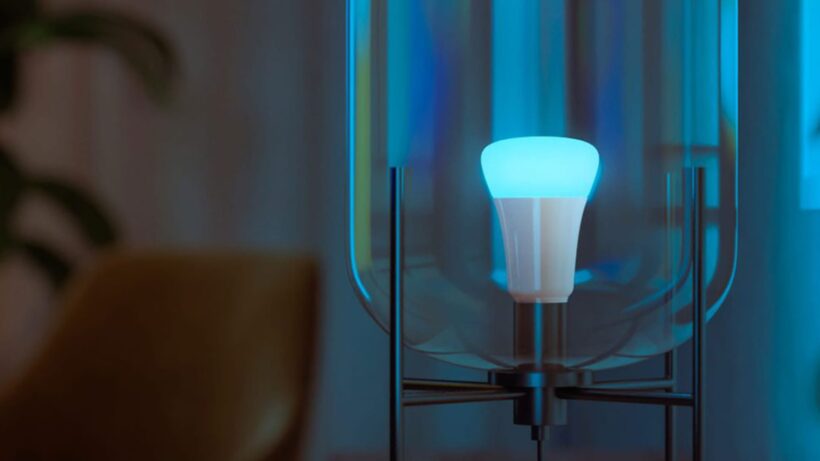
To wake her up, we use a Philips Hue smart light in her bedroom and the wake-up automation. This slowly brightens the light, gently waking her naturally without the harsh buzzing of an alarm.

This really seems to work for us and for her, and it’s easy to adjust if she needs to wake up at a different time. At the weekend, she can sleep in longer, for example, before she has to wake to take her medication.
Eero to control screen time
We have an Eero Wi-Fi system at home, and it has some of the best parental controls. It’s particularly useful, as we don’t let our daughter use screens 30 minutes before she has to go to sleep. With Eero, I have a profile set for her, and her internet time automatically shuts down 30 minutes before bedtime. That stops her from streaming anything to the TV and avoids us forgetting to tell her to turn the TV off.

For her phone, we have Apple Screen Time, which puts her phone into downtime when it’s time to shut down for the evening.
Homey for monitoring
Outside of a school day, we let her wake up a bit later, but it’s useful to know what time she did wake up, so we can judge when we’re past that initial period when she’s more likely to have a seizure.
Thanks to the smart light, which she turns on when she wakes up, I can use Homey to record when the light turns on and, therefore, roughly when my daughter wakes up. It’s a handy extra check.
Things change, but we’re ready
Having spoken to other people, epilepsy is individual, and patterns of seizures and triggers change person-to-person, and through life, and through medication. Routine seems to be important, and the tech we’ve got helps to gently manage that, while giving flexibility to adapt.

Stephan is the sports journalist for the Maple Grove Report.