Why I built my own DIY cyberdeck straight out of 80s sci-fi – and how you can too


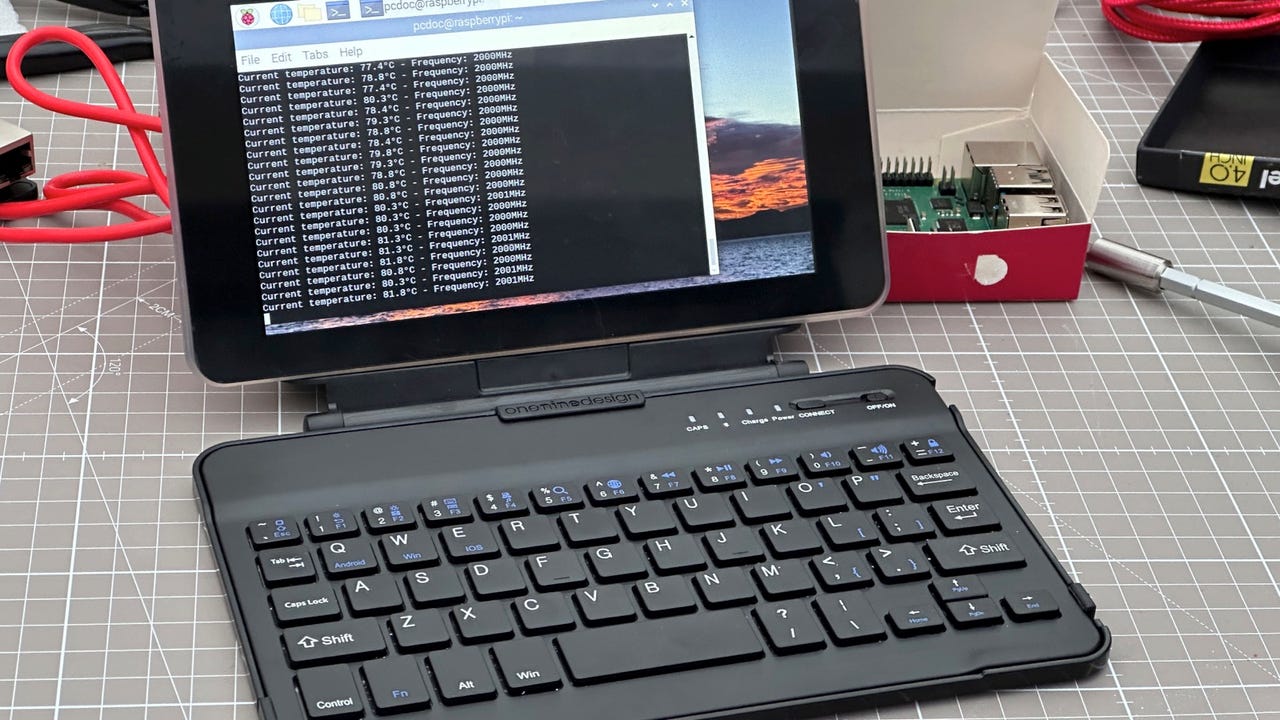
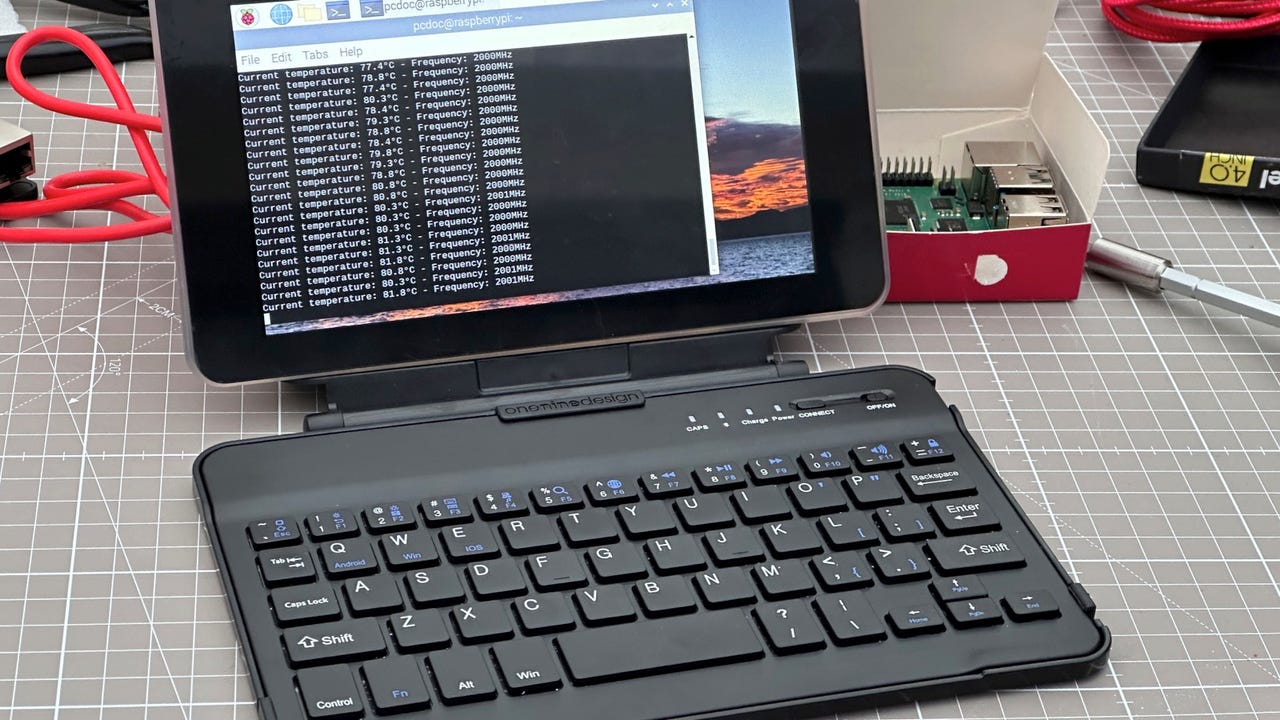
Overclocked Raspberry Pi being stress-tested to see if it is stable

My Raspberry Pi cyberdeck.

Adrian Kingsley-Hughes/ZDNET

Follow ZDNET: Add us as a preferred source on Google.


ZDNET’s key takeaways

  • The cyberdeck name comes from the 1984 novel Neuromancer.
  • They’re DIY computers that can be based on a cyberpunk vibe.
  • If you don’t fancy building a cyberdeck, why not try buying your own?

Everyone seems to be talking about cyberdecks. At the risk of mixing up sci-fi genres, that’s a name that I’ve not heard in a long time. No, cyberdecks aren’t a Star Wars thing. Instead, the term was coined by William Gibson in the 1984 near-future dystopian cyberpunk novel, Neuromancer.

In the novel, hackers, called “console cowboys,” would use cyberdecks to hook up to cyberspace (another term that Gibson came up with, two years earlier in a short story called Burning Chrome). In the book, they’re described as custom-built, rectangular, deck-like computers with red and green LEDs that are used to jack into the matrix (yes, Gibson used that term too).

Also: The Flipper One is the Linux cyberdeck I wish my Raspberry Pi could be

Similar devices have also appeared in movies such as Blade Runner, Mad Max, and Alien.

Fast forward to 2026, and it seems that people are building cyberdecks. But what are they, why are people excited about them, and how do you get your own?

What is a cyberdeck?

Bottom line, it’s a portable computer. At the risk of upsetting people in the maker and hacker communities, a cyberdeck can be pretty much anything that you want it to be.

Also: These retro-style speakers brought new life to my audio library – and they look great

Given their origin, cyberdecks usually have a cyberpunk/retro/dystopian/post-apocalyptic look and feel, but they don’t have to. Sure, you can go for the full-on cyberpunk look, but a cyberdeck can also be a basic, utilitarian computer, or you can even build one inside an Altoids tin or Grandma’s biscuit tin.

Yes, an entire computer inside a tin.

Or it can be an off-the-shelf system made to look cool… although if you post about your creation on Reddit, don’t be surprised if someone posts this meme in response to it.

If it’s a computer, and there’s a screen or an HMD (head-mounted display), and a keyboard that can be physical or virtual, it can be a cyberdeck. I’m not going to be a gatekeeper on people’s fun and creativity.

So, what do you need to build a cyberdeck?

Well, given my “a cyberdeck can be anything you want it to be” stance, this is where things start to get somewhat vague. But that doesn’t mean I can’t give you some pointers, along with a look at a simple yet powerful cyberdeck that I built a while back.

A computer

You need a computer. Something small yet powerful. Fortunately, we live in a time when there are no shortages of single-board computers (SBCs) to choose from. You could go for the somewhat traditional Raspberry Pi 4 or 5, go for the smaller Raspberry Pi Zero 2, or go for something more obscure like a BeagleBone or Banana Pi board.

The Raspberry Pi 5 - A powerhouse at the heart of many cyberdecks!

The Raspberry Pi 5 – A powerhouse at the heart of many cyberdecks!

Adrian Kingsley-Hughes/ZDNET

If this is your first build, I strongly suggest that you use a Raspberry Pi, either the full-sized boards or a Zero. These are very popular options, so there’s going to be information, parts, and accessories out there.

A display

Plenty of options here, from the standard Raspberry Pi touchscreen display to something smaller like the PiSugar Whisplay HAT.

A keyboard

This is where the myriad of tiny Bluetooth keyboards comes in handy. You can get something tiny, folding, or weird-looking to suit your needs. Many come with a built-in trackpad, which is a great way to interface with your cyberdeck.

Also: The best Raspberry Pi alternatives of 2026: Expert recommended

Think that it’s cheating to buy a keyboard? You can make one if you really want Yes, even down to the circuit board. I’ll be honest with you, that’s more effort than I want to put into one, but it’s a great way to learn a whole bunch of skills.

Power

Your cyberdeck will need power. Again, if your system is built around a Raspberry Pi, there are plenty of options. You can use 18650 lithium-ion batteries and a controller board, or you can choose a board that has a built-in battery.

Also: This ‘cardputer’ sits between the Raspberry Pi and Flipper Zero – but it’s uniquely better

You could also choose a small power bank that has its own controller and connect that to the board’s power port. If you’re taking a less-trodden path when it comes to SBCs, you’ll have to do a bit of research and find what’s available for you.

A case

Here you’ve got the option of an off-the-shelf case, especially if you’ve taken the Raspberry Pi route, because there are a lot of third-party cases out there for those boards, or you can repurpose something like a tin box.

Also: 7 useful things I can do with my Flipper Zero – as someone who’s used it for years

If you’ve got a 3D printer, you can custom-build your own case. You can find hundreds of designs for cyberdeck cases that you can 3D print yourself at home, or you can buy pre-printed cases (these command a premium price compared to how much they’d cost you to print yourself, but they are a great option for those without access to a printer).

Can you buy a cyberdeck?

Yes.

Trawl the shelves of eBay or Etsy and you’ll find ready-made systems, although they’re not cheap. If you wanted something cheaper, you could grab a Raspberry Pi 500 and add a display.

Or there’s a Cardputer, which is one of the tiniest systems I’ve used.

The Flipper One could be the first true cyberdeck system.

The Flipper One could be the first true cyberdeck system.

Flipper Devices

Then there’s the Flipper Zero, a real-life hacking tool. Or, and I think this will probably be the closest thing to a real-life cyberdeck, there’s a Flipper One in the works that looks absolutely incredible.

Also: The Flipper One may be the ultimate Linux PC for hackers in 2026 – and I’m excited

It’s mostly a case of what you want your cyberdeck to do and how much you want to spend.

My cyberdeck

My “cyberdeck” (I put that in quotes because it was never built as a cyberdeck, but as a tool) is a system I built out of an overclocked Raspberry Pi that I installed Kali Linux onto.

Kali Linux booting up on a Raspberry Pi.

Kali Linux booting up on a Raspberry Pi.

Adrian Kingsley-Hughes/ZDNET

Kali, for those who haven’t come across it before, is a Debian-based Linux distro that’s built for very specific tasks, such as penetration testing, digital forensics, and ethical hacking. Kali is a massive topic in and of itself, and not for the faint of heart, but it’s also a super powerful platform, even when installed on Raspberry Pi hardware.

Also: 8 Linux distros I always recommend first to developers – and why

I recently upgraded the SBC from a Pi 4 to a Pi 5, and that meant upgrading the touch screen because that wasn’t compatible with the new board. I also upgraded the Wi-Fi to get more advanced capabilities. Yes, I could have bought something off-the-shelf that would have worked just as well — maybe better — but I’m super pleased with the system.

It’s fast, versatile, and highly reliable.

I’ve toyed with making a custom case, but that’s one of those projects for a day when I’ve not much to do, and lately those have been thin on the ground.

Do you need a cyberdeck?

Yes. No. Maybe.

It really depends on you and what your needs are.

Also: Why my Raspberry Pi boards suddenly cost as much as a laptop now – and I’m not surprised

Need a tool to do a job? Then there are probably cheaper, easier options that you can buy off-the-shelf. But if you want a tool that’s fun to build, looks cool, and is still practical, then a cyberdeck might be just what you want in your life. They’re also a cool, fun way to get children interested in various aspects of tech. I know quite a few parents who have used cyberdecks as a springboard for a number of cool projects that their kids have enjoyed.

And there’s nothing wrong with just wanting one because they’re cool and you want to be a console cowboy.




Source link

Leave a Reply

Subscribe to Our Newsletter

Get our latest articles delivered straight to your inbox. No spam, we promise.

Recent Reviews


Anglers often wonder why the same spot produces drastically different results from one outing to the next. Subtle changes in conditions can shift fish locations and feeding behavior in ways that may not be obvious without a closer look. Recognizing and reading these patterns is key to boosting your chances and turning good days on the water into memorable ones.

Consistently catching fish rarely comes down to luck alone; instead, it involves learning how to recognize the variables that affect fish response. Weather, water changes, and habitat all combine to influence where fish are found and how they feed. Understanding fish activity can help bridge the gap between unpredictable outings and repeatable success. If you pay attention to patterns and avoid simply repeating yesterday’s plan, you can transform your time on the water and feel prepared even when exploring new destinations.

What information a fishing activity tool provides

A fishing activity tool, such as the one available at the referenced link, provides anglers with data and resources aimed at making trip planning and decision-making on the water more informed. These platforms typically offer live updates on weather and water conditions, moon phases, tidal information, and solunar forecasts. You can access maps to identify likely fish-holding structures, track changing patterns over multiple outings, and log your catches for future reference.

By aggregating environmental data alongside location and timing insights, you gain a centralized hub to consult before heading out or while adjusting your approach during your trip. This reduces guesswork and allows for a consistent application of patterning, whether you are fishing familiar waters or venturing into a new area. The summarized information can enhance your ability to react to changing conditions and improve your overall catch consistency.

Factors that influence daily fish behavior changes

Every fishing trip is shaped by a complex mix of natural elements, and understanding why fish move or bite differently is crucial for success. Water temperature and seasonal transitions serve as a central trigger, with cold-blooded fish responding immediately to shifts in warmth. Early spring can heighten fish metabolism, while sudden cold snaps tend to slow action, especially in shallow lakes or river stretches. Light levels further dictate movements, as many fish feed actively during low-light periods around sunrise and sunset, or when cloud cover softens direct sunlight.

Weather changes act as another major driver, altering fish location and mood even before storms arrive. Drops in barometric pressure can sometimes coincide with approaching fronts and may be associated with short bursts of feeding, while clear, stable weather might spread fish out and make them less aggressive. Wind and cloud cover work together to stir up food sources, alter light penetration, and push water around, constantly shifting where fish are most comfortable. Current, tides, and water movement, especially near inlets, points, or submerged structures, can concentrate fish or disperse them throughout a waterway. Oxygen and water quality play subtle but essential roles, with factors such as clarity, seasonal turnover, and aquatic vegetation creating either ideal or stressful conditions depending on the species and location.

Understanding food availability and how fish choose locations

Fish are constantly seeking a reliable meal, so areas rich in forage and suitable cover quickly become prime targets for your lures or bait. Forage presence matters greatly, as small prey fish, insects, or crustaceans cluster around specific habitats depending on the season, temperature, and light. Matching your bait or lure closely to what fish are currently feeding on, a technique often called “matching the hatch”, can lead to more consistent bites, especially when the fish are selective or pressured.

Habitat features determine where fish hold for safety and ambush opportunities. Structure plays a key role, with drop-offs, weed edges, sunken logs, and man-made features consistently attracting fish year-round. Shade lines, created by docks, overhanging trees, or changes in cloud cover, provide both cover from predators and ambush points for feeding. The interplay between forage availability and shelter is the foundation for successful fishing trips and explains why a fishing point might receive heavy attention one day, only to go quiet the next if either food or cover shifts. Seasoned anglers know that these factors are in constant motion and learn to watch for the subtle signs that predict an upcoming change in fish positioning.

Clues and techniques for trip planning and adjustments

Preparing for a fishing trip involves more than picking a spot and packing gear. A thoughtful pre-trip checklist considers current weather patterns, recent rainfall, wind forecasts, and lunar phases if targeting more sensitive species. Reviewing water temperature trends, known forage types for the season, and expected light conditions guides you towards the most effective lures, baits, and even the best times to be on the water. Savvy travelers look up recent reports or historical patterns for their destination, focusing not just on what worked recently but what environmental factors caused specific results.

Once on the water, keen observation becomes your most important tool. Surface signs such as baitfish activity, swirls, and birds diving can confirm or suggest productive areas. Presence of aquatic vegetation or nearby structure, changes in water color or temperature, and the location of windward banks all provide actionable cues. When you notice a shift in one of these elements, adjusting your approach, whether by relocating, switching presentations, or varying depth, can mean the difference between an average and an exceptional outing. Carving out time to watch for telltale signs is often as valuable as active casting, especially on unfamiliar waters or when conditions are rapidly changing.

Avoiding missteps that disrupt consistent fishing patterns

Many anglers reduce their chances of success by clinging too tightly to previous results without recognizing changing circumstances. One common mistake is overcommitting to spots that produced bites yesterday, assuming the pattern will hold without considering weather or seasonal shifts. As wind shifts or cloud cover increases, the productive areas can quickly move, and sticking to one location often leads to missed opportunities everywhere else. Failing to adjust also happens when subtle signs are overlooked, including slight changes in water clarity, rising surface temperatures, or new concentrations of bait.

Ignoring wind direction can push both anglers and baitfish out of key areas, while shifting light conditions often move fish between deep cover and shallower ambush points. Another frequent error is misjudging the speed at which you cover water; moving too quickly can mean missing subtle activity signals, while proceeding too slowly might result in fishing unproductive sections for too long. By being flexible and ready to reassess your strategy at a moment’s notice, you can better identify when a successful pattern is truly shifting and avoid the letdown of a slow day brought on by complacency.

Simple framework for piecing together a workable pattern

Building a strategy around fish response does not require complex theory or exhaustive research. Begin by narrowing down your options based on broad environmental factors, starting with water temperature, weather, and recent shifts in seasonality. Use this information to identify high-potential areas such as drop-offs, points, or sheltering structures that are likely to congregate prey and predators alike. Next, determine the most probable depth range, using a combination of available data, historical patterns, and current observations to focus your attention on productive water columns. From there, refine your approach by experimenting with different lure colors, sizes, and retrieval speeds, noting what elicits the clearest positive response from the fish you are targeting.

Adopting this simple method makes the process less overwhelming, allowing you to focus on the variables you can observe and adjust on the fly. By using a patterning framework, you gradually learn how each set of conditions interacts, making each trip more effective regardless of location. Not every day will be spectacular, but continual awareness and willingness to adapt will increase both your knowledge and the consistency of your results. This attention to fish activity and local environmental cues helps you stay connected to the natural rhythm of the water and its inhabitants.

Ethics and the value of thoughtful pattern recognition

Ethical fishing practices support long-term fish populations and help maintain access to healthy waterways. Handling fish carefully, using appropriate tackle, and respecting local regulations can reduce unnecessary stress on fish and improve survival after release. When you pair strong pattern recognition with responsible handling, you can pursue consistent results without compromising the resource.

Thoughtful pattern recognition also reduces waste and disruption on the water. By paying attention to conditions and choosing approaches that fit them, you can avoid repeated unproductive casts in sensitive areas and limit unnecessary disturbance to habitat. This balanced approach keeps the focus on learning fish behavior while maintaining respect for the environments that support it.

Hi! We are Jenn and Ed Coleman aka Coleman Concierge. In a nutshell, we are a Huntsville-based Gen X couple sharing our stories of amazing adventures through activity-driven transformational and experiential travel.


Source link