

Given how infrequently we upgrade our televisions, and how much they’re used as our portal into a world full of entertainment, it’s a purchase that should not be taken lightly, and that’s why when you shop with Trusted Reviews, you won’t be leaving anything to chance. Thanks to the hard work of our expert testers, we know exactly which of the latest TVs are the best to buy and why.
For years now, we’ve made use of our in-house testing facility to put TVs from the likes of Sony, LG, Panasonic and more, through their paces. When the testing facility is occupied, our team will use their homes to review a TV, but in either case, these sets are used by our team as their main source of entertainment throughout the testing period, after which they know exactly which areas are worth shouting about, and if there are any negatives that consumers should be aware of.
When it comes to buying a TV, the first thing that should be addressed before anything else can even be discussed, is the size of the space you have available. After all, there’s nothing worse in this scenario than thinking you’ve found the right TV for your needs, putting in an order and waiting for it to turn up, only to find out that it’s too large to fit. If there’s any uncertainty at play here, we recommend reading our guide on which size TV to buy.
Once the question of size is dealt with, then comes the budget. The cash you have at your disposal will have a big impact on the type of TV you can pick up, so it’s best to temper your expectations accordingly. If you have less than £500/$500 to work with then you’ll need to shop for an LCD TV which are more affordable, but still pack tons of detail with 4K resolutions now being the default.
For those who have a bit more cash to play with, you can indulge in better display tech such as QLED and OLED, which influences the degree of colour and contrast that you see, creating a far more vibrant and engaging image overall. In either case, we’ve made sure to include a good amount of variety in this list, so you can find the ideal TV. If you decide that you’d rather shop exclusively at the cheap end of the market, then our guide to the best cheap TVs has you covered. Those wanting to shop based on specific tech or use cases can check out our round-ups for the best gaming TVs, best OLED TVs, best 4K TVs and the best 8K TVs.
Recent updates:
- June 02, 2026: We’ve replaced the Sony A95L with the Bravia 8 II as the best TV for picture quality.
Best TV at a glance
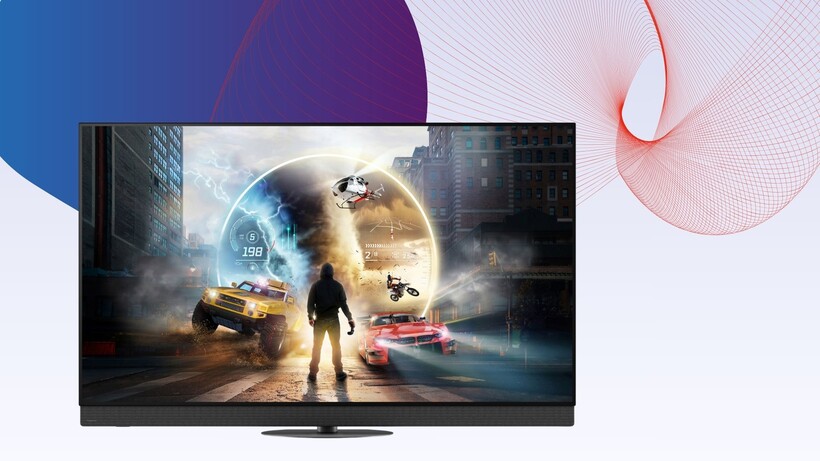
- Best all-in-one TV: Panasonic TV-65Z95B
- Best QD-OLED TV: Samsung QE65S95F
- Best Mini-LED TV: Sony Bravia 9
- Best LG TV: LG OLED55G5
- Best affordable OLED TV: Philips 55OLED760
- Best 8K TV: Samsung QE75QN900F
- Best TV for bright rooms: TCL 65C8K
- Best TV for picture quality: Sony Bravia 8 II
- Best TV over 90-inches: TCL 98C7K
- Best cheap TV: TCL 50C6KS
- Best small TV: Panasonic TV-48Z90B
- Best TV over 70-inches: Samsung QE75QN90D
- Best Micro RGB TV: Samsung QE75R95H
- Best portable TV: Metz 24MPE7002Z
Learn more about how we test televisions
Every TV we review is put through the same set of tests to gauge its picture performance, usability, and smart features.
Tests are carried out over several days and are done by eye but supported with technical measurements. Testing by eye involves an expert watching a wide range of material to understand and determine a TV’s performance in fields such as brightness, contrast, motion processing, colour handling and screen uniformity.
We’ll consider the design of the TV in terms of build quality, study the spec sheets and see if the TV’s connections are up to spec, as well as playing video and audio content to ensure that the set handles playback as it claims. We also take note whether a product’s compatible formats and features are in line with industry trends or not to gauge whether it’s relevant for you.
Comparison to other related and similarly priced products is also important, to see if it’s missing any vital features and whether it impresses as a whole. After all this, we’ll come to a judgement on how the TV performs as a whole.
FAQs
The Panasonic TV-65Z95B is our current pick for the best all-in-one TV that you can buy right now. We have other choices from the likes of Samsung, Sony, LG, and more for other categories like best 4K TV, best small TV, and more.
Refresh rate determines how many times per second the TV updates its image. Standard TVs operate at 60Hz, which is fine for most TV shows, movies, and streaming content. However, 120Hz or above is important for gaming, especially with PlayStation 5 and Xbox Series X consoles that support 120fps gaming for smoother, more responsive gameplay.
Burn-in issues were rife with earlier generations of OLED televisions and the issue factors less in more modern TV sets. However, burn-in occurs when static images are displayed for extended periods of time – so if you plan on using the TV to watch the same news channel for hours a day or anything with static taskbars, you might want to consider QLED or mini-LED instead.
The post Best TV 2026: OLED, Micro RGB and more tested appeared first on Trusted Reviews.

Stephan is the sports journalist for the Maple Grove Report.