

Love it or hate it, Paris is without question one of the most beautiful cities in the world. Trust me, I’ve been living here for 5+ years now, and I’m yet to run out of breathtaking sights and flowery cafés to discover.
There’s just one major downside—other than dealing with the hellish French bureaucracy and passive-aggressive boulangers—and you probably know where I’m going with this… as the most visited city in the entire world, it can get a tad… overwhelming, particularly in summer.
Between the Insta girlies flaunting their custom beret hats and the long wait lines to get into literally any museum, that romantic French getaway you’ve envisioned can quickly turn into a disastrous Emily in Paris skit, minus the designer bags, whimsical feel, and a stronger stench of sweat and sewage.
I’m a Paris local, and if you’re heading to the City of Lights this season looking for some authentic French flair, I have one piece of advice for you: leave town, even if only for a day. And no, I don’t mean go to Versailles.
France’s true magic lies in the smaller, more quaint towns that have not been flogged to death by travel publications, and where tourists rarely dare venture out to. These feel less like, ‘oh, a medieval church right by a busy thoroughfare!’, and more like ‘this entire place feels like it’s frozen back in the 1500s’.
Here are 5 of the most incredible, Travel Off Path-certified medieval town escapes within easy reach of Paris:
PLUS: We’ve built an interactive quiz for you at the end of this article to find your perfect match!
Provins
Distance from Paris: 59 miles
How to get there: 1h20 train from Paris-Est
Round-trip ticket fare: $5.70–$5.80
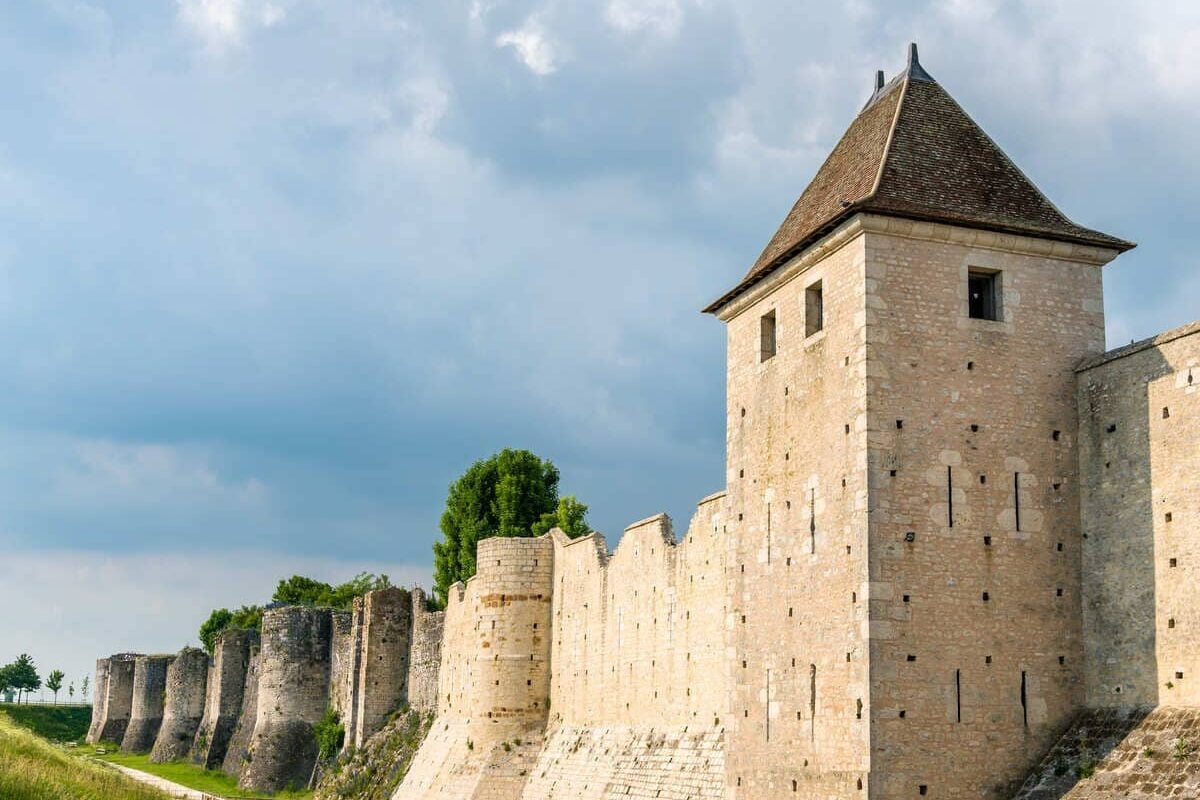
One of the easiest countryside escapes out of Paris, Provins is a seriously overlooked UNESCO-listed town that boasts perfectly preserved town walls and medieval-era timbered buildings that look like they belong on a storybook cover.
The town square is picture-perfect, flanked by galleries and boutique shops, and nearby, you’ll find two of Provins’s most iconic monuments:
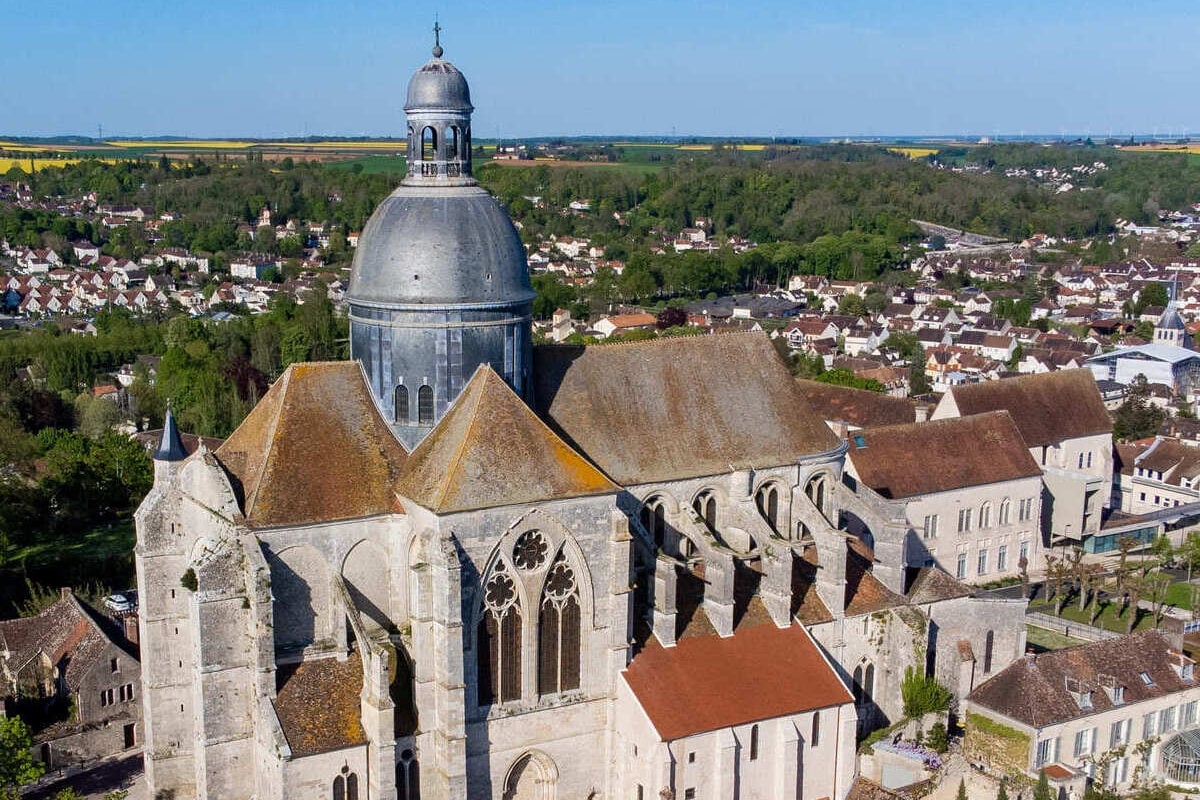
Collégiale Saint-Quiriace, a collegiate church Joan of Arc herself attended a mass in, and the Caesar’s Tower (Provins), a sturdy, hilltop stronghold commanding a sweeping panorama of the cobble-paved maze below, and the wider Île-de-France country.
If you’re coming to Provins in June, you’ll want to hit up Les Médiévales de Provins, a medieval festival set along the old walls. Think knights prancing about with their horses, jousting, falconry, and costumes everywhere.
Now, for my fellow sweet fiends out there, make sure you swing by Gourmandises médiévales, a medieval-themed dessert shop just off the town square where every biscuit on displayed is inspired by 15th-century recipes.
You can even try the original macaron, prior to all the innovative fillings being added.
Reims

Distance from Paris: 90 miles
How to get there: 50 minute high-speed train from Paris-Est
Roundtrip ticket fare: $34–$68
A small city roughly an hour’s train ride away from Paris, Reims is the forgotten cultural powerhouse that gets routinely overshadowed by the City of Light’s glitziness.
The whole world hasn’t been able to shut up about Notre-Dame de Paris for centuries now, but little do they know France’s most historically significant Gothic queen is not the one by the Seine, over in the capital, but right here in Reims:
Notre-Dame de Reims feels grander, more richly carved, taller, and for over 800 years, it’s where the Kings of France were crowned, from Louis VIII to Charles X.
All the way back in the year 498, it also hosted the baptism of Clovis, the guy that basically kickstarted the Kingdom of the Franks, which would later on become… well, France.
Unsurprisingly, Clovis is not buried there, but in the Basilique Saint-Remi, on the edge of the Historic Center. It may not be the cathedral, but it has an equally impressive collection of stained glasswork, and a majestic Gothic choir.
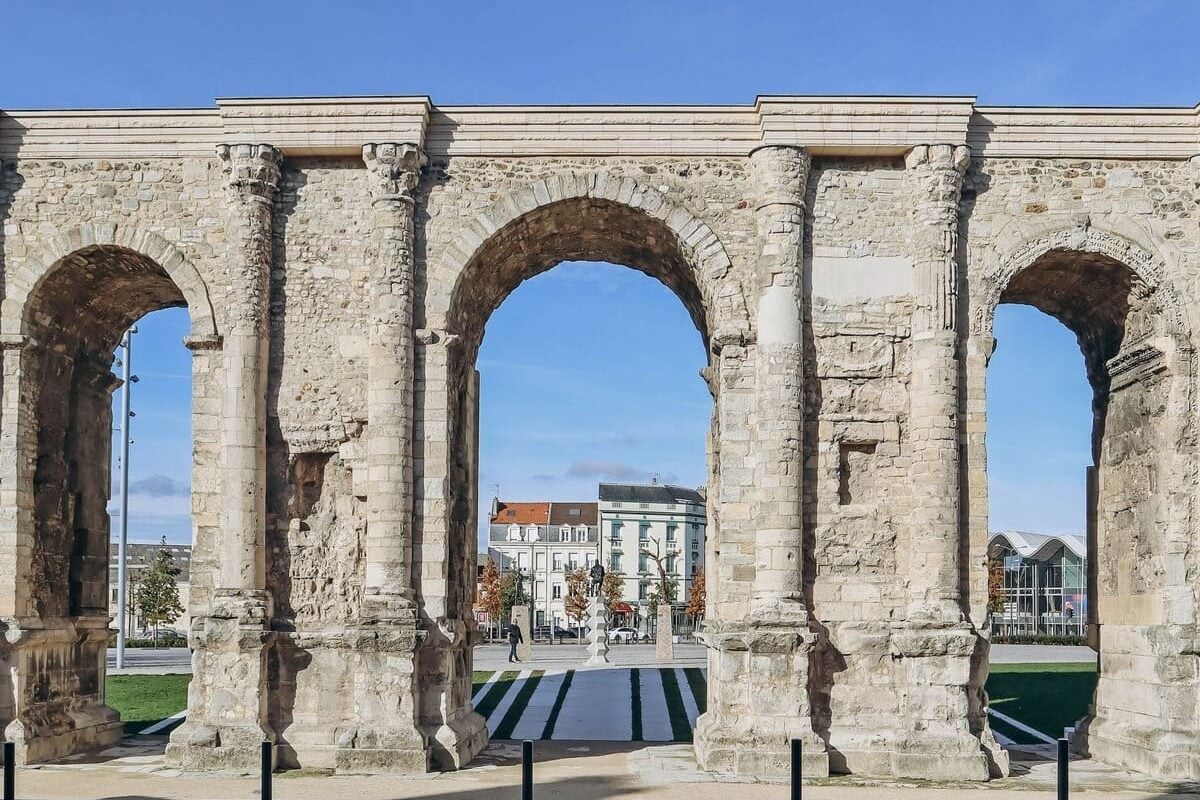
Medieval treasury aside, Reims used to be one of the most important cities of the Roman Empire. Now, it’s not like there’s a whole plethora of ancient ruins left to admire, however, it does boast the perfectly preserved Porte de Mars, a 1st-century triumphal arch built around the same time as the Pont du Gard.
Check Entry Regulations For Europe Ahead Of Flying

If you’re flying to Europe this season, you should know a lot has changed as far as entry regulations are concerned.
Americans are now required to consent to getting fingerprinted, and having a photo taken for digital registration upon arrival, and real soon, they will also be expected to apply for a mandatory travel permit ahead of flying.
The time of ‘just grabbing that passport and winging it at the airport’ is over. Flying internationally now requires a great deal of advance-planning, especially as a U.S. passport holder.
Check the latest Entry Requirements that apply at your destination, be it France or elsewhere in the continent, on this page.
Beauvais
Distance from Paris: 50 miles
How to get there: 1h15 by train
Roundtrip ticket fare: $23–$34
I just know the name ‘Beauvais’ raised some suspicious eyebrows.
Listen, I’ve been there more times than I’d like to admit: taking that dreadfully-long, 1h30-hour shuttle to Beauvais Airport, Ryanair’s 50-mile-out Paris hub, just to shave $20 off that flight ticket, and to say I’m scarred for life would be a huge understatement.
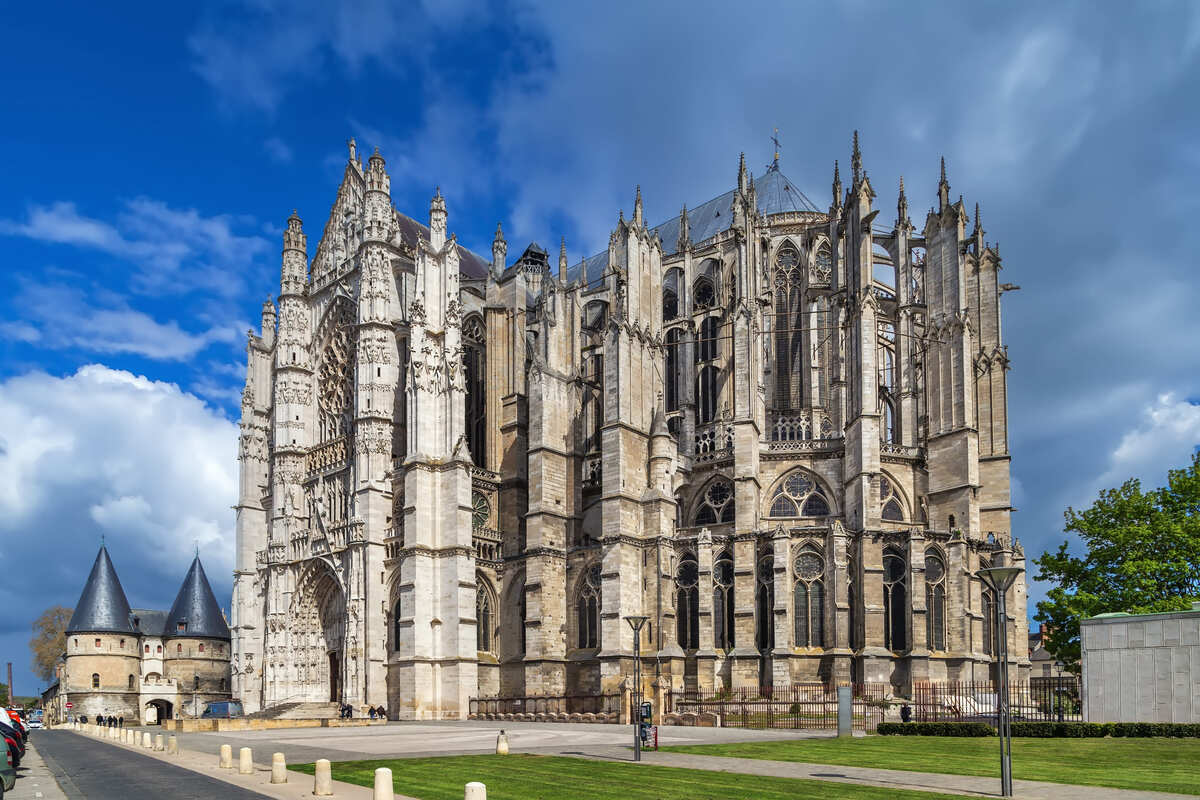
What most BVA-bound travelers don’t know is that the shoddy, two-terminal airport is in fact named after Beauvais, a hidden gem of Hauts-de-France that barely gets any tourists.
I only found out about it myself when I had to fly out of BVA and the shuttle buses were pulled off due to a strike, and I first had to get on the train to Beauvais town, then the local bus to the airport… and I immediately regretted not having come a little sooner to spend a couple more hours there.
Beauvais has the most hauntingly-beautiful, unfinished medieval cathedral, with its huge Astronomical Clock and a Gothic choir that just happens to be the highest in the world, at 48.5 meters.
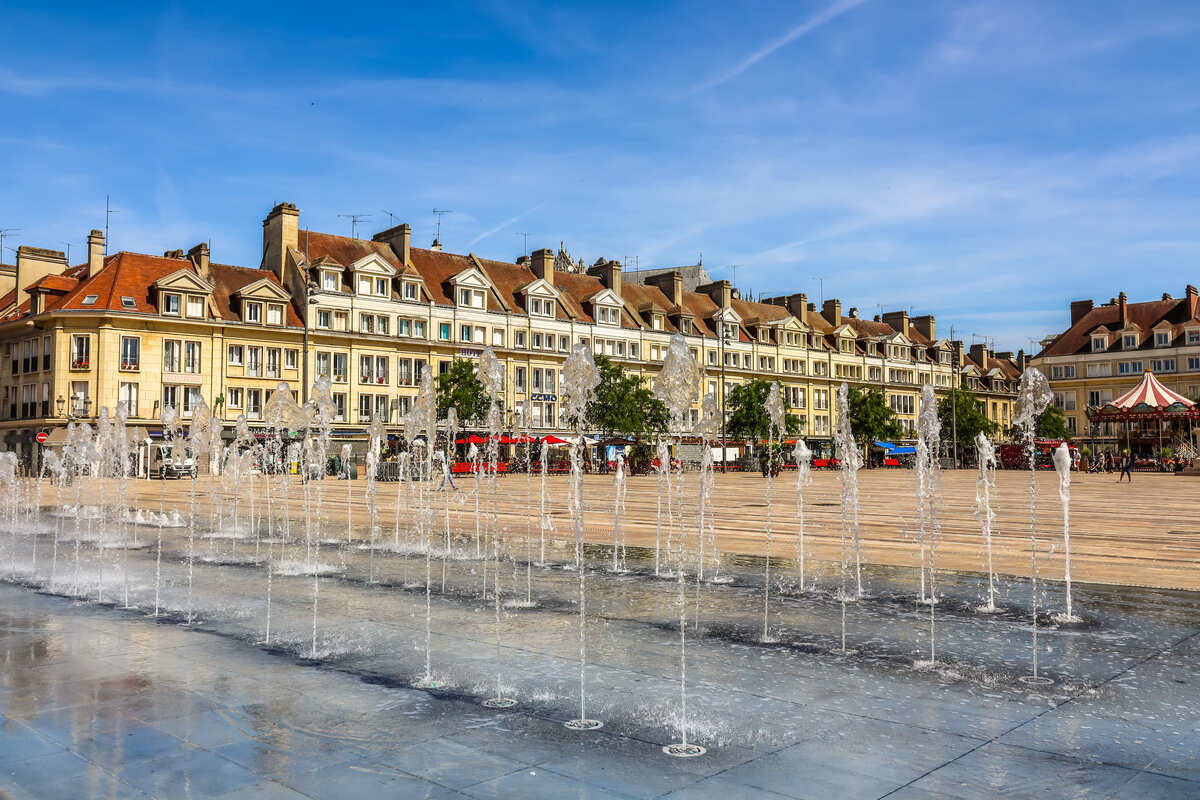
The Old Town is compact, but uber cute, with its cobblestone lanes that all lead to the cathedral, and one of its best-kept secret is the old hospital, Maladrerie Saint-Lazare, where leper victims were housed between the 12th and 13th centuries.
If you have time, which wasn’t the case for me, do stop by MUDO, or Musée de l’Oise, an art museum housed in the former Bishop’s Palace.
It’s only a few steps from the cathedral, and apparently they have a great mix of medieval and modern art, or swing by a Carrefour, stock up on your picnic essentials, and live out your best French life at Parc Marcel Dassault, a big expanse of green on the outskirts of town.
Honfleur
Distance from Paris: 122 miles
How to get there: 2 hour train from Paris Saint-Lazare to Deauville + 20 minute bus to Honfleur
Roundtrip ticket fare: $57–$114
Honfleur doesn’t exactly scream hidden gem anymore—it’s one of those places Parisians themselves love to name-drop when the sun comes out—but it somehow still manages to feel like a local secret, and authentically French once you’re actually there.
I visit different parts of Normandy every year, and whether I’m headed to the D-Day beaches or the coastal stretch between Deauville and Étretat, you can rest assured a pit stop in Honfleur is in the cards.
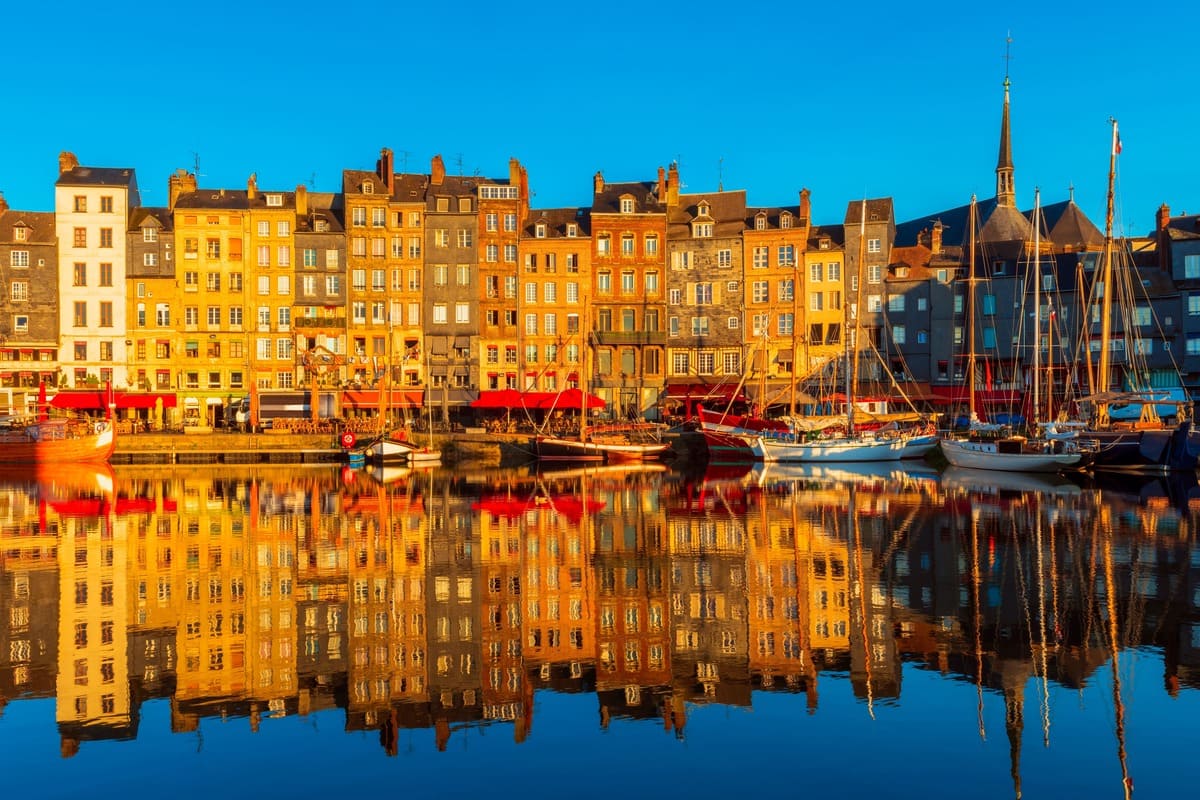
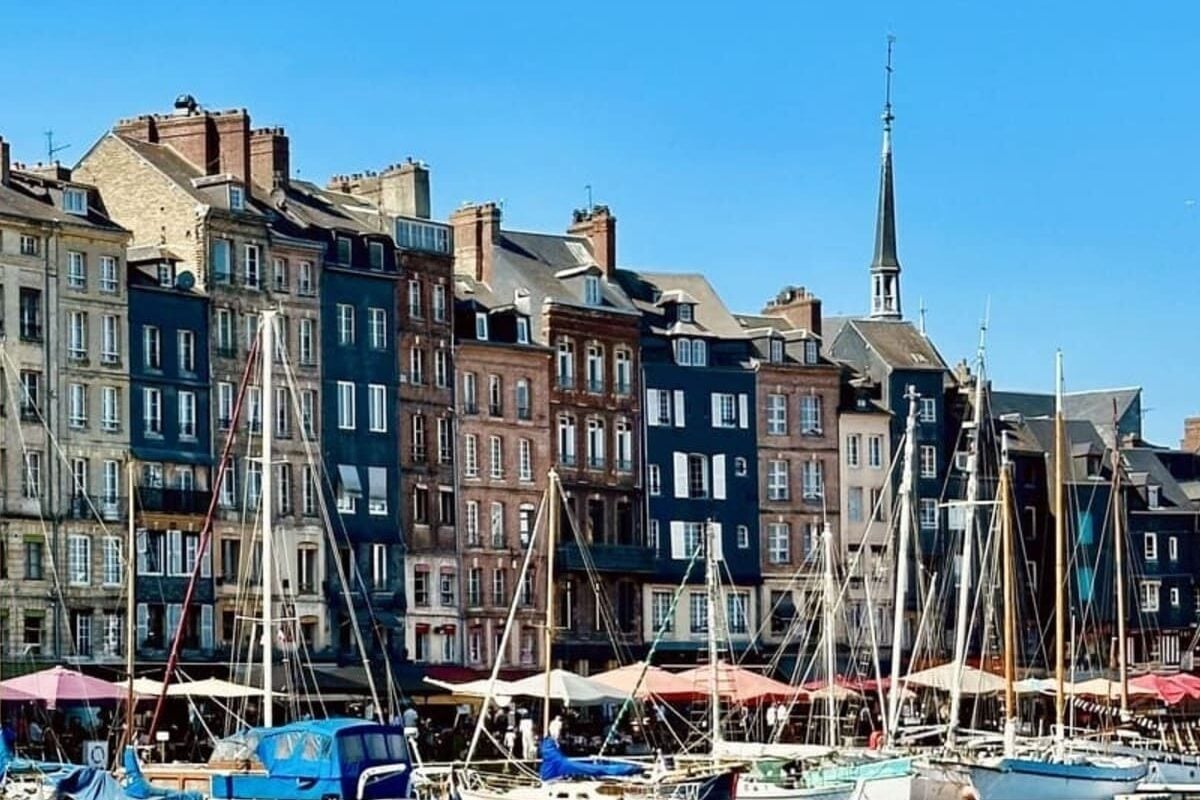
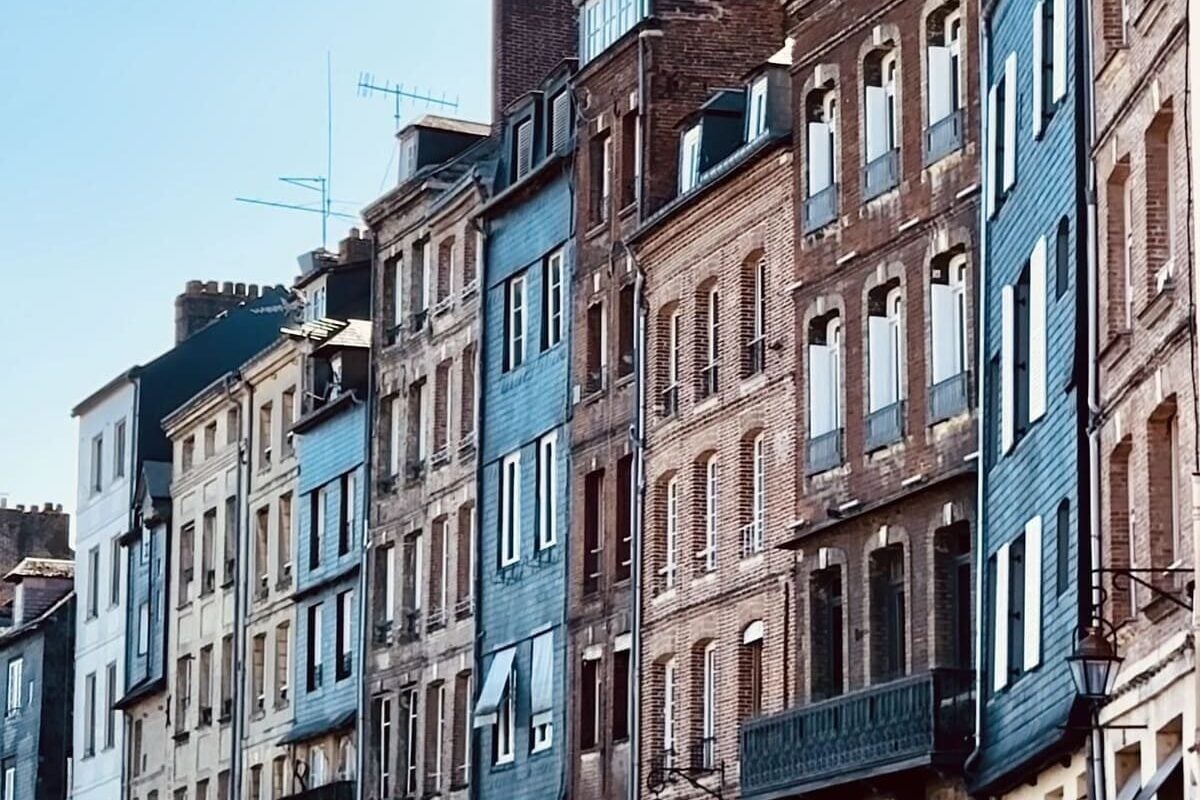
This is not just another pretty harbor town; it’s the harbor town. It has a whole cluster of tall, skinny houses in muted, weathered pastel tones arranged around a medieval marina, or Vieux Bassin, and between the bobbing boats and the reflection of the buildings on the water, the whole thing looks almost surreal.
Or as if someone carefully staged it for a painting… which, as it turns out, they sort of did.
Honfleur is the effective birthplace of Impressionism, where artists Monet and Boudin spent hours obsessing over that soft, early-evening golden glow, waterfront reflections, and those big, blue Normandy skies.
Walking around the Old Town feels like stepping into a painting: endlessly charming cobbled lanes, half-timbered abodes, and cozy art galleries tucked into basically every corner. My favorite thing to do in Honfleur, you ask?
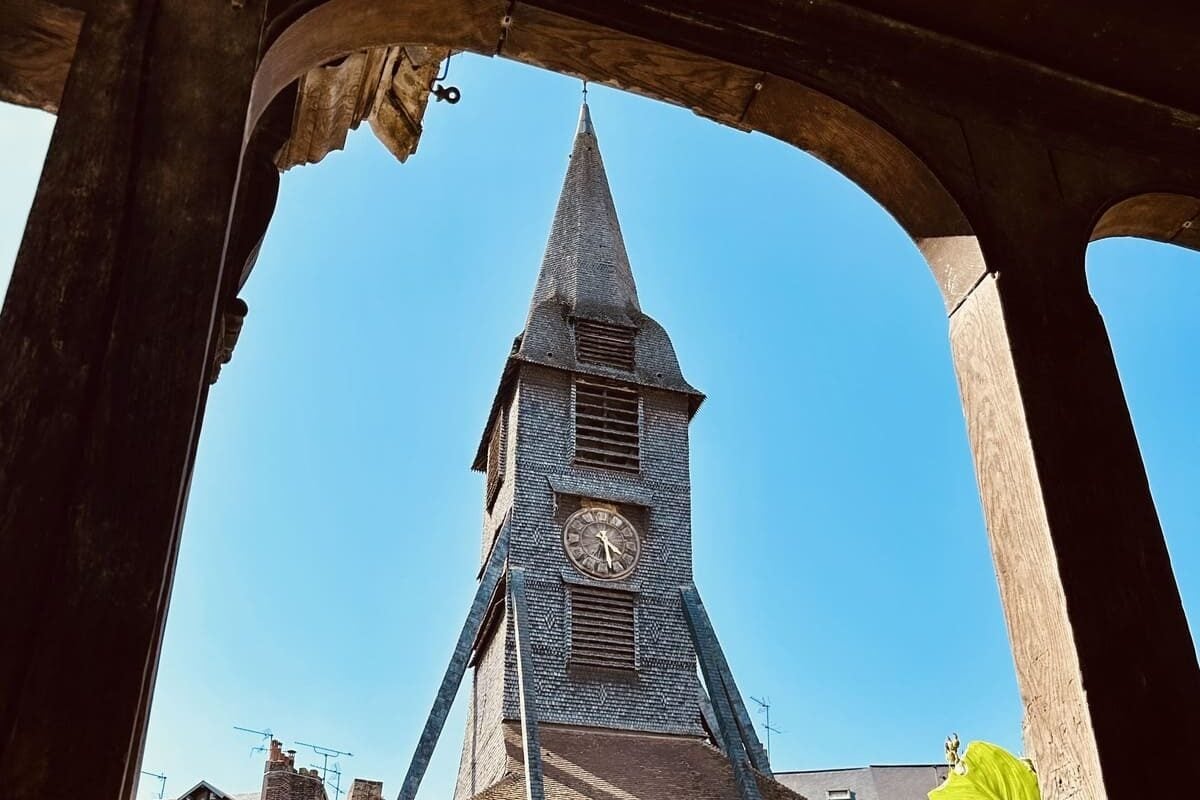
Well, other than paying the unique Église Sainte-Catherine a visit, a wooden church built by shipbuilders and the oldest surviving timber structure of its kind in France, I just have to pop round one of the waterfront terraces and get my dish of fresh oysters and moules frites overlooking the harbor.
Wondering how safe is France at the minute? Their passive-agressiveness aside, we do love our frog-eating friends, but if there’s one thing they love other than their larger-than-your-head baguettes and complaining is… a good old-fashioned strike.
Check Travel Alerts Before Flying Abroad
Year in, year out, travelers headed to France are faced with major travel disruption due to protests, or a sudden political upheaval that throws the entire country into turmoil.
The best way to anticipate major events is checking constantly the latest travel alerts issued to the Traveler Dashboard, and verify the actual safety levels on the ground on the Traveler Safety Index, whose score is based off of visitors’ own reports.
Right now, France scores a decent 86 out of 100:
Chartres
Distance from Paris: 56 miles
How to get there: 1 hour train
Roundtrip ticket fare: $24–$36
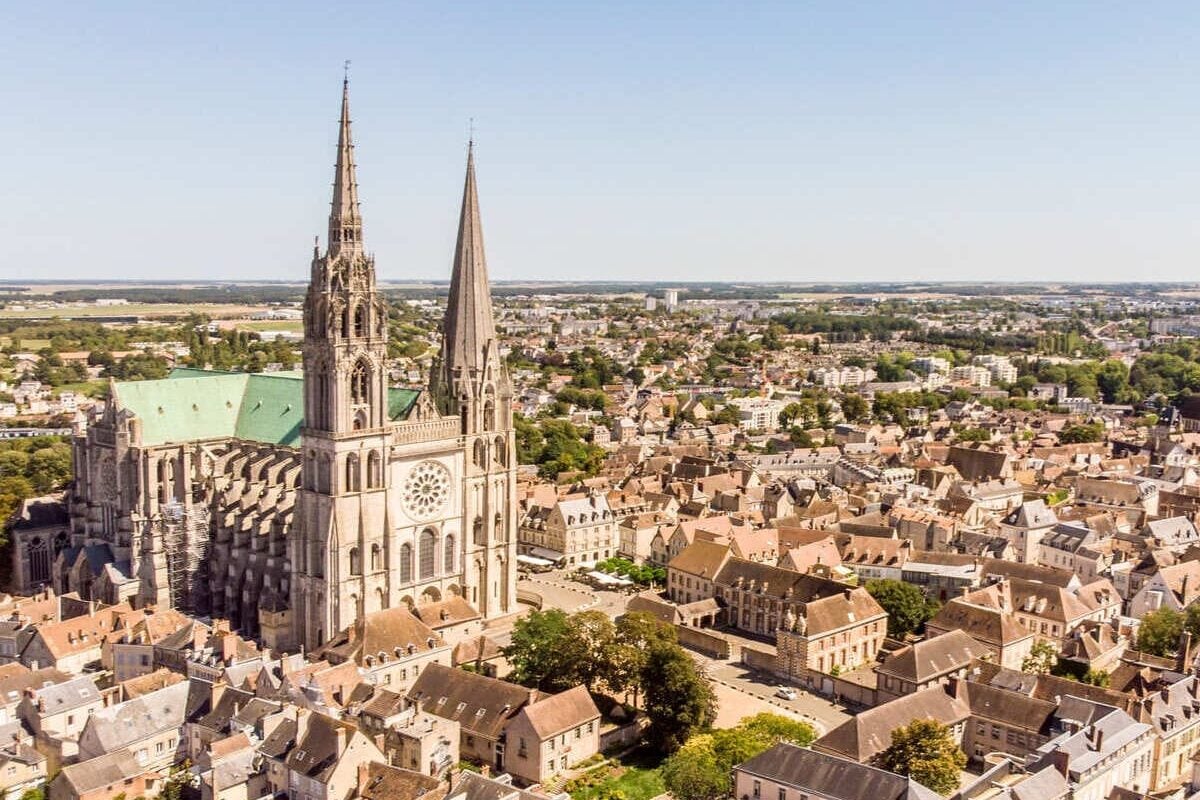
File this under “best cathedral day trip from Paris, no contest”:
Dominated by a UNESCO-listed Gothic masterpiece—one of the very first churches ever awarded World Heritage status—Chartres Cathedral feels like Paris before the 19th-century development boom and mass tourism absolutely did its thing and changed it for good.
Chartres Cathedral may be the star of the show, with its mismatched spires and ridiculous display of stained glass, but the real magic kicks in once you step outside. Most tourists hop off the train, beeline straight to the cathedral, snap a few pics, and call it a day.
After you say your little silent prayer, don’t leg it just yet.
The Old Town spills out from the cathedral square in a maze of stone-laden streets and timbered houses, market squares lined with weeping willows, and stone bridges stretching over the scenic Eure River.
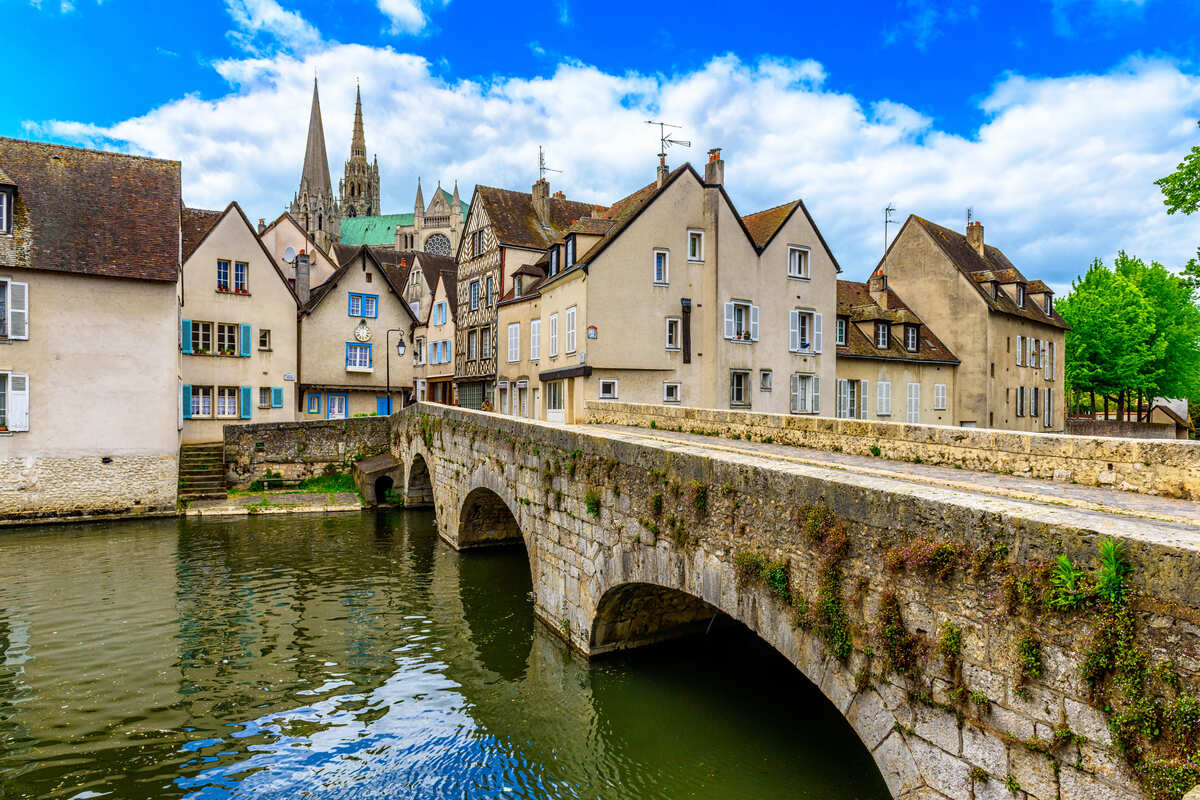
It’s not just a half-day box-tick. It’s a full-on medieval time warp.
Whenever things get a bit much in my 15th arrondissement Paris nook, and I need a change of scenery, Chartres is where I go to catch a proper breather, particularly around the “Lower Town” area, where you’ll find old washhouses along the riverbank and barely another soul in sight.
Keep it simple: grab a pastry from Maison Lemaire—I’m partial to their chaussons aux pommes—wander aimlessly, and let the cathedral drift in and out behind a row of rooftops, then reappear again down the next alley. It’s got a habit of following you around, no matter where you end up.
For those sticking around into the evening, stay put for Chartres en Lumières, a summertime event where over 20 landmarks across the city get lit up with artistic projections. The whole place turns into an open-air light show, and believe it or not, it still manages to feel charmingly understated rather than touristy.
Now take this quiz to find your perfect medieval match!


Stacie Harris is a local resident and reporter of the Maple Grove area. Stacie reports on medicine and science for the Maple Grove Report.




