5 Signs That It’s Time to Switch to a New Personal Injury Lawyer


5 Signs That It’s Time to Switch to a New Personal Injury Lawyer

Hiring an attorney for a personal injury claim should secure fair compensation rather than creating additional stress during your recovery process. However, the relationship between a client and their lawyer does not always work out as planned, and realizing that your representation is inadequate is a necessary step toward protecting your future. While changing attorneys mid-case is a significant decision, staying with a lawyer who is neglecting your needs could jeopardize the outcome of your settlement. Here are some key signs that you should change to a new personal injury lawyer:
1. Communication Has Broken Down Completely

One of the most common complaints clients have regarding legal counsel is a lack of responsiveness. It is reasonable to expect a return call or email within one or two business days, yet some clients find themselves waiting weeks for a simple update on their case status.

If you find yourself constantly chasing your attorney for information or are frequently passed off to paralegals who cannot answer your specific legal questions, this is a major red flag that your claim is not being prioritized. 

2. They Lack Experience with Your Specific Injury Type

Personal injury law is a broad field, and an attorney who excels at negotiating minor car accident settlements may not have the resources to handle a complex, catastrophic injury case. You need a representative who understands the nuances of your specific situation, especially when the stakes are high. 

Experienced attorneys, like John M. Groce, Jr., understand that specific expertise is required for severe negligence claims rather than relying on a general practice approach. This is crucial given that in 2023 alone, there were 222,698 preventable deaths in the US, highlighting the need for specialized legal counsel.

3. They Are Pushing You to Settle Too Early

A lawyer looking for a quick turnover might pressure you to accept the first offer from an insurance company, even if it does not fully cover your medical bills. While it is true that the vast majority of personal injury claims are settled outside the courtroom, with approximately 4-5% of cases going to trial, this does not mean you should avoid litigation if the settlement offer is unfair.

An attorney who is afraid of the courtroom is not serving your best interests. You require a legal partner who is prepared to escalate the matter if the opposing party refuses to offer a just amount.

4. Unexplained Delays and Missed Deadlines

Legal proceedings involve strict timelines, and missing a filing deadline can be fatal to your claim. If your case seems to be stalling without a valid explanation or your lawyer has missed court dates, you must take immediate action to protect your rights before it is too late. Professional negligence can result in your case being dismissed entirely.

5. You Have Lost Confidence in Their Strategy

Trust is the foundation of the attorney-client relationship. If you feel that your lawyer is disorganized or simply does not believe in the merits of your case, it’s difficult to move forward effectively. Statistics show that of all the personal injury cases that went all the way to verdict, the success rate for plaintiffs was about 50%, which demonstrates that having a confident and prepared litigator can make a substantial difference in the final result.

Recognizing that your attorney is no longer meeting your needs can be unsettling, but you are not required to stay with representation that isn’t serving your best interests. Most states allow clients to change lawyers at any stage of a personal injury case, giving you the freedom to choose someone who will advocate for you with the commitment and skill your claim deserves.  


Source link

Leave a Reply

Subscribe to Our Newsletter

Get our latest articles delivered straight to your inbox. No spam, we promise.

Recent Reviews


There are certain engine configurations that are known even to those whose interest in engines is minimal. For instance, most people will know what makes a V-engine a V-engine, and even the differences between an in-line and flat engine

One engine design trait that’s perhaps less well-known is also related to the engine block, but not to with how the cylinders are arranged in the engine, rather with how they’re supported and cooled. When looking at this aspect of engine design, there are really three main types of engine block to look at. At the extremes are closed-deck and open-deck engine blocks, with some modern engines taking a halfway house approach with a semi-closed design. 

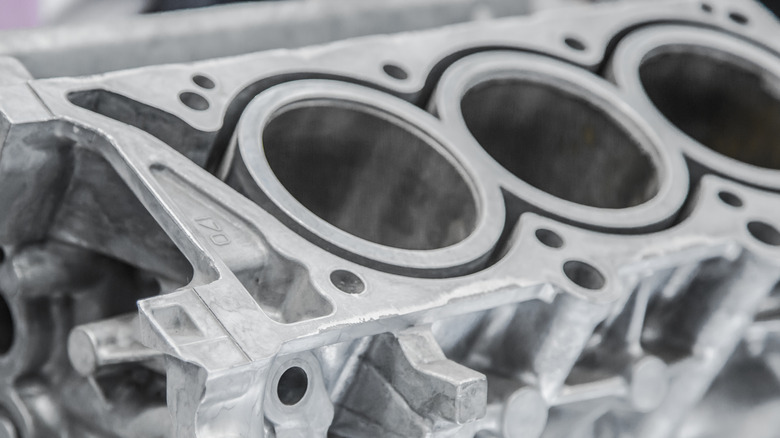
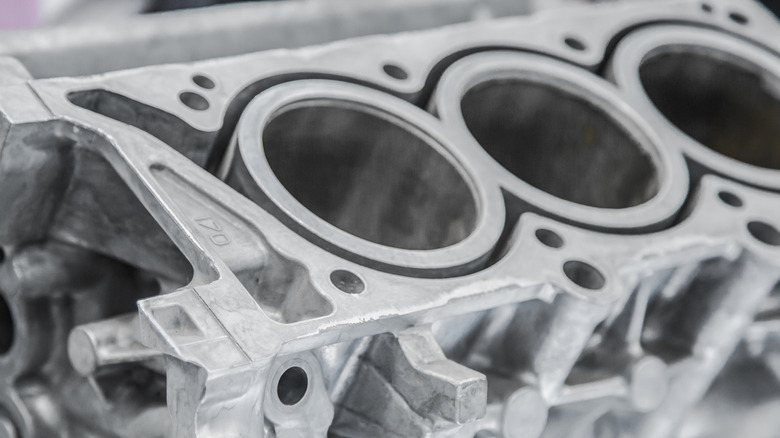
Let’s start by defining what an engine deck is. Essentially, the engine deck is that part of the block that the head gasket sits on, and the engine head attaches to. This means that an inline engine with a single line of cylinders will have one deck, whereas a V-configuration with two banks of cylinders will have two decks. 

Now that we understand that, we can begin to discuss the differences between closed-deck and open-deck engine blocks. In an open-deck engine, there is open space around the top of the cylinders that allows the coolant to circulate more freely. In a closed-deck design, in case you haven’t guessed it by now, the deck features extra material that offers less in the way of cooling, but it does support the cylinders more rigidly. Let’s pop the cylinder head off and have a closer look at these engine block types and why they matter more than you may think. 

Open-deck engines are cool, but flawed

For engine makers, there are definite advantages to open-deck designs — they cost less to manufacture when compared to closed-deck engines, and keep the engine cooler by exposing more of the surface area of the cylinder to the cooling liquid. 

However, all this open space around the cylinders is all very well and good when looking at cooling and manufacturing complexity — but cracks start to appear (sometimes literally) when we look at other aspects of closed-deck engine blocks. While it’s unfair to call open-deck engines unreliable and leave it at that, there are trade-offs in the design, and these become more noticeable in high-performance situations.

Essentially, the lack of material at the top of the engine deck means the engine is less structurally rigid right at the point where it meets some of the most extreme forces engines have to cope with — the combustion point at the top of the cylinder.

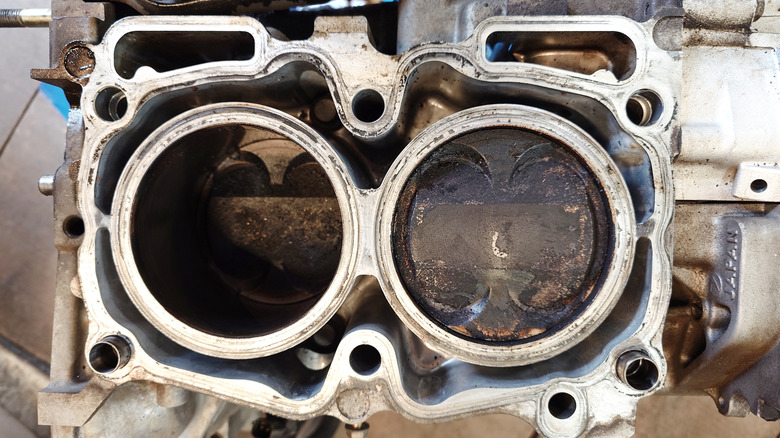
If you removed the head from an open-deck design and look down at the deck, this structural weakness is visible. From this viewpoint, the cylinders look separate from the rest of the engine block, with the gap between the two being used for coolant, as some open-deck designs have limited support at either end of the cylinder bank. While this gives more space for coolant to move freely, the downside is that it also does the same for the cylinder. Over time, even the limited movements of cylinders can weaken the head gasket and bring all the associated troubles that follow such a failure. 

Why some engines use closed- and semi-closed deck designs

Open-deck engine blocks are optimized for cooling and manufacturing efficiency. However, incorporate such a configuration in a high-revving, turbocharged brute of an engine and, well, it could end very badly. This is why such engines will usually use a closed-deck configuration. 

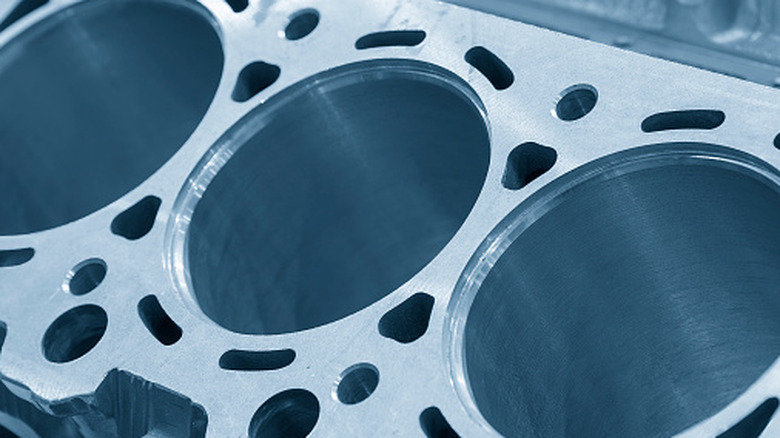
In a closed-deck engine, the open spaces around the cylinders of an open deck are filled with additional material. Obviously, the removal of such space and the flexibility it gives to the cylinders substantially strengthens the engine block. This is why some people fill engine blocks with concrete — it removes the flexibility afforded by the presence of cooling chambers. This is especially important for high-performance engines, but to call it overkill for the family runabout is not overstating the case. 

However, and the more observant among you will be there by now, filling an engine’s cooling cavities with material may add strength — but at the expense of cooling efficiency. This is why many modern turbocharged engines or higher-performance engines use a halfway house design in the form of semi-closed decks. 

Semi-closed decks are a compromise design that offers more rigidity to the cylinders by adding more support points. These supports are usually at the top of the cylinder. For instance, while there are pros and cons to Subaru’s EJ20 engine, the company released a version with a semi-closed deck with four additional support points, which should make it less prone to bore distortion. Ultimately, open-deck and closed-deck engine blocks represent design decisions based on the demands the engine is expected to handle. 


Source link