Americans Can Now Fly Nonstop To 4 Of The Safest Undiscovered Caribbean Islands


Share The Article

Trying to map out the perfect off-the-grid Caribbean trip used to end in a massive headache.

Historically, if an island was actually safe and totally undiscovered, getting there involved a brutal itinerary… we’re talking multiple layovers, terrifying tiny commuter planes, or sketchy ferry rides.

On the flip side, the islands with easy, direct flights from the States are almost always the ones packed with massive mega-resorts and thousands of cruise ship passengers.

But the aviation game is completely shifting right now. Airlines are finally using fuel-efficient, lower-capacity planes to operate direct, point-to-point routes to hidden gems that were once unreachable.

If you are ready to ditch the mainland crowds, here are 4 of the safest, off-the-grid Caribbean islands that you can finally fly to nonstop.

1. South Caicos, Turks and Caicos

Woman stepping into ocean in South Caicos, Turks and Caicos

When people think of Turks and Caicos, they usually think of Providenciales, which is getting incredibly congested and commercialized. South Caicos, affectionately known as the “Big South,” represents the absolute opposite of that.

  • The Vibe: It’s an incredibly authentic place where wild donkeys roam the historic salt flats and the local settlement is literally the fishing capital of the country. The island is totally devoid of sprawling all-inclusive resorts and massive designer shopping plazas.
  • The Ground Experience: The marine life here is unbelievable, featuring a breathtaking 7,000-foot underwater wall that makes it a world-class hotspot for advanced scuba divers. Because there are basically no red lights, only one gas station, and a tiny population, the crime rate against tourists is near-zero.
  • Getting There: For an entire generation, this place was totally cut off from the American travel market, requiring domestic flights or long ferry rides to reach. That completely changed when American Airlines launched a scheduled nonstop flight straight from Miami.

2. Guadeloupe
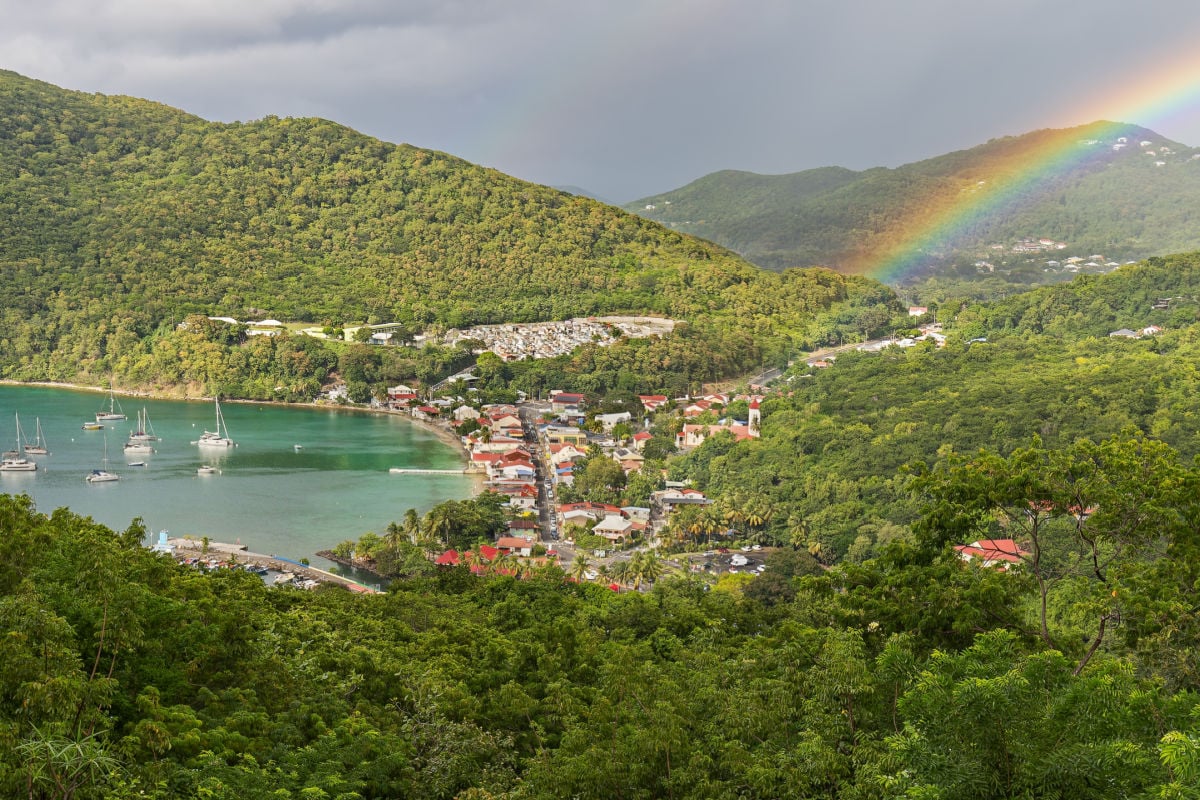
Small town Deshaies (Caribbean island Guadeloupe) at late afternoon with rainbow

This place offers a wildly unique setup because it isn’t an independent nation; Guadeloupe is actually a fully integrated overseas department of the French Republic.

  • The Vibe: The territory actually looks like a butterfly from above, with the eastern wing featuring postcard-ready white sands and tranquil coastal villages. The western wing is totally wild, packed with dense rainforests, waterfalls, and an active volcano called La Soufrière that rises over 4,800 feet into the air.
  • The Ground Experience: Because it is essentially Europe in the Caribbean, they use the Euro, run on strict European Union standards, and are heavily policed by the French Gendarmerie. This means violent crime against tourists is practically unheard of, and the U.S. State Department gives it a Level 1 safety advisory—their absolute safest rating.
  • Getting There: American Airlines currently runs regular, nonstop flights straight from Miami. You can jump from the U.S. mainland to a deep French-Creole cultural hub in just about three and a half hours.

3. Roatán, Honduras
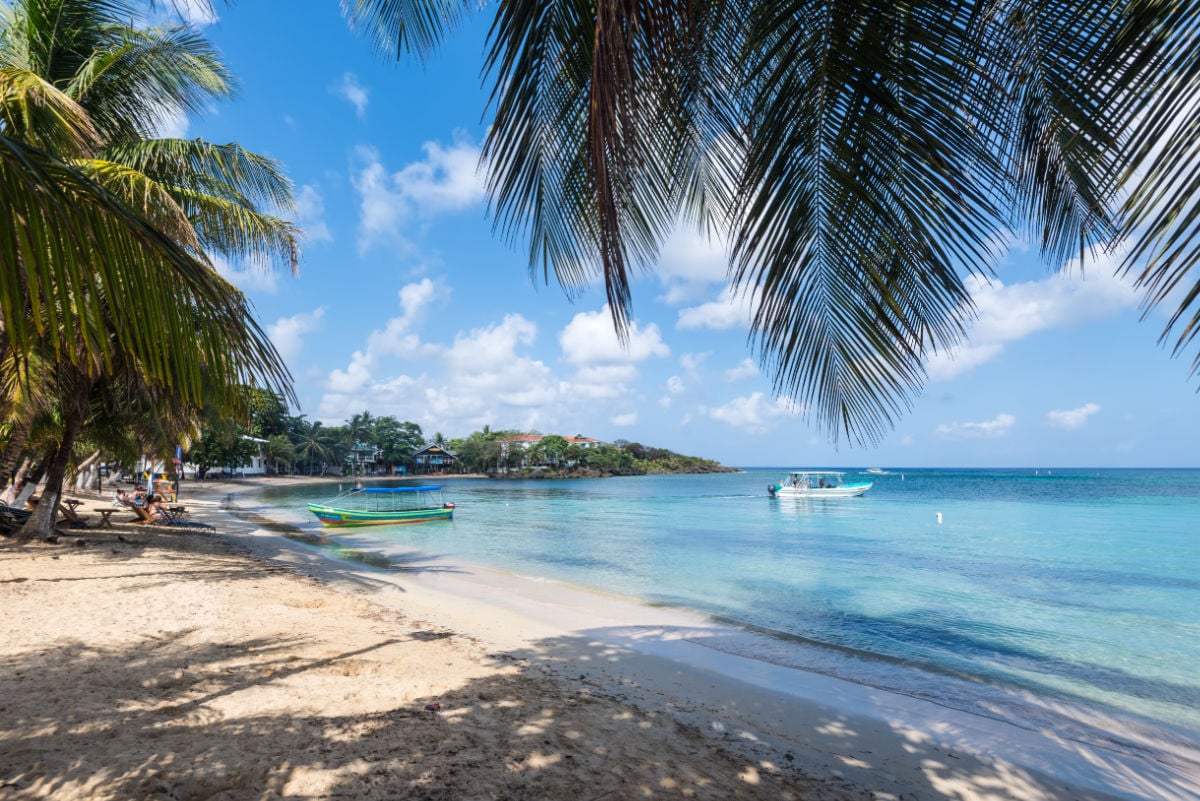
Half Moon Bay Beach at Roatan Island, Honduras

The mainland of Honduras frequently gets hit with a Level 3 safety advisory from the U.S. State Department due to rampant gang activity and crime. But Roatán is a total security anomaly.

  • The Vibe: It sits about 40 miles off the northern coast, meaning it is geographically severed from the mainland’s systemic issues. This is one of the tropics’ last truly unspoiled spots, totally avoiding the hyper-commercialization of other islands.
  • The Ground Experience: It is surrounded by the Mesoamerican Barrier Reef, which is the second-largest barrier reef system on the planet. You can spend your day diving, and then hit up West End Village, which is full of colorful palapa-style houses where you can grab fresh seafood and traditional pupusas right on the curb. The tourist areas here are incredibly well-policed with a massive concentration of resources, making it a highly secure localized safe haven.
  • Getting There: You can easily bypass Miami for this one. You can catch nonstop flights directly into the island from Dallas, Atlanta, Denver, and Minneapolis on airlines like American, Delta, United, and Sun Country.

4. La Romana, Dominican Republic

Aerial View Of A Caribbean Beach In La Romana, Dominican Republic

The Dominican Republic is famous for the massive, crowded mega-resorts in Punta Cana, but discerning travelers are starting to organically move westward along the coast to dodge the hordes.

  • The Vibe: La Romana historically served as a sugar-producing region, but it has completely transitioned into a chilled-out, sophisticated coastal escape. It offers a much more serene and culturally integrated experience than its crowded eastern neighbor.
  • The Ground Experience: The downtown and resort zones here are highly policed and secure, making the risk of violent crime incredibly minimal. You get seamless access to the gorgeous shores of Playa Bayahibe, and you can easily take a boat out to the protected marine environment of Saona Island. If you want a break from the beach, you can explore a massive cave system called Cueva de las Maravillas that is covered in ancient Taino pictographs.
  • Getting There: You can totally skip the chaos of the Punta Cana airport. American Airlines and JetBlue run nonstop flights from Miami and the East Coast right into La Romana International Airport.

Now take this quiz to find your perfect match!


Step 1 of 3

What’s your ideal island vibe?

🐴 Authentic fishing capital with roaming wild donkeys

🦋 A ‘butterfly’ island with pristine beaches and dense rainforests

🛖 Unspoiled tropical reef village with colorful palapas

🥂 Chilled-out, sophisticated coastal escape away from mega-resorts

Step 2 of 3

What’s your ultimate vacation activity?

🤿 Diving a breathtaking 7,000-foot underwater wall

🌋 Hiking a 4,800-foot active volcano

🌮 Eating fresh seafood & pupusas right on the curb

🚤 Taking a boat to protected islands & exploring pictograph caves

Final Step

How do you want to handle logistics and safety?

🛑 I want an ultra-low crime spot with zero traffic lights

💶 I want strict European Union safety standards and to spend Euros

🛫 I want to fly direct from non-Miami hubs like Dallas or Denver

👮 I want highly policed resort zones away from the Punta Cana chaos

🇹🇨

South Caicos

The “Big South” Authenticity

Tap to Reveal Details

South Caicos, Turks & Caicos

Why it’s a match: You want total authenticity and near-zero crime! This island has basically no red lights, wild roaming donkeys, and is totally devoid of sprawling all-inclusive mega-resorts.

Must Do: Scuba dive the breathtaking 7,000-foot underwater wall. You can now reach this historically cut-off paradise via a scheduled nonstop flight on American Airlines straight from Miami!

🇬🇵

Guadeloupe

The French Caribbean Butterfly

Tap to Reveal Details

Guadeloupe

Why it’s a match: You love diverse nature and top-tier safety! As a fully integrated department of the French Republic, Guadeloupe runs on strict EU standards with a Level 1 safety advisory.

Must Do: Hike the 4,800-foot active volcano La Soufrière on the western wing, then relax on the pristine white sands of the eastern wing. Fly direct from Miami in just 3.5 hours!

🇭🇳

Roatán, Honduras

The Unspoiled Reef Haven

Tap to Reveal Details

Roatán, Honduras

Why it’s a match: You want an unspoiled spot with easy non-Miami flight options! Geographically severed from mainland issues, Roatán is an incredibly well-policed, safe haven.

Must Do: Dive the Mesoamerican Barrier Reef by day, then hit West End Village for fresh seafood and pupusas. You can fly nonstop from Dallas, Atlanta, Denver, or Minneapolis!

🇩🇴

La Romana, DR

The Sophisticated Escape

Tap to Reveal Details

La Romana, Dominican Republic

Why it’s a match: You want the gorgeous DR waters without the Punta Cana hordes. Highly policed and minimal crime, this former sugar-producing region is now a serene, sophisticated coastal escape.

Must Do: Relax on Playa Bayahibe, boat out to Saona Island, and explore ancient Taino pictographs in Cueva de las Maravillas. Skip the chaos and fly right into La Romana International!


Source link

Leave a Reply

Subscribe to Our Newsletter

Get our latest articles delivered straight to your inbox. No spam, we promise.

Recent Reviews


There are certain engine configurations that are known even to those whose interest in engines is minimal. For instance, most people will know what makes a V-engine a V-engine, and even the differences between an in-line and flat engine

One engine design trait that’s perhaps less well-known is also related to the engine block, but not to with how the cylinders are arranged in the engine, rather with how they’re supported and cooled. When looking at this aspect of engine design, there are really three main types of engine block to look at. At the extremes are closed-deck and open-deck engine blocks, with some modern engines taking a halfway house approach with a semi-closed design. 

Let’s start by defining what an engine deck is. Essentially, the engine deck is that part of the block that the head gasket sits on, and the engine head attaches to. This means that an inline engine with a single line of cylinders will have one deck, whereas a V-configuration with two banks of cylinders will have two decks. 

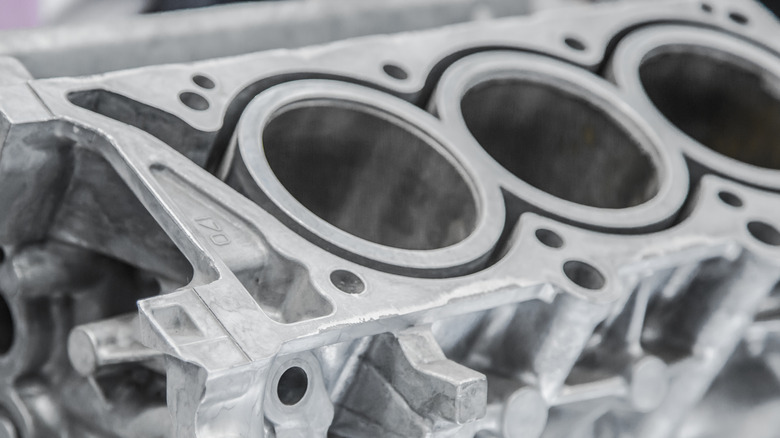
Now that we understand that, we can begin to discuss the differences between closed-deck and open-deck engine blocks. In an open-deck engine, there is open space around the top of the cylinders that allows the coolant to circulate more freely. In a closed-deck design, in case you haven’t guessed it by now, the deck features extra material that offers less in the way of cooling, but it does support the cylinders more rigidly. Let’s pop the cylinder head off and have a closer look at these engine block types and why they matter more than you may think. 

Open-deck engines are cool, but flawed

For engine makers, there are definite advantages to open-deck designs — they cost less to manufacture when compared to closed-deck engines, and keep the engine cooler by exposing more of the surface area of the cylinder to the cooling liquid. 

However, all this open space around the cylinders is all very well and good when looking at cooling and manufacturing complexity — but cracks start to appear (sometimes literally) when we look at other aspects of closed-deck engine blocks. While it’s unfair to call open-deck engines unreliable and leave it at that, there are trade-offs in the design, and these become more noticeable in high-performance situations.

Essentially, the lack of material at the top of the engine deck means the engine is less structurally rigid right at the point where it meets some of the most extreme forces engines have to cope with — the combustion point at the top of the cylinder.

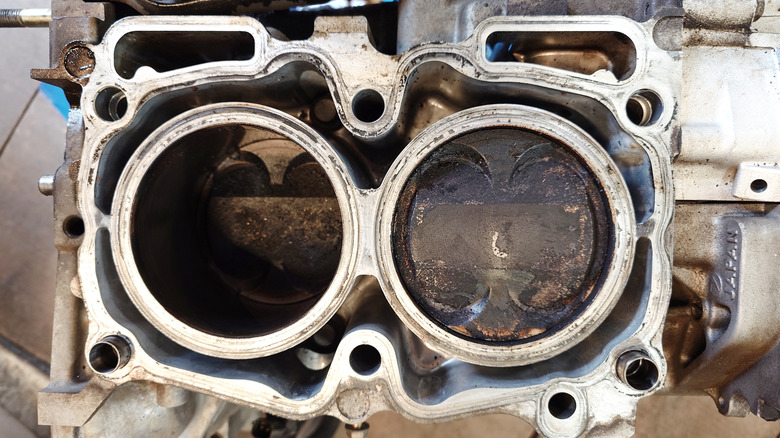
If you removed the head from an open-deck design and look down at the deck, this structural weakness is visible. From this viewpoint, the cylinders look separate from the rest of the engine block, with the gap between the two being used for coolant, as some open-deck designs have limited support at either end of the cylinder bank. While this gives more space for coolant to move freely, the downside is that it also does the same for the cylinder. Over time, even the limited movements of cylinders can weaken the head gasket and bring all the associated troubles that follow such a failure. 

Why some engines use closed- and semi-closed deck designs

Open-deck engine blocks are optimized for cooling and manufacturing efficiency. However, incorporate such a configuration in a high-revving, turbocharged brute of an engine and, well, it could end very badly. This is why such engines will usually use a closed-deck configuration. 

In a closed-deck engine, the open spaces around the cylinders of an open deck are filled with additional material. Obviously, the removal of such space and the flexibility it gives to the cylinders substantially strengthens the engine block. This is why some people fill engine blocks with concrete — it removes the flexibility afforded by the presence of cooling chambers. This is especially important for high-performance engines, but to call it overkill for the family runabout is not overstating the case. 

However, and the more observant among you will be there by now, filling an engine’s cooling cavities with material may add strength — but at the expense of cooling efficiency. This is why many modern turbocharged engines or higher-performance engines use a halfway house design in the form of semi-closed decks. 

Semi-closed decks are a compromise design that offers more rigidity to the cylinders by adding more support points. These supports are usually at the top of the cylinder. For instance, while there are pros and cons to Subaru’s EJ20 engine, the company released a version with a semi-closed deck with four additional support points, which should make it less prone to bore distortion. Ultimately, open-deck and closed-deck engine blocks represent design decisions based on the demands the engine is expected to handle. 


Source link