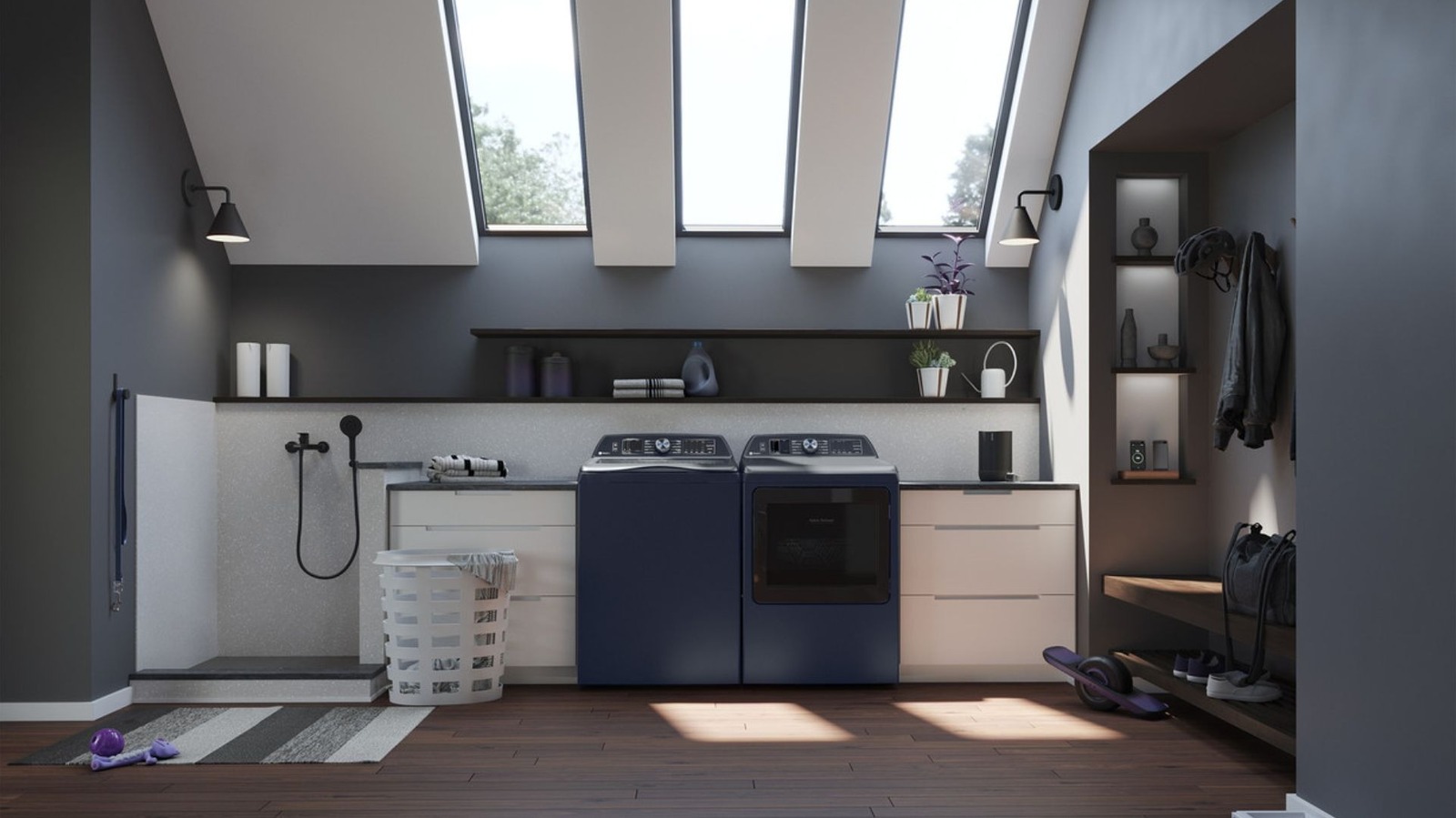

Buying a new washing machine isn’t a task anyone necessarily loves having on their to-do list. Sure, it can be fun to usher a shiny new appliance through your front door, but the process of actually making a final decision on which washer to go with can be a big hassle. To make things a little easier, it can help to start your search by choosing a brand, and from there, narrow down your search to the most popular options within that one brand.
General Electric, often shortened to simply GE, is one of the best major washing machine brands you can buy today. The company offers the best service experience among appliance brands, according to J.D. Power, and GE washing machines tend to have great average reviews across online stores at big-box retailers. However, this doesn’t mean every GE washer will function without issue and last a lifetime.
Modern appliances, in particular, are notorious for being built poorly, especially compared to their hardy predecessors, so that customers will likely need to replace the appliance sooner. Even though GE washing machines are among the better-rated options on the market, they can still experience a variety of common issues over time, and that’s evident in the problems owners commonly report.
Failure to turn on or start
Sometimes, GE washing machines simply won’t turn on. A quick search through Reddit shows just how common this issue can be, with GE washers struggling to start a load or turn on at all. There are a variety of reasons this can happen, whether your washer is decades old or brand new.
Often, the fix for this issue is super simple, like making sure the appliance is actually getting power. iFixit runs down the standard list of troubleshooting options for power issues, like making sure the washing machine is plugged in, checking whether the outlet has Ground Fault Circuit Interrupter (GFCI) protection that accidentally tripped and needs to be reset, or seeing if there’s an issue with the power outlet itself by plugging in a charger connected to your smartphone or another device. Other potential simple fixes include turning off the child lock or replacing a broken knob.
Other GE washing machines might require a multimeter to diagnose and help fix the problem. You can use a multimeter to test for continuity in the washer’s lid or door switch, start switch, or motor, and if there are any odd readings, you’ll know what the issue is and which part needs replacing.
Failure to spin or agitate properly
The best quality top-load washer brand, according to J.D. Power, is General Electric, based on its Problems Per 100 (PP100) rating of 60 PP100, which surpassed Maytag (70 PP100) and Whirlpool (71 PP100) by a significant margin. However, no matter how GE as an overall brand compares to Maytag, Whirlpool, and other top brands, GE washers aren’t immune to common problems, like struggling to spin or agitate your laundry. Without the spinning or agitating action, your clothes won’t get nearly as clean as they should be, and they’ll likely come out soaking wet.
According to one appliance repair expert, this issue can arise from simply overfilling the washing machine. When it’s packed too full, a washing machine can’t correctly balance the load, leading to an inability to spin or agitate everything properly. Or, this can sometimes be a user-error problem in which someone accidentally selected a no-spin option for the cycle. Running a drain and spin cycle can determine whether the washer’s spinning function is still working as it should. Otherwise, it might be a deeper issue with internal components, like the lid or door switch, motor carbon brushes, the motor itself, or the drain pump.
Failure to drain or fill with water
A washer’s main function is to fill with water and clean your laundry with whatever detergent you’ve supplied to the machine. However, some GE washers have trouble with the important step of filling with water prior to cleaning. One appliance repair company says this annoying issue can be caused by a defective water inlet valve, a faulty pressure switch, or a clogged water filter screen.
On the flip side, GE washing machines can sometimes turn on, fill with water, and spin correctly, but get hung up at the “drain” part of the wash cycle. For this issue, iFixit suggests running a drain and spin cycle to help pinpoint the issue. With the drain cycle running, you can pay attention to the noises the appliance is making while trying to drain and how much (if any) water is actually draining to see if it’s an issue with the pump or a potential clog.
Unfortunately, unless the washing machine randomly decides it wants to drain during your trial drain and spin cycle, this problem usually requires manually draining the machine before carrying out a fix. A faulty pump is one of the most common causes of a washer not draining properly, but this problem can also be caused by clogged hoses, a water-level sensing system malfunction, or in a worst-case scenario, a bad control board.
Leaks
Because washing machines often fill at least half-way with water to properly clean laundry, leaking is a major problem that needs immediate attention. Depending on the severity and source of the leak, a leaking washing machine can be more than just an inconvenience; it can also cause costly damage to your floors, walls, and nearby appliances or decor. Depending on where the leak is springing from, the amount of water on the ground near your washer can vary, as well as the time in the wash cycle when it starts to leak.
Multiple Redditors have encountered minor and major issues with leaking, with both top- and front-loading GE washers. This doesn’t mean all GE washing machines will leak, but it is a common issue to be aware of. An appliance repair company says leaks can be caused by an overloaded machine, clogged or loose hoses, a defective water pump, or, specifically with front-load models, worn or torn rubber gaskets along the door. In many cases, replacing the worn or damaged component can resolve the leak.
Lid or door lock problems
Some GE top-loading washing machines can experience lid-lock problems. This is also an issue for front-loading GE models, but instead of a lid on top, it’s a door in front that sometimes locks improperly. Unfortunately, this can be a pesky issue for non-professionals to try and fix, simply because of how difficult it can be to bypass the locked lid or door and get into the washing machine.
For some models, the process can be relatively easy. With many top-loading GE models, you can use a strong string, cord, or a plastic card to manually release the lid. However, iFixit notes that these methods shouldn’t be used on any washing machine that has a fixed hook or catch, and instead recommends removing the top panel on the washer to access the latch inside. It’s possible this could be a one-time issue and the washer’s lid might not need to be manually unlocked again, but if it continues malfunctioning, it could be a sign of a bigger issue with the catch, door hinges, latch mechanism, water-level sensor, or even the control board.

Stephan is the sports journalist for the Maple Grove Report.