California race tests progressives’ appeal in a Republican district 


At first glance, a recent Democratic primary in California’s Central Valley was just another skirmish between the party’s progressive wing and its more moderate establishment.

This time, the contest was won by populist insurgent Randy Villegas. But what sets the outcome apart from similar primary battles is the stakes.

This wasn’t a fight over a safe Democratic seat. Villegas will be the standard bearer against Republican Rep. David Valadao, one of the most promising targets for Democrats desperate to retake the U.S. House majority and slow down President Donald Trump.

The November race will test the theory, popular on the left, that voters will flock to progressive, anti-establishment candidates even in places that have traditionally favored Republicans.

“A populist message isn’t just for blue districts or certain parts of the country,” said Ravi Mangla, a spokesperson for the Working Families Party, one of the progressive groups that backed Villegas. “It can win anywhere people feel like politics is not working for them.”

“More than ever, voters across the political spectrum want candidates who are willing to stand up to power,” Mangla said.

The National Republican Congressional Committee dismissed Villegas’ chances, even though the state’s Democratic leaders recently redrew the district to make it easier to flip this year.

“Democrats know Villegas can’t beat Congressman David Valadao, as he embraces the same failed policies that have made California more expensive, less safe, and harder for working families in the Central Valley,” said spokesperson Christian Martinez.

Progressives want a shot in key races

The Villegas victory comes during an election season in which substantial parts of the Democratic base are rejecting the candidates that party bosses see as their best shot at winning power in Congress.

Graham Platner overwhelmingly won the Democratic Senate primary in Maine this week after Senate Minority Leader Chuck Schumer’s preferred nominee, Gov. Janet Mills, dropped out with lackluster support weeks before the election.

A combat veteran and oyster farmer, Platner has never held elected office before, and he’s endured controversies over past relationships with women, inflammatory online posts and a since-covered tattoo recognized as a Nazi symbol.

In Michigan, Rep. Haley Stevens is entangled in a three-way contest for the Democratic Senate nomination against state Sen. Mallory McMorrow and progressive favorite Abdul El-Sayed. The primary is Aug. 4, and El-Sayed recently scored a major endorsement from the United Auto Workers union, a political powerhouse in the state that is home to the U.S. auto industry.

And in Minnesota’s U.S. Senate race, progressive Lt. Gov. Peggy Flanagan is in a fierce battle with U.S. Rep. Angie Craig, who is backed by labor unions, LGBTQ groups and moderate Democrats ahead of the primary on Aug. 11.

Another test will come on June 30 in Colorado, where progressive Manny Rutinel faces establishment-backed Shannon Bird in the Democratic primary to take on Republican Rep. Gabe Evans. Like Valadao, Evans is a top target for Democrats. And like the California race, the Colorado contest hinges on questions about who is most electable in November.

Democrats try to unite around their nominee

Valadao finished first and Villegas second in California’s primary, in which the top two candidates move on to the general election.

When early voting began about a month before the primary, the Democratic Congressional Campaign Committee took the unusual step of publicly signaling support for Jasmeet Bains, a doctor and state Assembly member who had lined up support from a bevy of elected officials, unions and health care groups.

“Dr. Jasmeet Bains has fought on the frontlines of health crises and built a track record of delivering for the Central Valley,” DCCC Chair Suzan DelBene said in a statement at the time. She did not criticize Villegas, but the public support for his rival was a powerful signal to Democratic donors and activists that the party believed Bains was a stronger candidate. Congressional leaders and the party apparatus they control rarely wade overtly into contested primaries for open seats.

The decision to back Bains infuriated many on the left, who saw it as another example of Washington insiders being out of touch with both the Democratic base and disaffected voters who helped power Trump’s victories.

“I think the moderates are wrong. People don’t want status quo, pro-corporate candidates,” said Joseph Geevarghese, executive director of Our Revolution, a progressive group that grew out of Vermont Sen. Bernie Sanders’ 2016 presidential campaign. “They want people who are going to shake things up.”

Now that Villegas won, Democrats in Washington now insist he’s a strong candidate who is well-positioned to defeat Valadao. They point to the grassroots support that propelled him through the primary and the combined 59% that the Democrats got in the primary, significantly more than the 41% who voted for Valadao, though many more voters will turn out for the general election.

If the snub created tension between Villegas and his party, both sides buried it by Wednesday and presented a united front. California members of Congress, including some who had backed Bains, issued effusive statements, and he was magnanimous in return.

“We’re all in to elect Randy and flip this seat,” said Anna Elsasser, a spokesperson for the DCCC, the arm of the Democratic Party focused on winning House races. The district is “a must-win seat for the House majority, and we are confident in winning with Randy as the Democratic nominee,” she added.


Source link

Leave a Reply

Subscribe to Our Newsletter

Get our latest articles delivered straight to your inbox. No spam, we promise.

Recent Reviews


2026 has shaped up to be a big year for Milwaukee, and the company shows no signs of slowing down as it expands its product line. For example, it has announced that some solid new Milwaukee hand tools and organizers will be arriving throughout the summer, but that’s not all. At the end of the day, you need somewhere to put all of this stuff, and while the Milwaukee Packout storage system is deep and varied as is, the company will expand the line in the summer months.

More methods for organizing your tools are on the way, too, with the Milwaukee Packout line set to introduce some new entries this summer. They vary in size, purpose, and price point, but they’re all compatible with the wider Packout line. That means they can connect to each other, making transportation easier. In some cases, they’ll be able to help keep tools and other items secure and organized while on the move. Additionally, all of these new Packout products are covered by Milwaukee’s Limited Lifetime Warranty.

So, what new products does Milwaukee have to offer from its Packout line this summer? Here are the drops you can look forward to throughout June and July 2026.

Milwaukee compact crate

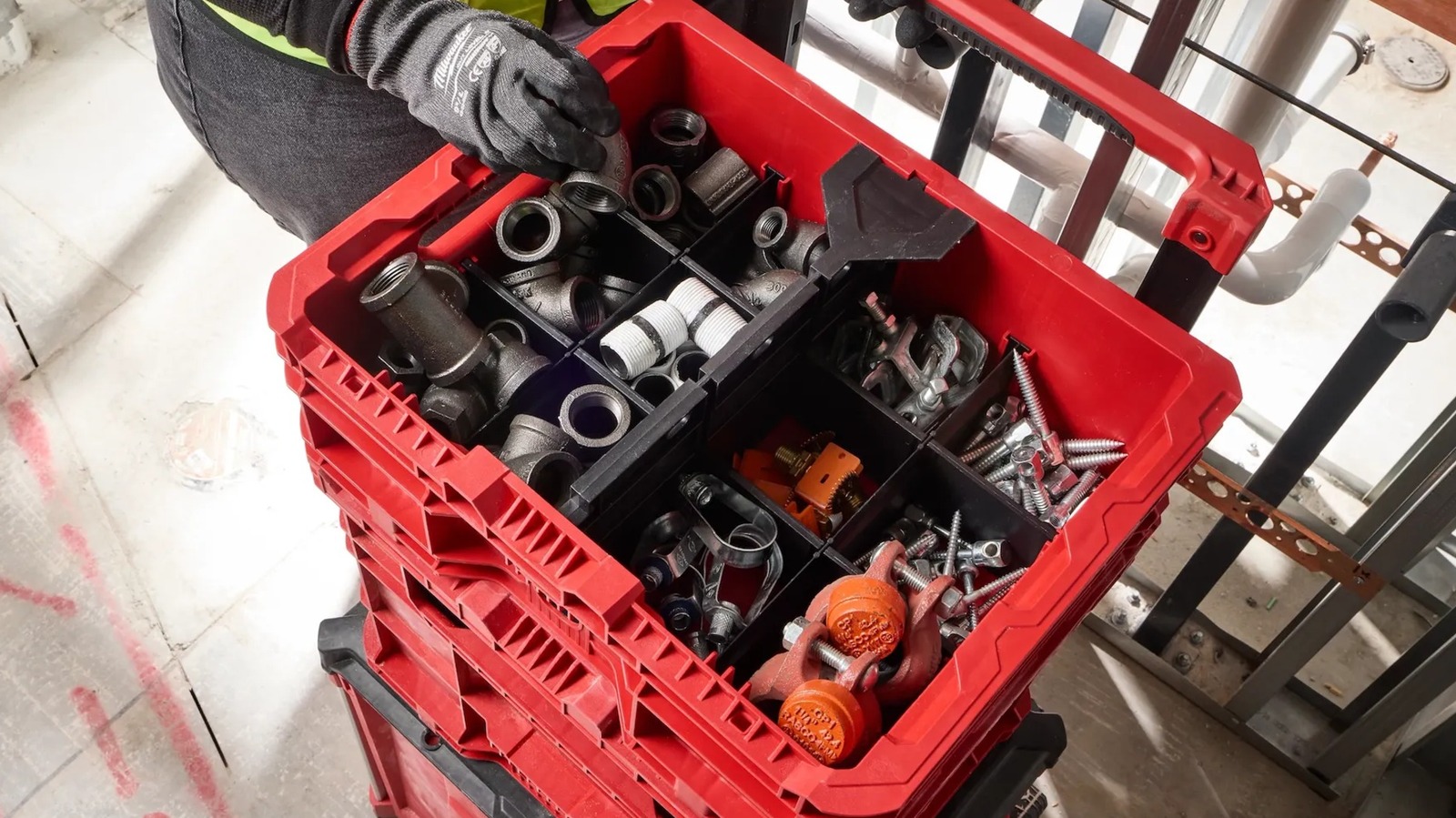
Sometimes, a massive Packout crate isn’t a necessity, which is why the line has its share of smaller options. Yet another will be coming to the Milwaukee catalog in the form of the Milwaukee Packout compact crate, which is set for a June 2026 release and will cost $39.97. It has a 30-pound weight capacity, comes in at 8.75 inches tall, 9.5 inches wide, 15.5 inches long, and 3.75 pounds, and includes two removable dividers to create up to three sections within the crate. The dividers can also be customized by cutting them to size along the pre-made score lines.

This compact crate features a wide front opening for easy access to its contents while on the job, as well as a metal top handle to carry it around on its own. Should you want to add it to your current Packout stack, you can use the connection points at the top and bottom of the crate. Speaking of durability, Milwaukee notes that it has an impact-resistant body along with weep holes to prevent water collection. At the same time, there is some nuance regarding the waterproof nature of Milwaukee Packout products, so keep that in mind before letting this crate get soaked.

Milwaukee Packout low-profile crate

A shorter but equally mighty Milwaukee Packout container is also on its way to customers this summer. The Milwaukee Packout low-profile crate is the shortest of the new releases at just 6.625 inches tall, though it makes up for what it lacks in height with a 15-inch length and an 18.625-inch width. Even though it’s slightly heavier than the compact crate at 4.85 pounds, it wins out in weight capacity with a 50-pound limit. It will be released in June 2026 and will cost $44.97.

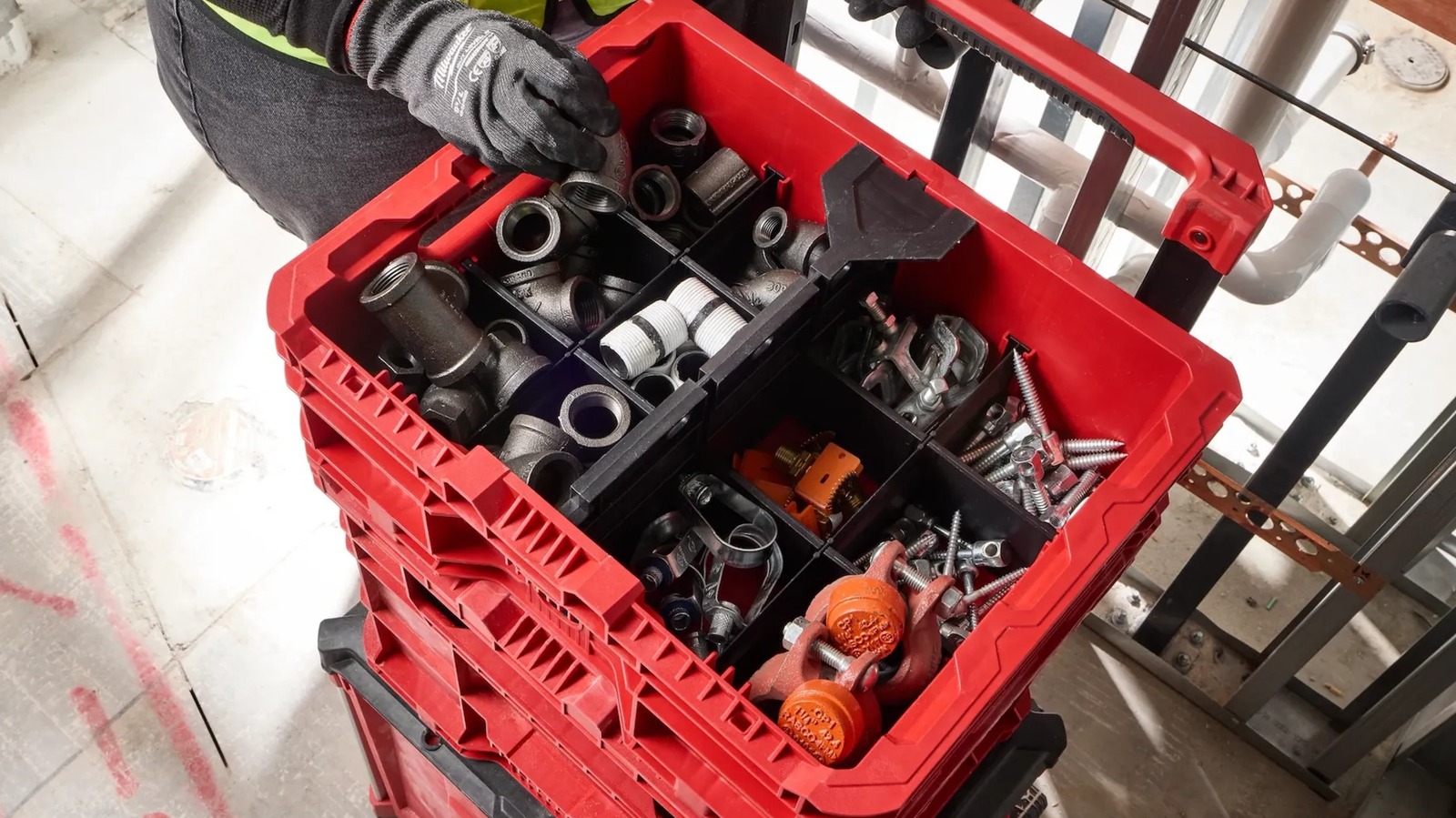
For added modularity, the low-profile crate includes three different divider types: eight short, two long, and one for the middle of the container. When combined, they form up to 12 individual sections for tool and accessory organization. In terms of connecting to other Packout containers, it can do so from the top and bottom. Alternatively, built-in side handles are integrated into the design to make it easier to carry the crate on its own. The crate has weep holes for water drainage and an impact-resistant body.

Milwaukee Packout XL crate

Moving on to one of the larger upcoming Milwaukee Packout releases — even if it ultimately lands somewhere in the middle of the smallest and largest Packout containers for sale — there’s the aptly-named Milwaukee Packout XL crate. This release will hit shelves in June 2026 and comes with a $69.97 price tag. The 8.03-pound crate can take on some serious tools with its 75-pound weight capacity. It measures 15 inches tall, 15.75 inches long, and 18.625 inches wide. Despite its size, it can be hung up on a wall like most other Packout containers.

While some may hang this crate in their workshop, many will use it as part of their mobile Packout stack. You can connect it to your existing setup via the top and bottom connection points. It can also be used with Milwaukee toolbox attachments to hold smaller tools and batteries with connection points on the sides. Alternatively, you can move the crate around using its built-in side handles. It’s advertised as having an impact-resistant body along with anti-water collection weep holes. Suffice to say, there’s more to this seemingly simple crate than initially meets the eye.

Milwaukee Packout Wire Pulling XL Crate

For the most part, the Milwaukee Packout line is so popular because of its versatility. While most entries can be used for just about anything, there are those that come with a specialized function. Case in point, the forthcoming Milwaukee Packout Wire Pulling XL crate, which is designed for dispensing wire. This involves inserting and locking in spools of the user’s needed material, threading the wire through the wire retention slots, and using the fold-down panel to keep the end of the wire from rolling back into the box.

Overall, this crate has the same dimensions and weight capacity as the previously covered Packout XL crate, though it is the heavier of the two at 9.85 pounds. It can accommodate up to six spools, can be stacked onto other Packout containers or hung up, and has an impact-resistant body. This is the most expensive of the new Packout releases at a hefty $119.97, and it’s set to release during July 2026. Alongside the best Milwaukee power tools for electrical work, this crate seems like a vital piece for any Milwaukee-enthusiast electrician’s kit.

New Milwaukee Packout inserts are coming, too

That’s it for the new Milwaukee Packout containers set to debut this summer, but there are more new releases yet to cover. To pair with some of these containers and improve their levels of organization and function, come two new insert sets. First is the divider for the Milwaukee Packout XL crate, which splits the container into two sections. It simply slides down the middle of the crate and fits snugly into place, while retaining its ability to connect with smaller Packout attachments. It will be released in July 2026 for $29.97.

Alongside the Packout XL crate divider is the set of Packout wire pulling inserts for the XL crate. You’ll need these if you end up buying an XL crate and later want to use it as a wire-pulling crate. These inserts allow you to convert it instead of having to buy a new designated wire pulling crate. They attach to two of the inner sides of the crate via T-25 screws and include wire puller guards as well. The Milwaukee product listing says these inserts are meant for 1/2-inch EMT conduit. This insert set also comes out in July and will cost $49.97. 


Source link