Bankrupt Internet Provider Cuts Off Service Without Warning


If you live in an urban or well-populated area, you likely get your internet from one of the major internet service providers (ISPs) such as Verizon or T-Mobile. Those in rural areas, however, likely have to rely on smaller ISPs, with fewer options than urban areas because major companies can’t justify expanding their services to cover sparsely populated regions.

So, while urban residents will likely have at least a backup option if they aren’t happy with a provider’s services, that’s not a luxury that more rural folk can rely on. Spare a thought, then, for residents in rural Minnesota who have lost access to the internet after RadioLink Internet (RLI) abruptly ceased service without any warning on June 1, 2026. Some customers initially thought the outage was temporary, but it turned out that the company had also shut down its website and phone lines. RLI states that it sent out an email to affected customers, but some residents say they never received any notification of the abrupt closure.

RLI serviced about 5,000 square miles in southern Minnesota. In an email, the company’s owner, Daniel Petsinger, told local news station KTTC that the sudden closure was due to a dwindling customer base and changes in the political climate. The company has filed for bankruptcy, leaving customers in the lurch.

What went wrong?
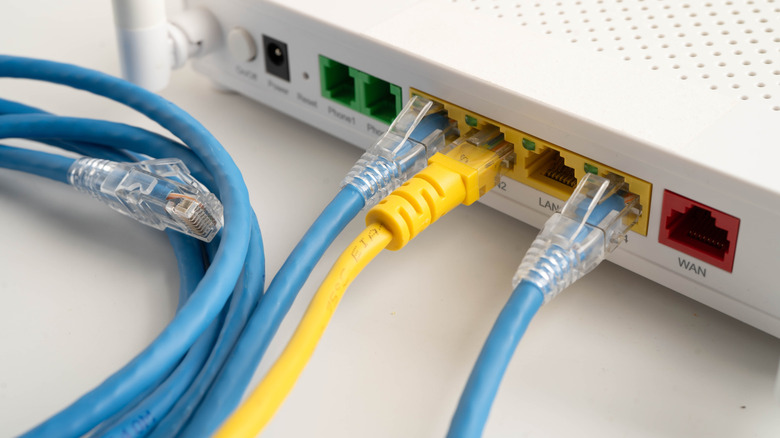
RLI’s abrupt closure has prompted the Minnesota Attorney General’s office to investigate why the company did not give its customers advance notice before shutting down. Owner Daniel Petsinger told KTTC that two Minnesota cities, Ellendale and New Richland, illegally stifled the broadband market. According to the same KTTC report, New Richland recently removed RLI’s equipment from a water tower after finding that the city’s contract with the ISP ended in 2018.

The Minnesota AG has advised RLI customers to keep all records related to their accounts, request a chargeback from their credit card companies for undelivered services, and file a complaint with the Attorney General’s office if necessary. For customers, however, the advice may feel like too little, too late as they scramble to find alternative services. The U.S. Internet Service Provider Directory suggests that certain residents will have other options, but some will be satellite services like Starlink and Viasat, which may prove more costly than broadband.

Others can take several steps to protect themselves should they ever find themselves in a similar situation. First, be aware of other options available in your area, and be prepared to use a mobile hotspot until you can secure new services. Keep track of how you’re paying for your internet and be ready to cancel automatic payments if necessary. Finally, before locking into a contract, compare local provider deals and customer reviews to ensure you’re getting a fair price and reliable service.


Source link

Leave a Reply

Subscribe to Our Newsletter

Get our latest articles delivered straight to your inbox. No spam, we promise.

Recent Reviews


Google’s latest Android update takes aim at the growing problem of imposter scam calls. It also expands Circle to Search functions and AirDrop compatibility to more Android devices, and introduces safety features for kids. The new capabilities are starting to roll out now.

The update comes on the heels of a larger Android 17 update that Google unveiled last month, which bakes AI even deeper into the operating system. Called Gemini Intelligence, it’s designed to turn AI agents into true assistants that proactively lend a hand without needing to be asked.

This month’s Android updates are a bit less flashy but arguably more practical — especially as scam calls become more sophisticated. Here’s what’s in store.

Fake call detection

Android’s fake call detection feature, which is baked into the Phone app, will alert you if it appears someone is impersonating one of your contacts. For instance, if you get a call from “Mom” and the system flags it as a scam, you’ll see an alert reading, “This may not be Mom. Someone may be pretending to call from your contact’s number.” This can be an especially handy feature as AI makes it easier to replicate the voices of friends and family members, leading to more sophisticated — and detrimental — scams. 

Fake call detection works by conducting a real-time check of both phones to gauge whether the caller is who they say they are. When your actual mom is calling, for instance, her verified device will send an end-to-end encrypted private confirmation signal over RCS. But when the scammer impersonating your mom calls — likely using an internet spoofing dialer and an AI voice cloner — their device won’t have that confirmation signal. Your phone will then check with your mom’s phone to confirm she didn’t place the call. You’ll get the alert and a prompt to hang up. 

The feature is rolling out globally this month in Phone by Google on devices with Android 12 and higher, starting with Pixel devices. Both the contact and the person receiving the call need to be using Google’s Phone app. Fake call detection also requires RCS capability in Google Messages.

Watch this: Android’s Biggest AI Update: Everything to Know About Gemini Intelligence

Book Insights in Google Play Books

Another new feature called Book Insights helps you refresh your memory or dig up information about what you’re reading on Google Play Books. You can tap “Catch me up” to get a recap of where you left off (similar to the Story So Far feature on Amazon’s newer Kindle models). You can also highlight a passage to ask questions or dig deeper into specific themes or characters. Book Insights is rolling out in the Google Play Books app and is available on certain titles in English. 

AirDrop across more Android devices

Perhaps one of the most anticipated features to arrive in recent months is support for Apple’s AirDrop in Quick Share. Finally, it’s easy to seamlessly share photos, videos and other media across iPhones and Android phones with a few taps

AirDrop compatibility is already available on certain phones including the Google Pixel 9 and 10, and the Samsung Galaxy S26 series. Now, it’ll work on more Android devices, including the Galaxy Z Fold 7, Z Flip 7, Z TriFold, S24 series, Z Fold 6 and Z Flip 6. It’ll also be supported on the OnePlus 15, Xiaomi 17T Pro, Honor Magic V6 and Vivo X300 and X300 Pro.

See also: How to Use Apple’s AirDrop on Samsung Galaxy S26 Phones

Circle to Search’s outfit feature expands

Google’s Circle to Search feature quickly pulls up details about what’s on your device’s screen. It got a fashion-forward boost earlier this year with the addition of Find the Look, which, as the name suggests, helps you find an entire outfit from a photo or screenshot. You can also see how that outfit might look on you using an AI-powered virtual try-on feature. Find the Look is now available on all devices that support Android 14 and up with Circle to Search.

Sift through your own wardrobe in Google Photos

Another outfit-oriented feature lets you mix and match pieces you own and try them on virtually. Called Google Photos Wardrobe, it’ll catalog what you’re wearing throughout your photo library and turn those outfits into images you can sift through to piece together your next look. This is rolling out next week to certain users in the US, India and Brazil with Android 10 and up.

Kids can tap into Personal Safety app features

New safety features are arriving soon for kids under 13. They’ll be able to access features in the Personal Safety app such as displaying medical information and featuring emergency contacts on their lock screen. They can also turn on car crash detection, which automatically contacts emergency services and texts emergency contacts if there’s an accident. The Personal Safety app is available globally.  

Cook up some fun emoji combos

And lastly, you’ll be able to combine emoji to better match what you’re feeling. Emoji Kitchen in Gboard includes new sticker combinations, like a mouse with a pink heart, that you can send to your friends for a more creative and whimsical touch. 


Source link