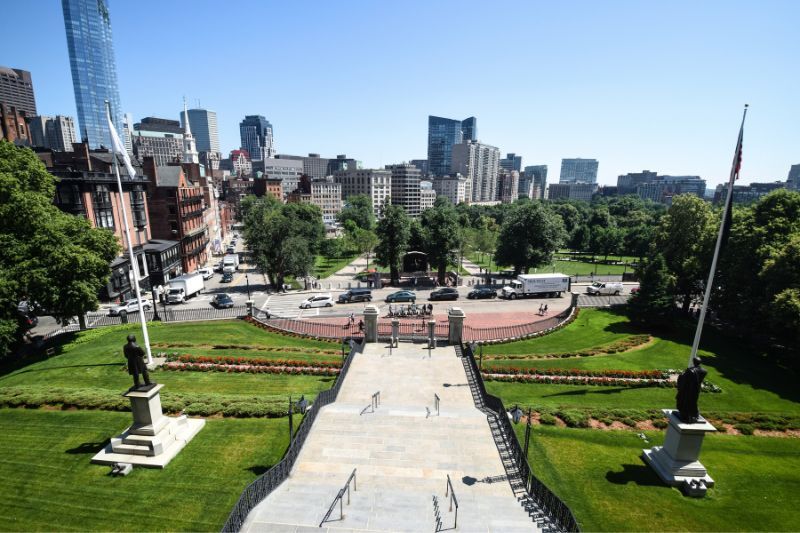
How to Experience Boston Like a Local


Boston is one of the few American cities that genuinely rewards the visitor who ignores the organised tour and wanders instead. The problem is that most first-timers spend three days doing the Freedom Trail and the aquarium and leave feeling like they have seen the city when they have mostly seen its tourist layer. Getting underneath that layer takes a bit of planning, particularly around where you stay and how you choose to move around.

Where You Base Yourself Shapes Everything

Boston Freedom Trail
Photo Credit: Jenn Coleman.

Boston is not enormous by American standards, but its neighborhoods are distinct enough that the wrong hotel puts you a long ride from the parts of the city worth exploring on foot. The North End, Beacon Hill, and the South End are the three areas most worth staying in if you want to walk out of your door and immediately be somewhere interesting. Beacon Hill in particular is one of the most intact pre-Civil War streetscapes in the country, with gas lamps, Federal-style row houses, and a dense network of alleys that feel genuinely old rather than restored. A reasonably priced Boston hotel in this area costs more than one near the airport or in Cambridge, but the difference in walkability quickly pays for itself. Back Bay works well for first-timers; its grid layout is easier to navigate and puts you near the Prudential and the Public Garden.

The T is the Most Practical Way to Understand the City’s Layout

Metro at Boston
Photo Credit: Deposit Photos.

Boston’s subway system, called the T, is one of the oldest in the United States, with the first section opening in 1897. It is not perfect – the Green Line in particular runs slowly above ground through much of Back Bay – but it covers the main residential and cultural areas well enough to make it genuinely useful. Locals use it constantly. The MBTA journey planner is straightforward, and Charlie Cards (the reusable tap-in card) are cheaper per journey than paying cash. Getting comfortable on the T takes about one day. After that, you can move between neighbourhoods the way residents do rather than catching taxis between landmarks.

The Local Food Scene Runs Through Neighborhoods, Not Restaurants

Salumeria-Italiana-Boston
Photo Credit: Jenn Coleman.

The most useful piece of advice for eating in Boston like a resident is to organize your meals by area rather than by cuisine. The North End is the Italian neighborhood: Hanover Street has the cannoli bakeries, but the side streets – Salem Street, North Street, Richmond Street – have smaller trattorias that are cheaper and quieter than the obvious choices on the main drag. The South End has the highest concentration of serious independent restaurants in the city, particularly along Tremont Street and the blocks between Union Park and Rutland Square. Chinatown is compact, walkable, and genuinely good, with Vietnamese and Malaysian options alongside the better-known Cantonese restaurants. If you are eating in Boston’s Chinatown, cash is often preferred, and lunch is a better value than dinner.

Boston is One of the Few American Cities Where Not Having a Car is an Advantage

Old Corner Bookstore
Photo Credit: WikiMedia Commons.

This matters. The city’s streets predate the car by about 250 years, and driving in Boston is notorious among Americans for its combination of narrow roads, aggressive local driving habits, and near-total absence of right-of-way logic. Residents who live within the city itself often do not own cars. Arriving without one is not a limitation here; it is an asset. Maybe that’s why it’s one of the happiest cities in the world. The walkable core – Beacon Hill, the North End, Downtown, Back Bay, the South End – covers more than enough ground for a week’s stay. For day trips to Cambridge, Somerville, or Brookline, the T covers the distance in under 20 minutes.

Cambridge is a Separate City That Most Boston Visitors Treat as an Afterthought

Harvard Square in Cambridge
Photo Credit: WikiMedia Commons.

Harvard Square in Cambridge is about 15 minutes on the Red Line from Downtown Crossing, and it functions as a separate urban ecosystem rather than a Boston neighborhood. The independent bookshops around the square – the Harvard Book Store at 1256 Massachusetts Avenue is the landmark, but Raven Used Books, and Rodney’s Bookstore are both worth an hour – are exactly the kind of thing you miss if you stick to the Boston tourist circuit. Inman Square and Central Square, a short walk or bike ride from Harvard, have a denser concentration of locals-only restaurants and bars than anywhere in Boston proper.

The Waterfront is Worth More Time Than the Tourist Itinerary Gives It

Seaside-by-Christopher-Columbus-Park Boston
Photo Credit: Jenn Coleman.

The Rose Kennedy Greenway – the linear park built on top of the tunnels that replaced the old elevated highway – runs from the North End to Chinatown and connects neighborhoods that were previously cut off from each other. On weekday mornings, it is used almost entirely by commuters and dog walkers. The harbor islands, accessible by ferry from Long Wharf, are almost entirely unvisited by tourists despite being within sight of downtown. Georges Island has a Civil War-era fort and reliable summer ferries from late May to mid-October. Bring a picnic; the island has no restaurants. For full ferry schedules and island details, the Boston Harbor Islands State Park site is the right resource.

The Locals Have a Complicated Relationship With the Tourist Version of Their City

Boston
Photo Credit: Deposit Photos.

Most residents of the North End will tell you that Mike’s Pastry and Modern Pastry are fine but that the real neighborhood is the streets behind Hanover, not the main drag. Most people who grew up in Beacon Hill will direct you away from the obvious shops and toward the Saturday farmers’ market on Charles Street or the tiny bookshop at the corner of Chestnut Street. The best version of any neighborhood is the one the people who live there actually use, and Boston’s are compact enough that finding it does not take much effort. Turn off the main street, walk until you hear fewer American accents, and sit down somewhere that does not have a laminated tourist menu in the window.

Hi! We are Jenn and Ed Coleman aka Coleman Concierge. In a nutshell, we are a Huntsville-based Gen X couple sharing our stories of amazing adventures through activity-driven transformational and experiential travel.


Source link

Leave a Reply

Subscribe to Our Newsletter

Get our latest articles delivered straight to your inbox. No spam, we promise.

Recent Reviews


When you envision a tropical getaway in the Philippines, Bohol is often associated with the Chocolate Hills and the large, lively beaches of Panglao Island. For most tourists, the adventure begins the moment they step off the Cebu to Bohol ferry, eager to immerse themselves in the island’s legendary beach lifestyle. 

However, there is a secret that only experienced island-hoppers and natives know: the best beach in Bohol is actually not where all the action is.

Have you ever been to Bohol and found yourself dodging selfie sticks or competing for a square inch of sand? Then you know that the magic doesn’t happen where the crowds are, but when you get off the beaten path. But what is it about these less-visited shores that are stealing the hearts of those who know where to look? Let’s find out. 

The Psychology of Paradise: Why Less is Truly More?

There is a particular type of peace that can only be achieved when the loudest sound you can hear is the retreat of the tide over broken coral. In the more popular areas of the island, the beach experience is almost like a show with music from bars, street vendors selling sunglasses, and the ever-present sound of motorized boats. While this is exciting for a night out, it does not have the heart of a real island vacation.

The best beach is more than just the brightness of the sand and the clarity of the water; it is about the sense of being a part of something small and special. 

When you discover a beach that is not on every Top 10 list, you are not just a visitor; you are a guest of the land. You get to witness the local fishermen unloading their morning catch instead of a jet ski line. You get to witness the stars without the neon lights of a bar. 

This is the main reason why travelers are now beginning to seek out something new, something different from the popular Alona Beach.

The Problem with Popularity

Let’s not forget that beaches like Alona are popular for a reason. They are stunning. However, with popularity comes development, and development can lead to the degradation of the very thing that drew visitors in the first place. Overcrowded beaches deal with problems like light pollution (which affects sea turtles), noise that chases away native birds, and the inevitable tourist tax on everything from coconuts to cocktails.

On the other hand, quiet and secluded beaches boast of finer sand and more vibrant reefs because they have not faced the same level of foot traffic and boat anchors. 

So, Where are These Hidden Gems?

If you’re ready to trade the crowds for a bit of solitude, here are the beaches that truly define the beauty of Bohol:

1. Dumaluan Beach

Technically still on Panglao Island but lightyears away from the hustle and bustle of Alona, Dumaluan has a much wider shoreline and shallower waters. It’s a favorite among locals, which makes it have a much more down-to-earth and authentic feel. The resorts are also not as packed, which means you get to breathe.

2. Anda White Beach (Quinale Beach)

Anda is situated on the eastern tip of the island and is also known as the next Boracay, minus the high-rise buildings. The beach is famous for its white and fine sand, which stretches for kilometers. It is also a peaceful haven since it is a few hours away from the nearest port. It is one of those places where you can walk for twenty minutes without seeing anyone.

3. Doljo Beach

Hidden away in the northwest corner of Panglao, Doljo is the best spot to watch the sunset. It is renowned for its untouched coral reefs and historic coconut trees that stretch towards the water. There are hardly any commercial developments in this area, which makes it ideal for a long walk while the sun sets.

4. Pamilacan Island

Although you have to take a short boat ride to get there, the beaches of Pamilacan are famous. This small island used to be a whaling ground but is now a protected marine sanctuary. The water is so clear that it is like glass, and the sand is soft white sand and sun-bleached shells. It is the epitome of an off-the-beaten-path paradise.

5. Momo Beach

If you are looking for a rustic experience, Momo is the place to be. It is a shallow beach that is largely occupied by locals, so it is a peaceful and unpretentious destination that is free from all the usual tourist trappings. It is a good place to sit back and watch the colors of the sky change or to read a book under a palm tree.

How to Get to Your Slice of Quiet?

Does it require more work to reach these destinations? A little bit. But that is the filter that makes these destinations unique. The majority of tourists go with the flow. They alight from the ferry, ride a tricycle to the closest resort, and stay there.

If you want a better experience, you have to plan ahead. Come to Bohol via the Cebu to Bohol ferry, which docks in Tagbilaran City. From there, instead of going with the majority to the southwest, you can rent a scooter or a private car to go east to Anda or north to the less crowded areas of Panglao.

The Verdict: Is it Worth the Journey?

Ask anyone who has ever spent a morning alone on the deserted shores of Anda or a sunset alone at Doljo, and the answer is always a resounding yes.

The best beach in Bohol is not a destination where you go to be noticed. It’s a destination where you go to be forgotten for a little while. It’s all about the indulgence of emptiness, the richness of local culture, and the possibility of reconnecting with nature without the filter. When you move away from the masses, you’re not just viewing a beach; you’re living the essence of the island.

The next time you find yourself planning a trip to the Visayas, remember that the most beautiful sights are sometimes only a few miles beyond where everyone else stops. Are you ready to discover your own hidden shore?

Hi! We are Jenn and Ed Coleman aka Coleman Concierge. In a nutshell, we are a Huntsville-based Gen X couple sharing our stories of amazing adventures through activity-driven transformational and experiential travel.


Source link