
Boston is one of the few American cities that genuinely rewards the visitor who ignores the organised tour and wanders instead. The problem is that most first-timers spend three days doing the Freedom Trail and the aquarium and leave feeling like they have seen the city when they have mostly seen its tourist layer. Getting underneath that layer takes a bit of planning, particularly around where you stay and how you choose to move around.
Where You Base Yourself Shapes Everything

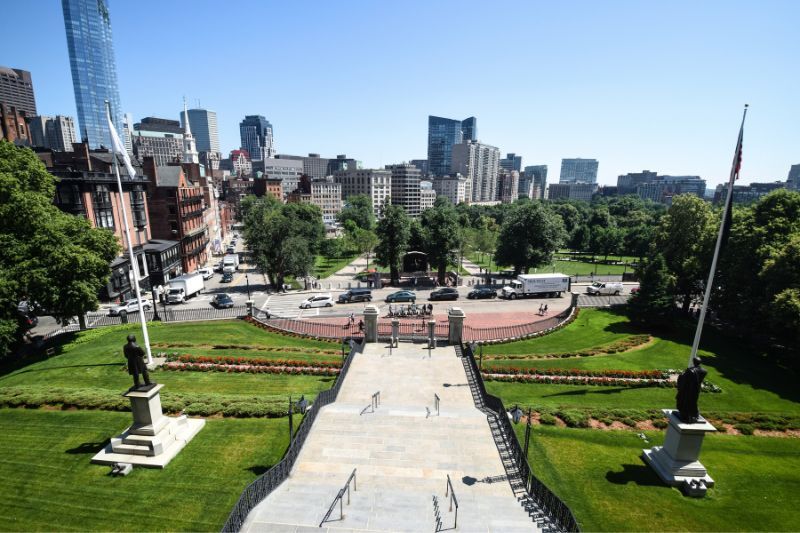
Boston is not enormous by American standards, but its neighborhoods are distinct enough that the wrong hotel puts you a long ride from the parts of the city worth exploring on foot. The North End, Beacon Hill, and the South End are the three areas most worth staying in if you want to walk out of your door and immediately be somewhere interesting. Beacon Hill in particular is one of the most intact pre-Civil War streetscapes in the country, with gas lamps, Federal-style row houses, and a dense network of alleys that feel genuinely old rather than restored. A reasonably priced Boston hotel in this area costs more than one near the airport or in Cambridge, but the difference in walkability quickly pays for itself. Back Bay works well for first-timers; its grid layout is easier to navigate and puts you near the Prudential and the Public Garden.
The T is the Most Practical Way to Understand the City’s Layout

Boston’s subway system, called the T, is one of the oldest in the United States, with the first section opening in 1897. It is not perfect – the Green Line in particular runs slowly above ground through much of Back Bay – but it covers the main residential and cultural areas well enough to make it genuinely useful. Locals use it constantly. The MBTA journey planner is straightforward, and Charlie Cards (the reusable tap-in card) are cheaper per journey than paying cash. Getting comfortable on the T takes about one day. After that, you can move between neighbourhoods the way residents do rather than catching taxis between landmarks.
The Local Food Scene Runs Through Neighborhoods, Not Restaurants

The most useful piece of advice for eating in Boston like a resident is to organize your meals by area rather than by cuisine. The North End is the Italian neighborhood: Hanover Street has the cannoli bakeries, but the side streets – Salem Street, North Street, Richmond Street – have smaller trattorias that are cheaper and quieter than the obvious choices on the main drag. The South End has the highest concentration of serious independent restaurants in the city, particularly along Tremont Street and the blocks between Union Park and Rutland Square. Chinatown is compact, walkable, and genuinely good, with Vietnamese and Malaysian options alongside the better-known Cantonese restaurants. If you are eating in Boston’s Chinatown, cash is often preferred, and lunch is a better value than dinner.
Boston is One of the Few American Cities Where Not Having a Car is an Advantage

This matters. The city’s streets predate the car by about 250 years, and driving in Boston is notorious among Americans for its combination of narrow roads, aggressive local driving habits, and near-total absence of right-of-way logic. Residents who live within the city itself often do not own cars. Arriving without one is not a limitation here; it is an asset. Maybe that’s why it’s one of the happiest cities in the world. The walkable core – Beacon Hill, the North End, Downtown, Back Bay, the South End – covers more than enough ground for a week’s stay. For day trips to Cambridge, Somerville, or Brookline, the T covers the distance in under 20 minutes.
Cambridge is a Separate City That Most Boston Visitors Treat as an Afterthought
Harvard Square in Cambridge is about 15 minutes on the Red Line from Downtown Crossing, and it functions as a separate urban ecosystem rather than a Boston neighborhood. The independent bookshops around the square – the Harvard Book Store at 1256 Massachusetts Avenue is the landmark, but Raven Used Books, and Rodney’s Bookstore are both worth an hour – are exactly the kind of thing you miss if you stick to the Boston tourist circuit. Inman Square and Central Square, a short walk or bike ride from Harvard, have a denser concentration of locals-only restaurants and bars than anywhere in Boston proper.
The Waterfront is Worth More Time Than the Tourist Itinerary Gives It
The Rose Kennedy Greenway – the linear park built on top of the tunnels that replaced the old elevated highway – runs from the North End to Chinatown and connects neighborhoods that were previously cut off from each other. On weekday mornings, it is used almost entirely by commuters and dog walkers. The harbor islands, accessible by ferry from Long Wharf, are almost entirely unvisited by tourists despite being within sight of downtown. Georges Island has a Civil War-era fort and reliable summer ferries from late May to mid-October. Bring a picnic; the island has no restaurants. For full ferry schedules and island details, the Boston Harbor Islands State Park site is the right resource.
The Locals Have a Complicated Relationship With the Tourist Version of Their City

Most residents of the North End will tell you that Mike’s Pastry and Modern Pastry are fine but that the real neighborhood is the streets behind Hanover, not the main drag. Most people who grew up in Beacon Hill will direct you away from the obvious shops and toward the Saturday farmers’ market on Charles Street or the tiny bookshop at the corner of Chestnut Street. The best version of any neighborhood is the one the people who live there actually use, and Boston’s are compact enough that finding it does not take much effort. Turn off the main street, walk until you hear fewer American accents, and sit down somewhere that does not have a laminated tourist menu in the window.

Hi! We are Jenn and Ed Coleman aka Coleman Concierge. In a nutshell, we are a Huntsville-based Gen X couple sharing our stories of amazing adventures through activity-driven transformational and experiential travel.

Stacie Harris is a local resident and reporter of the Maple Grove area. Stacie reports on medicine and science for the Maple Grove Report.