

One small container of yogurt can tell us six stories.
Six Yogurt Stories
1. An origin story:
Let’s start with a fossil:
Although our ancestors were lactose intolerant, they probably consumed dairy products 6,000 years ago. The evidence comes from milk protein found in calcified dental plaque. The place was Great Britain and the people, prehistoric farmers. From here, scientists hypothesize that the lower lactose content in fermented daily products like yogurt were likely an alternative to whole milk.
2. Food trends
A staple in Europe, yogurt was not popular in the U.S. before the 1980s. While Europeans liked the plain and tart taste, Americans needed more sugar. So, when Dannon during the late 1980s brilliantly made yogurt palatable with the fruit-on-the-bottom concept, they transformed yogurt’s popularity. From there, yogurt makers catered to kids by adding sprinkles. As for women, ads connected yogurt to the growth of a diet-conscious culture.
Then, a decade later, the onset of Greek yogurt reflected our quest for an appetite satisfying low calorie health food. Chobani did it best with a low sugar creamy blend. In just six years, by 2013, 44% of our yogurt purchases were for Greek yogurt.
Next, we moved to artisanal versions like an Icelandic yogurt and then, non-dairy. And most recently a sales bump in full fat yogurt reflected the popularity of other high protein high fat products like red meat. During 2025, meat sales touched a record high.
3. Weight loss wars
A Boston Consulting Group executive told us that, “High-protein foods like yoghurt or…meat seem to increase in frequency during and even more after stopping GLP-1s…” like Ozempic or Zepbound. Consequently, last week, Dannon sued Chobani. Claiming that Chobani had inflated its protein content, Dannon sought to attract more of the GLP-1 users seeking high protein low calorie foods.
4. Shrinkflation:
Instead of raising prices, Chobani classic went down from a 6-ounce serving to 5.3 in 2014. Then, with price remaining the same, in 2022, Chobani’s flip yogurts shrunk from 5.3 ounces to 4.5. But Dannon also has offered us less. One Costco review pointed out that their Oikos container was at 5.3 ounces and (perhaps misleadingly) left room for toppings.
5. A tariff story:
Retaliatory tariffs from countries like Canada diminished export revenue. U.S. yogurt revenue from Canada was down a whopping 67% in February 2025 YOY.
6. A “K” demand story:
Echoing the “K” economy, the $10 cup of frozen yogurt reflects the consumers that can pay a premium price. By contrast, a more cost conscious household purchases the mass market yogurt products.
Our Bottom Line: Demand and Supply
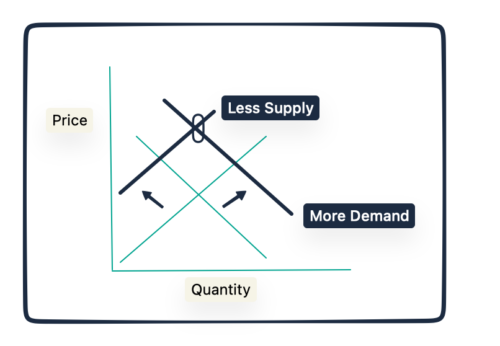
And finally, a graph completes our story. On the demand side, we have record consumption levels. As for supply, the price of milk is not driving up costs. However, other input prices like plastic packaging materials affected by tariffs and the Iran war, transport costs, and increased supply-side competition for milk solids, have hiked production costs. The result could be the following graph that displays my oval on an elevated equilibrium price:
Like espresso, yogurt stories are about much more than yogurt.
My sources and more: Thanks to Slate Money for inspiring today’s post when they cited the sale of 87 million frozen yogurts during the past year. From there, we found the BBC’s fossil image and decided this could be interesting. Next, we got our facts from Vox , the Meat Institute, and USA Today . For yogurt wars, we looked at Reuters. Then also, we learned more from The Takeout, the Dairy Reporter, and the IDFA. And finally, do take a look at espresso’s six stories.
The post What a Tub of Yogurt Tells Us appeared first on Econlife.

Nicole Byers is an entertainment enthusiast! Nicole is an entertainment journalist for the Maple Grove Report.