

For the last decade, I’ve watched some of my absolute favorite beach towns in Central America slowly transform into massive, overpriced tourist traps.
It usually happens the exact same way: a quiet surf village gets “discovered,” the massive mega-resorts move in, the prices triple, and suddenly you are fighting 500 people for a plastic lounge chair.
When I am back home mapping out the next coastal escape, my goal is to actively avoid that entire cycle. I want destinations that are wildly authentic, highly affordable, and above all else, completely safe.
Historically, finding that perfect combination required a brutal travel day. You had to endure exhausting layovers, navigate terrifying dirt roads, or take a 10-hour overnight bus just to reach a beach that wasn’t paved over by commercialization.
But major airlines are aggressively launching nonstop routes that bypass the chaotic hubs entirely, dropping you right on the doorstep of the region’s best-kept secrets.
If you want to trade the packed, commercialized strips of Tamarindo and the massive resorts of Cancún for raw authenticity and perfect waves, you need to look at El Salvador.
Specifically, you need to head to the coastal haven of El Tunco.
The Ultimate Safe Haven
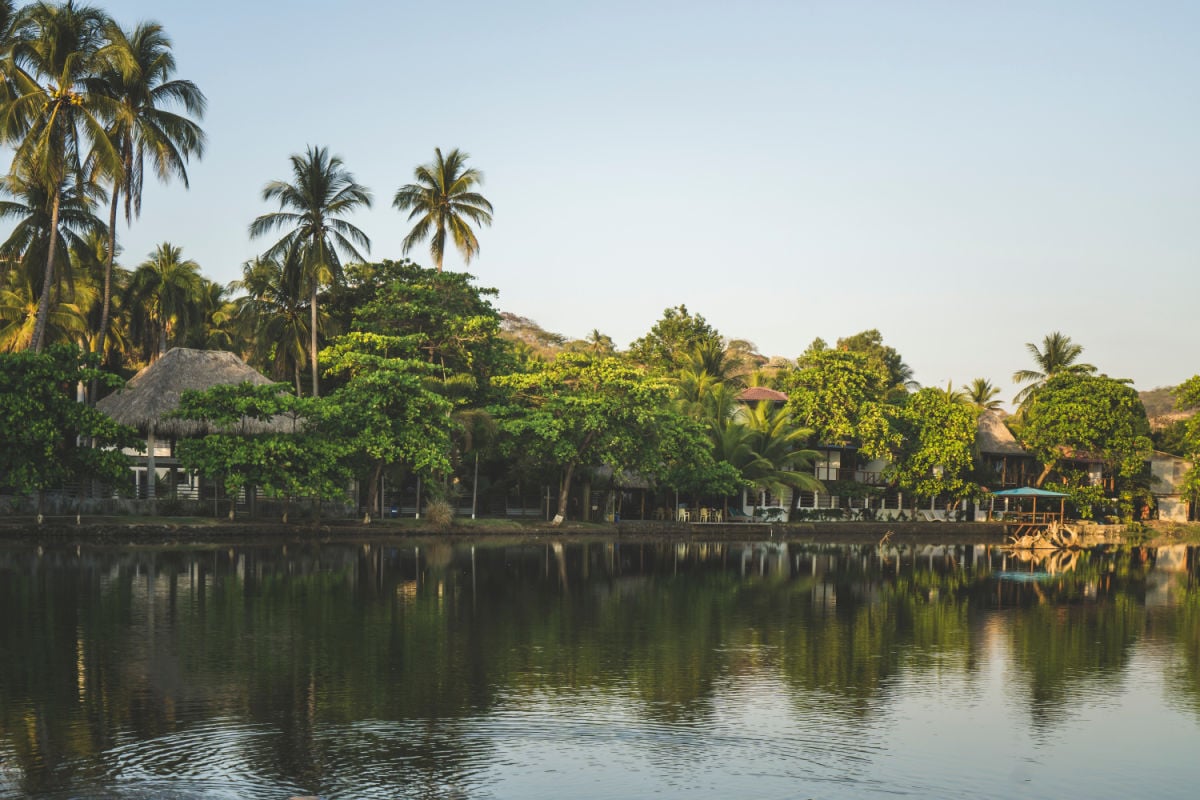
Let’s address the elephant in the room first: El Salvador’s reputation. If you are operating on outdated information from a decade ago, you might be hesitant. But the country has experienced a complete, unprecedented transformation, turning it into arguably the safest nation in the entire Western Hemisphere.
The security turnaround has been so massive and effective that the U.S. State Department currently gives El Salvador a Level 1 safety advisory. That is their absolute lowest-risk category, placing this tropical surf haven on the exact same safety tier as places like Iceland or Japan.
The boots-on-the-ground reality matches the rating perfectly, with our Safety Index giving it a score of 91/100! You can spend your evenings wandering the vibrant, mural-covered dirt roads of El Tunco, hopping between open-air beach bars and street food carts without ever having to constantly look over your shoulder.
The peace of mind here is entirely unmatched.
Why El Tunco Is the Perfect Beach Town
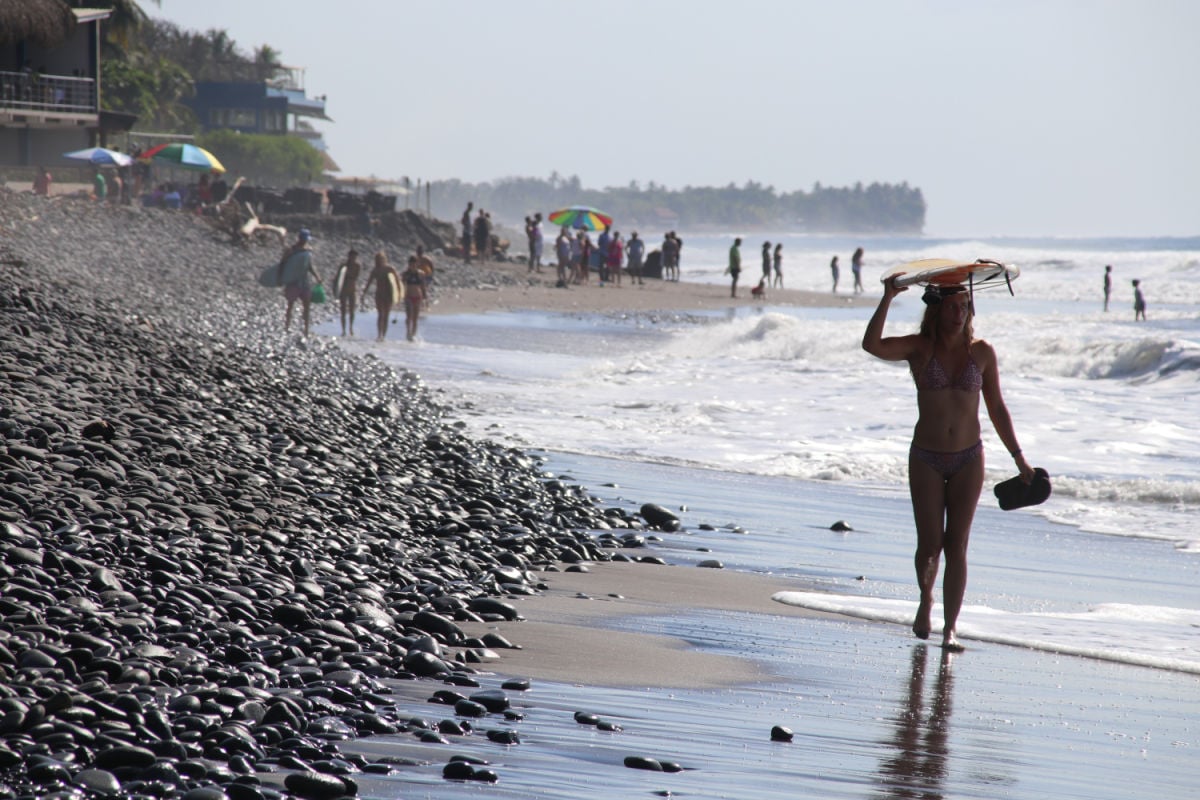
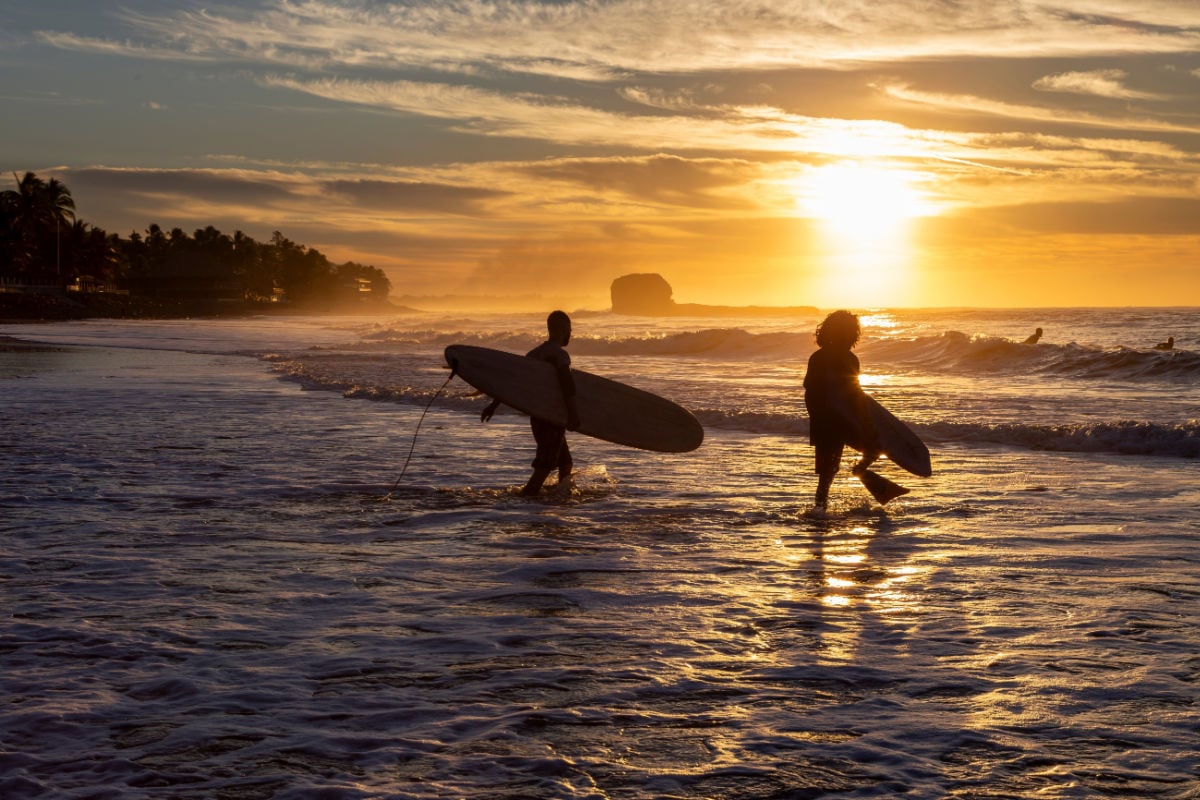
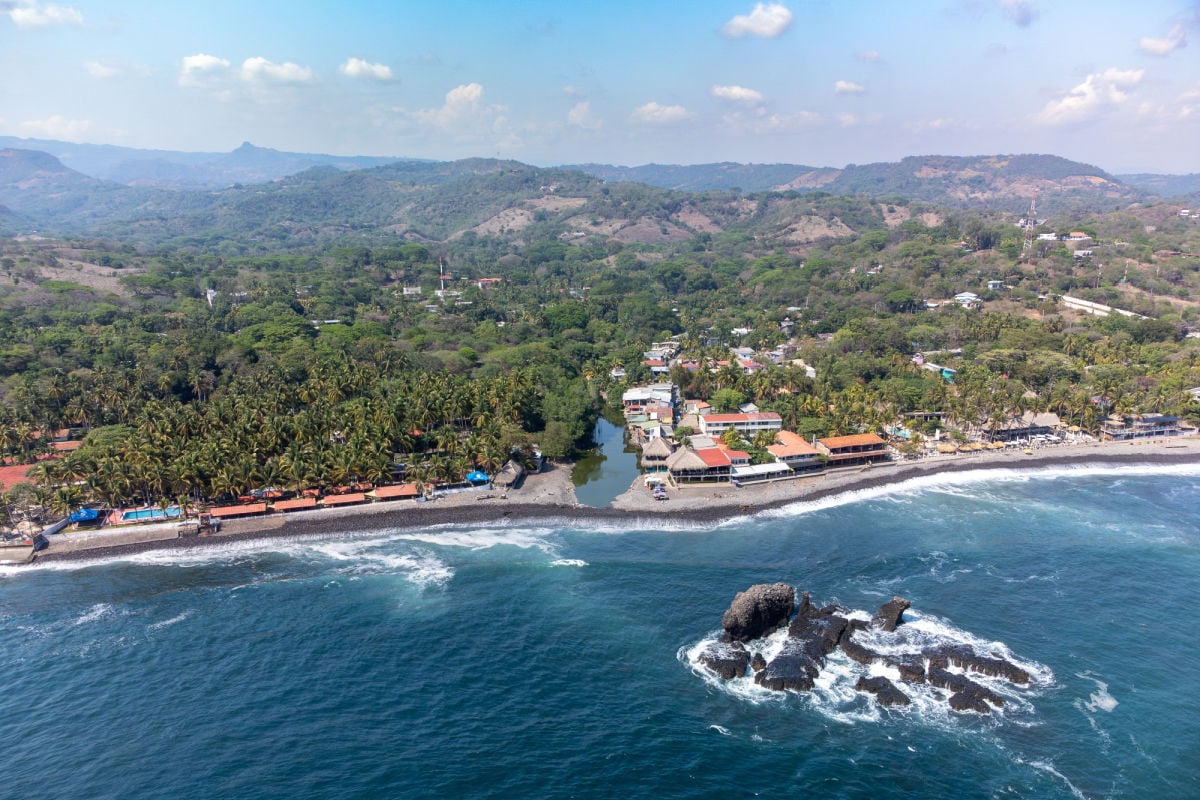
When you picture El Tunco, completely erase any mental image of towering hotels and sprawling designer shopping plazas. This is a pure, unpretentious surfer’s paradise. The town gets its name from a massive, iconic rock formation sitting right off the shore (which locals say looks like a pig, or tunco).
- The Vibe: The streets are narrow, walkable, and lined with colorful street art, cheap coastal hostels, and boutique eco-lodges. The atmosphere is incredibly laid-back. It is the kind of place where wearing shoes is completely optional, and the daily schedule revolves entirely around the ocean tides.
- World-Class Surfing: Even if you have never touched a surfboard, you will appreciate the surf culture here. The beaches are defined by their dramatic, dark volcanic sand. If you do ride, you have immediate access to La Bocana, a legendary, fast left-hand break, and Sunzal, a longer, smoother ride perfect for longboarders. It is mesmerizing to just sit on the shore with my camera and photograph the locals carving up the afternoon swells.
- An Unbelievable Food Scene: The culinary scene here completely skips the overpriced, manufactured dining rooms. It is all about rustic, incredible local flavor. You absolutely cannot leave the country without eating your weight in traditional pupusas—thick, handmade corn tortillas stuffed with melted cheese, refried beans, and savory pork chicharrón, served with spicy cabbage slaw (curtido). Sitting on a wooden bench on the beach, eating a massive stack of hot pupusas for three dollars as the sun goes down, is peak travel.
The Ultimate Basecamp for Adventure
El Tunco is amazing on its own, but it also serves as the absolute perfect staging ground for exploring the rest of the country’s stunning Pacific coastline.
If you want a break from the saltwater, you can take a quick trip up into the surrounding jungle to find the Tamanique Waterfalls. It is a rugged, steep hike through the dense tropical canopy that rewards you with a series of spectacular, rushing waterfalls and deep natural swimming pools.
For the adrenaline junkies, there are multiple epic cliff-jumping spots dropping right into the crystal-clear water below.
You can also rent a car or take a quick shuttle to explore the rest of the famous “Surf City” route, winding along the coastal cliffs to discover even quieter, more isolated black-sand coves like El Zonte (often called “Bitcoin Beach” because the local economy runs heavily on cryptocurrency).
How to Get There Before the Crowds Do
For an entire generation, El Tunco felt completely cut off from the casual American travel market. Reaching it used to involve brutal, multi-stop itineraries. That barrier to entry is officially gone.
Airlines like Avianca, United, American, and Delta are now running direct, nonstop flights from major hubs across the United States straight into El Salvador International Airport (SAL) in San Salvador. The connectivity is better than it has ever been.
Once you land, you don’t even have to navigate a chaotic, congested capital city. Thanks to the country’s massive new infrastructure projects, you simply hop on the new Surf City bypass. It is a quick, gorgeous, modern 45-minute highway ride from the tarmac directly to the ocean.
The secret is officially out, and the window to experience El Tunco while it still feels like an undiscovered, tranquil coastal secret is starting to close. If you want a perfectly safe, culturally rich, and completely unforgettable Central American trip, it is time to pack your bags.


Stacie Harris is a local resident and reporter of the Maple Grove area. Stacie reports on medicine and science for the Maple Grove Report.