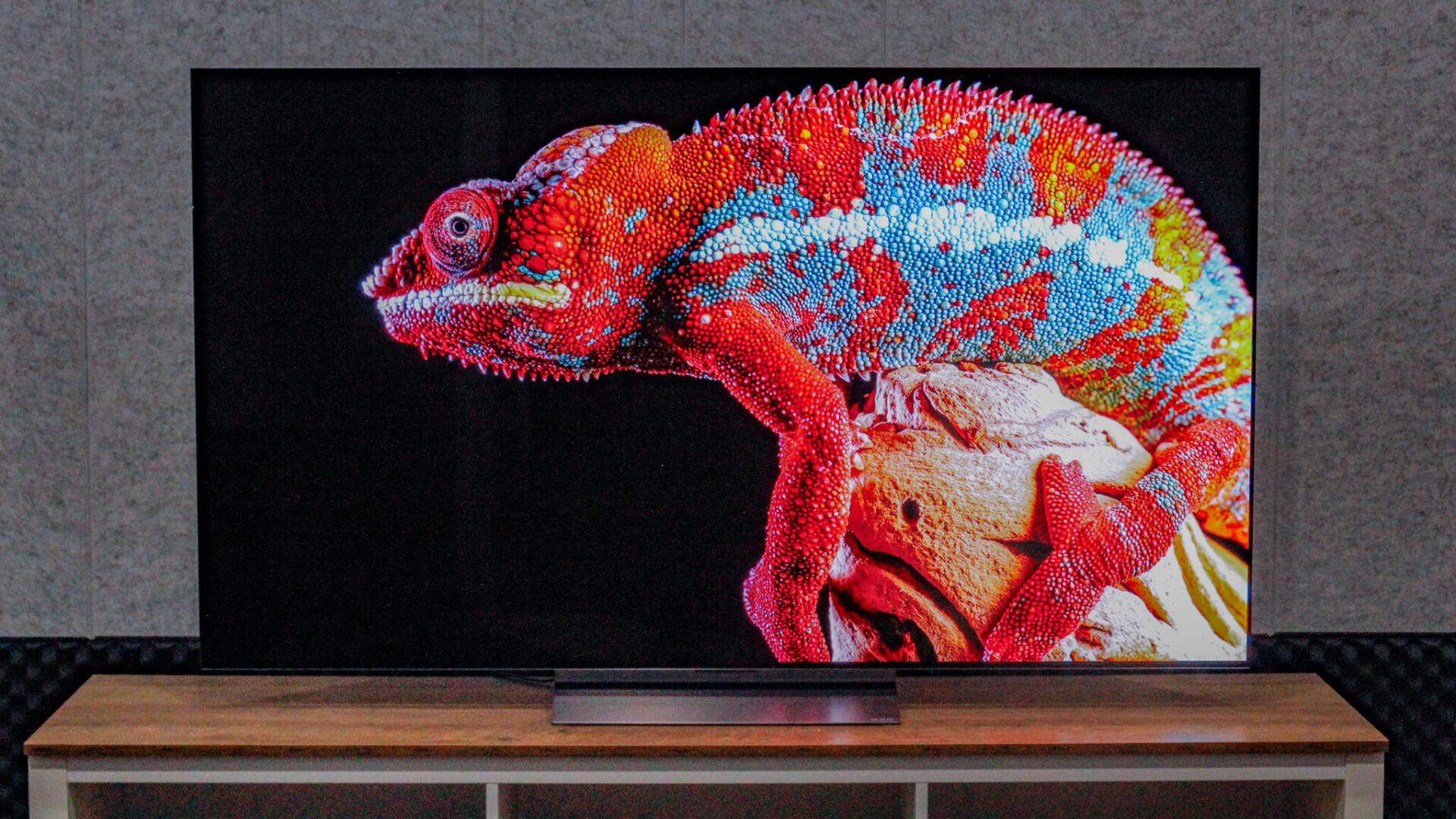
I tested the LG C6 OLED for a week, and its color accuracy and contrast levels left me in awe


mg-8987.jpg

pros and cons

Pros

  • Excellent color
  • Great sound
  • Perfect for streaming and gaming
Cons

  • Expensive
  • AI integration
  • Could be brighter

Follow ZDNET: Add us as a preferred source on Google.


If you think OLED technology has hit a plateau in terms of picture quality and color accuracy, the LG C6 might change your mind. The updated OLED panel delivers a brighter picture than its predecessor, along with a few menu tweaks to help you get the most out of your new TV.

Also: LG C6 vs. LG C5: Which flagship OLED should you buy?

I spent the past week putting the TV through its paces, including a suite of color, contrast, and brightness tests, and the performance was mostly impressive. Mostly. Let me break down why.

Best tv deals of the week

Deals are selected by the CNET Group commerce team, and may be unrelated to this article.

Sleek design, rich sound

The slick, streamlined design hides a lot of cutting-edge tech that LG managed to cram into the main housing behind the incredibly slim ¼-inch-thick screen. The redesigned processor utilizes machine learning algorithms for automatic picture and sound processing tailored to your space, as well as manual fine-tuning for cine- and audiophiles who prefer to have total control over how their TV looks and sounds.

Also: LG G6 vs. Samsung S95H

With seven preset picture modes to choose from, you can quickly change settings to suit your favorite media. Or if you prefer manual picture calibration, the advanced settings let you adjust everything from contrast ratios and white balance to RGB fine-tuning and gamma levels. 

And don’t worry if you mess up: you can reset the screen to factory presets with the click of a button and start over. There are only about half as many sound mode choices, though, with the C6 offering AI, standard, and voice clarity options. However, you can tweak your sound a bit further by going into the menu and selecting whether your TV is on a stand or wall-mounted, as well as which kind of speaker you’re using: Bluetooth, LG home theater, or TV speakers. 

An LG C6 OLED TV showing a variety of spices in wooden bowls

Taylor Clemons/ZDNET

While it doesn’t offer nearly as much control over sound quality as I’d like right out of the box, it does help get you started if you don’t want to invest in a pricey home theater system to go with your very expensive new OLED TV.

Streaming and gaming performance

Unsurprisingly, the picture quality is top-notch with the LG C6, offering some of the boldest and brightest colors I’ve seen in an OLED at the lab. The refreshed panel provides better contrast by controlling color bleed and backlight blooming, reducing the risk of a halo effect around objects set against a dark background. 

The Cinema Home and Filmmaker picture modes add a warm wash to the picture to create the illusion of richer color saturation and recapture some of the retro charm that gets lost in older media when it’s upscaled to 4K resolution. The Standard, Vivid, and Game Optimizer modes utilize the LG C6’s native color spectrum for a more balanced picture, which is most apparent in black-and-white media. 

Also: Connecting my TV to a router VPN was one of my smartest home network upgrades

I popped in Dr. Strangelove and was pleasantly surprised to see a more neutral tone that worked very nicely with Kubrik’s heavy use of shadow. The cooler tones also helped highlight some of the finer details that tend to get lost in the yellow tint.

From our tests, the LG C6 also handles console gaming with ease, offering a dedicated Game Optimizer picture mode that automatically lowers input latency and uses Nvidia G-Sync VRR for buttery-smooth motion across genres. Based on our tracker, input latency is virtually nonexistent, with near-perfect audio and video syncing that was most noticeable while I was playing Persona 5 Dancing in Starlight. 

Usually, I have to spend a few minutes adjusting in-game lag to play with any accuracy. But with the LG C6, I didn’t have to touch any of the recalibration menu options, getting the best in-game timing right out of the box. If you are experiencing sync issues that don’t stem from your game, the C6 has menu options to adjust speaker lag to better match your visuals.

It’s not picture perfect

My biggest complaint about the LG C6 is its asking price. The 65-inch we tested starts at $2,700, and while you can often find LG TVs on sale year-round, discounts still don’t make it any easier on your wallet. 

Another small issue I have is that the OLED screen, while brighter than previous C Series OLED TVs I’ve seen, still isn’t as bright as I’d like. And not just because I had it set up next to the incredibly bright Hisense U8 and TCL QM8L. 

Also: How to disable ACR on your TV (and why it makes such a big difference when you do)

With the refreshed OLED panel, LG delivers a picture that’s much more consistently visible in various lighting conditions and across different media. But movies and shows with a lot of nighttime or dimly lit scenes can still be frustrating to watch, as the heavy contrast can obscure details. 

ZDNET’s buying advice

The LG C6 OLED is a refreshed and souped-up version of the brand’s flagship TV, with bright, bold colors, crisp details, and clean contrast. The redesigned OLED panel has improved bloom and bleed control, reducing “halo” effects that can make videos and photos look fuzzy or muddy. 

With seven pictures and four sound modes, you can mix and match to suit your space and personal preferences. Or you can let the AI modes automatically calibrate images and sounds to give you the best viewing experience for your space. And if you prefer total control, you can fine-tune everything from RGB saturation to white balance. 

The LG C6 is available in screen sizes from 42 to 83 inches, with the 65-inch version we tested starting at $2,699 – a pretty penny, but well worth the high quality if you’re looking for an OLED TV to keep your home theater or gaming space on the cutting edge of entertainment for the next few years.




Source link

Leave a Reply

Subscribe to Our Newsletter

Get our latest articles delivered straight to your inbox. No spam, we promise.

Recent Reviews


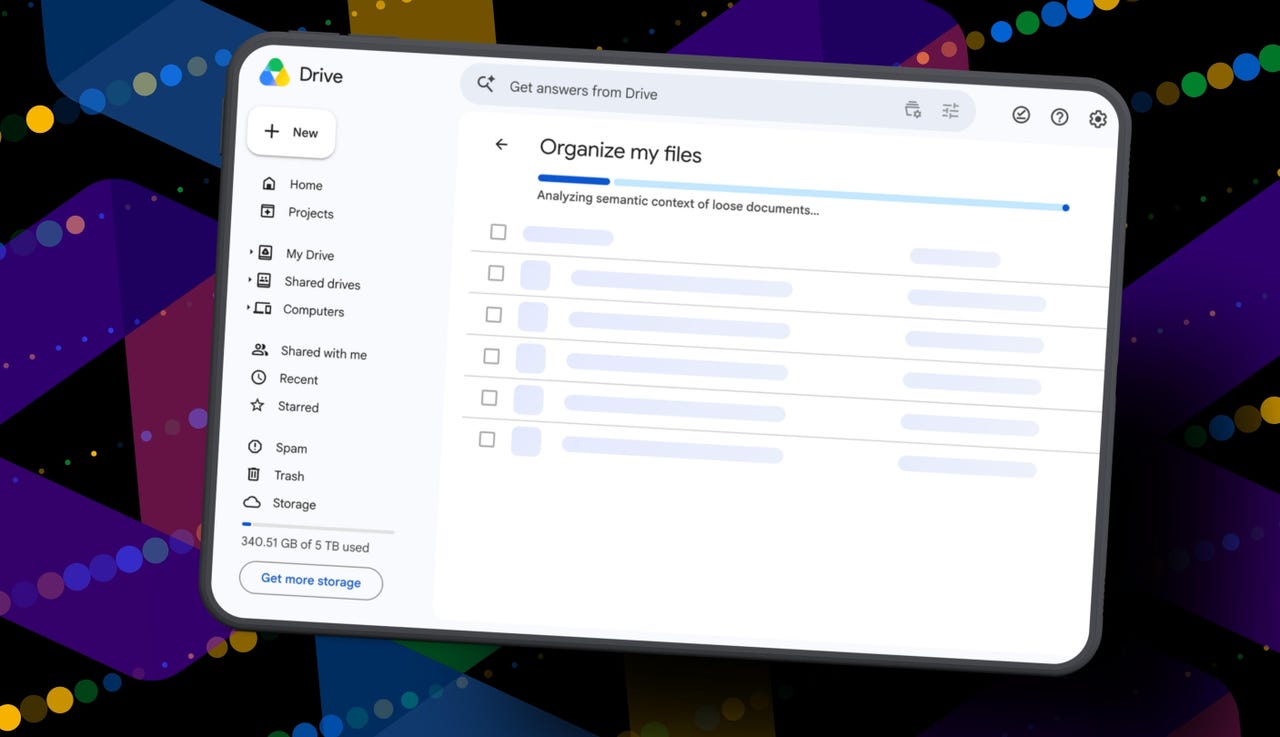
Google Drive Organize My Files

Elyse Betters Picaro / ZDNET

Follow ZDNET: Add us as a preferred source on Google.


ZDNET’s key takeaways

  • Gemini can suggest Drive file moves and new folders.
  • Organize My Files requires Workspace or Google AI access.
  • The tool is useful but still feels limited and unfinished.

I’m an Apple person. I’ve owned an iPhone since 2007 and a Mac since before that, so of course I’m also a longtime user of iCloud Photos and iCloud Drive. I pay $10 a month for the 2TB iCloud+ plan because I have 488GB of data sitting there, including nearly 40,000 photos. Don’t judge me. The real problem is that I’m also a heavy Google user, specifically Workspace apps.

Also: I tested ChatGPT Plus vs. Gemini Pro to see which is better

After 14 years of using Google Drive, I have 340GB of data stored there from all the Google Docs, Sheets, Slides, and Gmail messages I’ve created, not to mention file uploads. So I pay $20 a month for Google AI Pro, which gives me 5TB of storage and access to Gemini AI. And because, apparently, I need all the subscriptions, I also pay $20 a month for ChatGPT Plus.

I need to cut subscriptions

I know… I need to cut subscription costs somewhere. I’ve wondered whether I should cancel ChatGPT or somehow, some way, reduce my Google usage enough to stop paying for extra Drive storage. Realistically, I do not think I could ever get my data down to the 15GB Google gives me for free. My Drive has become so daunting that I’ve mostly stopped trying to manage it.

The funny part is that I am hyper-organized. My pantry has coordinated glass jars with labels. My daughter’s toy room has a place for everything. My Google Drive, though? A dumping ground. What can I say? Pre-parenthood Elyse was not so organized.

Also: Tired of AI Overviews? I found 9 Google Search alternatives

Because my Drive has never been in a good place, I have let files, photos, screenshots, PDFs, tax documents, drafts, downloads, and random digital debris accumulate with no real oversight for years. I keep putting off cleaning it.

Recently, I had the idea that some AI service could connect to my Drive and help me quickly organize it with a few clicks. Then I remembered my Drive includes things like my house deed, a copy of my will, and my LLC business details, and suddenly giving a random third-party company broad access to my personal data felt like too much to bear.

So here we are. My Drive is still messy, and my subscriptions are still multiplying. Joy. I sure do love that in this economy.

Can ‘Organize My Files’ declutter my Drive?

But today I spotted a quiet little launch from Google: its “Organize My Files” feature is now available. Can Gemini actually, truly help me declutter, organize, and simplify my Drive now? Apparently, it uses Gemini AI to suggest moving loose files in Drive into existing folders or creating new folders for related files. And I get to review everything before anything moves.

Also: I tried Gmail’s new Gemini AI features, and I want to unsubscribe

If this works, maybe one day I can move my data out of Drive and cancel my Google AI Pro plan for good. Maybe. One day.

How Organize My Files works

What you’ll need: A Google account with a messy-as-hell Drive. Oh, and Google’s “Organize My Files” feature is currently limited to Google Workspace and Google AI subscribers. Workspace smart features must also be enabled for it to appear in Drive.

Open Google Drive

Elyse Betters Picaro / ZDNET

Look toward the top of the file and folder list in My Drive for a new button called “Suggest File Moves.” Google said it will appear in My Drive as well as in parent folders in Drive. 

Clicking Suggest File Moves opens a new Organize My Files window, where Gemini will begin analyzing loose files and suggesting ways to clean them up.

Also: This Gemini setting made my AI results way more personal


Show more

Click Suggest File Moves

Elyse Betters Picaro / ZDNET

After a minute or so, Gemini serves up recommendations to review. They’re divided into two main types:

  • Gemini may suggest moving files into existing folders in Drive.
  • Gemini may suggest creating new folders for related groups of files.

All files and folders can be previewed through hovercards or opened in a new tab for a closer look.

Also: Is Google’s AI Ultra plan worth $100/month?


Show more

Review Gemini's suggestions

Elyse Betters Picaro / ZDNET

It’s time to use the checkboxes to select or deselect any file or folder that Gemini served up. 

Also, if a suggested folder name is weird, just rename it. Check destinations for folders, too. If they aren’t right, change the target. Once the suggestions do look right and you’re happy, approve the changes.

Gemini will then perform the file or folder moves in one batch and return to My Drive.

Also: I used Nano Banana 2 to make perfect sketchnotes: 5 lessons


Show more

Approve the changes

Elyse Betters Picaro / ZDNET

My result

After all that, Gemini suggested 19 moves for me. Nineteen. And it mostly surfaced recent files I had created or uploaded.

Some of the suggestions made sense. Gemini wanted to move my resume and a couple of resumes I had helped family members create into an existing resume folder. It also suggested creating a new Family and Real Estate folder for house deed documents, plus a Travel Planning folder for upcoming summer trip itineraries I have stored in Drive. But one of the files it grouped under Travel Planning was literally called “Delete,” because it’s a doc I want to delete. Gemini did not realize that, nor did it suggest deleting it.

To be clear, I have hundreds of gigabytes of data and years of clutter sitting in Google Drive.

Also: How I unlocked another 15GB of Gmail storage for free

Still, I approved the changes Gemini recommended. For the heck of it, I ran the tool again. In about 30 seconds, it suggested the same thing: the same file moves, the same new folders, and the same changes it had just made. This feels half-baked.

It’s not at all the sweeping cleanup assistant for Drive that I was hoping for and need. Maybe it will get better over time. It did just come out of beta, and it’s possible Google will improve how Gemini scans Drive, prioritizes older files, recognizes obvious trash, and surfaces deeper organization suggestions. I just don’t want to have to click it 500 times, hoping it finds something new each time.

Looks like I’m still stuck with a messy Drive and a $20 AI Pro subscription… for now.


Source link