Can Seat Covers Affect Your Airbags? Here’s What You Need To Know


Our love affair with cars is well documented, and personalizing our precious rides is one way to express that love. From big-ticket changes like custom paint jobs, tinted windows, chrome wheels, and upgraded sound systems to less wallet-busting touches like adding hula girl dashboard dolls, interior lighting, fuzzy dice hanging from your rearview mirror, and seat covers, there are endless ways to deck out your car. In fact, so many of us bedazzle our vehicles that a $50 billion industry focused on aftermarket goodies for vehicles exists.

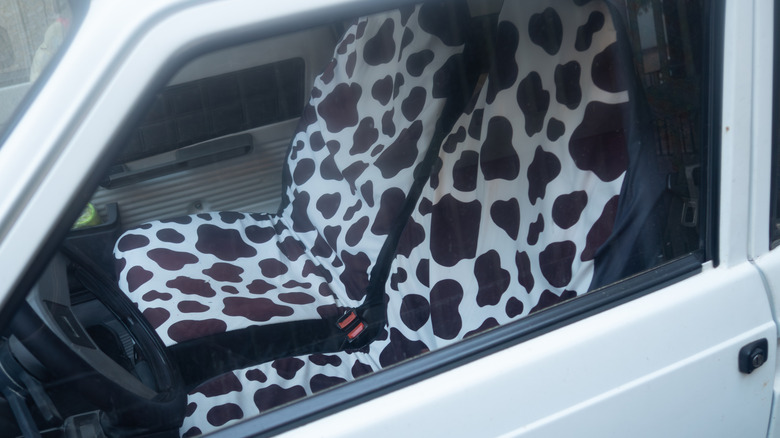
While most of these accessories don’t affect the function of your vehicle, some of them, like seat covers, may pose a problem. According to the Insurance Institute for Highway Safety (IIHS), many seat covers weren’t designed to work with your car’s restraint system and may, in fact, block or redirect a deploying airbag as it tries to keep you safe during an accident.

Thanks to the National Highway Traffic Safety Administration (NHTSA), all new vehicles since 1999 are required to have airbags. Since their introduction, they’ve saved over 70,000 lives, so they do indeed work as intended. While the law only requires vehicles to be equipped with front airbags, most manufacturers also install them in the doors to meet federal side protection requirements. Where those airbags are located will influence what kind of seat cover is most compatible with your particular vehicle.

Choose safety over personal taste when it comes to seat covers
When considering new seat covers, a good rule of thumb is to just assume that every set of covers you’re interested in — either because they’re plastered with a cool design or have the perfect color scheme — isn’t going to work. Guessing or hoping isn’t helpful, so instead, make sure they’re specifically compatible with your car’s make and model. That way you’ll know for sure they won’t block any sensors or other important features of the supplemental restraint system (SRS)

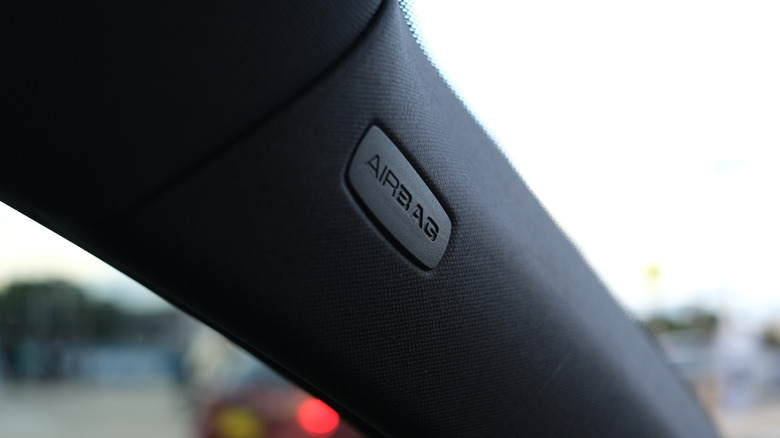
Knowing exactly where the airbags are located inside your vehicle is key to compatibility. Plus, it gives you a piece of critical information into how your car works. If you drive an older model that doesn’t have them, or they’re built into the door pillars, your options open up as there’s less chance of interference. Checking the user’s manual can help, but searching the internet may be more useful. You can also thoroughly inspect the car’s interior, looking for the distinctive airbag logo somewhere on the seats.

If you do find them on the seat, options become limited because seat-mounted airbags either use special stitching or have a weak area designed to burst open, allowing the airbag to deploy and do its thing. In this case, you’ll need covers designed specifically for seats with integrated airbags. Choosing the wrong one can interfere with or prevent deployment and won’t protect you properly in an accident. And no one wants to become just another National Highway Traffic Safety Administration stat for the sake of personal taste.


Source link

Leave a Reply

Subscribe to Our Newsletter

Get our latest articles delivered straight to your inbox. No spam, we promise.

Recent Reviews


It kind of makes no sense that literally every new car sold these days can go twice the regular speed limit in most countries. Even a Toyota Prius tops out at 115 mph, and reaching that speed in 99% of the world can easily land you in jail, or at least with a large dent in your bank account from a truly massive speeding ticket. Meanwhile, supercars can easily blow a Prius out of the water — for example, the Chevrolet Corvette ZR1 can hit speeds more than double that.

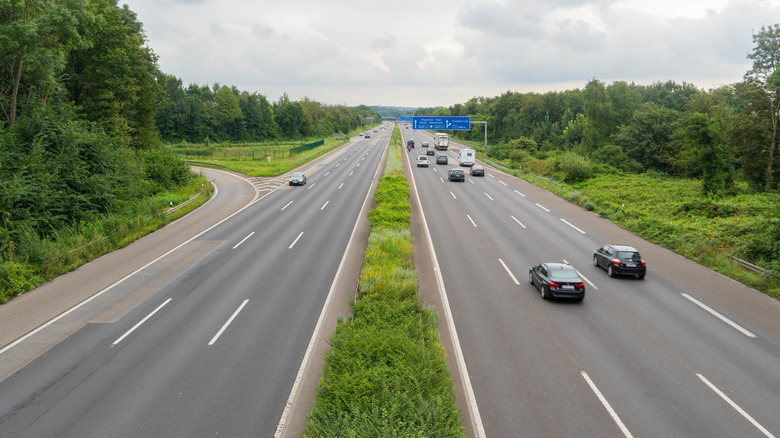
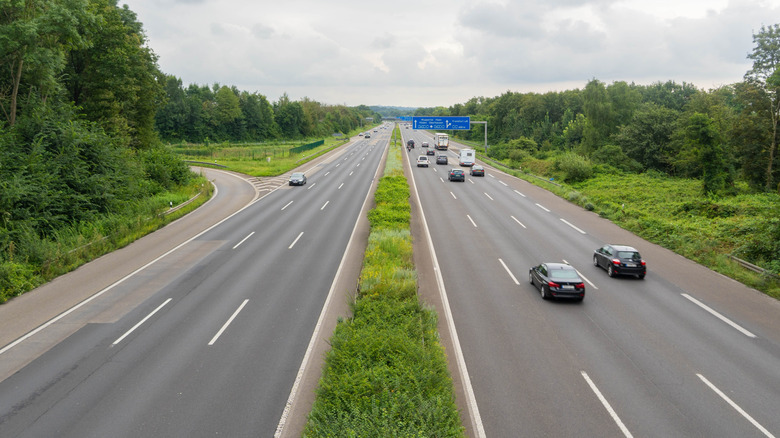
Either way, top speeds are merely hypothetical and completely off-limits for 99% of the world. Yet no matter if you own a ZR1 or a Prius and you want to test that top speed claim, there are public roads where you can try. The most obvious choice is the German Autobahn, which has certain sections with no speed limits. This means that, if it is safe to do so, you can theoretically chase that top speed.

Besides the German Autobahn, the roadways on the Isle of Man — known for the Isle of Man TT — also has sections with no speed limits. About a decade and a bit ago, you were also able to max out your car on certain locations of the Australian Northern Territory, specifically the Stuart Highway. However, speed limits were reinstated in the interest of public safety in 2016. Besides the Isle and the Autobahn, if you want to max out your car, public roads simply aren’t an option.

Limitations and dangers on no-speed-limit roads

Although reaching the top speed on the Autobahn is possible, it is not as simple as merging and hitting the gas. For example, the A9 near Bayreuth, A20 in Mecklenburg, and parts of A24 between Berlin and Hamburg are without speed limits in certain sections. In total, around 70% of German autobahns don’t have a capped speed limit. Even on those unrestricted sections, German law sets a recommended speed of 130 km/h called the Richtgeschwindigkeit.

Exceeding it is not a criminal offense, but if you are involved in an accident above that threshold, it can affect your legal liability for the incident. German law also prohibits driving at any speed where your stopping distance exceeds your line of sight, which effectively puts a practical ceiling on how fast you can legally go based on road conditions. The AutoTopNL YouTube channel serves as a good educational basis for how one ought to approach high speed driving on the autobahn.

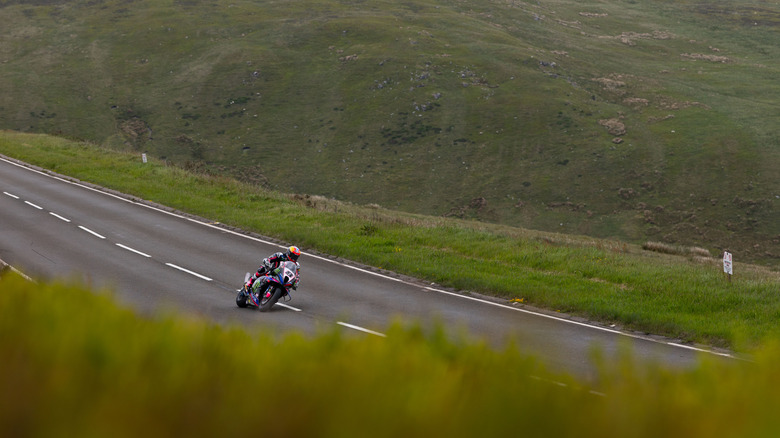
If Germany is too far away and you want a more rural experience while driving at ten-tenths, the Isle of Man is your only other option. Outside of towns you can press on, but keep in mind that these roads are much narrower and less protected, leaving no room for error. The best example is likely the Isle of Man’s TT Race, which the BBC called “the world’s most dangerous road race.” The Isle of Man TT and the Manx Grand Prix, held on the same roads that you can max out your car on, are races so dangerous that they have taken a collective 270 lives since inception.

Where do automakers actually test top speed claims?

For decades past, we’ve seen automakers advertising hypercars going over 250 mph, but not many people know the places where these tests are commonly carried out. For example, the fastest street-legal car on record, the Bugatti Chiron Super Sport 300+, reached its top speed of more than 300 mph on the Volkswagen Ehra-Lessien test track in 2019. This facility has 60 miles of private roads with a single straight that is 5.4 miles long.

There is also the Papenburg test facility, which features a 7.6-mile-long oval track banked at 50 degrees. This is where the Yangwang U9 Xtreme set the all-time production car top speed record at 308 mph in 2025, and where in 2023 the Rimac Nevera drove 171 mph backwards — not something you can do on the German autobahn. Italy’s Nardò Ring is a 7.8-mile circular track built by Fiat in 1975 and now owned by Porsche. It is so large it is visible from space, and so well-banked that a car traveling at 149 mph in the outer lane doesn’t need to be steered and can simply be driven straight. This last test track is perhaps best known from the 2012 Top Gear episode where Jeremy Clarkson, Richard Hammond, and James May pushed a Lamborghini Aventador, a Noble M600, and a McLaren MP4-12C to their limits. 

America’s equivalent is the former Space Shuttle Landing Facility at Kennedy Space Center, now operating as the Johnny Böhmer Proving Grounds. The 3.2-mile runway is where the SSC Tuatara hit 295 mph in 2022. Although these aren’t typically open for public joyriding, they are a few of a very limited number of places where top speeds are actually tested.


Source link