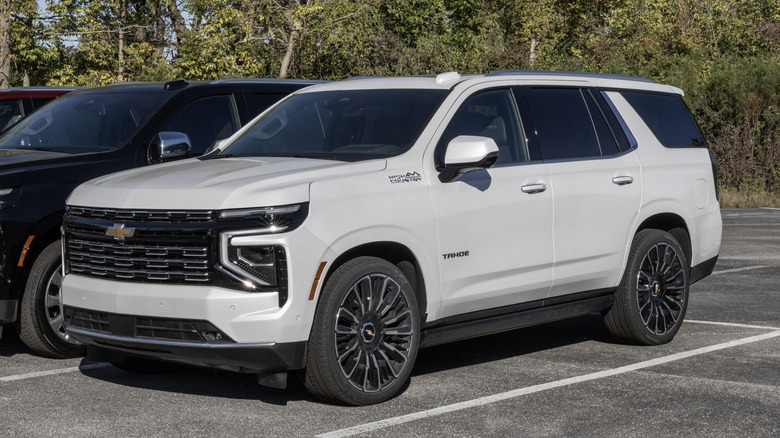
This Is The Chevy Tahoe Engine You Should Steer Clear Of


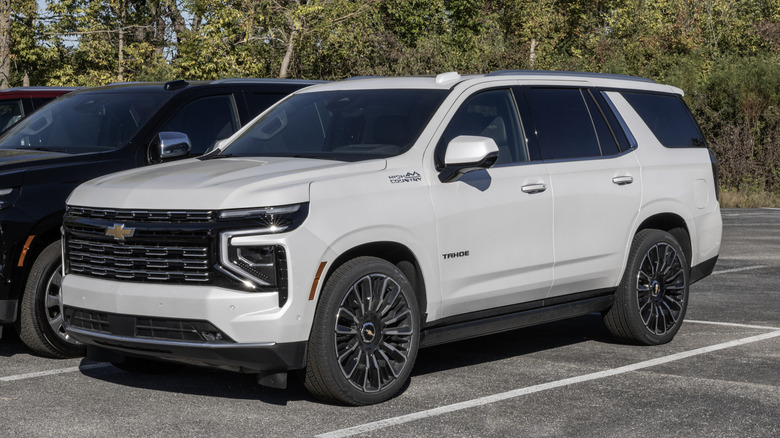
The Chevrolet Tahoe is one of America’s most popular and most established SUV nameplates, with the model name itself dating to 1992 and its full-size Chevy truck underpinnings going back even further. As with most long-running models, there have been both good and bad model years for the Tahoe over the decades, with many different engine options over its history. 

The majority of Chevy Tahoes on the road are powered by a variant of GM’s ubiquitous naturally aspirated, overhead-valve V8, and the current model offers buyers a choice between three different engines. The base Tahoe engine is a 5.3-liter V8, and buyers can upgrade to either a 6.2-liter V8 or a 3.0-liter Duramax turbodiesel inline-six.

Of these three modern Tahoe engines, one has proven especially problematic in the Tahoe and other General Motors pickup trucks and SUVs that it powers. That engine is the L87 6.2-liter V8, which has become a fairly large thorn in the side of the Tahoe’s generally strong reputation for reliability. The L87’s problems are substantial and go far beyond your typical gremlins or minor parts issues, with a significant risk of total engine failure that’s led to major manufacturer recalls and federal investigations.

The L87’s problems are significant and ongoing

While issues with the GM’s 6.2-liter V8 are well-publicized, it’s important to note that there have been several iterations of the 6.2 V8 used in the Tahoe and other GM trucks and SUVs, including the L92 of the 2000s and the EcoTec3 L86 of the 2010s. The 6.2 V8 that’s causing major issues for GM is the newer L87 variant, which debuted in the 2019 Chevy Silverado before making its way to the Tahoe for 2021. 

The main problem with the L87 is the risk of bearing failure, which has been attributed to a manufacturing defect on GM’s part. Since it involves the engine’s internals, it’s not an easy issue to fix and can lead to complete engine failure if things go wrong. To say that the L87 issues have been a problem for GM would be an understatement, with the company having to recall over 700,000 L87-equipped trucks and SUVs from the 2021 to 2024 model years as of mid-2025, and also coming under an NHTSA investigation for the problem.

While GM has been working on solutions to the problem, including complete engine replacements for affected vehicles and a switch to higher-viscosity oil, there’s still concern that the automaker has not addressed the initial problem. According to the NHTSA, over 30 owners whose engines were supposedly fixed under the recall have reported engine failures after the repairs or replacements as of early 2026.

How to avoid issues with the 6.2-liter V8
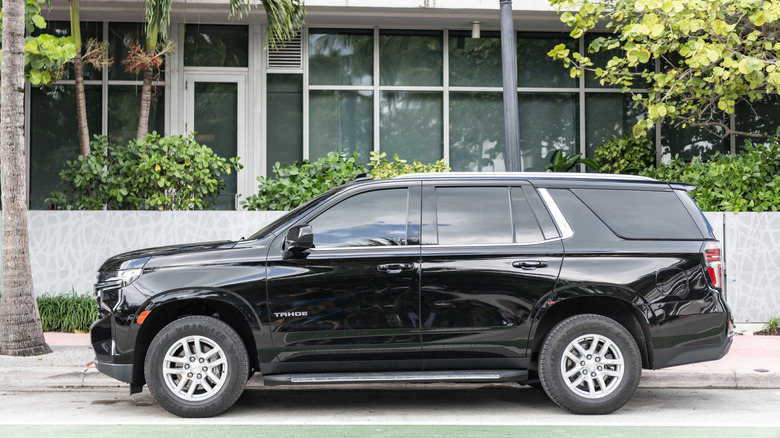
The 6.2-liter L87’s issues have cast a shadow over the late-model Tahoe and other affected GM vehicles. General Motors has said that it updated the production design of 2025 and newer engines, which has kept newer model years out of the recall. The jury is still out on whether the problem was actually fixed, though, as some 2025 owners have reported similar engine issues with their 6.2s. 

Potential Tahoe buyers have alternatives, though, as the L87’s issues can be avoided by opting for either the base 5.3-liter V8 or the 3.0-liter Duramax turbodiesel. Both of these make less peak horsepower than the 6.2, but the Duramax makes up for it with impressive torque and good fuel economy. 

Thankfully, potential Tahoe owners may not have to compromise on their engine choice for much longer. The fully redesigned 2027 Silverado will be available with a pair of next-generation V8 engines, one of which is a new 6.6-liter V8 that replaces the 6.2. That new engine will almost certainly make its way to the Tahoe as well somewhere down the line. Potential GM truck and SUV buyers will surely be hoping the new engine isn’t just more powerful than the 6.2-liter, but also leaves its spotty reliability in the past. 


Source link

Leave a Reply

Subscribe to Our Newsletter

Get our latest articles delivered straight to your inbox. No spam, we promise.

Recent Reviews


It kind of makes no sense that literally every new car sold these days can go twice the regular speed limit in most countries. Even a Toyota Prius tops out at 115 mph, and reaching that speed in 99% of the world can easily land you in jail, or at least with a large dent in your bank account from a truly massive speeding ticket. Meanwhile, supercars can easily blow a Prius out of the water — for example, the Chevrolet Corvette ZR1 can hit speeds more than double that.

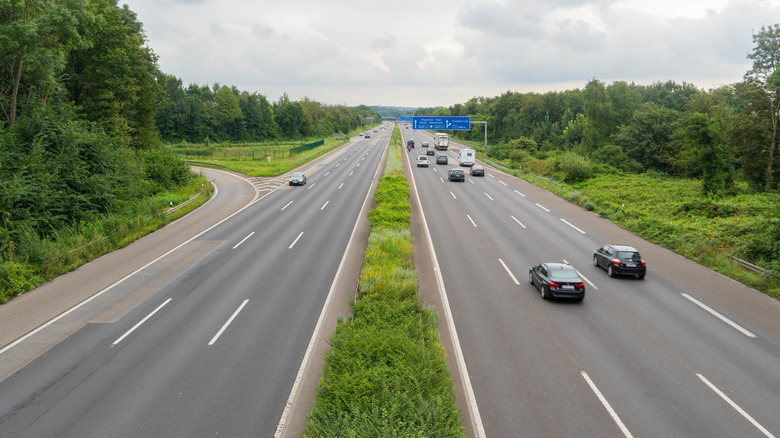
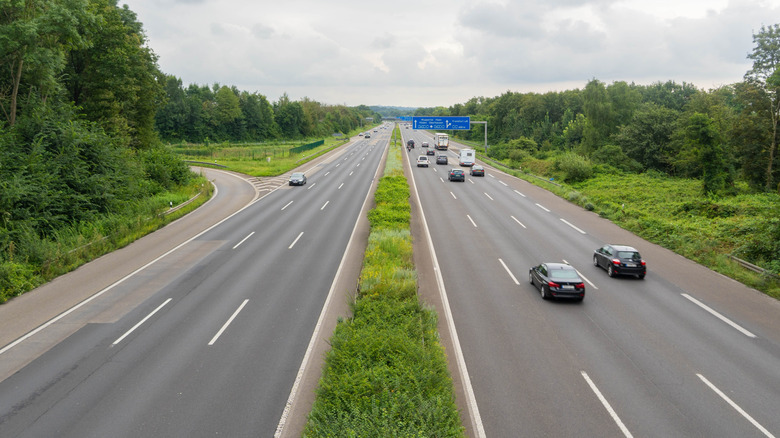
Either way, top speeds are merely hypothetical and completely off-limits for 99% of the world. Yet no matter if you own a ZR1 or a Prius and you want to test that top speed claim, there are public roads where you can try. The most obvious choice is the German Autobahn, which has certain sections with no speed limits. This means that, if it is safe to do so, you can theoretically chase that top speed.

Besides the German Autobahn, the roadways on the Isle of Man — known for the Isle of Man TT — also has sections with no speed limits. About a decade and a bit ago, you were also able to max out your car on certain locations of the Australian Northern Territory, specifically the Stuart Highway. However, speed limits were reinstated in the interest of public safety in 2016. Besides the Isle and the Autobahn, if you want to max out your car, public roads simply aren’t an option.

Limitations and dangers on no-speed-limit roads

Although reaching the top speed on the Autobahn is possible, it is not as simple as merging and hitting the gas. For example, the A9 near Bayreuth, A20 in Mecklenburg, and parts of A24 between Berlin and Hamburg are without speed limits in certain sections. In total, around 70% of German autobahns don’t have a capped speed limit. Even on those unrestricted sections, German law sets a recommended speed of 130 km/h called the Richtgeschwindigkeit.

Exceeding it is not a criminal offense, but if you are involved in an accident above that threshold, it can affect your legal liability for the incident. German law also prohibits driving at any speed where your stopping distance exceeds your line of sight, which effectively puts a practical ceiling on how fast you can legally go based on road conditions. The AutoTopNL YouTube channel serves as a good educational basis for how one ought to approach high speed driving on the autobahn.

If Germany is too far away and you want a more rural experience while driving at ten-tenths, the Isle of Man is your only other option. Outside of towns you can press on, but keep in mind that these roads are much narrower and less protected, leaving no room for error. The best example is likely the Isle of Man’s TT Race, which the BBC called “the world’s most dangerous road race.” The Isle of Man TT and the Manx Grand Prix, held on the same roads that you can max out your car on, are races so dangerous that they have taken a collective 270 lives since inception.

Where do automakers actually test top speed claims?

For decades past, we’ve seen automakers advertising hypercars going over 250 mph, but not many people know the places where these tests are commonly carried out. For example, the fastest street-legal car on record, the Bugatti Chiron Super Sport 300+, reached its top speed of more than 300 mph on the Volkswagen Ehra-Lessien test track in 2019. This facility has 60 miles of private roads with a single straight that is 5.4 miles long.

There is also the Papenburg test facility, which features a 7.6-mile-long oval track banked at 50 degrees. This is where the Yangwang U9 Xtreme set the all-time production car top speed record at 308 mph in 2025, and where in 2023 the Rimac Nevera drove 171 mph backwards — not something you can do on the German autobahn. Italy’s Nardò Ring is a 7.8-mile circular track built by Fiat in 1975 and now owned by Porsche. It is so large it is visible from space, and so well-banked that a car traveling at 149 mph in the outer lane doesn’t need to be steered and can simply be driven straight. This last test track is perhaps best known from the 2012 Top Gear episode where Jeremy Clarkson, Richard Hammond, and James May pushed a Lamborghini Aventador, a Noble M600, and a McLaren MP4-12C to their limits. 

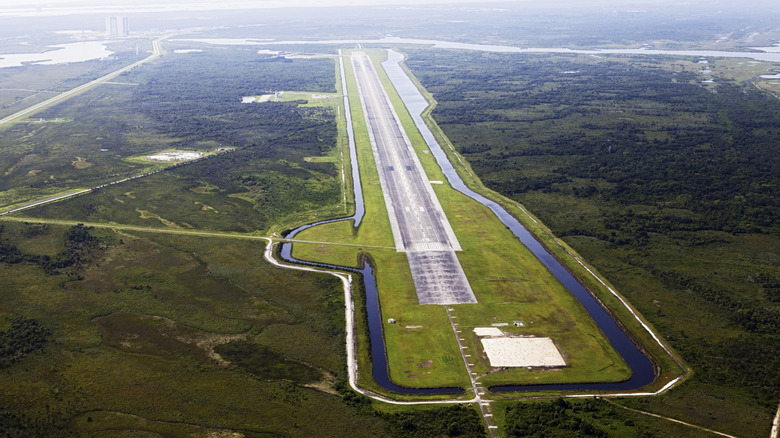
America’s equivalent is the former Space Shuttle Landing Facility at Kennedy Space Center, now operating as the Johnny Böhmer Proving Grounds. The 3.2-mile runway is where the SSC Tuatara hit 295 mph in 2022. Although these aren’t typically open for public joyriding, they are a few of a very limited number of places where top speeds are actually tested.


Source link