
Discover the Living Legacy of the T’boli Dream Weavers in Lake Sebu
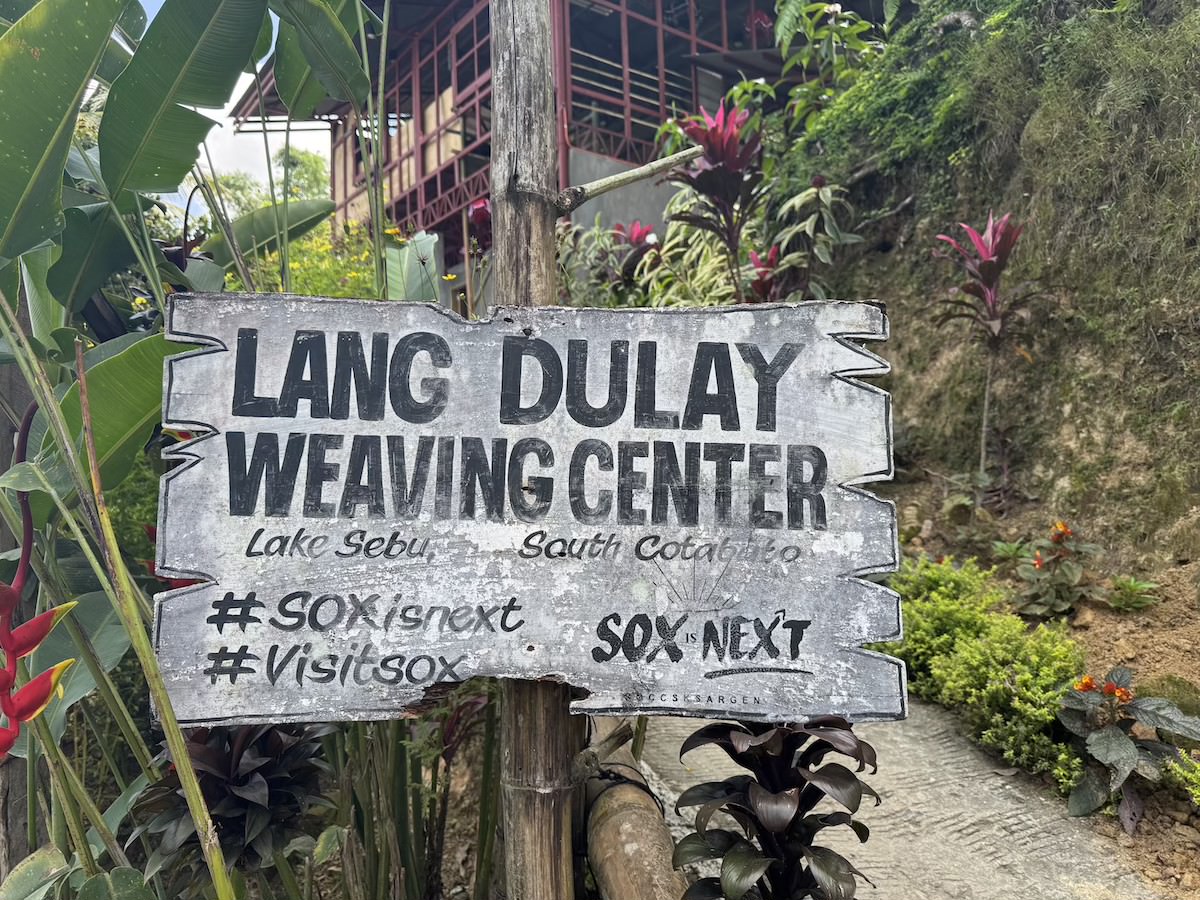
Hidden in the lush highlands of Lake Sebu, South Cotabato, the Lang Dulay T’nalak Weaving Center is one of the Philippines’ most treasured cultural destinations. More than a simple weaving workshop, it is a living heritage center where visitors can witness the centuries-old T’nalak weaving tradition practiced by the T’boli people.
Lang Dulay T’nalak Weaving Center in Lake Sebu
Named after National Living Treasure (Gawad sa Manlilikha ng Bayan) awardee Lang Dulay, the center preserves the intricate art of transforming abaca fibers into the sacred T’nalak cloth—an heirloom textile whose patterns are believed to be inspired by dreams. A visit offers travelers an authentic glimpse into Indigenous culture, traditional craftsmanship, and the enduring legacy of one of the country’s greatest master weavers.
Location
The Lang Dulay T’nalak Weaving Center is located in Lake Sebu, South Cotabato, in the SOCCSKSARGEN Region of Mindanao. Nestled among rolling hills and the ancestral homeland of the T’boli people, the center is one of Lake Sebu’s most-visited cultural attractions, alongside its scenic lakes, waterfalls, and zipline adventures.

History
The weaving center honors the life and legacy of Lang Dulay (1928–2015), the renowned T’boli master weaver who dedicated her life to preserving traditional T’nalak weaving. She learned the craft from her mother at the age of twelve and eventually mastered more than a hundred intricate patterns inspired by dreams, which the T’boli believe are gifts from Fu Dalu, the guardian spirit of the abaca.

In 1998, Lang Dulay was recognized as a National Living Treasure (Gawad sa Manlilikha ng Bayan) for safeguarding the ancient weaving tradition. Around the same period, the weaving center was established to train her family members and younger T’boli women, ensuring that the authentic techniques and sacred patterns would continue to be passed down through future generations.
Although Lang Dulay passed away in 2015, her family continues to operate the center, welcoming visitors and preserving the traditional methods she championed.
Things to Do and See

Watch Traditional T’nalak Weaving
The highlight of every visit is watching skilled T’boli women hand-weave T’nalak on traditional backstrap looms. Every thread is carefully prepared, dyed with natural plant extracts, and woven into elaborate geometric patterns.

Meet the Dream Weavers
Visitors can interact with Lang Dulay’s family members and local artisans who continue her legacy. Listening to their stories offers a deeper appreciation of the cultural significance behind every woven masterpiece.
Learn About the T’nalak Process
Guided demonstrations explain the painstaking process of harvesting abaca fibers, preparing natural dyes, tying intricate ikat patterns, and weaving the finished cloth. Creating a single authentic T’nalak textile can take several months.

Shop for Authentic Handwoven Souvenirs
The center offers genuine T’nalak textiles, table runners, scarves, bags, and handicrafts made by local artisans. Purchasing directly from the weaving center helps support Indigenous livelihoods and cultural preservation.

Appreciate Indigenous Culture
Beyond the weaving itself, visitors gain insight into T’boli traditions, beliefs, rituals, and artistic expressions that have been preserved for generations.
Interesting Facts
- Lang Dulay mastered more than 100 traditional T’nalak designs, many of which she said came to her in dreams.
- T’nalak is woven exclusively from hand-processed abaca fibers and dyed using the ancient ikat technique.
- Traditional T’boli belief holds that the weaving patterns are gifts from Fu Dalu, the guardian spirit of the abaca plant.
- Authentic T’nalak uses only three primary colors: black, white, and red, each carrying cultural symbolism.
- The weaving process involves numerous rituals and cultural practices that emphasize respect for both nature and spirituality.
- The T’nalak weaving tradition is recognized as an important part of the Philippines’ intangible cultural heritage.
- Lang Dulay trained dozens of apprentices who continue preserving her weaving techniques through the center today.
How to Get There
From General Santos City
General Santos City serves as the primary gateway to Lake Sebu. From the city’s integrated transport terminal, take a bus or passenger van bound for Lake Sebu. The trip typically takes around two to three hours, depending on traffic and road conditions.
Upon arriving in the Lake Sebu town proper, hire a tricycle or motorcycle taxi to the Lang Dulay T’nalak Weaving Center. The ride usually takes about 10 to 15 minutes.
From Koronadal City
Travelers may also reach Lake Sebu from Koronadal City by bus or van. The journey takes approximately 1.5 to 2 hours, after which you continue to the weaving center by local transportation.
The weaving center is often included in cultural tours around Lake Sebu, making it convenient to combine with visits to Seven Falls, Lake Sebu, and other T’boli cultural attractions.
The Lang Dulay T’nalak Weaving Center offers far more than a sightseeing stop—it provides a meaningful encounter with one of the Philippines’ richest Indigenous traditions. Every woven textile reflects generations of knowledge, spirituality, artistry, and cultural identity that continue to thrive in the heart of Lake Sebu.
Whether you come to admire the remarkable craftsmanship, learn about the T’boli people, or purchase an authentic T’nalak piece, a visit to the center leaves a lasting appreciation for the legacy of Lang Dulay and the dream weavers who keep this extraordinary tradition alive.
Follow and subscribe to OutofTownBlog.com on Facebook , Twitter, Instagram, Pinterest, and YouTube for more Travel-related updates.
Read: Lake Sebu Travel Guide: DIY Itinerary, Hotels, Activities + How to get there and more

Stacie Harris is a local resident and reporter of the Maple Grove area. Stacie reports on medicine and science for the Maple Grove Report.