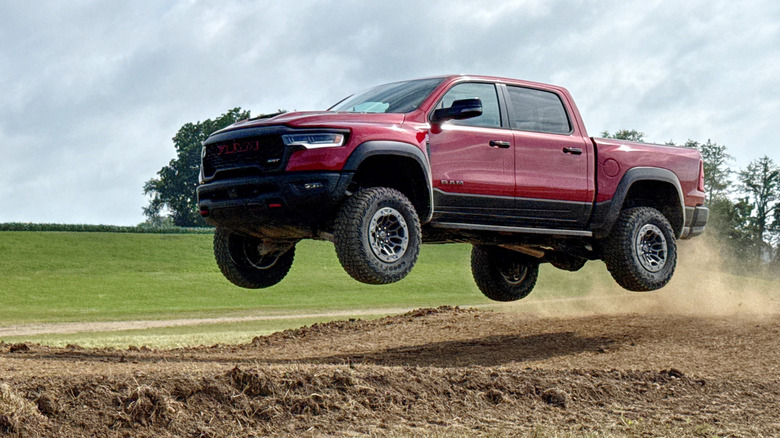

I imagine that there’s an inspirational poster hanging somewhere in Ram headquarters, but instead of cats hanging onto the limb of a tree, or motivational words about determination and growth, there’s an off-road truck jumping over another truck that’s doing a big, smokey burnout. And in large, bold font, it says something like “If it’s worth doing, it’s worth overdoing.” To me, anyway, that seems to be the spirit behind the return of the Ram TRX.
The folks at Ram invited me out to Indiana to drive the newest version of the TRX SRT (that’s its official name, but we’ll just call it TRX for short), complete with all the improvements that were applied to the 2025 Ram 1500 lineup refresh. Discontinued at the end of 2024, but back with even more power for 2027, the TRX (now with the SRT for Street and Racing Technology included in the name) is Ram’s most powerful full-size pickup truck, and one of the most off-road dominant forces of the last few decades.
 Travis Langness/SlashGear
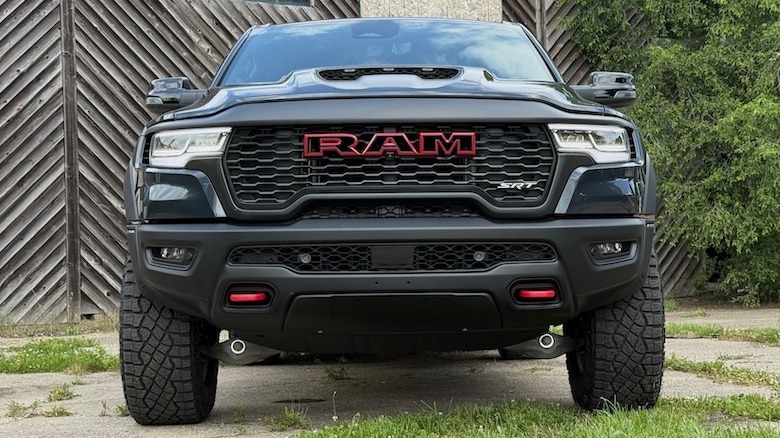
The TRX shares a lot of its equipment, and even a few of its body panels, with high-end versions of the regular Ram 1500, but it’s wider, taller, and way more capable when the pavement ends. And, of course, the TRX is powered by the infamous Hellcat engine — a supercharged V8 that puts out intoxicating levels of growling, whining, earth-moving horsepower.
Guess who’s back, back again
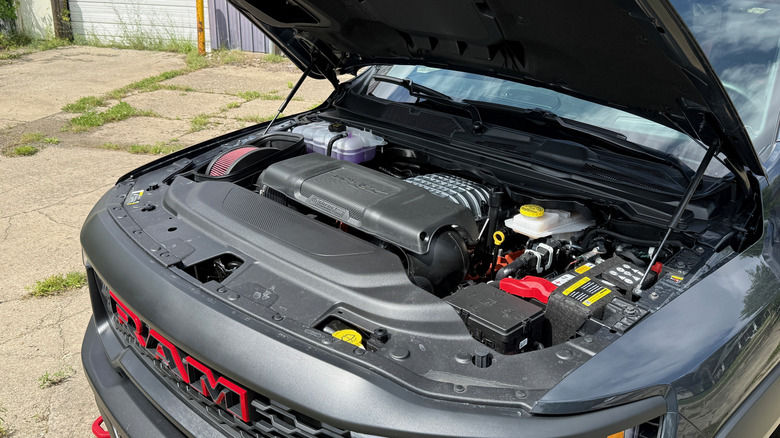
Like that boyfriend your bestie can’t seem to break up with for good, the Hellcat engine is back under the hood of the new 2027 Ram TRX SRT. The supercharged 6.2-liter V8 that has powered the various Hellcat vehicles over the years returns as the motivating force behind the TRX’s speed, but this time it comes with 777 horsepower and 680 pound-feet of torque.
That’s up from 702 hp and 650 lb-ft in the old model, and it’s enough to leapfrog right over Ford’s F-150 Raptor R — which was once the leader in the class — which puts out 720 hp and 640 lb-ft.
 Travis Langness/SlashGear
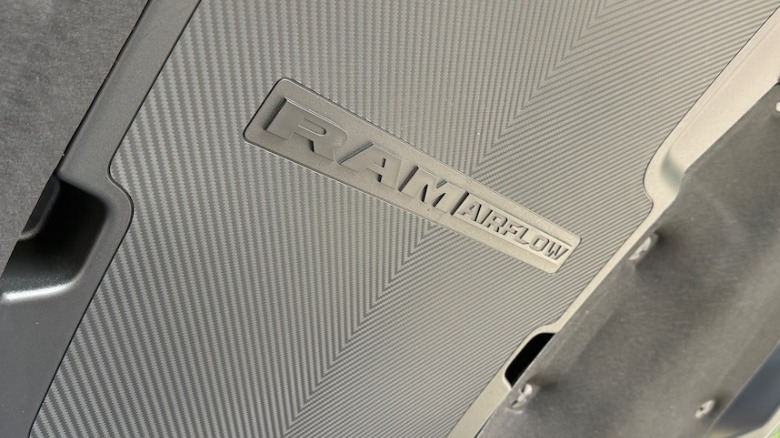
The TRX’s extra power for 2027 comes from breathing and fueling upgrades. According to the folks at Ram, the TRX’s version of the Hellcat engine got valvetrain components from the Hellcat Redeye, an increase from 5 to 7 bar in the fuel pressure department, and the boost was dialed up by about 20%. There’s also a re-routed hood duct for more air to make its way into the combustion chamber, an upgraded torque converter, and a redline increase from 6,250 to 6,500 rpm.
The upgrades are familiar
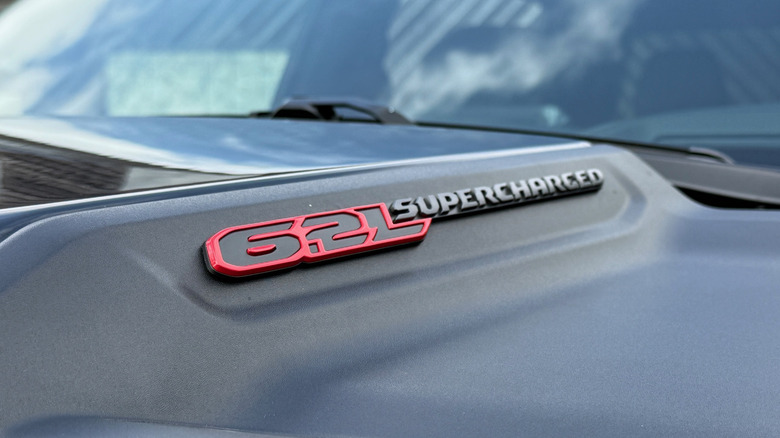
I’ve enjoyed driving Hellcat-powered vehicles over the years, in pretty much every form the engine has been packaged in, and the Ram TRX is no exception. Durangos, Challengers, Chargers, even Jeeps — all have had some form of the fantastic powertrain that this TRX uses, and I’ve driven them all. Punch the throttle and you get a big thrust of acceleration, no matter the gear you’re in or the speed you’re going.
The rumbles of the V8 can be heard via the engine bay and through the dual 3-inch exhaust pipes, especially at low RPM, but they’re outmatched by the high-pitched supercharger whine at the top of the rev range. Hurdling towards the horizon in such a big vehicle, upshifting with the 8-speed automatic as you come to grips with this much power, is truly a unique experience.
 Travis Langness/SlashGear
The 777 hp that this version of the Hellcat engine puts out is higher than before, and according to Ram, it drops the TRX’s zero-to-60 time from 4.5 seconds to an astonishing 3.5, but it doesn’t change the vehicle dynamics much in the real world. It’s still a rowdy powertrain, with all sorts of sensory input that makes the drive enjoyable. It’s also still a truck that can do wild things in the dirt.
A hop, skip, and a jump
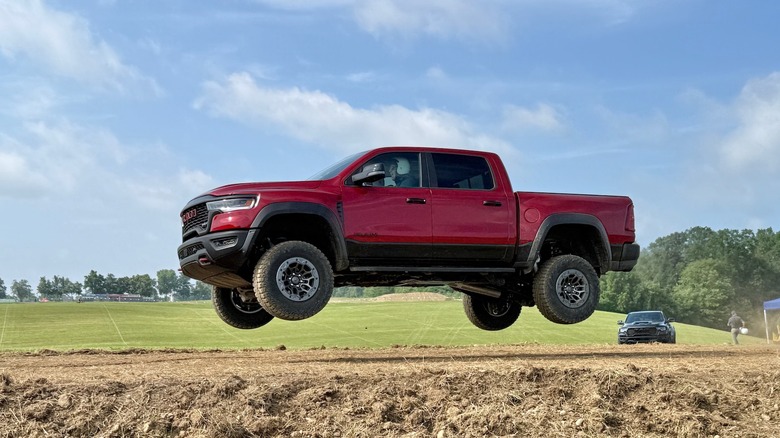
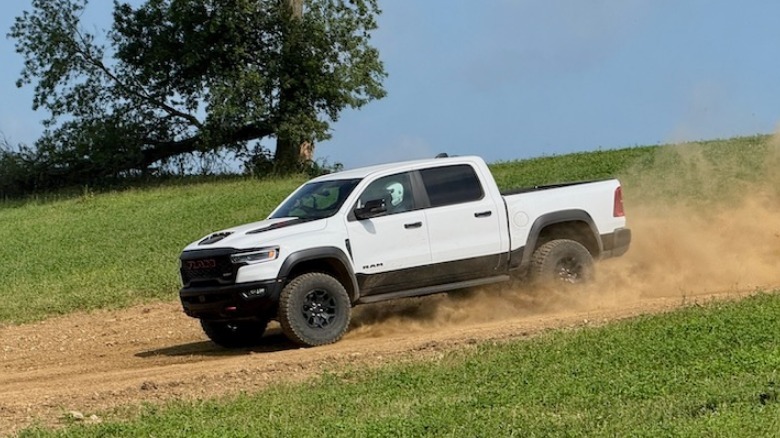
As a part of the event that showcased the return of the TRX, the Ram folks set up a small course at a local motocross track in Indiana. Instead of rocky terrain to test out the truck’s articulation, there were some corners to slide through and two jumps. Yes, jumps. The TRX was capable of taking these small table-top style leaps at 45 and 60 mph, respectively, covering nearly 100 feet laterally in the air before returning to terra firma. On the outside things looked harrowing, but inside the impacts were impressively smooth.
 Travis Langness/SlashGear
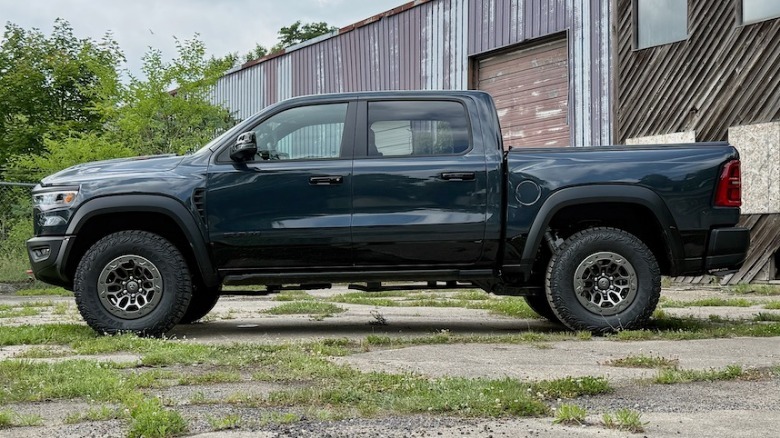
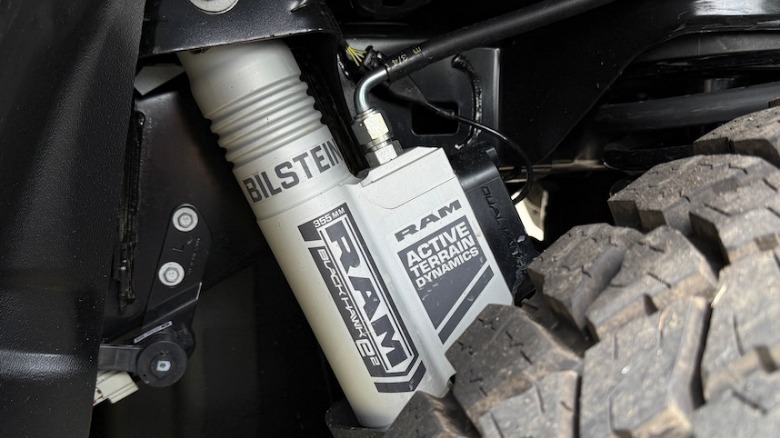
That’s because the TRX’s engine is just one of its party tricks — the other is its suspension. Bilstein e2 Blackhawk shock absorbers do the work of soaking things up underneath, along with stats like 11.8 inches of ground clearance and massive 35-inch tires.
 Travis Langness/SlashGear
The TRX is pre-loaded for hard work off-road. Over and over, drivers jumped the TRX all day: fully extending the suspension, then fully compressing it again without any complaints from the two test trucks being used for the jumping exercise. As a torture test, it was pretty remarkable to watch.
It’s still a big, comfy truck
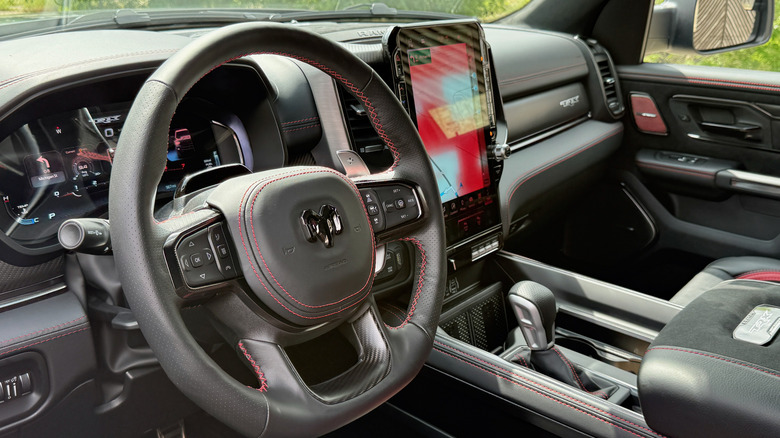
More than just some dirt driving and jumps provided to help us experience the TRX’s best gimmick, Ram offered a few driving routes on nearby rural roads and highways so we could get a sense for the truck’s behavior in the real world. Even with a monster muscle car motor under the hood, the Ram TRX remains pretty comfortable, just like you’d expect from a crew-cab full-size pickup truck these days.
 Travis Langness/SlashGear
There’s more than enough room for five adults, with all the cupholders, cubbies, USB ports, and conveniences you’d need to transport friends or family anywhere they need. The driver’s seat felt relatively firm at first, but I settled in during my time behind the wheel and came away thinking it would be a pretty good road-trip companion. The inclusion of front-seat massage functions, along with front- and rear-seat heating and ventilation, is a big plus, too. It’s a beast over broken terrain, flattening out the largest of road imperfections, but the TRX is also the sort of truck you can live with every day.
The cost for all that power
Naturally, the cost is high when it comes to providing class-leading power and immense off-road capability, but the TRX’s price tag is still tough to swallow. The 2027 TRX SRT (we’ll use its official government name when talking about the price) starts at $102,790 (including a $2,795 destination fee). The particular truck I tested, with a few extras like beadlock capable wheels and rock rails, swelled up to $108,215. Thankfully, the TRX is more than just a big engine on wheels.
 Travis Langness/SlashGear
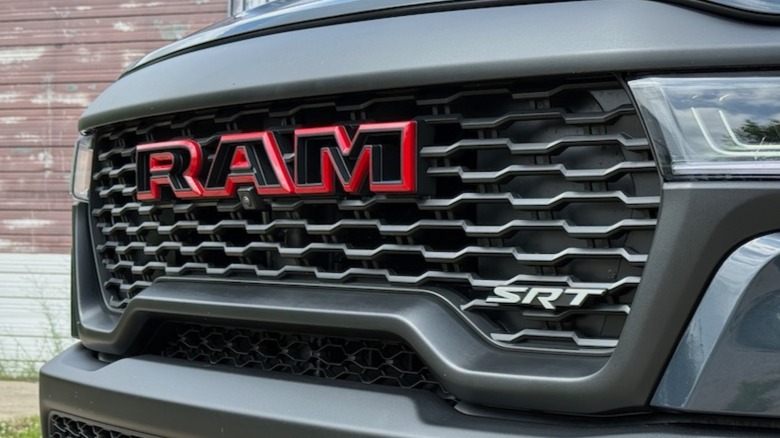
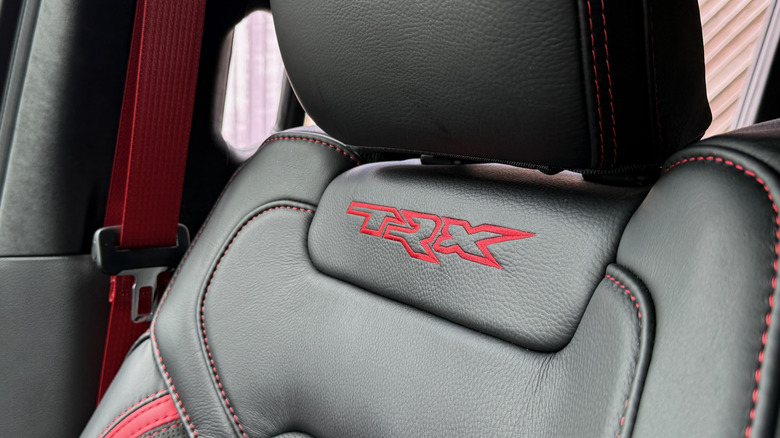
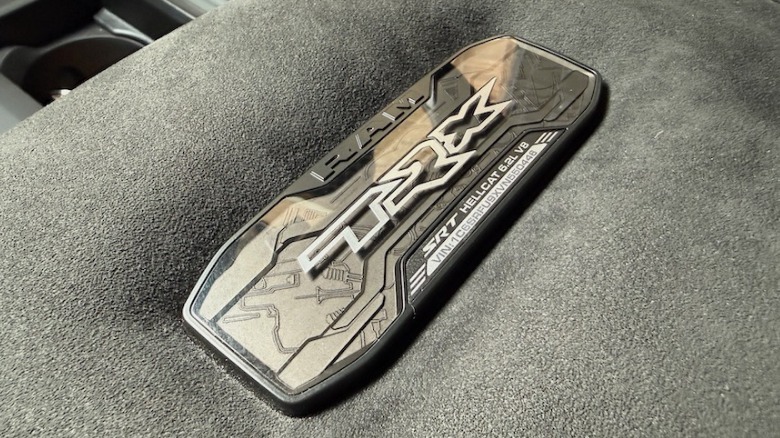
If you can tear yourself away from the joy of jumping or take a break from doing sub-4-second launches in your massive pickup truck, there’s a lot to like about the interior, too. Carbon fiber patterns and Ram TRX logos are all around you on the interior of the truck, with special touches like the glass center-console badge that uses multiple layers to show off the Hellcat Redeye’s valvetrain components. The massive 14.4-inch center screen is one of the best-looking infotainment options in any full-size pickup right now, and the 19-speaker Harman Kardon stereo has more than enough volume to overwhelm the cabin.
2027 Ram TRX SRT verdict
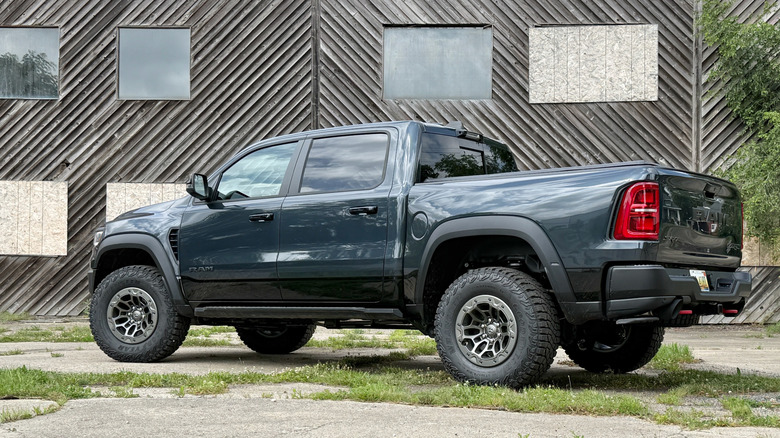
Since it was first introduced, the price of the TRX has gone way up, and the price of gas has gone up right along with it, making it harder to justify such a wild version of a utilitarian vehicle. When it first came out in 2021, the original TRX was under $72,000. And sure, the price of the final-edition TRX that last sold in 2024 was around $120k, but that doesn’t make this meet-in-the-middle price any smaller. Making the case for the TRX even tougher are Ram’s other (cheaper) off-road offerings like the Ram RHO, which makes much less power but is similarly capable in the dirt.
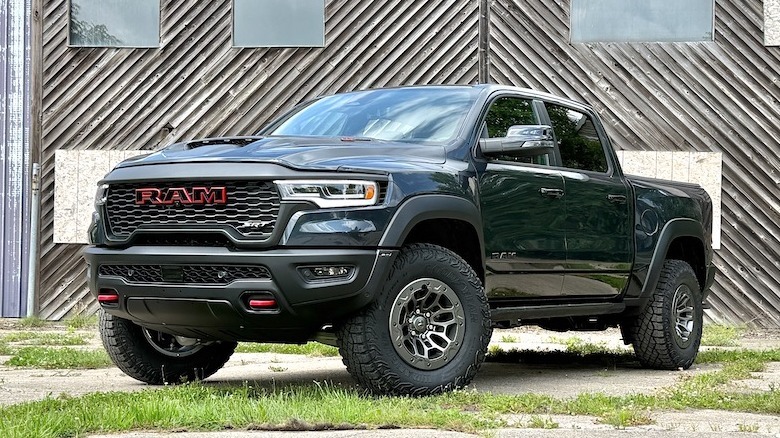
Since Chevy doesn’t really make an off-road super-truck, and all-electric off-roaders like the Rivian R1T aren’t exactly aimed at the same gas-guzzling sections of the market, the only direct rival for the TRX is the Ford F-150 Raptor. Base trim levels of the Raptor start at $82,495, with the supercharged V8 Raptor R adding a healthy $31,925 to the mix, if that’s the engine you need. That means the Ford has an MSRP of $114,420 – well above even the upgraded version of the TRX. So, it turns out the Ram is a bit of a bargain, if you consider a six-figure price tag a bargain.
 Travis Langness/SlashGear
I like the TRX quite a bit. I really enjoyed driving when it first came out, and in this updated form. It hasn’t lost a step in the few years it was gone, and the Hellcat powertrain will always be a favorite of mine. If you’ve got to have full-size, V8-powered, off-road supremacy, the 2027 Ram TRX SRT is certainly at the top of the performance ladder — particularly when it comes to horsepower. But thanks to high prices, it’s a ladder that’s becoming increasingly difficult to climb.

Stephan is the sports journalist for the Maple Grove Report.