The Reason Why Some Modern Tanks Still Rely On Humans To Load Their Main Turret Guns


Tanks have evolved significantly since their inception, and modern main battle tanks are among the most technologically sophisticated land vehicles ever built. Equipped with computerized fire-control systems, thermal imaging cameras, laser rangefinders, and advanced composite armor, they can accurately engage targets miles away while operating in some of the harshest conditions imaginable. Given all that technology, many people naturally assume loading the tank’s main gun is also fully automated.

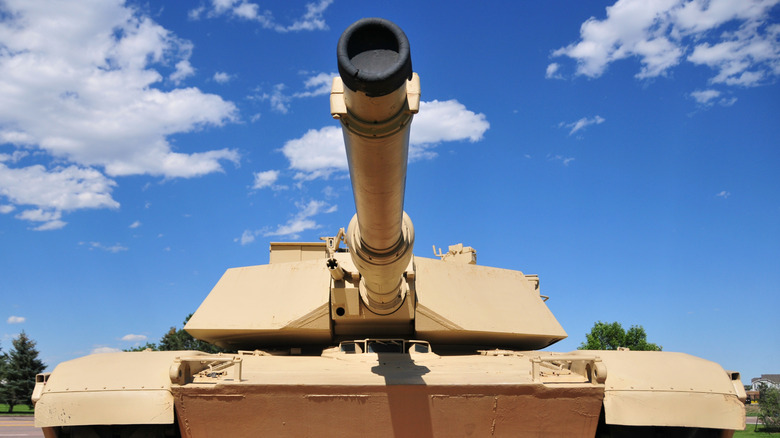
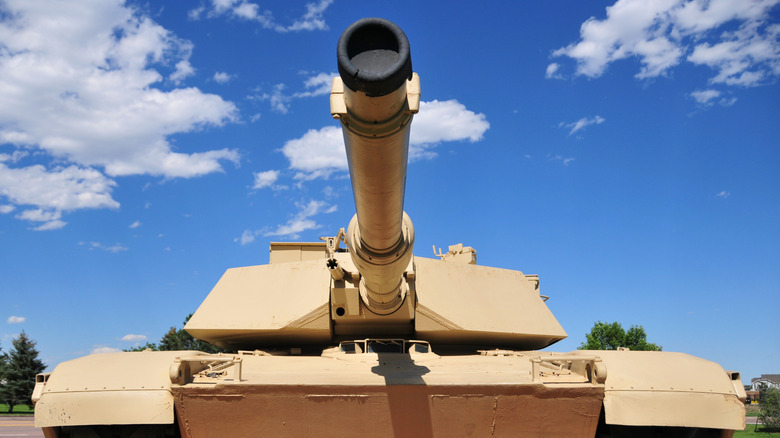
That assumption, however, isn’t entirely correct. While some countries, including Russia, China, and Japan have embraced automatic loading systems, some of the world’s most capable tanks, including the legendary M1 Abrams, still rely on a fourth crew member to manually load shells into the main turret gun. At first glance, that may seem like an outdated practice from the early 20th century, but some military planners have continued to favor human loaders for reasons that go beyond simply their ability to ram ammunition into the chamber.

How autoloaders changed tank design

Autoloaders reload tank guns after they fire and were built to replace human loaders. The concept of an autoloader gained prominence during the Cold War as Soviet designers sought to reduce crew size and create tanks with smaller silhouettes, while maintaining a consistent fire rate of six to eight rounds per minute for some guns. Vehicles such as the T-72 and T-80 tanks, as well as the later T-90, all incorporated autoloaders, allowing them to operate with a crew of three instead of the typical four.

Besides reducing the crew requirements, autoloaders offer several other benefits. Removing one crew member allows engineers to design a smaller turret, which in turn reduces a tank’s overall size and profile. Mechanical loading systems also deliver a consistent rate of fire regardless of crew fatigue and can streamline certain aspects of ammunition handling. Given these advantages, it’s easy to see why many observers expected autoloaders to become the universal standard for modern tanks. That change, however, has not taken place.

Why human loaders haven’t disappeared

Supporters of human loaders argue that their role extends well beyond loading shells. An experienced loader is trained to load the main gun within 3 seconds (trainees are allowed up to 15 seconds), operate the tank radios, identify the different types of ammunition, and perform countless tasks that an autoloader cannot. Human loaders can respond to mechanical problems, select different ammunition types on the fly, and serve as another set of eyes during combat operations. For many armies, including the U.S. and U.K., that additional flexibility outweighs the manpower savings offered by automation.

Ultimately, the choice between an autoloader and a human loader reflects different design philosophies rather than a simple question of technological progress. Countries such as Russia and France have prioritized smaller crews and automated loading systems, while the United States has continued to field tanks like the M1 Abrams, with a dedicated loader because of the versatility that the extra crew member brings to the battlefield — though that may be in doubt with the new M1E3 Abrams. Automation will undoubtedly play a larger role as armored warfare continues to evolve, but one of the most important jobs inside many of the world’s modern tanks remains distinctly human.


Source link

Leave a Reply

Subscribe to Our Newsletter

Get our latest articles delivered straight to your inbox. No spam, we promise.

Recent Reviews


Today, when one pictures a “classic Dodge Charger”, the first image that pops up is almost certainly one of the highly desirable Charger models from the late 1960s or early ’70s. Indeed, those early muscle car Chargers are iconic, playing a starring role in the “Dukes of Hazzard” television show and, somewhat more recently, “The Fast and the Furious” films. But as time ticks on, is it time to start appreciating the modern version of the Charger as a potential modern classic?

It’s now been over 20 years since Dodge brought back the Charger nameplate for a spacious four-door sedan with an optional HEMI V8 engine. While the basic Charger R/T was a potent machine for its time, Dodge really took the Charger’s game to the next level for the 2006 model year with the debut of the Charger SRT8. 

The SRT8 model used a larger version of the third-gen HEMI V8 that, combined with other performance upgrades, transformed the sedan into a serious performance car capable of running with its 1960s HEMI ancestors at the drag strip — to say nothing of its vastly superior handling and refinement. In the years that followed, Dodge would continue to improve the Charger’s performance with larger and more powerful HEMI engines, but the significance of the original Charger SRT8 is not to be overlooked.

A muscle car legend reborn for the 2000s

Today, with the modern Charger being such an established part of the car enthusiast world, it’s easy to forget some of the controversy that surrounded its mid-2000s return. Most of it focused on the fact that the beloved muscle car nameplate had been brought back for a four-door sedan rather than a retro-styled coupe. Fortunately, those people looking for that retro coupe would be satisfied by the reborn Dodge Challenger when it arrived a few years later, while the Charger went on to become a highly popular muscle sedan in its own right.

The addition of the SRT8 model to the lineup certainly helped, of course. Under the hood was the larger 6.1-liter HEMI V8, which differed from the standard 5.7-liter HEMI in several ways, not least the displacement. With the 6.1 under the hood, the SRT8 made 425 hp and 420 lb-ft of torque, easily laying down a mid-13-second quarter-mile time in Motor Trend’s hands. This was very quick by mid-2000s standards, especially considering the now-outdated five-speed automatic transmission.

But the SRT8’s performance went beyond just the drag strip. As part of the SRT transformation, Dodge also gave the car larger wheels and tires, a retuned suspension setup, and large Brembo brakes. While this didn’t necessarily make the car an agile road course weapon, it did give the SRT8 an athleticism that belied the Charger’s weight and size. 

The evolution of modern Dodge muscle

What’s even cooler about this era in Chrysler/Dodge performance history is that the Charger was just one of the four-door LX platform cars that the automaker offered with SRT badges and a powerful HEMI engine under the hood. Apart from the Charger, buyers could also choose from the more upscale, but ultimately short-lived SRT version of the Chrysler 300C sedan or the Dodge Magnum SRT8 station wagon.

The original Charger SRT8 marked the beginning of a long run of increasingly powerful, high-performance models. In the early 2010s, the Charger SRT8’s 6.1 HEMI was replaced by the larger and more powerful 6.4/392 HEMI, with that motor eventually becoming available in the less expensive Charger R/T Scat Pack. Then, of course, came the Charger SRT Hellcat, with a 707-hp, supercharged 6.2-liter that turned the car into a genuine super sedan.

So is the original Charger SRT8 a guaranteed future classic? Classified listings show that clean examples still bring decent money today, but the fact that it was followed by improved models may ultimately limit its potential for becoming a true, mega-desirable collector car. Regardless, though, the Charger SRT8’s accomplishments in modern muscle car history are not to be taken lightly.


Source link