Google and the FBI Target Massive Botnet That Quietly Used Home Devices to Mask Cybercrime


The FBI, in partnership with Google and other tech companies, struck a massive blow against NetNut, a public-facing residential network proxy service that secretly hosted a botnet controlling approximately 2 million Android TVs and similar smart home devices. The network was being used for password-spraying, credential attacks and other malicious activity. 

Residential proxy botnets make malicious traffic appear like normal internet use, allowing everyday devices to be secretly hijacked by cybercriminals to conduct illegal activities using your home internet. Infected home devices were often preloaded with malicious software used by the botnet, which made traditional home security practices less effective at detecting and stopping the problem. 

According to an FBI statement emailed to CNET, on July 2, the federal agency carried out “a court-authorized seizure of multiple domains as part of a coordinated law enforcement action with the Department of Justice and IRS Criminal Investigation targeting infrastructure associated with the NetNut residential proxy platform, its administrators, and users.”

Authorities worked in tandem with Google, Lumen Technologies and the Shadowserver Foundation to go after NetNut and its services — also known as the Popa botnet by security researchers. Google said in a blog post that the actions “caused significant degradation to NetNut’s proxy network and its business operations, reducing the available pool of devices for the proxy operator by millions.” NetNut’s website now shows an FBI takedown notice

Google acknowledged that taking down NetNut is only the first step. Because these proxy networks frequently share and resell access to each other’s botnets, disrupting one provider often leads malicious actors to simply purchase capacity from a competitor. To create a lasting impact, Google said it must “target the infrastructure of several interconnected providers” simultaneously.

A takedown notice for NetNut by the FBI, IRS, and several tech companies.

NetNut’s official website is taken down with this seizure notice in its place. 

The FBI

How this botnet worked

In 2024, security researchers at XLab found the Vo1d botnet, a massive collection of hacked, mostly off-brand Android TV devices. If you recall the fake AI video of Donald Trump and Elon Musk appearing on TVs at the Department of Housing and Urban Development, that was most likely caused by a malicious actor using the Vo1d botnet. 

Those same researchers also found Popa, a legitimate network protocol plug-in that turned consumer devices into residential proxy nodes with the user’s consent. But the version researchers found was being installed on the hacked Android TV devices without user consent. According to the FBI, a residential proxy node is “an intermediary server between individuals and websites they visit to make their connections appear to originate elsewhere.” 

Residential proxy networks are legal in the US, and businesses that use them usually sell access to enterprise customers, where they’re often used for security penetration testing, ad verification, gathering marketing data and unlocking geo-locked websites. Since residential nodes use real IP addresses from someone’s home, the company or person using the node is seen by the World Wide Web as just an ordinary user, and their true identity is hidden. 

Android TV devices that were part of the Vo1d botnet and infected with Popa allowed cybercriminals to conduct attacks, scrape data from infected devices looking for sensitive information like passwords, and even hijack the device to perform malicious tasks, all while the hacker appeared to originate from the house across the street or the apartment across the hall without actually being there. 

That is where NetNut comes in. NetNut is a public-facing residential proxy network operator owned by Alarum Technologies, a publicly traded company out of Israel. Per Google, it was one of the largest residential proxy network operators in the world.

On the surface, NetNut appeared to be a legitimate business and even had an official website where you could buy its services. However, late last month, multiple researchers confirmed that traffic generated by the Popa botnet was from NetNut users. This meant that NetNut was effectively selling its botnet out in the open to anyone, for both legitimate and illegitimate uses, which gave authorities enough evidence to take the company down.

Stay safe from the next attack

The good news is that making sure you don’t wind up as part of the next Android TV-powered botnet is actually pretty easy. According to Google and security researchers, the overwhelming majority of the hacked devices were no-name Android TV streamers that you can freely find on Amazon, Temu, AliExpress and other online outlets.

Many of those streaming sticks and boxes are quite cheap, but they do work. The problem is that nearly all of them run ancient versions of Android, which are easier to hack since those devices don’t have the modern protections afforded by newer versions. 

Some brands sell streaming boxes that promise free streaming with no subscriptions. These are often advertised on Instagram and TikTok by fresh-faced influencers who claim to offer a no-subscription streaming TV solution. Security researchers found that many of those streamer boxes came prehacked with botnet software installed out of the box. 

So, step one to avoid becoming part of a botnet is to only buy Android TV devices from reputable companies like Sony, Nvidia, Google and others. Try to buy one that runs a modern version of Android and still gets security updates. You should also avoid those “one price, no subscriptions” boxes on social media, since they definitely come with malware preinstalled. 

Botnets like this aren’t unique to Android TV. Smart home devices are also consistently included in botnets, so step two to keeping yourself safe is to make sure you apply all of the above advice to your smart home products as well. You should also keep up with the latest trends, like promptware, a new kind of malware that hacks your devices by asking the onboard AI to do it on behalf of the hacker. 

The incident serves as an important reminder to be wary of low-quality, cheap tech peddled by influencers — or you risk having your personal ID information stolen. The usual array of things helps as well, like making sure to have a robust password, learning how to avoid phishing emails and not revealing any personal details to suspicious characters online.


Source link

Leave a Reply

Subscribe to Our Newsletter

Get our latest articles delivered straight to your inbox. No spam, we promise.

Recent Reviews


Alaska doesn’t reward rushing. It rewards curiosity, patience, and a willingness to follow the wild where it leads. That’s why an Alaska UnCruise feels less like a vacation and more like an immersion. These small-ship journeys trade crowds and fixed itineraries for quiet coves, misty fjords, and days shaped by tides, weather, and wildlife instead of a clock.

We recently sailed with UnCruise from Juneau on one of their most iconic itineraries, and we can’t wait to share our firsthand experience. One morning we were kayaking beneath hanging glaciers; the next we were bushwhacking through old-growth forest or skiffing toward a shoreline that rarely sees footprints. With Uncruise we discovered Alaska at human scale: intimate, flexible, and deeply connected to the place itself.

Read on to see whether an Alaska UnCruise belongs on your bucket list.

Wild, Woolly, and Wow: The Glacier Bay Loop

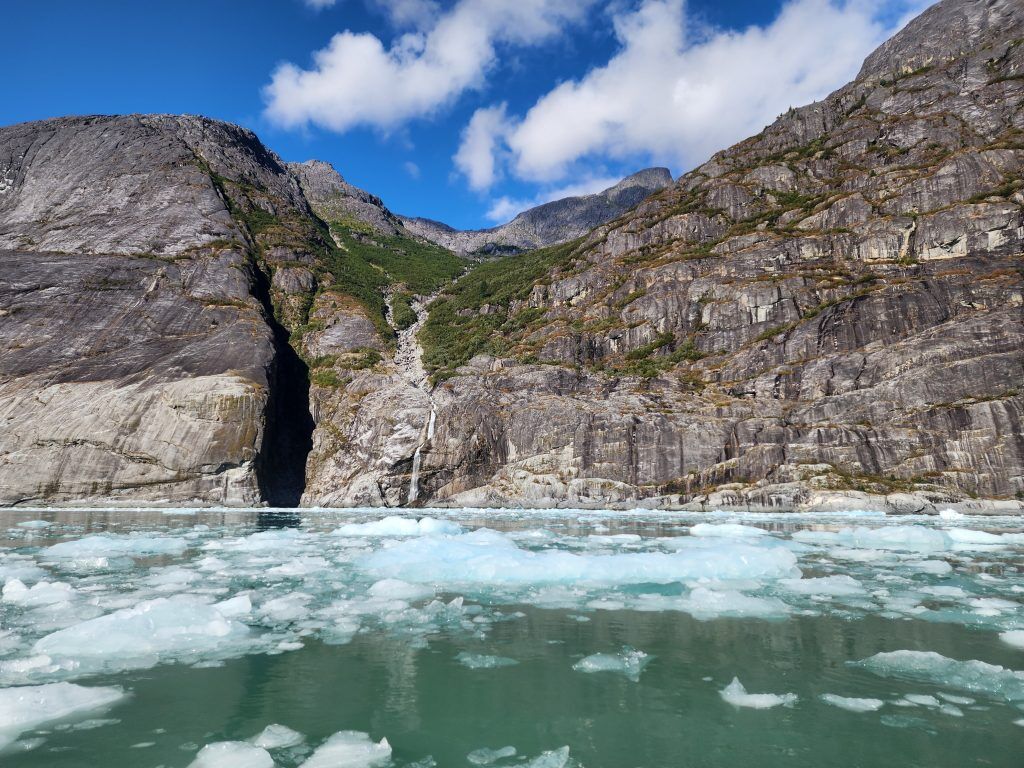
LeConte Bay Alaska
Photo Credit: Jenn Coleman.

UnCruise operates trips in four of Alaska’s five regions, Southeast, Southcentral, Interior, and Southwest, but Juneau is the heart of the operation. It’s their most popular port, offering round-trip voyages through the Inside Passage as well as one-way itineraries connecting to Sitka, Ketchikan, Seattle, and Seward.

We sailed the Wild, Woolly, and Wow with Glacier Bay itinerary: a week-long, round-trip voyage from Juneau that includes one full day in Glacier Bay. Some sailings offer two days in the park, but for us, one was plenty. We woke at the base of a tidewater glacier deep in the bay and sailed out at sunset—hard to imagine a better bookend.

What really surprised us was how much we enjoyed the glaciers outside Glacier Bay. Many UnCruise itineraries explore additional tidewater glaciers that mega-ships can’t access. These areas came with fewer people, more time ashore, fewer restrictions, and, often, better weather. Glacier Bay’s massive icefields can generate their own conditions, which means sunshine elsewhere while the park sits under clouds.

Because UnCruise captains have the freedom to choose anchorages based on real-time conditions, no two trips are identical. Still, the geography naturally creates a rhythm: a loose loop around Admiralty Island, Glacier Bay to the northwest, quieter glacier systems to the southeast, and countless bays and backwaters in between for kayaking, bushwhacking, and skiff exploration.

UnCruising vs. Traditional Cruising

Kayaks on UnCruise Waterfall Cove Alaska
Photo Credit: Jenn Coleman.

Traditional cruising runs on a dual-revenue model. Competitive ticket prices, often low-margin or even loss leaders, are offset by onboard spending like drinks, specialty dining, spa treatments, internet, and retail. Scale is the strategy: 3,000 to 6,000+ passengers spread operational costs thin.

UnCruise flips that model on its head. With all-inclusive pricing and fewer than 90 passengers, the experience feels more like an adult summer camp than a floating resort. Instead of pulling into ports for pre-packaged shore excursions, the ships anchor in remote bays and rely on an in-house guide team. You’re not herded; you’re invited.

The payoff is connection, both to the place and the people. With such a small guest count, you quickly learn names, swap stories, and share the day’s highlights over genuinely excellent food and drinks that reflect the region you’re sailing through.

Alaska UnCruise vs. Other UnCruises

Kayaking Glacier Bay Alaska
Photo Credit: Jenn Coleman.

This was our third UnCruise, following trips to the Sea of Cortez and Hawaii. Alaska felt different, a good way. UnCruise started here, and it shows. The Alaska program leans heavily into wilderness exploration led by the onboard team, rather than outsourced excursions.

In Hawaii and Mexico, proximity to towns meant more third-party activities, bike rides, cultural tours, and the like. Alaska, by contrast, felt raw and remote, with days shaped almost entirely by weather, wildlife, and opportunity.

It was also colder. Hawaii and Mexico invited snorkeling and free swimming; Alaska required more gear, better tides, and a stronger sense of humor to enter the water. We did the polar plunge more for the bragging rights than the pleasure, and we’d do it again.

Life Aboard the Wilderness Legacy

Sam is delivering an after-dinner program
Photo Credit: Jenn Coleman.

The Wilderness Legacy is UnCruise’s largest ship, carrying up to 90 guests. Interestingly, similar Glacier Bay itineraries are also offered on much smaller vessels, down to just 22 passengers, depending on how intimate you want the experience to be.

We appreciated the comforts onboard: reliable Wi-Fi and hot tubs, which make glacier watching from bubbling water feel downright legendary. Cabins were compact but comfortable, no Instagram-perfect balconies here, but if your goal is to spend the day outdoors, that’s a fair trade.

Two spacious common areas brought everyone together for meals, happy hour, and nightly programming. From naturalist talks to talent shows and the always-anticipated end-of-voyage slideshow, every evening felt communal and relaxed.

The Real Reason You UnCruise: Activities

Skiff Tour LeConte Bay Alaska
Photo Credit: Jenn Coleman.

You don’t UnCruise to stay onboard. You UnCruise to get out into it.

Most days offered three core options, bushwhacking, kayaking, and skiff tours, both morning and afternoon. Plans shifted with weather and conditions, which is part of the magic. Southeast Alaska is a temperate rainforest, after all.

Our loose strategy: kayak on clear days, bushwhack in the rain, and choose skiff tours when there was something extraordinary to see, like bears feeding at Pavlov Creek. It wasn’t scientific, but it worked.

Some moments were non-negotiable: skiffing up to tidewater glaciers, the mandatory kayak orientation, or simply staying aboard when wildlife appeared unexpectedly, like the pod of roughly 30 orcas that surfaced as we exited Glacier Bay.

One of the biggest advantages of small-ship cruising is how well the guides get to know you. By midweek, excursions were subtly tailored to guests’ interests and abilities, making everyone feel both supported and challenged.

Food Worth Planning Your Day Around

UnCruise Crab Leg dinner
Photo Credit: Jenn Coleman.

Forget buffet lines. Every meal onboard was cooked to order, with meat, seafood, and vegetarian options. Everything was so good that ordering a “partial of all three” became a habit. Ordering ahead also helped reduce food waste, which we appreciated.

Dietary restrictions were handled seamlessly, and the menus reflected a strong sense of place like crab boils, butter-poached halibut, and other Alaska-forward dishes. Morning meal announcements became a highlight, and we learned to choose our breakfast seat strategically so we’d have time to contemplate dinner choices before they took our order.

An onboard pastry chef kept desserts dialed in, while talented bartenders handled everything from classics to the cocktail of the day. Happy hour quickly became a ritual: swapping stories, snacking on charcuterie and baked brie, and trying not to ruin our appetite for dinner.

Cabins: Functional, Thoughtful, and Surprisingly Cozy

Cabin-Navigator Cabin UnCruise Wilderness Legacy
Photo Credit: UnCruise Adventures.

Cabins aren’t luxurious, but they are smartly designed. Full bathrooms, potable tap water, comfortable beds, and enough storage, assuming you don’t overpack.

Our favorite feature? Hooks. Lots of them. Perfect for drying wet gear after a day outside. By the end of the voyage, the hallways looked like an REI sidewalk sale caught in a rainstorm, but our cabin always felt clean, dry, and warm.

It’s also worth noting how skilled our captain was at selecting sheltered anchorages. Even when a strong storm rolled through, we slept soundly each night, tucked behind towering cliffs that blocked the wind. Every morning delivered a new view, complete with freshly fed waterfalls spilling down the rock walls.

What to Pack (and What Not To)

Neka Bay Alaska
Photo Credit: Jenn Coleman.

UnCruise provides excellent packing lists, but the guiding principles are simple: dress in layers and expect to get wet. Waterproof pants and a solid rain jacket are non-negotiable.

Footwear is more forgiving. You’re issued gum boots, the unofficial uniform of Alaska, and we wore them every time we left the ship, including for kayaking.

One pro tip: bring soft luggage. We packed everything into soft-sided bags that folded away easily during the voyage. It kept us from overpacking and made cabin life much simpler.

Bonus Time in Juneau

Tahku whale sculpture Juneau Alaska
Photo Credit: Jenn Coleman.

As immersive as the UnCruise experience is, we would’ve felt shortchanged if we hadn’t added time in Juneau for classic Alaska adventures.

The good news: Juneau makes it easy. Seaplane tours depart right from the dock, and Mendenhall Glacier is just 20 miles away. Depending on your budget and appetite for adventure, you can reach it by bus, helicopter, or something in between and choose from ice climbing, paddling, dog sledding, or a simple walkabout.

And since you missed-out on onboard shopping during the cruise, Juneau Harbor has you covered.

The Takeaway: Who Alaska UnCruise Is (and Isn’t) For

2 bears with a salmon Pavlovs Bay Alaska
Photo Credit: Jenn Coleman.

An Alaska UnCruise isn’t about checking boxes or lounging poolside. It’s about slowing down, leaning into uncertainty, and letting the landscape set the agenda. You trade predictability for possibility, and that’s exactly the point.

If you’re curious, flexible, and happiest when your days are shaped by weather reports and wildlife sightings instead of reservations and alarms, this style of travel will feel like coming home. Alaska is vast and wild, but UnCruise has a way of making it feel personal.

For us, it wasn’t just a trip, it was a reminder of how powerful travel can be when you let a place lead.

Disclosure: A big thank you to Uncruise Adventures for hosting us! For more Uncruise travel inspiration, check out their InstagramFacebook, and YouTube accounts.

As always, the views and opinions expressed are entirely our own, and we only recommend brands and destinations that we 100% stand behind.

Ready to Book Your Trip? These Links Will Make It Easy:

Airfare:

Insurance:

  • Protect your trip and yourself with Squaremouth and Medjet
  • Safeguard your digital information by using a VPN. We love NordVPN as it is superfast for streaming Netflix
  • Stay safe on the go and stay connected with an eSim card through AloSIM

Our Packing Favs:

  • We LOVE Matador Equipment for their innovative products and sustainability focus. Their SEG45 is a game changer when you need large capacity while packing light.
  • Travel in style with a suitcase, carry-on, backpack, or handbag from Knack Bags
  • Packing cubes make organized packing a breeze! We love these from Eagle Creek

Like it? Pin it for later on Pinterest!

Hi! We are Jenn and Ed Coleman aka Coleman Concierge. In a nutshell, we are a Huntsville-based Gen X couple sharing our stories of amazing adventures through activity-driven transformational and experiential travel.


Source link