Coinbase’s AI Hallucinated a World Cup Match Result Before the Game Even Started


A phone with the Coinbase logo is in the foreground, blending in with a larger Coinbase logo in the background.

Coinbase is the largest US-based cryptocurrency market. It has also dipped a toe into the world of prediction markets.

Samuel Boivin/NurPhoto/Getty Images

Some World Cup bettors were in for a rude surprise on Sunday, when an AI-generated notification from the crypto exchange Coinbase shared false breaking news about a 3-2 Norway victory in a knockout match against Brazil. The AI said Norwegian player Erling Haaland scored two goals to clinch the win.

The kicker? The match hadn’t even started yet. It had been delayed due to inclement weather conditions at the New Jersey-based MetLife Stadium. At the time, Coinbase’s official prediction market page showed that the game had been delayed.

AI Atlas

Hours later, once the game actually played out, the result was slightly different. Norway won, and Haaland scored two goals, but the final tally was just 2-1. For some bettors, that’s enough of a difference to tank a sizable sum of cash — at a time when gambling addiction rates are surging among young people, thanks to the widespread proliferation of online prediction markets and sportsbooks.  

Read more: Stream Every World Cup Elimination Game for Free With a VPN

Coinbase is the largest US-based public market for trading cryptocurrencies like bitcoin and ethereum, but has expanded its ventures to include stock and derivative trading. Recently, the company partnered with Kalshi to start offering prediction markets. 

Screenshots of the inaccurate Coinbase AI news flooded social media as some critics pointed out how propagating false results is “dangerous and irresponsible.” In response to one criticism of the Coinbase AI mistake shared on X, the company’s CEO, Brian Armstrong, claimed that he was “taking a look with the team.”

When reached for comment, Coinbase referred to an X post written by the company’s head of consumer products, Max Branzburg.

Branzburg’s reply to the X post criticizing the AI model’s mistake indicated that the company fixed its incorrect World Cup story and “made some updates to avoid these types of inaccuracies in the future.”

Norwegian player Erling Haaland celebrates his achievements against the Brazilian team during the World Cup.

Norwegian player Erling Haaland did end up scoring two goals during the knockout match against Brazil — but that in no way means that Coinbase’s AI model can accurately predict the outcome of future events. Including the win over Brazil, Haaland has scored two goals in three of Norway’s four matches so far in this year’s World Cup.

Image Photo Agency/Getty Images

“And hey — it turns out Norway did win and Haaland did score two goals, so maybe the AI knew something we didn’t,” Branzburg wrote in the post.

The AI didn’t “know” anything. Large language models — the technology that most commonly gets referred to as artificial intelligence — can’t actually know or predict the outcome of future events. These machines have no more precognitive ability than you or I do.

LLMs are trained on aggregations of large quantities of data and attempt to generate relevant information or identify patterns based on presented queries. This technology frequently leads to fabrications called “hallucinations” as the chatbot churns out inaccurate answers with no basis in reality, based merely on pattern matching on existing data. Confronted with a question without an actual answer — the final result of a game that hasn’t happened — an LLM will often make up something that seems probable.

In this case, it was entirely plausible that the game would end in a 3-2 Norway victory with two goals from Haaland — that’s a reasonable soccer score, and Haaland is Norway’s top scorer and one of the best in the tournament.

It’s unclear whether this incident will cause Coinbase to pause and rethink its AI integration strategies. In June, the company launched its Coinbase for Agents feature, allowing users to let an AI agent execute financial transactions within defined accounts and spending limits.


Source link

Leave a Reply

Subscribe to Our Newsletter

Get our latest articles delivered straight to your inbox. No spam, we promise.

Recent Reviews


It kind of makes no sense that literally every new car sold these days can go twice the regular speed limit in most countries. Even a Toyota Prius tops out at 115 mph, and reaching that speed in 99% of the world can easily land you in jail, or at least with a large dent in your bank account from a truly massive speeding ticket. Meanwhile, supercars can easily blow a Prius out of the water — for example, the Chevrolet Corvette ZR1 can hit speeds more than double that.

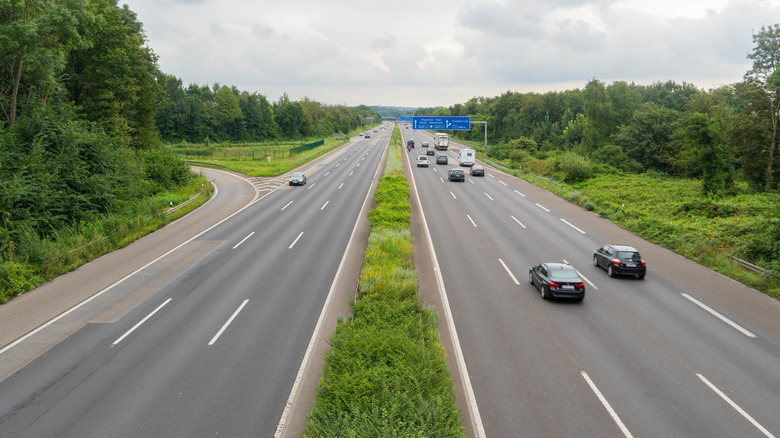
Either way, top speeds are merely hypothetical and completely off-limits for 99% of the world. Yet no matter if you own a ZR1 or a Prius and you want to test that top speed claim, there are public roads where you can try. The most obvious choice is the German Autobahn, which has certain sections with no speed limits. This means that, if it is safe to do so, you can theoretically chase that top speed.

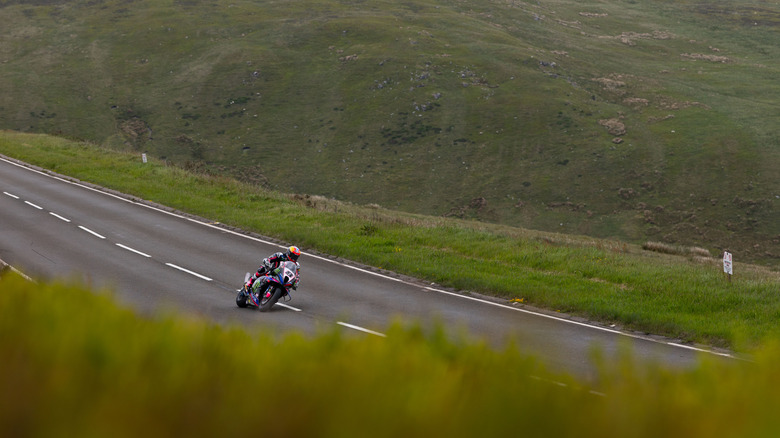
Besides the German Autobahn, the roadways on the Isle of Man — known for the Isle of Man TT — also has sections with no speed limits. About a decade and a bit ago, you were also able to max out your car on certain locations of the Australian Northern Territory, specifically the Stuart Highway. However, speed limits were reinstated in the interest of public safety in 2016. Besides the Isle and the Autobahn, if you want to max out your car, public roads simply aren’t an option.

Limitations and dangers on no-speed-limit roads

Although reaching the top speed on the Autobahn is possible, it is not as simple as merging and hitting the gas. For example, the A9 near Bayreuth, A20 in Mecklenburg, and parts of A24 between Berlin and Hamburg are without speed limits in certain sections. In total, around 70% of German autobahns don’t have a capped speed limit. Even on those unrestricted sections, German law sets a recommended speed of 130 km/h called the Richtgeschwindigkeit.

Exceeding it is not a criminal offense, but if you are involved in an accident above that threshold, it can affect your legal liability for the incident. German law also prohibits driving at any speed where your stopping distance exceeds your line of sight, which effectively puts a practical ceiling on how fast you can legally go based on road conditions. The AutoTopNL YouTube channel serves as a good educational basis for how one ought to approach high speed driving on the autobahn.

If Germany is too far away and you want a more rural experience while driving at ten-tenths, the Isle of Man is your only other option. Outside of towns you can press on, but keep in mind that these roads are much narrower and less protected, leaving no room for error. The best example is likely the Isle of Man’s TT Race, which the BBC called “the world’s most dangerous road race.” The Isle of Man TT and the Manx Grand Prix, held on the same roads that you can max out your car on, are races so dangerous that they have taken a collective 270 lives since inception.

Where do automakers actually test top speed claims?

For decades past, we’ve seen automakers advertising hypercars going over 250 mph, but not many people know the places where these tests are commonly carried out. For example, the fastest street-legal car on record, the Bugatti Chiron Super Sport 300+, reached its top speed of more than 300 mph on the Volkswagen Ehra-Lessien test track in 2019. This facility has 60 miles of private roads with a single straight that is 5.4 miles long.

There is also the Papenburg test facility, which features a 7.6-mile-long oval track banked at 50 degrees. This is where the Yangwang U9 Xtreme set the all-time production car top speed record at 308 mph in 2025, and where in 2023 the Rimac Nevera drove 171 mph backwards — not something you can do on the German autobahn. Italy’s Nardò Ring is a 7.8-mile circular track built by Fiat in 1975 and now owned by Porsche. It is so large it is visible from space, and so well-banked that a car traveling at 149 mph in the outer lane doesn’t need to be steered and can simply be driven straight. This last test track is perhaps best known from the 2012 Top Gear episode where Jeremy Clarkson, Richard Hammond, and James May pushed a Lamborghini Aventador, a Noble M600, and a McLaren MP4-12C to their limits. 

America’s equivalent is the former Space Shuttle Landing Facility at Kennedy Space Center, now operating as the Johnny Böhmer Proving Grounds. The 3.2-mile runway is where the SSC Tuatara hit 295 mph in 2022. Although these aren’t typically open for public joyriding, they are a few of a very limited number of places where top speeds are actually tested.


Source link