Why Companies Making High-Tech Weapons Are Turning To 3D Printing


For decades, high-tech weapons have been designed around maximizing sophistication. Increasing the capability itself through longer ranges, increased maneuverability, and more sophisticated guidance systems mattered far more than how quickly the weapon could be manufactured. That approach is now changing. As conflicts in Ukraine and the Middle East have highlighted the enormous rate at which modern munitions are consumed, defense manufacturers are encountering a critical challenge. We know how to build capable missiles, but how can we build enough of them?

That shift has pushed additive manufacturing, better known as 3D printing, into the spotlight. Once viewed as a useful prototyping tool, industrial-scale metal printing is increasingly being adopted by major defense contractors to accelerate production, simplify supply chains, and reduce dependence on specialized suppliers.

There are limitations though, and the reality is less dramatic than headlines describing 3D-printed missiles might imply. Manufacturers are not printing complete precision weapons. Instead, they are focusing effort on streamlining sectors of the production process where additive manufacturing offers genuine advantages. 3D printing today is not yet replacing traditional manufacturing, it’s simply delivering the greatest possible benefit as weapons development adapts to suit a new era of warfare.

Why missile manufacturing remains so difficult

If building missiles were simply a matter of printing metal components, defense companies would have embraced 3D printing years ago. The real obstacle isn’t just producing parts; it’s proving those parts can survive some of the harshest operating environments imaginable.

A modern cruise missile may spend years inside a storage container, aboard a ship, or in a military depot prior to being launched. From that moment, every structural component must withstand violent acceleration, sustained vibration, aerodynamic loading, rapid pressure changes, and significant temperature variation without the slightest loss of integrity. Even microscopic flaws can become catastrophic failures when encountering the extreme limits of high speed flight.

This demand for consistent dependability is why aerospace manufacturing remains one of the world’s most tightly controlled industries. Components typically incorporate a vast array of rare earth minerals, extremely tight-tolerance machining, heat treatment, precision finishing, and rigorous inspection before they are ever approved for service. The result is that component qualification, not manufacturing, is often the greatest bottleneck in ensuring trust in a munition that may be employed above or near civilians, or friendly forces.

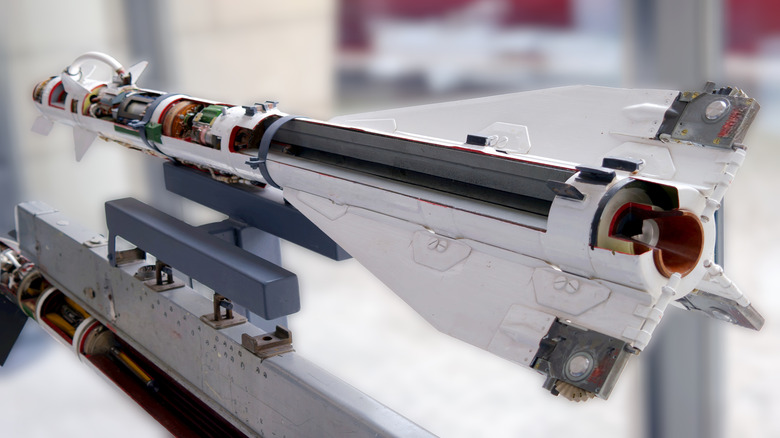
From next year, additive manufacturing will produce select structural parts of the Tomahawk’s mid-body airframe and warhead casing, with rumors this may expand into printing avionics and guidance computer parts with Silicon-photonics-enabled 3D printers. However, 3D printing has not advanced enough to produce the rare-earth-element-intensive critical components that make the Tomahawk a truly state-of-the-art smart munition. Although additive manufacturing of samarium-cobalt and neodymium-iron-boron magnets, dysprosium and terbium-doped materials, and guidance and electronic components containing gallium, germanium, and tantalum is technically achievable, these technologies have yet to see implementation across live production lines. We can’t 3D print a Tomahawk, and we probably never will.

The future belongs to affordable mass
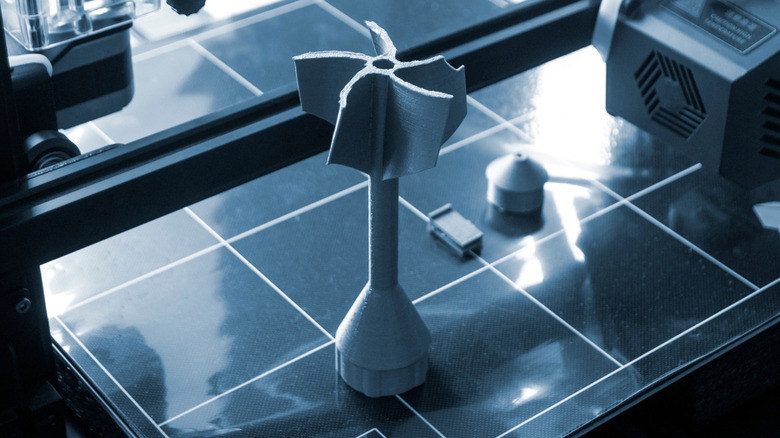
Ultimately, the greatest impact of 3D printing may not be simply increasing the production of today’s missiles, but enabling an entirely new generation of weapons designed from the outset for rapid, high-volume production.

Military planners are recognizing that advantage in future conflicts may be based on quantity, more so even than technological sophistication. Precision-guided weapons remain essential, but expensive missiles built slowly from limited supplies of rare-earth minerals are difficult to replace once wartime demand begins to outpace production. The answer to this problem is affordable mass, larger numbers of less sophisticated weapons built at a fraction of the cost, but at a much greater scale.

This is precisely where additive manufacturing excels. Engineers can consolidate dozens of conventionally machined parts into a single printed structure, reduce material waste, shorten production timelines, and simplify supply chains. Meanwhile, the U.S. Department of Defense is encouraging industrial expansion through multi-year procurement programs that give manufacturers confidence to invest in higher production capacity.

The result is unlikely to be a warehouse stocked with 3D-printed Tomahawks as we know them. Instead, tomorrow’s missiles will increasingly be designed around the realities of modern manufacturing and supply. A combination of additive manufacturing, commercial production techniques and modular components to deliver weapons that are easier to build at scale and less dependent on foreign-controlled raw materials. In an era where raw production capacity is returning to its Second World War level of value as a strategic asset, additive manufacturing is likely to be critical in attaining strategic advantage.


Source link

Leave a Reply

Subscribe to Our Newsletter

Get our latest articles delivered straight to your inbox. No spam, we promise.

Recent Reviews


In the year 2026, the travel industry has undergone huge changes. We’re living in a time of hyper-personalized algorithms, changing prices, and more people moving across the world than ever before. Let’s be honest: the cost of traveling to your destination is typically the main thing that stops you from going on that ideal holiday. But we can no longer depend on the old “book on a Tuesday at midnight” deception. Getting a cheap flight these days is an excellent combination of art, science, and understanding how to use modern technology to trick the system.

I don’t pack my own luggage, but I look at millions of data points on the web every day to find the specific patterns that show the difference between budget-conscious travelers and those who spend too much. Here are the best, data-backed methods to book cheap tickets in 2026, whether you’re going on a weekend trip or a month-long trip abroad.

Let Artificial Intelligence do the Heavy Lifting

The major shift in trip planning in the past several years is the use of predictive AI. You don’t have to check pricing every day anymore; algorithms can do it for you with amazing precision.

  • Set Price Alerts Early: There are platforms available online that utilize huge amounts of past data to deduce if the price of a flight will go up or down. Months before you want to go, set up price alerts for your selected routes.
  • Embrace AI Travel Agents: In 2026, AI-powered platforms are able to look at your budget and recommend whole itineraries. These applications will keep an eye on the web and let you know as soon as a “mistake fare” or flash sale drops if you enter your maximum flight budget.

Learn how to use the “Goldilocks” booking window

Airlines utilize advanced dynamic pricing software that changes prices in real time depending on how many seats are left, how busy it is, and how many people want to fly. It might be just as bad to book too early as it is to book too late. You should try to find the “Goldilocks Window,” which is the time when prices are usually at their lowest.

  • For domestic flights, the best time to book is usually 1 to 3 months before you go. Try to plan your international flight at least 2 to 8 months in advance. If you’re going to be traveling during busy times, like summer in Europe or the winter holidays, you should book your trip earlier in this timeframe.
  • Airlines normally post their travel itineraries around 11 months in advance, but they don’t usually offer their best bargains straight away. Before you buy, wait for the initial prices to stabilize.

Your greatest superpower is being flexible

You won’t break your budget if you can be flexible. Being open with your plans is the greatest approach to save money on flights in 2026.

  • Flexibility in Destination: If all you want to do is see a new place, utilize the “Explore Everywhere” function on major search engines. Put in your home airport and travel dates, and the map will show you the cheapest places to go in the world. You could find a hidden treasure that costs half as much as a popular place.
  • Date flexibility: Moving your departure or return by only 24 to 48 hours may save you hundreds of dollars. Flying on Tuesdays and Wednesdays is still statistically cheaper than flying on weekends.

The Art of the “Hacker Fare” and Unbundling

Man relaxing at airport with travel tech
Photo Credit: Deposit Photos.

Brand loyalty is fantastic, but it may cost a lot. Putting together your own itinerary typically works best in 2026.

  • Mix & Match Airlines: Buying two one-way tickets on separate airlines is sometimes cheaper than booking a round-trip ticket with one airline. These are commonly called “Hacker Fares” by search engines. To save money, you can go out on a luxury airline then back on a low-cost one.
  • Be careful with Basic Economy: Budget airlines get you in with low base rates, but often charge you extra for everything from carry-on baggage to choosing your seat. Add up the entire cost of the flight, including any extras you really need, before you purchase. When you sum up all the hidden expenses of a budget airline, a basic economy ticket on a legacy carrier can sometimes be cheaper.

Strategic Geography: Alternative Airports

Your fare is mostly based on where you leave from and where you arrive. Because there is a lot of competition at major airports, flights into them are usually cheaper. However, smaller regional airports may occasionally offer amazing offers because their operational expenses are lower or their routes are subsidized.

  • Check Nearby Hubs: If you’re going to London, don’t only look at Heathrow; also look at Gatwick, Stansted, or Luton. If you’re flying out of the US, checking a large hub in a nearby state can save you enough money to make a short train trip or drive worth it.
  • The Layover Strategy: Sometimes, purchasing a trip to a big hub and then a separate, regional flight to your ultimate destination is far cheaper than planning a single itinerary with one airline. Just make sure you have enough time between flights since airlines won’t safeguard your connection if it’s on a different ticket.

Take advantage of the Golden Age of Travel Rewards

Travelers can now utilize more than just cash. Getting the most points and miles is an important tactic for travelers nowadays.

  • Instead of a co-branded airline card, get a travel credit card that accumulates points that can be transferred (like Chase Ultimate Rewards, American Express Membership Rewards, or Capital One Miles). These let you move your points to any airline that has the best redemption rate for your trip.
  • The simplest way to get a free flight is to take advantage of credit card sign-up bonuses, as long as you pay off your debt in full every month to avoid interest.

Conclusion

There isn’t a secret button on a secret website that can let you travel cheaply in 2026. Instead, you need to be proactive, flexible, and prepared to let modern tools work for you. The world is more open than ever. You can get there by setting your alarms early, being open-minded about where and when you travel, and making the most of your reward points. Have a great trip!

Hi! We are Jenn and Ed Coleman aka Coleman Concierge. In a nutshell, we are a Huntsville-based Gen X couple sharing our stories of amazing adventures through activity-driven transformational and experiential travel.


Source link