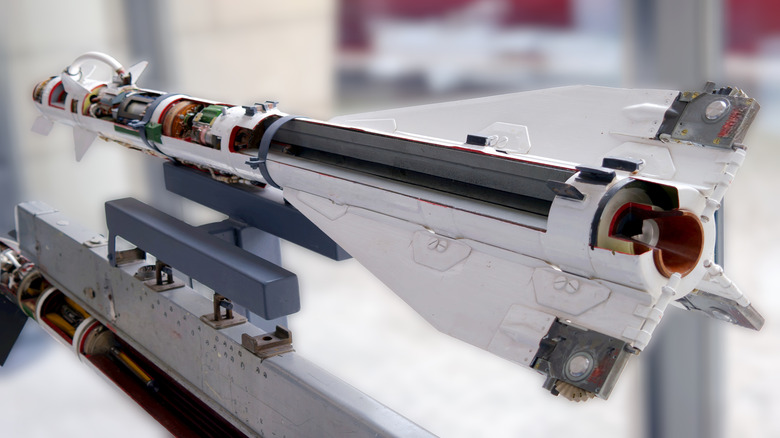
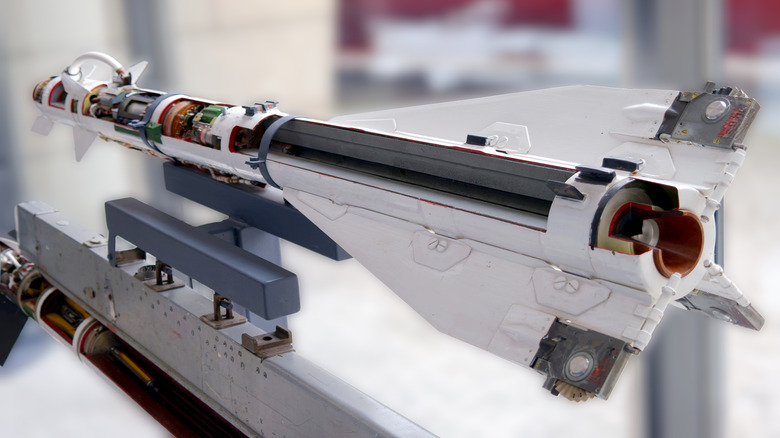
Why Companies Making High-Tech Weapons Are Turning To 3D Printing


For decades, high-tech weapons have been designed around maximizing sophistication. Increasing the capability itself through longer ranges, increased maneuverability, and more sophisticated guidance systems mattered far more than how quickly the weapon could be manufactured. That approach is now changing. As conflicts in Ukraine and the Middle East have highlighted the enormous rate at which modern munitions are consumed, defense manufacturers are encountering a critical challenge. We know how to build capable missiles, but how can we build enough of them?

That shift has pushed additive manufacturing, better known as 3D printing, into the spotlight. Once viewed as a useful prototyping tool, industrial-scale metal printing is increasingly being adopted by major defense contractors to accelerate production, simplify supply chains, and reduce dependence on specialized suppliers.

There are limitations though, and the reality is less dramatic than headlines describing 3D-printed missiles might imply. Manufacturers are not printing complete precision weapons. Instead, they are focusing effort on streamlining sectors of the production process where additive manufacturing offers genuine advantages. 3D printing today is not yet replacing traditional manufacturing, it’s simply delivering the greatest possible benefit as weapons development adapts to suit a new era of warfare.

Why missile manufacturing remains so difficult

If building missiles were simply a matter of printing metal components, defense companies would have embraced 3D printing years ago. The real obstacle isn’t just producing parts; it’s proving those parts can survive some of the harshest operating environments imaginable.

A modern cruise missile may spend years inside a storage container, aboard a ship, or in a military depot prior to being launched. From that moment, every structural component must withstand violent acceleration, sustained vibration, aerodynamic loading, rapid pressure changes, and significant temperature variation without the slightest loss of integrity. Even microscopic flaws can become catastrophic failures when encountering the extreme limits of high speed flight.

This demand for consistent dependability is why aerospace manufacturing remains one of the world’s most tightly controlled industries. Components typically incorporate a vast array of rare earth minerals, extremely tight-tolerance machining, heat treatment, precision finishing, and rigorous inspection before they are ever approved for service. The result is that component qualification, not manufacturing, is often the greatest bottleneck in ensuring trust in a munition that may be employed above or near civilians, or friendly forces.

From next year, additive manufacturing will produce select structural parts of the Tomahawk’s mid-body airframe and warhead casing, with rumors this may expand into printing avionics and guidance computer parts with Silicon-photonics-enabled 3D printers. However, 3D printing has not advanced enough to produce the rare-earth-element-intensive critical components that make the Tomahawk a truly state-of-the-art smart munition. Although additive manufacturing of samarium-cobalt and neodymium-iron-boron magnets, dysprosium and terbium-doped materials, and guidance and electronic components containing gallium, germanium, and tantalum is technically achievable, these technologies have yet to see implementation across live production lines. We can’t 3D print a Tomahawk, and we probably never will.

The future belongs to affordable mass
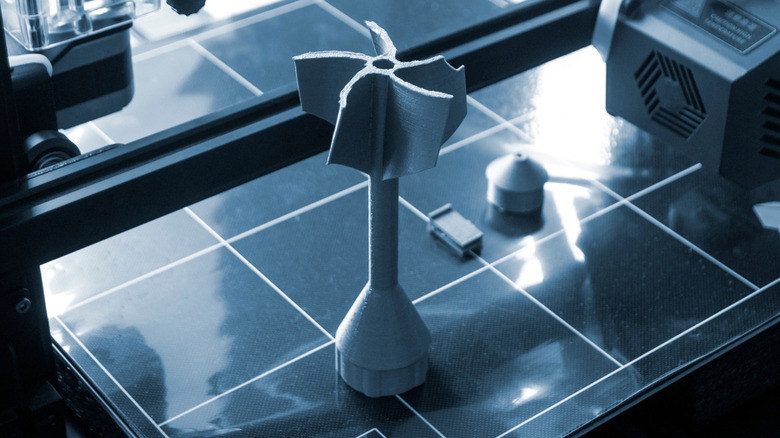
Ultimately, the greatest impact of 3D printing may not be simply increasing the production of today’s missiles, but enabling an entirely new generation of weapons designed from the outset for rapid, high-volume production.

Military planners are recognizing that advantage in future conflicts may be based on quantity, more so even than technological sophistication. Precision-guided weapons remain essential, but expensive missiles built slowly from limited supplies of rare-earth minerals are difficult to replace once wartime demand begins to outpace production. The answer to this problem is affordable mass, larger numbers of less sophisticated weapons built at a fraction of the cost, but at a much greater scale.

This is precisely where additive manufacturing excels. Engineers can consolidate dozens of conventionally machined parts into a single printed structure, reduce material waste, shorten production timelines, and simplify supply chains. Meanwhile, the U.S. Department of Defense is encouraging industrial expansion through multi-year procurement programs that give manufacturers confidence to invest in higher production capacity.

The result is unlikely to be a warehouse stocked with 3D-printed Tomahawks as we know them. Instead, tomorrow’s missiles will increasingly be designed around the realities of modern manufacturing and supply. A combination of additive manufacturing, commercial production techniques and modular components to deliver weapons that are easier to build at scale and less dependent on foreign-controlled raw materials. In an era where raw production capacity is returning to its Second World War level of value as a strategic asset, additive manufacturing is likely to be critical in attaining strategic advantage.


Source link

Leave a Reply

Subscribe to Our Newsletter

Get our latest articles delivered straight to your inbox. No spam, we promise.

Recent Reviews


Thailand and golf make an interesting combination. Within moments, you could be strolling down a lush tropical fairway surrounded by palm trees, then have dinner at an inexpensive street stall while watching the sun dip below the horizon from your seaside vantage point. This winning combination of golfing excellence, sunny skies, tasty cuisine, and affordability keeps players coming back every year.

The country now has more than 250 golf courses across destinations such as Bangkok, Pattaya, Hua Hin, Phuket, and Chiang Mai. Many of them are championship-level courses designed by top golf architects. The best part is that you can often play world-class golf for far less than what you would spend in the US, Australia, or Europe. 

But here’s the thing. A golf trip to Thailand is one activity that requires careful planning. The distances are not always as they appear on a map; weather is important, and Thai golf is not quite like that of other countries.

So if you are thinking about booking a golf holiday there in 2026, here’s how to do it right.

First, Decide What Kind of Golf Trip You Want

Wide green lawns in Thailand golf course
Photo Credit: Jennifer Coleman.

Not every golf destination in Thailand feels the same.

If you want nightlife and a huge number of golf courses close together, Pattaya is usually the first choice. The city has more than 20 quality courses nearby, including Siam Country Club and Laem Chabang. 

If you prefer a calmer beach town with a more relaxed atmosphere, Hua Hin is hard to beat. Courses like Black Mountain and Pineapple Valley regularly appear on lists of the best courses in Asia. 

Phuket is ideal if the trip is half golf and half luxury holiday. The scenery is incredible, and courses like Blue Canyon and Red Mountain are famous for a reason. 

Bangkok works well for shorter trips because many excellent courses sit within driving distance of the city. Meanwhile, Chiang Mai gives you cooler mountain air and a slower pace.

Before booking anything, ask yourself one simple question: do you want a serious golf-focused trip, or a holiday where golf is just part of the experience?

That answer changes everything.

Pick The Right Time of Year

The Royal Bangkok Sports Club golf course
Photo Credit: Jenn Coleman.

Thailand is warm all year, but golf conditions definitely change with the seasons.

The main golf season runs from November to April. Temperatures are more comfortable, humidity drops a little, and rainfall is lower. That is why this period is considered the peak season for golf tourism. 

December through February is especially popular, so tee times and hotels can fill up quickly.

The rainy season usually runs from May to October. That does not mean constant rain all day, though. In many areas, showers arrive in the afternoon for an hour or two before clearing up. The upside is cheaper hotel rates and quieter courses.

If you do not mind occasional rain, shoulder months like May or October can offer excellent value.

Don’t Try to Cover The Entire Country

Toscana one of the most beautiful golf courses in the world
Photo Credit: Deposit Photos.

A common mistake first-time visitors make is trying to play golf everywhere.

Thailand looks compact on a map, but travel between golf destinations can take longer than expected. Phuket to Hua Hin, for example, is a serious travel day. 

Instead of rushing around, pick one or two regions and stay there.

A smart first trip could look like this:

● 4 nights in Bangkok

● 5 nights in Hua Hin

Or:

● 6 nights in Pattaya

● 3 nights in Bangkok

That gives you enough time to actually enjoy the golf instead of constantly packing and unpacking.

Book Tee Times Earlier Than You Think

Green golf course
Photo Credit: Jenn Coleman.

Thailand’s best golf courses get busy during peak season, especially morning tee times.

This is where services like Sawadee Golf can genuinely help. The site focuses specifically on golf travel in Thailand, with detailed course guides, rankings, green fee information, and local advice that makes trip planning much easier for international golfers.

Booking in advance is especially important if you want to play famous courses like Black Mountain, Siam Country Club, Blue Canyon, or Alpine Golf Club.

Some private clubs also have stricter access rules, so planning ahead matters.

Understand Thailand’s Golf Culture

Thailand golf culture
Photo Credit: Deposit Photos.

Golf in Thailand comes with a few things that surprise first-time visitors.

For starters, caddies are standard at almost every course. In fact, many clubs require them. Most courses also include a golf cart or buggy policy. 

And truly, the caddies themselves are a part of the game.

Most are extremely adept at judging greens, finding balls, and helping players navigate the course. It takes a great caddie to help you shave off a few strokes from your game.

Tipping, of course, is also required. Most golfers will leave about 400 to 500 baht, depending on the service of the caddie.

Dress codes are usually stricter than those at public golf courses in the West. Pack proper golf attire and avoid showing up too casually.

Choose Courses That Match Your Skill Level

Three men playing Golf
Photo Credit: Jenn Coleman.

Thailand has beautiful courses, but some are seriously challenging.

Red Mountain in Phuket, for example, is stunning but demanding. The elevation changes, and tight fairways can punish wayward shots. 

Meanwhile, courses like Laguna Phuket or Palm Hills are more forgiving and relaxed for casual golfers.

It is tempting to only chase famous championship courses, but mixing easier rounds with tougher ones usually makes the trip more enjoyable.

A balanced golf itinerary always works better than five brutal rounds in tropical heat.

Pack The Right Gear

Smiling female golf players at golf cart getting ready for game at golf
Photo Credit: Deposit Photos.

Traveling across the world with sports equipment requires a bit of extra thought. First, make sure you invest in a heavy-duty, padded travel bag to protect your clubs from rough airport baggage handling.

Because of the tropical humidity, packing lightweight, moisture-wicking golf shirts and flexible shorts is key. Do not forget to pack an extra pair of golf gloves, as hands sweat quickly in the heat, causing your grip to slip.

Most clubs have a standard dress code that requires collared shirts, golf shorts/pants, and soft-spiked shoes. Regular shoes can be used on occasion for casual play, but metal spikes cannot be worn at any time due to the high quality of the grass.

Bring along some good-quality waterproof sunblock cream, sunglasses with polarizing lenses, and a broad-brimmed hat because the tropical sun is very strong even on cloudy days and can cause intense sunburns.

Balance Time On And Off The Greens

The Marble Temple, Wat Benchamabophit
Photo Credit: Deposit Photos.

The secret to a truly great golf trip is making sure you enjoy the destination just as much as the sport itself. After a long, physically demanding morning out on the turf, take advantage of the local culture to unwind.

Reward yourself with an authentic Thai massage from a local spa to ease your aching shoulder and back muscles. Visit the famous night markets to indulge in the delicious Pad Thai, barbecued seafood, and the sweet dessert of sticky mango rice. 

Allocate a couple of days without golfing to experience the olden day golden temples, cruise inside the caves, or just kick back on a white sandy beach.

So, there you have it. This is how you can plan a stress-free golf trip in Thailand. Pack your clubs!

Hi! We are Jenn and Ed Coleman aka Coleman Concierge. In a nutshell, we are a Huntsville-based Gen X couple sharing our stories of amazing adventures through activity-driven transformational and experiential travel.


Source link