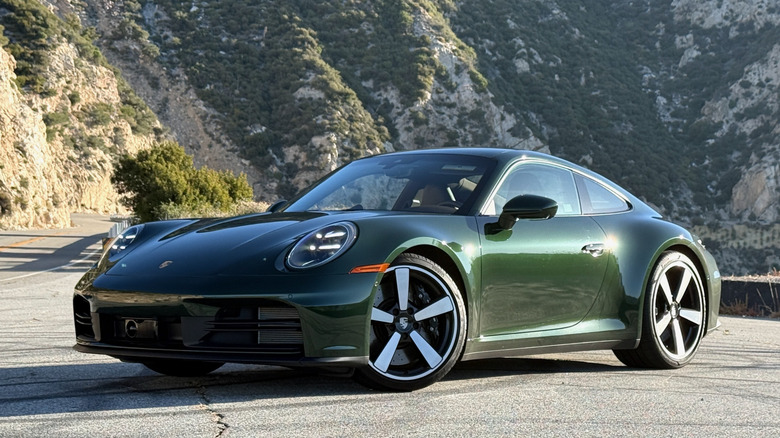

The Porsche 911 has transcended simple sports car status. It’s a standard bearer for its class and an icon that represents the Porsche brand. On top of that, it’s a yardstick by which all other competing vehicles are measured. I don’t normally wake up before dawn, but this car is worth it. I voluntarily set my alarm clock at an ungodly hour to get out on the road in the 2026 Porsche 911 Carrera 4S without any traffic.
I’m on a winding mountain road that’s normally lined with hundreds of motorists, but at this hour, things are quiet. The sun has just started to creep over the distant mountains, and I’ve seen maybe a dozen other humans since I left my home. This is the sort of driving the 911 was made for, and I’ve already enjoyed every moment, but there’s a caveat — I know just how expensive this car is.
 Travis Langness/SlashGear
In the process of becoming the go-to sports car, performing at the top of its class, the 911 has also become way more of a financial reach than it once was. The 911 used to be a car that many automotive enthusiasts could stretch their budgets for. Not too long ago, you could get a base version of the 911 for less than $100,000, but prices for even the most basic 911s now go deep into the six figures. Inflation and tariffs are certainly part of the hockey-stick curve in car prices these days, but that doesn’t change the high cost of a new 911. After upping my caffeine intake and stitching together a few dozen corners with the 4S that Porsche loaned me for a week, I had to wonder if it was worth the price.
The price that got me thinking
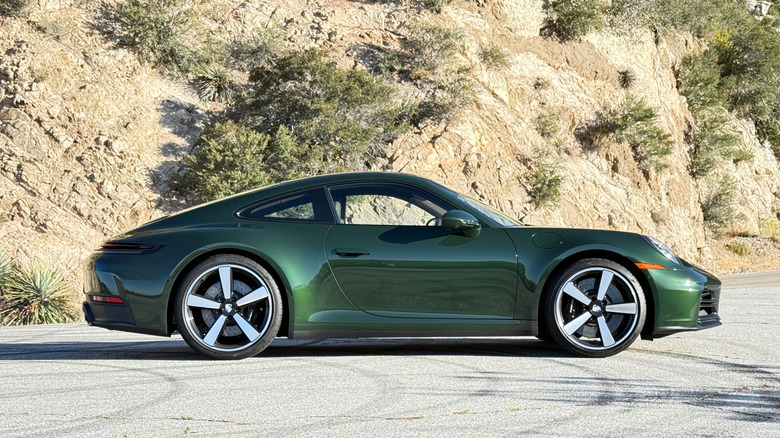
After my enthusiastic early-morning cruise up the mountain, while the 911’s brakes and engine cooled down a little, I took a look at the pricing sheet (also known as a Monroney). The standard 2026 911 Carrera has a starting price of $137,850 (including a $2,350 destination fee). For that, you get the base 388-horsepower flat-six engine, an excellent driving experience, and a few luxury features, but it’s just the tip of the iceberg.
 Travis Langness/SlashGear
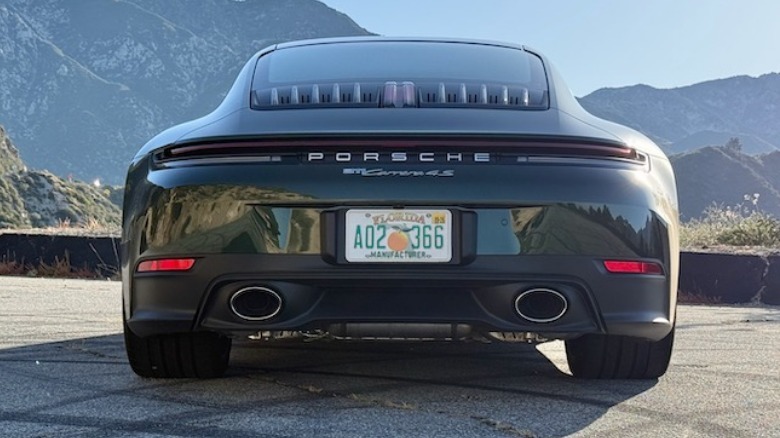
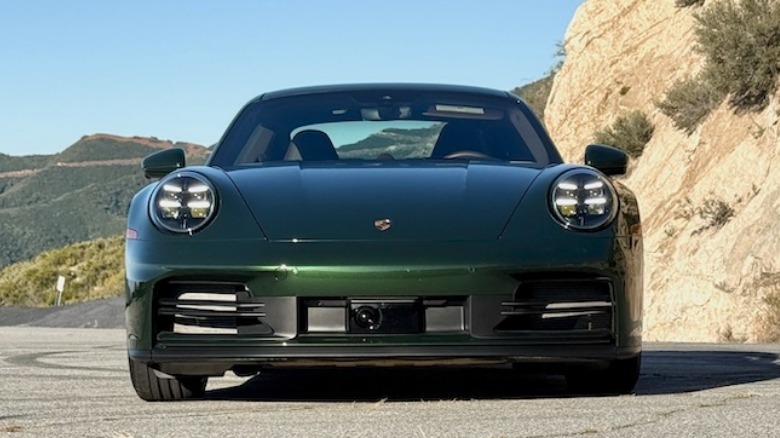
The car Porsche lent me to test for a week had an MSRP of $196,050. The 4S — back in the lineup for 2026 — has a more powerful engine than the standard 911, along with all-wheel drive and some hardware from the spicy 911 GTS. The 4S starts at $164,500, though, so there are some key options that brought up the total.
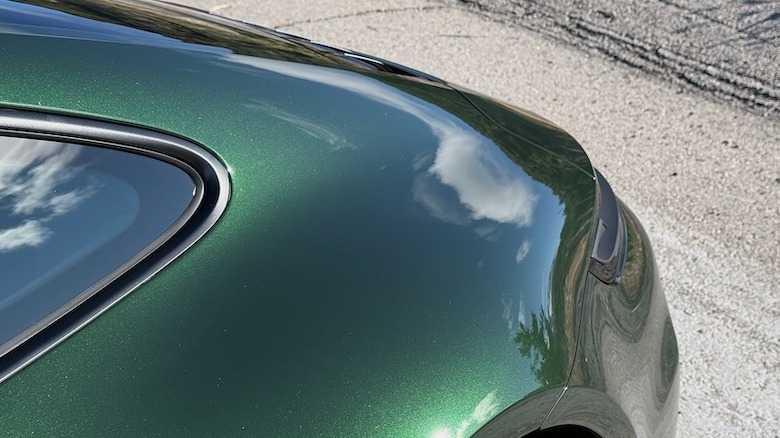
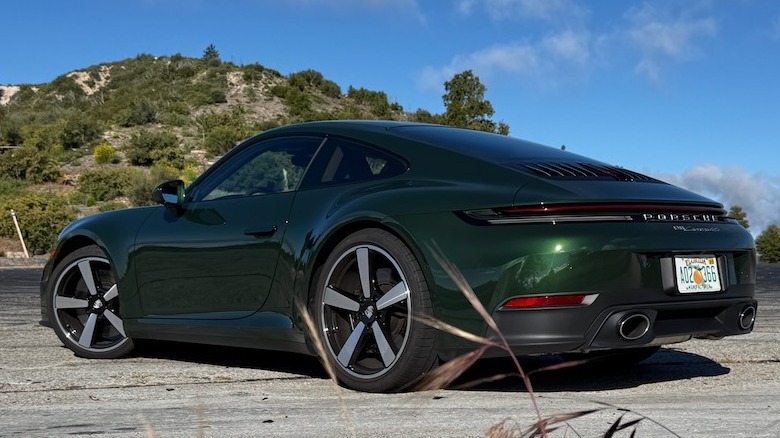
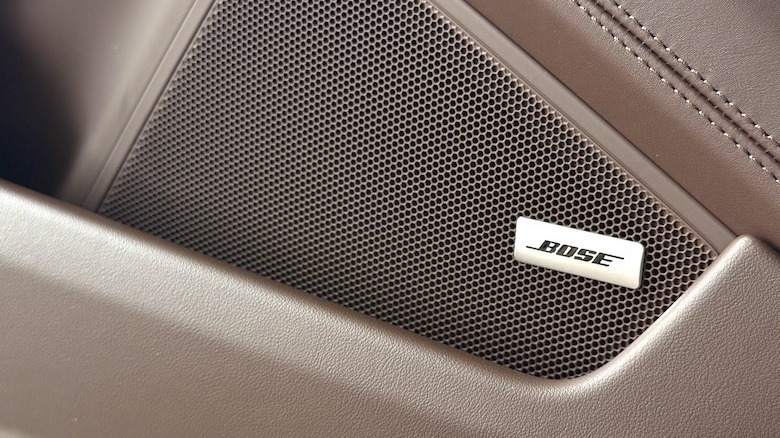
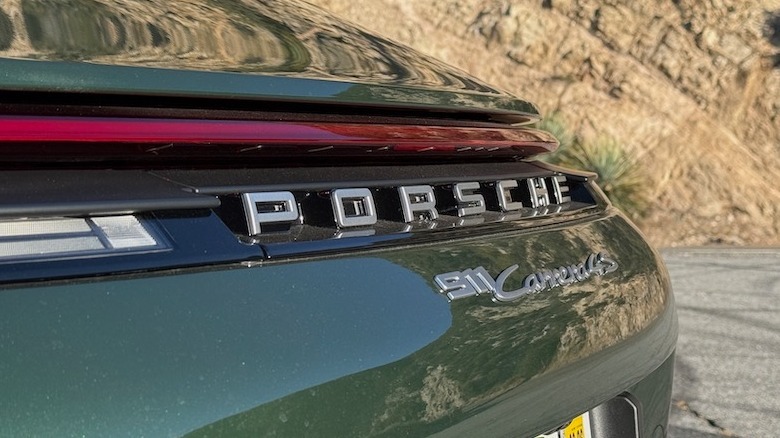
The excellent Oak Green metallic paint job, for example, is an extra $3,160. The front-axle lift to avoid scraping when you enter and exit steep driveways — that’s another $3,160. The Truffle brown leather that makes the inside feel utterly refined is $5,190 on top of the standard price. And the Premium package that adds a Bose stereo, ventilated front seats, adaptive cruise control, and a surround-view camera adds $5,590.
 Travis Langness/SlashGear
Testing various Porsches over the years, I’ve learned this lesson: No matter what the base price of your desired model is, it’s probably best to mentally add about 20% more to the price tag to accommodate the options you end up choosing. Or at least that’s how I seem to spec out my imaginary Porsches.
More than enough power
After spending a few moments thinking about how unlikely it is that I’ll ever be able to afford this sort of car myself, I decided to go back out and enjoy it some more: no point in dwelling on the malaise of a hypothetical non-future while I’ve got the keys to the real-life car in my hands that’ll bring me joy in the present. I key up, select sport mode, mash the throttle, and head back down the mountain. From a dig, the 4S moves forward in an astonishing but non-violent hurry. It’s properly fast, but it doesn’t feel particularly aggressive in its acceleration — instead, it’s purposeful.
 Travis Langness/SlashGear
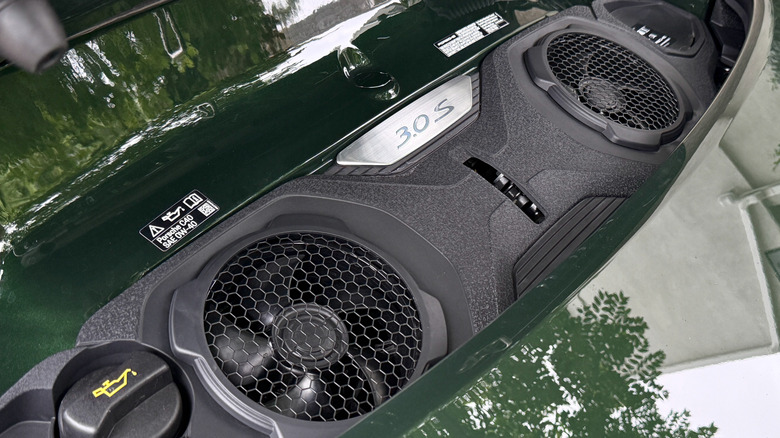
Behind the driver and the rear axle, hidden from view underneath some fans and bodywork, is the 4S’ twin-turbocharged 3.0-liter flat-six engine. It’s paired with Porsche’s 8-speed PDK transmission and all-wheel drive, a combo I think is broadly appealing. Though there’s certainly a case for the manual Carrera T being the best spec, the upgraded engine in the 4S makes noticeably more power and a bit more growl.
 Travis Langness/SlashGear
The 4S version of the Porsche engine makes 473 horsepower and 390 pound-feet of torque, and it’s the sort of powertrain that makes the bigger-power Porsches feel a bit unnecessary. With a long enough straightaway, it’ll hit 191 mph. Press the right buttons and prepare a clear enough straightaway, and the 911 4S will blast from zero to 60 mph in 3.3 seconds – quicker than you’ll ever need to scoot away from a stop light, even if you are late for work.
Much more than just a powertrain
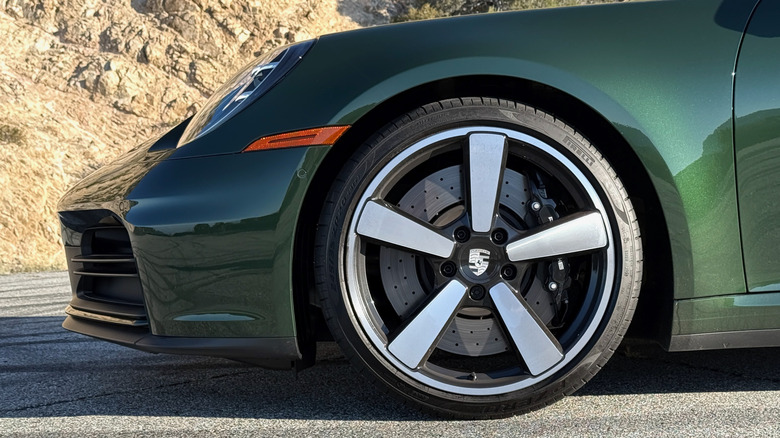
More than just balanced and adept at navigating every curve on the most challenging of mountain roads, the 911 can be driven in a calm and relaxed way, or it can be driven hard. I brake late into corners, transition immediately to near-full acceleration on the way out, and it doesn’t flinch. The Pirelli P Zeros provide all the grip you’ll need. The 911 won’t find its limits until you’re well beyond the responsible (and legal) limits of driving on public roads.
 Travis Langness/SlashGear
I also took my time, enjoying the scenery, soaking in the warm rays of the rising sun, dropping the windows and feeling the wind on my face as I dialed up the volume on the stereo. Road imperfections that jostle lesser sports cars are shed off by the 911 as well. Along some of the most broken and beaten sections of Los Angeles’ overcrowded freeway system, the 4S is easy to live with. You might be spending a lot on the 911, but it can truly be your everyday car, no matter what your day looks like. Paying for the performance makes sense, but getting this level of refinement is included right alongside the thrills.
Comfortable, even at a standstill
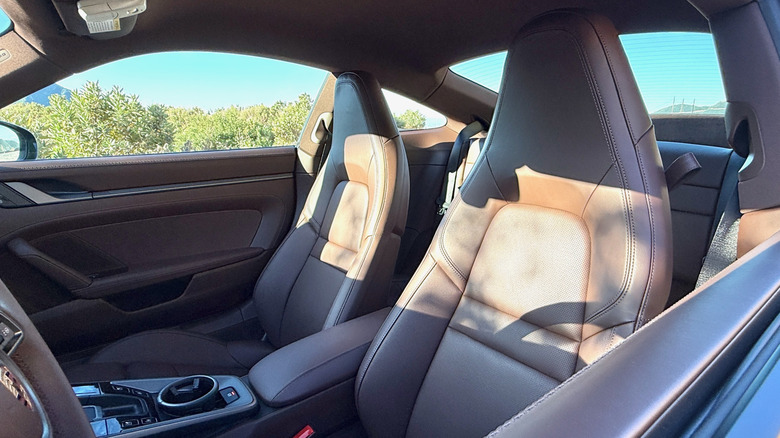
After a few dozen miles enjoying the 911 at speed, I slowed down to appreciate some of the finer details – of which there are many. As a part of the optional Premium package, my test car came with 14-way power Sport seats. They aren’t quite at the top of the heap when it comes to available 911 seats, but they’re pretty close.
They’re supportive, well-padded, and bolstered strongly enough that I never slid from side to side. Opting to get the 14-way seats, with the ventilation added to the mix, is a wise choice — especially for anyone who lives in a hot climate.
 Travis Langness/SlashGear
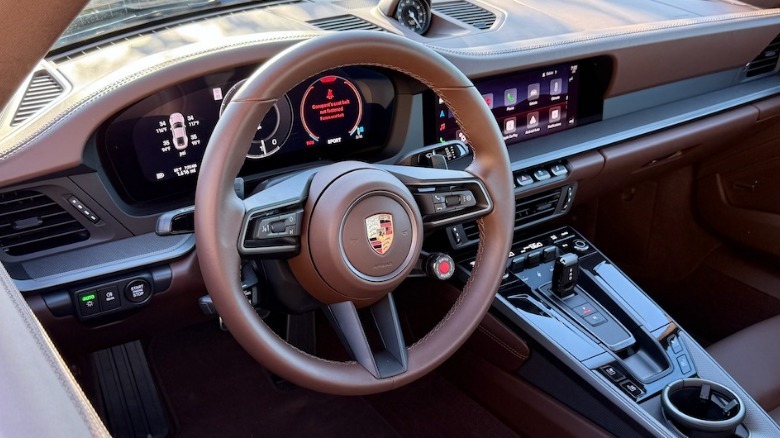
Like just about every other Porsche, the 911 has one of the best steering wheels fitted to any car on the road today. The size of the steering wheel itself, the heft of the rim, and the limited number of buttons to get in the way makes it a favorite of mine. Along with the steering wheel, every surface in the 911’s cabin is crafted with care, with near-perfect cross-stitching spanning the dashboard. Even the piano black plastics that typically drag down the vibe of an interior somehow feel more elegant in their placement and material quality with the 911.
Immediately part of the club, but at a higher tier
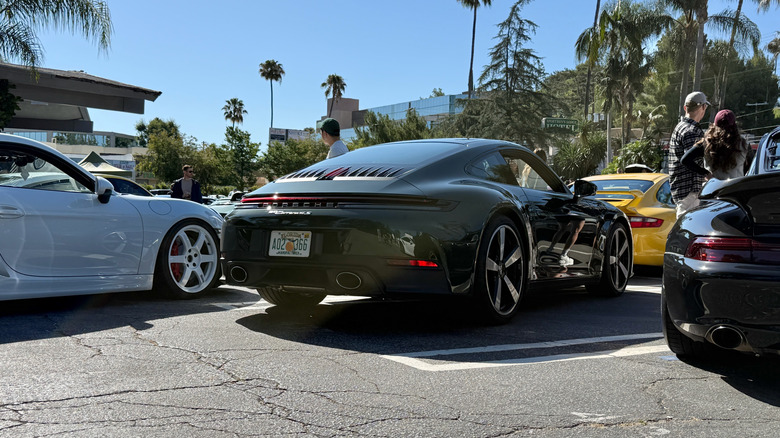
A few days after my test in the mountains, I took the 4S to a local Cars and Coffee. Even though it felt relatively understated at the Sunday-morning caffeine-fueled car event, flanked by big-wing GT3s and ultra-modified 911s, the 4S got me into the Porsche club immediately. This is not any official Porsche club, mind you (of which I’m sure there are many), but I was immediately counted amongst the chosen few. While this was a similar experience to when I drove the electric Macan, the 911 certainly brought a different gravitas.
 Travis Langness/SlashGear
As I pulled into a local lot, planning on spectating, I was directed to the most VIP of parking spots, asked questions about the car from bystanders, and given compliments immediately — many of which were about the 4S’ excellent paint color. If you want instant street cred, buying just about any version of the 911 will give it to you. This wasn’t the only experience I had with the 911 like this, either. It might not be listed as an official standard feature with the $200k price tag, but being admitted to the top tier of the Porsche clubs is part of the package.
No car is without its flaws
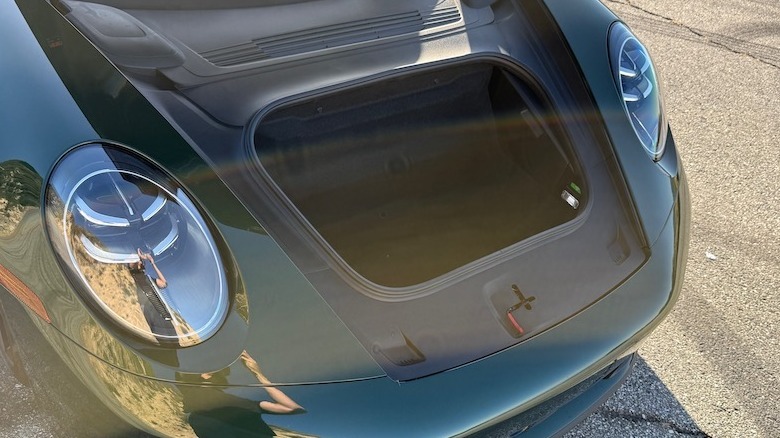
Just like everything else on four wheels, the 911 has drawbacks, but these are the most insignificant of gripes, really. Cargo space, for instance, is at a premium. With the engine out back, the 911 has to make do with a tiny front trunk; there’s just 4.7 cubic feet of space up there. The back seat, however, has more room for luggage if you treat the 911 like a two-seater (as many owners I know do).
 Travis Langness/SlashGear
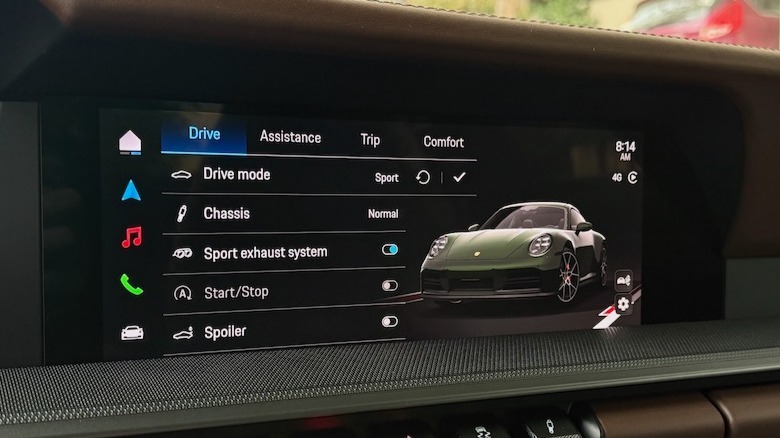
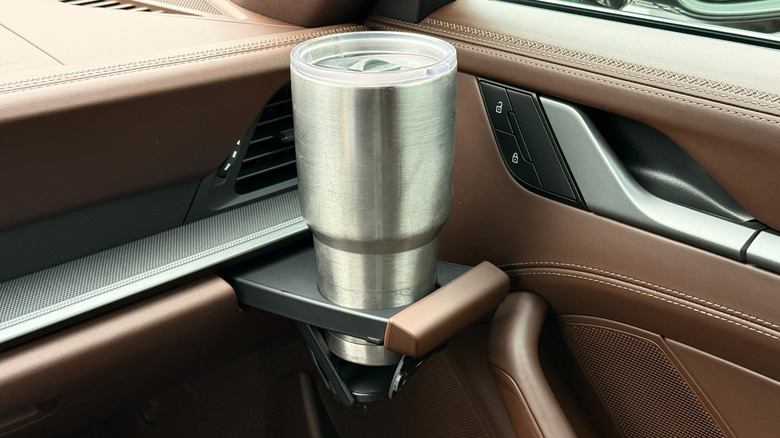
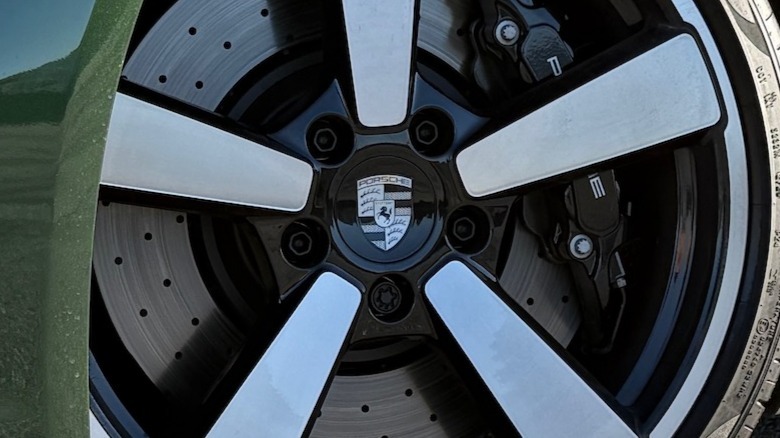
In the 4S’ Sport Plus setting the ride is a bit stiffer than I’d like, but that can be solved by simply leaving it in the basic Sport mode. The cupholders could be a bit bigger, or I could just get a smaller cup, I suppose, and I’d prefer a different one of Porsche’s wheel designs (wide spokes just aren’t my thing), but that’s more of a customization than it is a complaint. Like I said, the problems here aren’t really problems.
2026 Porsche 911 Carrera 4S verdict
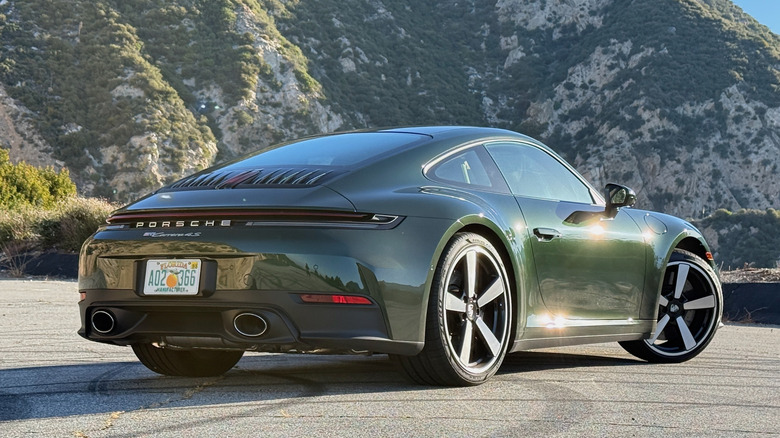
There aren’t too many cars that I’d describe as perfect, but in the sports car world this is about as close as it gets. The 911 is lauded as one of the best sports cars of all time, partly because of its commitment to refinement over the years, but also because of its ability to balance performance with comfort. Simply owning one will push you to wake up early, get extra coffee, and experience all the sensations it offers as often as you can, but it is also the sort of car you can drive on a daily basis for decades.
 Travis Langness/SlashGear
With only a week behind the wheel, I wanted to feel the near-perfect steering, the excellent weight distribution, and the sonorous flat-six engine as much as possible. I got up early on multiple days, not just my test day in the mountains, to drive the 911 anywhere I could. It’s worth the loss of sleep if you’ve got limited time with it. Unfortunately, the cost is more than just the loss of a little bit of sleep.
 Travis Langness/SlashGear
With the Cayman gone from its lineup, Porsche doesn’t have an entry-level sports car anymore: it’s either the 911 or something with four doors for new-car shoppers who want the Porsche badge. A base price of nearly $140,000, or a mid-level version for nearly $200,000 (with several versions well into the $300k range), means the 911 is now more aspirational than it is attainable. As far as automotive experiences go, though, it’s still just as desirable.

Stephan is the sports journalist for the Maple Grove Report.