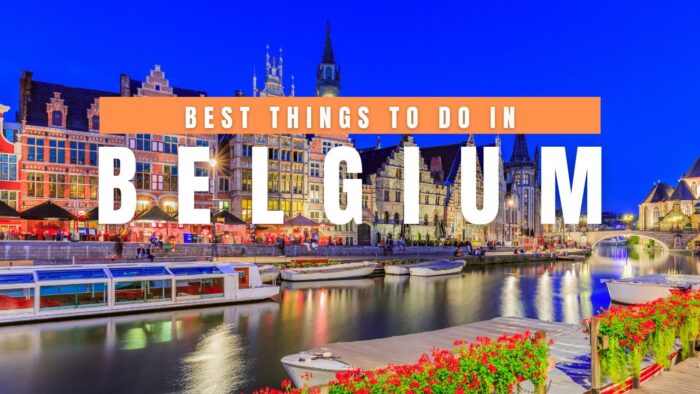

Belgium, though one of Europe’s smaller nations, provides a remarkable range of experiences within a compact area. It features fairy-tale medieval towns, impressive castles, renowned chocolates, centuries-old breweries, and scenic canals. The country seamlessly blends history, culture, cuisine, and natural landscapes. Each region has a distinct identity, whether exploring UNESCO World Heritage Sites, viewing famous artworks, or enjoying traditional Belgian waffles in quaint town squares.

Best Things to do in Belgium
Belgium stands out for how easily travelers can visit multiple destinations on a single trip. Well-connected train routes link lively cities such as Brussels, Bruges, Ghent, Antwerp, and Leuven, enabling visitors to enjoy diverse sights without extended travel. Whether you’re into medieval architecture, love food, are curious about European history, or just want to enjoy scenic landscapes, Belgium offers numerous memorable experiences year-round.
This guide highlights the 20 best things to do in Belgium, featuring iconic landmarks, hidden gems, and memorable activities that showcase why this remarkable country continues to captivate millions of visitors worldwide.
1. Wander Through the Medieval Streets of Bruges

Located in the province of West Flanders, Bruges is often called the “Venice of the North” thanks to its scenic canals and remarkably preserved medieval architecture. Walking through Bruges feels like stepping into a fairy tale, with cobblestone streets, Gothic churches, colorful guild houses, and romantic bridges around every corner.
Visitors can climb the famous Belfry for panoramic city views, explore Market Square, visit the Basilica of the Holy Blood, or simply enjoy a leisurely canal cruise. Chocolate boutiques, lace shops, and cozy cafés add even more charm to the experience.
Bruges is also a UNESCO World Heritage Site, recognized for its exceptional medieval city center. Its timeless beauty, rich history, and enchanting atmosphere make wandering through Bruges one of the most unforgettable experiences and among the absolute best things to do in Belgium.
2. Explore Brussels’ Grand Place

Situated in the heart of Belgium’s capital, Grand Place is one of Europe’s most spectacular public squares. Surrounded by opulent guildhalls, the Town Hall, and the King’s House, this UNESCO World Heritage Site has been the center of Brussels since the Middle Ages.
Visitors can admire the intricate Baroque architecture, dine at traditional Belgian restaurants, enjoy lively outdoor cafés, and photograph one of the continent’s most beautiful city squares. Throughout the year, Grand Place hosts flower carpet festivals, Christmas markets, concerts, and cultural celebrations that transform the square into a vibrant gathering place.
Illuminated at night, the historic buildings become even more breathtaking. The combination of architectural grandeur, historical importance, and lively atmosphere makes Grand Place an essential stop and one of the finest attractions in Belgium.
3. Cruise Along the Canals of Ghent

Located in East Flanders, Ghent offers visitors an enchanting blend of medieval heritage and youthful energy. One of the best ways to experience the city is by taking a scenic boat cruise through its historic canals.
The waterways pass magnificent guild houses, ancient warehouses, medieval castles, and picturesque bridges, offering fascinating perspectives unavailable from the streets. Along the route, visitors can admire landmarks such as Gravensteen Castle, Saint Bavo’s Cathedral, and Graslei, one of Europe’s most beautiful riverside streets.
Ghent is less crowded than Bruges yet equally impressive, making it a favorite among experienced travelers. The relaxing canal journey combines sightseeing with local history, offering unforgettable views that reveal why Ghent is considered one of Belgium’s most captivating cities.
4. Visit the Atomium in Brussels

The Atomium is one of Belgium’s most recognizable landmarks and a symbol of innovation and modern architecture. Located in northern Brussels, the structure was built for the 1958 Brussels World’s Fair and represents an iron crystal magnified 165 billion times.
Standing over 100 meters tall, the Atomium features interconnected spheres connected by escalators and elevators, each housing exhibitions, multimedia displays, and observation areas. Visitors can learn about science, design, architecture, and Belgium’s post-war optimism while enjoying panoramic views across Brussels from the upper sphere.
At night, thousands of LED lights illuminate the structure, creating an impressive futuristic spectacle. Its distinctive design and fascinating history have made the Atomium an internationally recognized icon and one of Belgium’s most iconic attractions.
5. Taste Authentic Belgian Chocolate

No visit to Belgium is complete without indulging in its world-famous chocolate. Throughout cities such as Brussels, Bruges, Antwerp, Ghent, and Leuven, visitors will discover hundreds of artisan chocolatiers producing handcrafted pralines, truffles, chocolate bars, and seasonal specialties using techniques refined over generations.
Many shops offer tasting sessions, chocolate-making workshops, and behind-the-scenes demonstrations where visitors can watch master chocolatiers at work. Belgium’s reputation for premium chocolate dates back to the 19th century and remains among the finest in the world today. Sampling chocolates from different makers reveals remarkable differences in flavor, texture, and craftsmanship.
Beyond simply satisfying a sweet tooth, experiencing authentic Belgian chocolate provides insight into one of the country’s proudest culinary traditions, making it one of the most delicious and memorable things to do in Belgium.
6. Tour the Castle of the Counts (Gravensteen) in Ghent

Standing proudly in the heart of Ghent, the Castle of the Counts, or Gravensteen, is one of Belgium’s best-preserved medieval fortresses. Built in the late 12th century by Count Philip of Alsace, the imposing stone castle features towering walls, fortified gates, watchtowers, and an impressive keep that transport visitors back to the Middle Ages.
Inside, guests can explore the medieval torture chamber, armory, banquet halls, and interactive exhibits showcasing life during feudal times. Climbing the castle walls rewards visitors with sweeping views of Ghent’s historic skyline and winding canals.
Unlike many castles that have been heavily restored, Gravensteen retains much of its original medieval character, offering an authentic glimpse into Belgium’s rich history. Its fascinating stories, remarkable architecture, and commanding presence make it one of the country’s most captivating historical attractions.
7. Admire the Masterpieces at the Royal Museums of Fine Arts of Belgium

Located in central Brussels, the Royal Museums of Fine Arts of Belgium comprise several museums housing one of Europe’s finest art collections. Visitors can admire masterpieces by renowned Flemish painters such as Pieter Bruegel the Elder, Peter Paul Rubens, Anthony van Dyck, and René Magritte, whose surrealist works have gained worldwide acclaim.
The museums span centuries of artistic achievement, from Old Masters to modern and contemporary art, allowing visitors to trace Belgium’s remarkable contribution to European culture. Beautiful galleries, carefully curated exhibitions, and rotating international displays make every visit unique.
Art lovers can easily spend several hours exploring the extensive collections while learning about Belgium’s artistic heritage. The museums’ exceptional quality and historical significance make them an essential destination for anyone interested in fine art and one of the best cultural experiences in Belgium.
8. Discover Antwerp’s Diamond District

Antwerp, located in northern Belgium along the River Scheldt, is globally recognized as the diamond capital of the world. For centuries, this bustling city has dominated the international diamond trade, with thousands of merchants, cutters, and jewelers operating within its famous Diamond District near Antwerp Central Station.
Visitors can browse elegant jewelry boutiques, learn about diamond cutting and polishing, and visit museums that explain how precious stones are evaluated, traded, and transformed into dazzling works of art. Even travelers not planning to purchase jewelry will find the district fascinating for its rich history and international atmosphere.
Antwerp handles a significant portion of the world’s rough and polished diamonds, making it a unique destination unlike anywhere else. Exploring this iconic neighborhood offers insight into one of Belgium’s most prestigious industries.
9. Experience Belgium’s Legendary Beer Culture

Belgium is internationally celebrated for its extraordinary beer heritage, with brewing traditions dating back nearly a thousand years. Across cities such as Brussels, Bruges, Leuven, and Dinant, visitors can tour historic breweries, sample Trappist beers brewed by monks, and discover hundreds of distinctive beer styles ranging from rich abbey ales and fruity lambics to refreshing wheat beers and strong golden ales.
Many breweries offer guided tours explaining centuries-old brewing techniques before ending with tastings of their signature creations. Traditional pubs often serve beer in glasses designed specifically for each brand, enhancing both flavor and presentation.
Belgian beer culture has even been recognized by UNESCO as an Intangible Cultural Heritage of Humanity. Experiencing this remarkable brewing tradition is not only enjoyable but also provides valuable insight into Belgium’s culinary identity and cultural history.
10. Hike Through the High Fens Nature Reserve

Located in eastern Belgium near the German border, the High Fens Nature Reserve is one of the country’s most beautiful natural landscapes. This protected area features vast peat bogs, rolling heathlands, dense forests, wooden boardwalks, and scenic hiking trails that stretch across one of Belgium’s highest regions.
Visitors can enjoy peaceful walks, birdwatching, wildlife photography, and seasonal landscapes that change dramatically throughout the year. During winter, snowfall transforms the reserve into a picturesque destination for cross-country skiing and snowshoeing, while spring and summer showcase colorful wildflowers and lush greenery.
The High Fens also play an important ecological role by supporting rare plants and animals found nowhere else in Belgium. Its untouched beauty and tranquil atmosphere provide a refreshing contrast to the country’s historic cities, making it one of the best outdoor adventures in Belgium.
11. Visit Saint Bavo’s Cathedral and See the Ghent Altarpiece

Located in the historic center of Ghent, Saint Bavo’s Cathedral is one of Belgium’s most treasured religious landmarks. Originally built in the 10th century and expanded over several centuries, the cathedral showcases an impressive blend of Romanesque, Gothic, and Baroque architecture. Its greatest treasure is The Adoration of the Mystic Lamb, better known as the Ghent Altarpiece, created by brothers Hubert and Jan van Eyck in 1432.
Widely regarded as one of the most influential masterpieces in Western art, the altarpiece has survived wars, thefts, and centuries of history. Visitors can also admire ornate chapels, magnificent stained-glass windows, historic crypts, and remarkable sculptures.
Combining artistic brilliance with architectural grandeur, Saint Bavo’s Cathedral offers an unforgettable cultural experience and remains one of the most important places to visit in Belgium.
12. Climb the Belfry of Bruges

Towering above the Market Square in Bruges, the Belfry of Bruges is one of Belgium’s most iconic medieval landmarks. Standing approximately 83 meters tall, this UNESCO-listed bell tower has watched over the city since the 13th century and once served as a treasury, archive, and lookout tower.
Visitors who climb the 366 narrow steps are rewarded with breathtaking panoramic views of Bruges’ red rooftops, winding canals, and surrounding countryside. Along the ascent, guests can observe the impressive carillon, which consists of 47 bells that continue to ring throughout the day.
The Belfry symbolizes the wealth and independence Bruges achieved during the Middle Ages as one of Europe’s leading trading centers. Its remarkable history, architectural beauty, and unforgettable views make climbing the Belfry one of the most rewarding experiences in Belgium.
13. Stroll Along the Meuse River in Dinant

Nestled dramatically between towering limestone cliffs and the Meuse River in the province of Namur, Dinant is one of Belgium’s most picturesque towns. A leisurely walk along the riverfront reveals colorful historic buildings, elegant bridges, charming cafés, and spectacular views of the imposing Citadel perched high above the town.
Travelers can take a cable car to the fortress, explore riverside markets, enjoy boat cruises, or visit the Collegiate Church of Notre Dame with its distinctive onion-shaped dome. Dinant is also the birthplace of Adolphe Sax, the inventor of the saxophone, and sculptures celebrating his famous invention can be found throughout the town.
The combination of dramatic natural scenery, fascinating history, and peaceful riverside atmosphere makes Dinant one of Belgium’s most photogenic and memorable destinations.
14. Discover the Historic University City of Leuven

Located just east of Brussels, Leuven is a lively university city that beautifully combines centuries of history with youthful energy. Home to KU Leuven, one of Europe’s oldest and most prestigious universities, the city is filled with elegant Gothic buildings, historic colleges, bustling cafés, and vibrant public squares.
Visitors can admire the magnificent Town Hall, considered one of the finest examples of Gothic architecture in Europe, explore the Grand Beguinage, a UNESCO World Heritage Site, and relax in the city’s botanical gardens.
Leuven is also famous for its brewing heritage, home to some of Belgium’s best-known beer producers. Its welcoming atmosphere, rich academic tradition, cultural attractions, and excellent dining scene make Leuven a rewarding destination, offering a more relaxed alternative to Belgium’s larger cities.
15. Explore the Caves of Han-sur-Lesse

Located in the Ardennes region near the village of Han-sur-Lesse, the Caves of Han are among Europe’s most spectacular natural attractions. Formed over millions of years by the Lesse River, this immense cave system features enormous underground chambers, towering stalactites, stalagmites, crystal-clear pools, and dramatic rock formations illuminated by carefully designed lighting.
Visitors begin their journey aboard a historic tram before venturing deep underground on guided tours that explain the caves’ fascinating geological history. One of the highlights is the massive Dome Room, where sound and light shows enhance the awe-inspiring surroundings.
Above ground, the adjacent wildlife park is home to European species including wolves, lynxes, bison, and bears living in spacious natural habitats. The combination of breathtaking geology, educational experiences, and surrounding nature makes Han-sur-Lesse one of Belgium’s most extraordinary destinations.
16. Explore Pairi Daiza

Located in the province of Hainaut near the town of Brugelette, Pairi Daiza is consistently ranked among the finest zoological parks in Europe. Spread across beautifully landscaped gardens, the park is home to more than 7,500 animals representing hundreds of species from around the world.
Visitors can explore themed areas inspired by continents and civilizations, including Chinese gardens, Indonesian temples, African landscapes, and the Kingdom of Ganesha. Giant pandas, elephants, polar bears, orangutans, and rare birds are among the park’s most popular residents. Pairi Daiza also emphasizes wildlife conservation, scientific research, and environmental education through interactive exhibits and breeding programs for endangered species.
Combining world-class animal habitats with stunning botanical gardens and immersive cultural settings, Pairi Daiza offers an unforgettable family-friendly adventure and is undoubtedly one of the best attractions in Belgium.
17. Visit the Battlefields of Waterloo

Located about 20 kilometers south of Brussels, the Battlefields of Waterloo are one of the world’s most famous historical sites. It was here on June 18, 1815, that Napoleon Bonaparte suffered his final defeat at the hands of the allied forces led by the Duke of Wellington and Field Marshal Blücher, forever changing the course of European history.
Visitors can climb the Lion’s Mound for panoramic views of the battlefield, explore the underground Memorial Museum, watch immersive multimedia presentations, and examine authentic military artifacts from the Napoleonic era.
Guided tours provide fascinating insights into the strategies, soldiers, and events that shaped this decisive battle. Whether you’re passionate about military history or simply interested in understanding Europe’s past, Waterloo offers a compelling and educational experience, making it one of Belgium’s most significant historical destinations.
18. Wander Through the Historic Center of Mons

Situated in the Wallonia region, Mons is a charming city known for its rich history, elegant architecture, and vibrant cultural scene. At its heart lies the Grand-Place, a lively square surrounded by historic buildings, inviting cafés, and restaurants that create a welcoming atmosphere year-round.
Visitors can climb the UNESCO-listed Belfry of Mons, the only Baroque-style belfry in Belgium, to enjoy panoramic views across the city. Other highlights include the Collegiate Church of Saint Waltrude, the Mons Memorial Museum, and the city’s many festivals, particularly the famous Doudou Festival, recognized by UNESCO for its cultural significance.
Mons was also named a European Capital of Culture in 2015, further enhancing its artistic reputation. Its blend of heritage, festivals, and local charm makes Mons one of Belgium’s most rewarding cities to explore.
19. Experience the Scenic Beauty of the Ardennes

Stretching across southeastern Belgium, the Ardennes is a region of rolling hills, dense forests, winding rivers, and picturesque villages that offers a completely different side of the country. Outdoor enthusiasts can enjoy hiking, mountain biking, kayaking, rock climbing, wildlife watching, and camping amid some of Belgium’s most beautiful natural landscapes.
During autumn, the forests transform into a spectacular display of vibrant colors, while winter brings opportunities for cross-country skiing and peaceful snowy walks. The region is also home to medieval castles, historic abbeys, charming towns such as Durbuy and La Roche-en-Ardenne, and numerous local breweries that serve traditional Belgian ales.
Rich in history and natural beauty, the Ardennes provides an ideal escape for travelers seeking adventure, relaxation, and authentic countryside experiences, making it one of the country’s premier outdoor destinations.
20. Enjoy Belgian Waffles at a Traditional Café

No journey through Belgium is complete without savoring authentic Belgian waffles at a traditional café or local bakery. Whether in Brussels, Bruges, Ghent, Antwerp, or countless smaller towns, visitors will find freshly prepared waffles served warm with a variety of delicious toppings.
Two of the most famous varieties are the light and crispy Brussels waffle and the rich, caramelized Liège waffle, each offering a unique taste and texture. Many cafés serve them simply dusted with powdered sugar, while others add fresh strawberries, whipped cream, Belgian chocolate, ice cream, or seasonal fruits.
Sampling waffles in their country of origin allows travelers to appreciate the craftsmanship and tradition behind this beloved dessert. Combined with a cup of Belgian coffee or hot chocolate, enjoying authentic waffles is a delicious cultural experience and one of the most iconic things to do in Belgium.
Conclusion
Belgium proves that extraordinary travel experiences are not measured by a country’s size but by the richness of its culture, history, and landscapes. From the fairy-tale canals of Bruges and the medieval castles of Ghent to the vibrant streets of Brussels, the scenic Ardennes, and the historic battlefields of Waterloo, every destination reveals a different chapter of Belgium’s remarkable story. Add to that world-famous chocolates, exceptional beers, mouthwatering waffles, and welcoming local hospitality, and it’s easy to understand why Belgium remains one of Europe’s most rewarding destinations.
Whether you’re planning a weekend city break or a longer journey across the country, these 20 best things to do in Belgium offer the perfect introduction to its timeless charm. Every experience blends history, culture, gastronomy, and natural beauty, creating memories that will last long after your trip ends.
Once you’ve explored Belgium’s cobblestone streets, admired its architectural masterpieces, and tasted its culinary delights, you’ll quickly discover why so many travelers return to this captivating European gem again and again.
Antwerp Travel and Tour Packages
Searching for the best hotels, resorts, and affordable flights in the nearby Cities? Check out our list of cheap Antwerp hotels and resorts on Agoda, or browse available Airbnb properties in the city.
Want more updates about new tourist attractions in Belgium? Follow #TeamOutofTown on Facebook, Twitter, Instagram, and Pinterest for more travel ideas.
Also read:

Stacie Harris is a local resident and reporter of the Maple Grove area. Stacie reports on medicine and science for the Maple Grove Report.