A Garmin Trademark Filing Hints at a New Whoop-Like Wearable


As more people embrace an analog lifestyle, favoring offline experiences that get them off their devices, it would seem technology is following suit.

On March 31, Google implied that it will release a new screenless wearable reminiscent of fitness trackers like the Whoop 5.0, known for its recovery insights, and the Luna Band, which uses your voice to track your health. By forgoing screens, you can view your data only in the wearables’ accompanying apps, which can be a game changer for those with health anxiety or anyone tired of staring at screens.

Now, it appears Garmin is joining the screen-free party. 

On Thursday, news and reviews site Gadgets and Wearables reported that Garmin filed a trademark for a device called Cirqa with the United States Patent and Trademark Office on Feb. 25.

The trademark filing describes Cirqa as nonmedical, nontherapeutic wearable devices and instruments that use electronic sensors and monitors to measure and analyze the body’s bio-signals and behavior. Specifically, Cirqa would collect data on recovery from physical and emotional stress, human alertness level and performance.

With a focus on recovery and performance, Cirqa sounds a lot like the Whoop health tracker. 

In its filing, Garmin also describes Cirqa as an instrument for storing and sending data, which could mean it doesn’t display that data itself and instead relies on an app, as with other screenless wearables. 

A Garmin representative declined to comment, saying it’s against company policy to comment on any rumored or unannounced products.

A hand with the Whoop 5.0 on the wrist.

The wrist-based Whoop 5.0 health tracker

Nasha Addarich Martínez/CNET

Whoops: An accidental leak 

This isn’t the first time the Cirqa device has made news. In January, Garmin accidentally launched a Cirqa smart band product page and accompanying support pages, which have since been taken down. However, screenshots are still available on Reddit.

The leaked product was seen in Garmin’s online stores in the US, Canada, Mexico, Brazil and Chile. The band was shown in two colors, black and French gray, and two sizes, small-medium and large-extra large. One of the aforementioned Reddit screenshots shows the latter as wrist sizes.

The page included an “add to cart” option with the caveat that shipping would start in four to five months, meaning it would launch in May or June.

The lawsuit look of Garmin’s Cirqa 

While there haven’t been any leaks showing what Cirqa will look like, based on current lawsuits, it’s unlikely to resemble the Whoop band.

On Oct. 14, Whoop filed a trademark infringement lawsuit against Polar Electro Oy, the maker of the screenless Polar Loop, a health- and fitness-tracking band. Polar told MobiHealthNews that it denied the claim that its Loop copied the look of the Whoop band. On Friday, Polar filed an official response to Whoop’s complaint.

But that wasn’t the last time Whoop went after alleged copycats. On Jan. 22, Whoop filed another trademark infringement lawsuit against Nexxbase Technologies, maker of the Luna Band. Nexxbase Technologies has until May 19 to respond to the complaint.

As of now, Garmin does have its own Index Sleep Monitor, a smart armband worn on the upper arm that tracks breathing, recovery, women’s health and other bodily metrics while you sleep. So perhaps Cirqa will simply move that technology down the arm with 24/7 health insights.

Garmin's black Index Sleep Monitor armband

Garmin’s Index Sleep Monitor armband

Garmin

Based on the shipping date listed in Garmin’s own leaked product page, we may have the answers to all our questions in a month or two.


Source link

Leave a Reply

Subscribe to Our Newsletter

Get our latest articles delivered straight to your inbox. No spam, we promise.

Recent Reviews


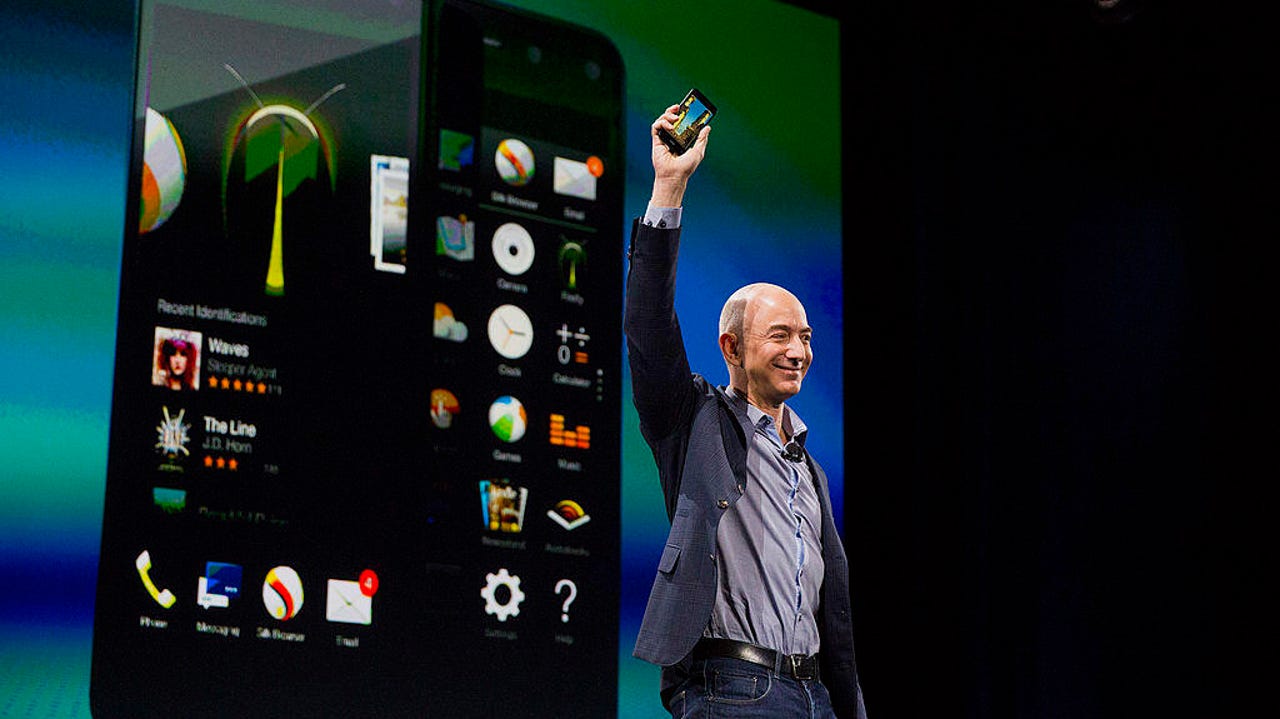
Amazon Fire Phone Jeff Bezos

Bloomberg / Getty Images

Follow ZDNET: Add us as a preferred source on Google.


ZDNET’s key takeaways

  • Amazon is reportedly developing a new Fire Phone.
  • The previous model had several issues, including an inferior app store experience.
  • Under new supervision (and with more experience), Amazon can do better this time.

Well, I don’t know about you, but I certainly didn’t have “new Amazon smartphone” on my 2026 bingo card. As it turns out, according to Reuters, the retailer may be developing a new smartphone, internally known as “Transformer.” 

Those familiar with the industry will instantly draw parallels to Amazon’s previous smartphone effort, the Fire Phone from 2014. Appropriately, that phone ended up as part of a fire sale about a year later.

Now, in 2026, with no fewer than five phone brands in the US — Apple, Samsung, Google, Motorola, and OnePlus — Amazon faces a lot of competition. In fairness, it also has two fewer platforms to compete against. In 2014, Windows Phone and BlackBerry were still very much part of the smartphone conversation; these days, not so much.

The AppStore problem

But there’s one mistake Amazon made in its first effort that will absolutely torpedo its chances at succeeding — the Amazon AppStore and specifically the decision to forego Google Play services. Google is simply too valuable in too many lives to not support the platform. Oh, and the Amazon AppStore is terrible.

Also: What’s right (and wrong) with the Amazon Fire Phone

It has admittedly been a few years since I last inventoried the Amazon AppStore, but when I last checked, the Amazon AppStore was a wasteland of half-supported or unsupported apps, with two notable exceptions. Finance, home control, and communication apps were either absent or had not received updates for years prior.

The only apps in the Amazon AppStore that remained up to date were productivity apps (largely powered by Microsoft) and streaming apps. Those two categories work very well on the cheap, underpowered hardware that Amazon usually launches, and that’s fine. A coffee-table tablet is a nice thing to have lying around.

A spark of hope

Amazon Fire Phone

Liam Tung/ZDNET

But a phone is another animal entirely. If a tablet is a device to entertain, a phone is a device for everything else. One of the key reasons Windows Phone failed was its lack of an app ecosystem. The Senior Vice President of Devices and Services,  Panos Panay, is very familiar with that saga, so I’m hopeful that he will make the same arguments to the powers that be at Amazon. 

Honestly, if there is anyone who I think can pull off an Amazon phone revival, it’s probably Panay, who understands design and product development better than most, and to be perfectly honest, he’s my absolute favorite product presenter.

Also: Amazon Fire Phone review: Not a great smartphone

Of course, all of this is early days. This phone is being worked on internally, and even Reuters reports that it could get the axe long before it sees the light of day. Personally, I’m intrigued by the idea, but I sincerely hope that Amazon doesn’t make this the shopping phone it tried to build in 2014. 

If Amazon just wants to make a nice, well-built smartphone, with a skin that pushes Amazon content to the fore, I’m fine with that. But leaving Google behind is a mistake that Amazon cannot afford to make again. Fool me once, and all that.

So, if this phone is to have a chance at success, it needs to embrace Google services so it can be a phone that everyone can use. Amazon has the brand power to make a phone like this work, even up against juggernauts like Apple and Samsung, but it needs to approach this correctly, lest it end up in yet another Fire phone fire sale.


Source link