Alleged Supercomputer Hack Could Be The Biggest Breach In China’s History


A hacker has allegedly stolen a massive amount of classified data from one of the nation’s state-owned supercomputers. While it stopped short of revealing which of China’s many supercomputers were affected by this breach, a CNN report claims that the stolen dataset contains more than 10 petabytes of data — enough to make it potentially the largest data breach in China’s history. The affected supercomputer is believed to be housed at China’s premier National Supercomputing Center (NSCC) in Tianjin, which has historically been home to several of the world’s fastest supercomputers.

The supercomputing hub at NSCC is extensively used by several clients across China, with CNN estimating the number to exceed 6,000. These clients include multiple Chinese state-run agencies, including the Commercial Aircraft Corporation of China (the company behind the Comac 919 passenger jet), the National University of Defense Technology, and the Aviation Industry Corporation of China. The large trove of data accessed by the hacker includes classified defense documents, missile schematics, and research data from aerospace engineering, bioinformatics, and fusion simulations.

The first indication of this breach dates back to early February 2026, when an anonymous user “FlamingChina” uploaded a sample of the dataset to a Telegram channel. Cyber researchers immediately got to work, and several of them have verified the data to be genuine. They were also able to confirm that the hackers were offering several users a “limited preview” of the data priced at several thousand dollars. Anyone with deeper pockets was also given the option to gain unrestricted access by paying hundreds of thousands of dollars’ worth of cryptocurrency.

How did the hackers pull it off?

While a detailed technical breakdown of the breach is beyond the scope of this article, cybersecurity researcher Marc Hofer claims that the breach was primarily achieved via a compromised VPN domain. Speaking to CNN, Hofer claimed that he confirmed this method directly with the person allegedly behind the breach, whom he was able to contact via Telegram.

Hofer added that once the hacker had access to the supercomputer, he deployed a botnet — essentially a set of automated programs designed to extract, download, and store as much data as possible from the target supercomputer. The botnet was programmed to extract and store this data discreetly without alerting the Chinese cybersecurity apparatus. This approach also meant that it took the hackers well over six months to siphon off the claimed 10 petabytes of data.

Now, there is no denying that this alleged breach will raise questions about the robustness of China’s technology infrastructure. While China has tried to minimize such data breaches in the past, this newest incident is only the latest in a long string of such cybersecurity-related breaches in the country. What makes this particular breach far more worrying from a Chinese perspective is the sensitive nature and sheer volume of the leaked data. Only time will tell whether the latest supercomputer data breach will prompt China to accelerate its cybersecurity apparatus


Source link

Leave a Reply

Subscribe to Our Newsletter

Get our latest articles delivered straight to your inbox. No spam, we promise.

Recent Reviews


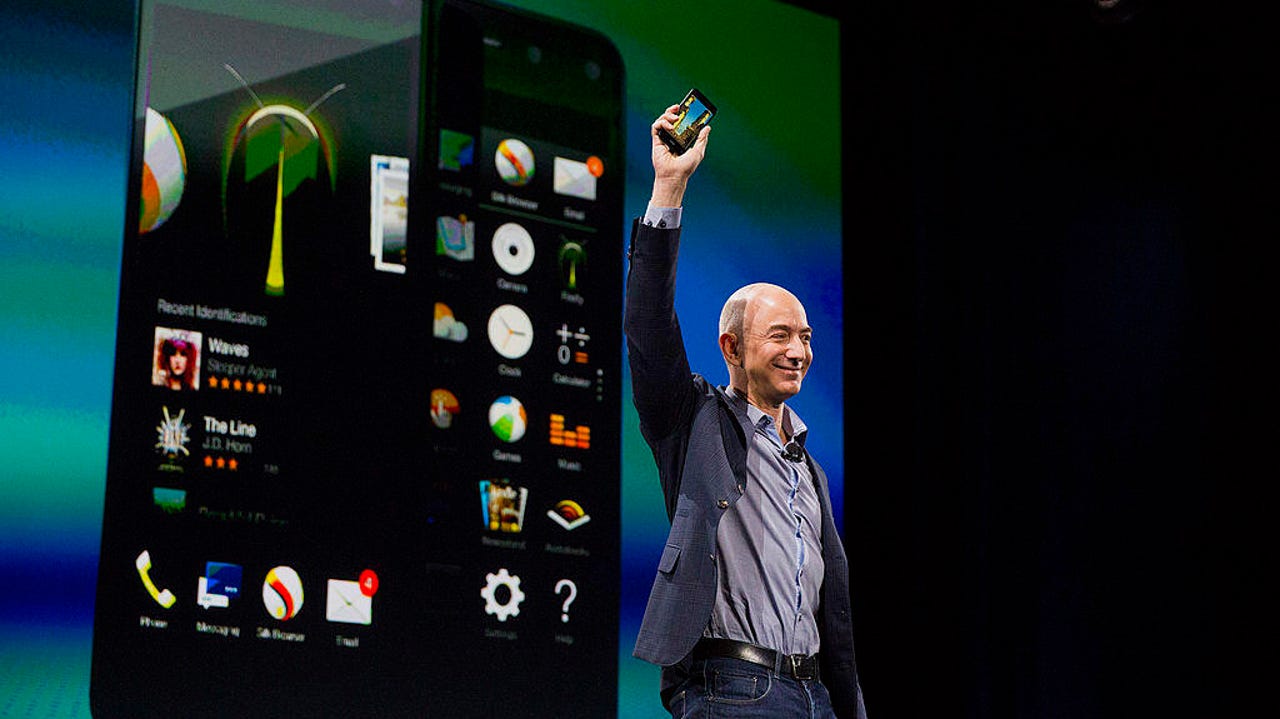
Amazon Fire Phone Jeff Bezos

Bloomberg / Getty Images

Follow ZDNET: Add us as a preferred source on Google.


ZDNET’s key takeaways

  • Amazon is reportedly developing a new Fire Phone.
  • The previous model had several issues, including an inferior app store experience.
  • Under new supervision (and with more experience), Amazon can do better this time.

Well, I don’t know about you, but I certainly didn’t have “new Amazon smartphone” on my 2026 bingo card. As it turns out, according to Reuters, the retailer may be developing a new smartphone, internally known as “Transformer.” 

Those familiar with the industry will instantly draw parallels to Amazon’s previous smartphone effort, the Fire Phone from 2014. Appropriately, that phone ended up as part of a fire sale about a year later.

Now, in 2026, with no fewer than five phone brands in the US — Apple, Samsung, Google, Motorola, and OnePlus — Amazon faces a lot of competition. In fairness, it also has two fewer platforms to compete against. In 2014, Windows Phone and BlackBerry were still very much part of the smartphone conversation; these days, not so much.

The AppStore problem

But there’s one mistake Amazon made in its first effort that will absolutely torpedo its chances at succeeding — the Amazon AppStore and specifically the decision to forego Google Play services. Google is simply too valuable in too many lives to not support the platform. Oh, and the Amazon AppStore is terrible.

Also: What’s right (and wrong) with the Amazon Fire Phone

It has admittedly been a few years since I last inventoried the Amazon AppStore, but when I last checked, the Amazon AppStore was a wasteland of half-supported or unsupported apps, with two notable exceptions. Finance, home control, and communication apps were either absent or had not received updates for years prior.

The only apps in the Amazon AppStore that remained up to date were productivity apps (largely powered by Microsoft) and streaming apps. Those two categories work very well on the cheap, underpowered hardware that Amazon usually launches, and that’s fine. A coffee-table tablet is a nice thing to have lying around.

A spark of hope

Amazon Fire Phone

Liam Tung/ZDNET

But a phone is another animal entirely. If a tablet is a device to entertain, a phone is a device for everything else. One of the key reasons Windows Phone failed was its lack of an app ecosystem. The Senior Vice President of Devices and Services,  Panos Panay, is very familiar with that saga, so I’m hopeful that he will make the same arguments to the powers that be at Amazon. 

Honestly, if there is anyone who I think can pull off an Amazon phone revival, it’s probably Panay, who understands design and product development better than most, and to be perfectly honest, he’s my absolute favorite product presenter.

Also: Amazon Fire Phone review: Not a great smartphone

Of course, all of this is early days. This phone is being worked on internally, and even Reuters reports that it could get the axe long before it sees the light of day. Personally, I’m intrigued by the idea, but I sincerely hope that Amazon doesn’t make this the shopping phone it tried to build in 2014. 

If Amazon just wants to make a nice, well-built smartphone, with a skin that pushes Amazon content to the fore, I’m fine with that. But leaving Google behind is a mistake that Amazon cannot afford to make again. Fool me once, and all that.

So, if this phone is to have a chance at success, it needs to embrace Google services so it can be a phone that everyone can use. Amazon has the brand power to make a phone like this work, even up against juggernauts like Apple and Samsung, but it needs to approach this correctly, lest it end up in yet another Fire phone fire sale.


Source link