

Though it isn’t nearly as widespread as the minds behind it likely want, autonomous driving is becoming increasingly prevalent all the same. Autonomous driving has been classified into different levels, with companies like Waymo implementing it for ridesharing. Driverless semi-trucks have begun to creep into the mainstream, too, delivering various goods without a person behind the wheel. As of early 2026, it looks like these trucks will make their way to the United States’ fastest highway.
The 41-mile-long Texas State Highway 130 sits at the center of this situation, notable for its low traffic and 85 mph speed limit. These elements have made it quite an attractive area for companies such as Einride, Aurora Innovation, and the aforementioned Waymo to plan or already begin testing out autonomous vehicles on this stretch of road. Einride, for its part, hopes to start testing its autonomous semis by the end of 2026 or the start of 2027, with the company first having to collect data on the routes its trucks will take.
How the Texas SH 130 Concession Company has responded to these efforts
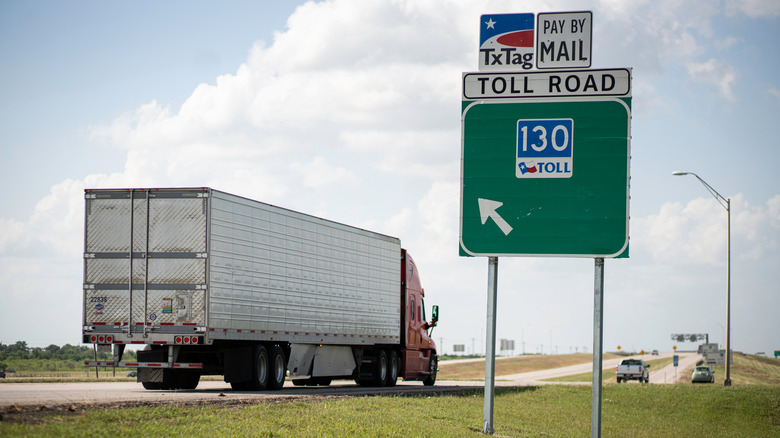
Texas SH 130 is the responsibility of the SH 130 Concession Company, which is well aware of companies’ intentions to use the highway as a proving ground — and seems eager to get started. Speaking to KXAN Austin, James Lovett, VP of Public Affairs for the SH 130 Concession Company, explained that this decision to test autonomous freight with companies like Einride is a major innovation that will benefit the Texas supply chain.
Emphasizing the importance of SH 130, Lovett added that “As we advance toward our goal of establishing the southern section of SH 130 as a nationally recognized route for autonomous freight movement, we see this partnership with Einride as a strategic opportunity to accelerate innovation,” ideally without sacrificing safety. Additionally, Einride and SH 130 Concession plan to leverage the former’s AI software, Saga AI, to monitor driving data and manage traffic. The two entities also have plans for a next-gen rest stop, which would handle things like semi EV battery charging and docking requirements to keep them on the road.
This is all well and good, and it seems like a potential plus for the Texas and wider U.S. economy. However, there is concern surrounding this initiative, both in terms of safety and the long-term financial security of those in the trucking industry.
Autonomous semis don’t have unanimous support
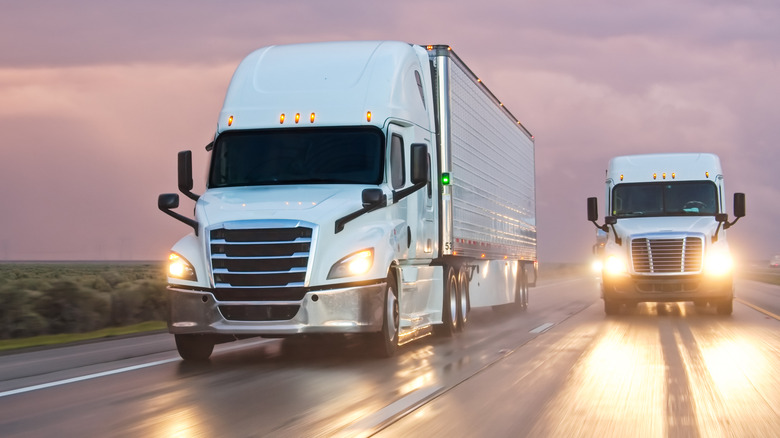
Despite the potential advantages of autonomous semis, there are still concerns that need addressing. For one, the safety element cannot be ignored, as these are massive, heavy vehicles that will likely be driving down SH 130 at the 85-mph limit. Drivers are perhaps justifiably concerned by the prospect of not having drivers behind the wheel in case something happens. This is a worry shared by the Transport Workers Union of America, whose president, John Samuelsen, claimed to KXAN Austin that autonomous trucking companies “have a track record of cutting corners on safety,” adding that “it is not safe to operate massive trucks on busy highways when the only solution for problems … is someone sitting at a computer.”
Automation will also likely impact the labor market, as self-driving trucks can keep going without breaks, time off, monthly salaries, and the like. This means money saved for companies, and possibly jobs lost for even experienced workers. Organizations like the Owner-Operator Independent Drivers Association have raised concerns about job losses due to autonomous semis. Some members see the benefits, but most worry about their livelihoods, alongside increased safety risks and inflated operational costs.
Though we’re not quite at the point of completely autonomous cars, endeavors like self-driving trucks on Texas SH 130 are, for better or worse, pushing the tech forward. Time will tell how these tests will pan out, and whether we’ll see more self-driving semis hit that stretch of Texas road and others in the coming years.

Stephan is the sports journalist for the Maple Grove Report.