Anthropic Restores Access to Mythos and Fable AI After Government OK


Anthropic announced late Tuesday that access to its most advanced AI models, Claude Mythos 5 and Claude Fable 5, would be restored globally on Wednesday, with the US government signing off.

Anthropic reiterated in its statement that Fable 5 had industry-leading cybersecurity safeguards. It also calls for consistent standards for model evaluation and proposes one framework as part of its cybersecurity Project Glasswing

In June, Anthropic released Fable 5, the first of its Mythos-level models to be made publicly available. It was only available for a week before the government issued an export control order, commanding Anthropic to block access by any foreign national. Anthropic said the only way to comply was to pull the model for everyone.

AI Atlas

“Although we have reached a constructive resolution, these events have made clear that the industry needs a consistent way to assess and fix potential ‘jailbreaks’ of AI models,” the company said. “A shared standard… would help AI developers triage new findings as they arise, launch highly capable models with greater safety, and communicate the level of risk consistently to government and industry partners.”

As of 9 a.m. ET on Wednesday, CNET couldn’t independently confirm the availability of Fable 5. Access to the model will likely be rolling throughout the day. You can use the new Sonnet 5 model, also released on Tuesday.

Anthropic said it is working to restore access on AWS, Microsoft Foundry and Google Cloud “as quickly as possible.” Subscribers on Pro, Max, Team and enterprise plans will be able to use Fable 5 on tasks that use up to 50% of their weekly usage limits (tokens) through July 7, after which Fable will cost extra to use with usage credits. Mythos 5 will only be available to select US companies as part of Project Glasswing.

Commerce Secretary Howard Lutnick, whose office oversees the regulatory Center for AI Standards and Innovation, said on X: “Over the past two weeks, we have worked closely with Anthropic to analyze and approve Fable 5 to ensure alignment across the US government and strengthen America’s leadership in AI.”

The Trump administration and Anthropic have had a rocky relationship this year. The government had Anthropic declared a supply chain risk this spring after the AI company balked at a Pentagon request that would’ve allowed Claude AI to be used for all legal military purposes

Until the past few months, the administration had taken a hands-off approach to regulating AI. Now, particularly with interventions to block frontier models from public release, it has dramatically changed its stance. An executive order signed on June 2 requires the Defense Department to work with AI companies to have the government review all new frontier models and approve them before they are widely released. Fable and Mythos were blocked under a different legal authority, but showed a similar desire for government approval of public availability for the most capable AI models.


Source link

Leave a Reply

Subscribe to Our Newsletter

Get our latest articles delivered straight to your inbox. No spam, we promise.

Recent Reviews


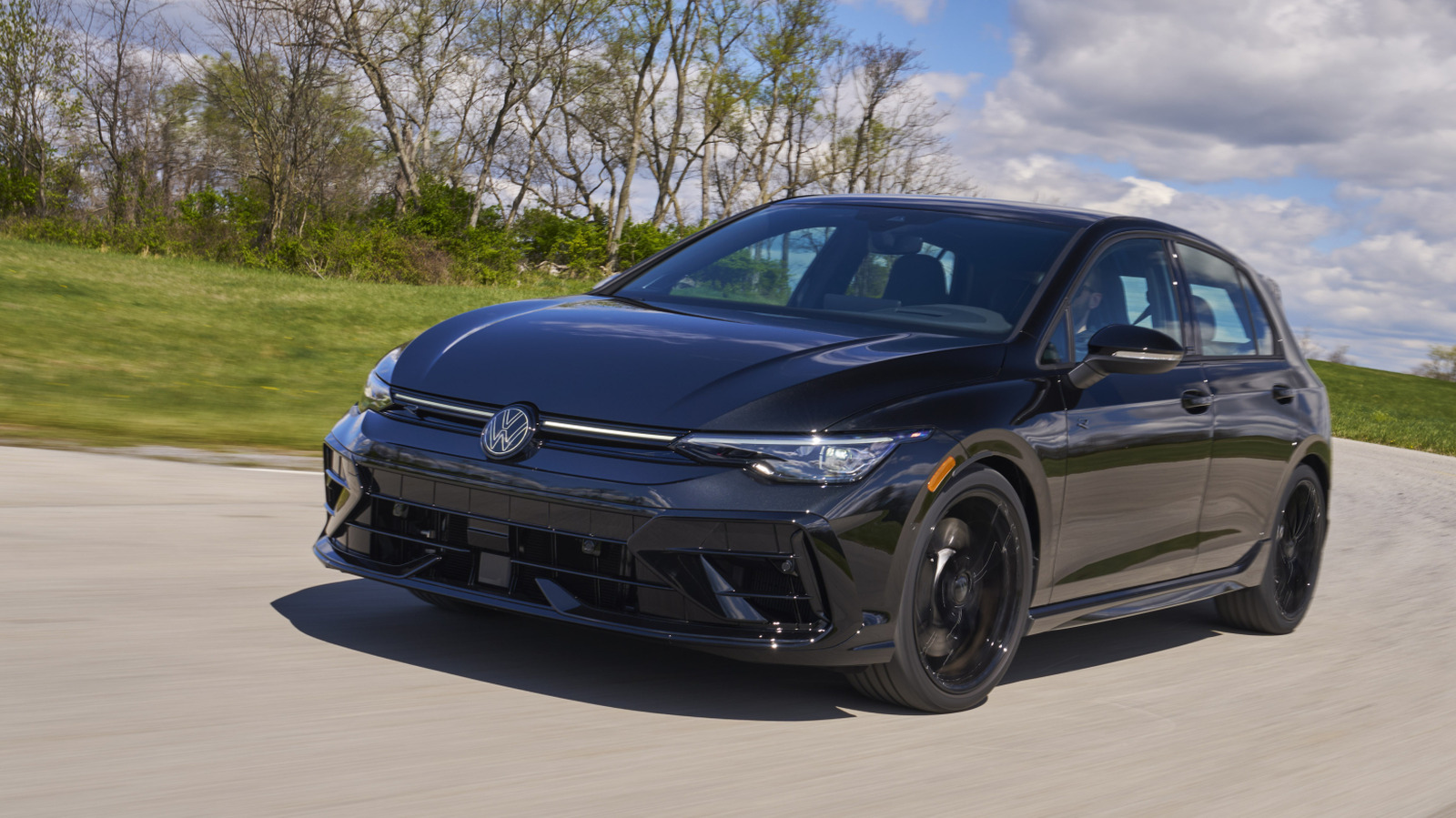
It kind of makes no sense that literally every new car sold these days can go twice the regular speed limit in most countries. Even a Toyota Prius tops out at 115 mph, and reaching that speed in 99% of the world can easily land you in jail, or at least with a large dent in your bank account from a truly massive speeding ticket. Meanwhile, supercars can easily blow a Prius out of the water — for example, the Chevrolet Corvette ZR1 can hit speeds more than double that.

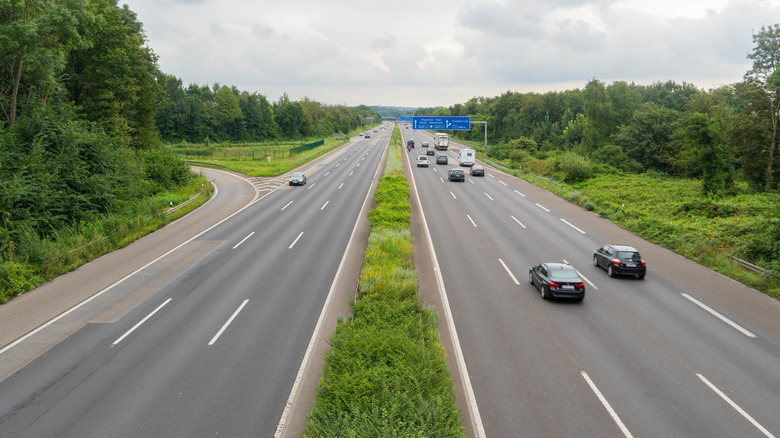
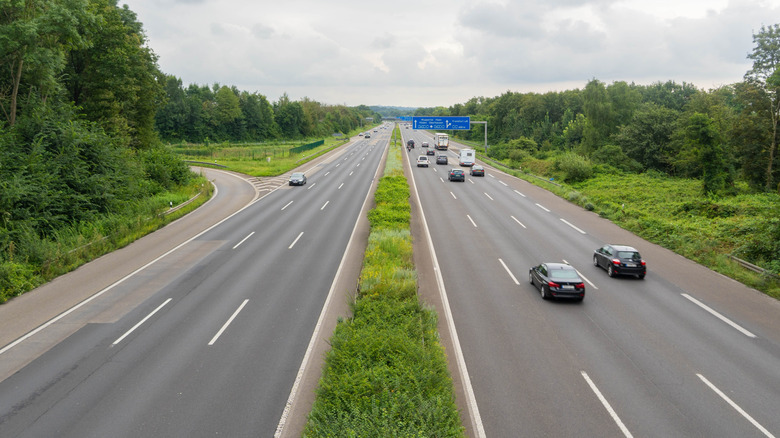
Either way, top speeds are merely hypothetical and completely off-limits for 99% of the world. Yet no matter if you own a ZR1 or a Prius and you want to test that top speed claim, there are public roads where you can try. The most obvious choice is the German Autobahn, which has certain sections with no speed limits. This means that, if it is safe to do so, you can theoretically chase that top speed.

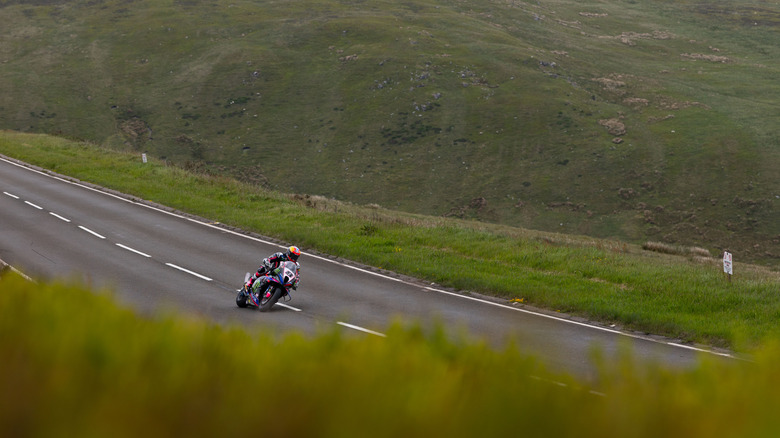
Besides the German Autobahn, the roadways on the Isle of Man — known for the Isle of Man TT — also has sections with no speed limits. About a decade and a bit ago, you were also able to max out your car on certain locations of the Australian Northern Territory, specifically the Stuart Highway. However, speed limits were reinstated in the interest of public safety in 2016. Besides the Isle and the Autobahn, if you want to max out your car, public roads simply aren’t an option.

Limitations and dangers on no-speed-limit roads

Although reaching the top speed on the Autobahn is possible, it is not as simple as merging and hitting the gas. For example, the A9 near Bayreuth, A20 in Mecklenburg, and parts of A24 between Berlin and Hamburg are without speed limits in certain sections. In total, around 70% of German autobahns don’t have a capped speed limit. Even on those unrestricted sections, German law sets a recommended speed of 130 km/h called the Richtgeschwindigkeit.

Exceeding it is not a criminal offense, but if you are involved in an accident above that threshold, it can affect your legal liability for the incident. German law also prohibits driving at any speed where your stopping distance exceeds your line of sight, which effectively puts a practical ceiling on how fast you can legally go based on road conditions. The AutoTopNL YouTube channel serves as a good educational basis for how one ought to approach high speed driving on the autobahn.

If Germany is too far away and you want a more rural experience while driving at ten-tenths, the Isle of Man is your only other option. Outside of towns you can press on, but keep in mind that these roads are much narrower and less protected, leaving no room for error. The best example is likely the Isle of Man’s TT Race, which the BBC called “the world’s most dangerous road race.” The Isle of Man TT and the Manx Grand Prix, held on the same roads that you can max out your car on, are races so dangerous that they have taken a collective 270 lives since inception.

Where do automakers actually test top speed claims?

For decades past, we’ve seen automakers advertising hypercars going over 250 mph, but not many people know the places where these tests are commonly carried out. For example, the fastest street-legal car on record, the Bugatti Chiron Super Sport 300+, reached its top speed of more than 300 mph on the Volkswagen Ehra-Lessien test track in 2019. This facility has 60 miles of private roads with a single straight that is 5.4 miles long.

There is also the Papenburg test facility, which features a 7.6-mile-long oval track banked at 50 degrees. This is where the Yangwang U9 Xtreme set the all-time production car top speed record at 308 mph in 2025, and where in 2023 the Rimac Nevera drove 171 mph backwards — not something you can do on the German autobahn. Italy’s Nardò Ring is a 7.8-mile circular track built by Fiat in 1975 and now owned by Porsche. It is so large it is visible from space, and so well-banked that a car traveling at 149 mph in the outer lane doesn’t need to be steered and can simply be driven straight. This last test track is perhaps best known from the 2012 Top Gear episode where Jeremy Clarkson, Richard Hammond, and James May pushed a Lamborghini Aventador, a Noble M600, and a McLaren MP4-12C to their limits. 

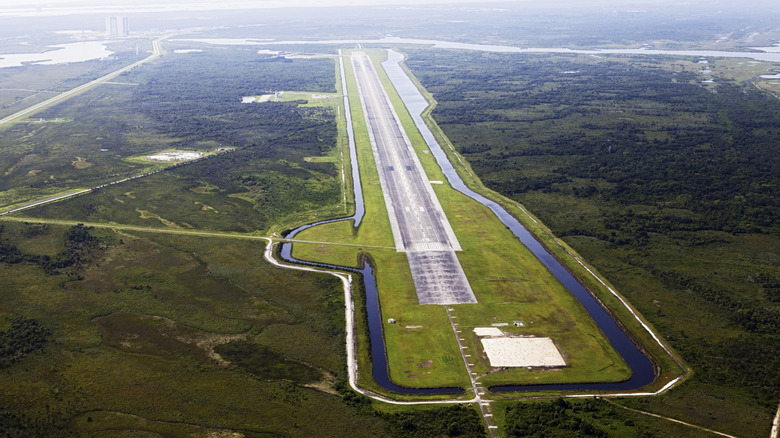
America’s equivalent is the former Space Shuttle Landing Facility at Kennedy Space Center, now operating as the Johnny Böhmer Proving Grounds. The 3.2-mile runway is where the SSC Tuatara hit 295 mph in 2022. Although these aren’t typically open for public joyriding, they are a few of a very limited number of places where top speeds are actually tested.


Source link