Apple Intelligence Brings Accessibility Updates Across iPhone, Mac and Vision Pro


Apple is leveraging AI to boost its accessibility features.

The company shared a handful of updates on Tuesday designed to make its products more helpful for people with a range of disabilities. Apple Intelligence, the tech giant’s suite of AI features, powers some of these new capabilities. The unveiling comes ahead of Global Accessibility Awareness Day on Thursday, which aims to bolster digital access and inclusion. 

The updates are arriving for features like VoiceOver, Magnifier and video subtitles later this year. They come as more companies — from Google to Microsoft to Amazon — are harnessing AI to make their products and platforms accessible to a wider range of people. Many of Apple’s updates build upon features it announced last year. They also come ahead of the company’s Worldwide Developers Conference, which is scheduled for June 8 and is expected to usher in more AI updates. 

VoiceOver and Magnifier support more detailed descriptions

Apple’s VoiceOver and Magnifier features can describe on-screen information or real-world settings, and Apple Intelligence is pushing each to be more helpful. 

VoiceOver is a screen reader that speaks aloud what’s on your screen, and it can help people who are blind or have low vision navigate their device. Image Explorer in VoiceOver will now give more detailed descriptions of what’s in objects like photographs, scanned bills and personal records. 

And as part of an update to Live Recognition, you can use your iPhone’s Action button to quickly gather more information about your surroundings. Just point the camera at what you want to learn more about and ask follow-up questions for additional details. 

Magnifier on iPhone breaks down how much a bill is for and when it's due

Magnifier can share more detailed information about what’s on your screen and answer follow-up questions.

Apple

Magnifier allows people who are low vision to zoom in, view high-contrast text and detect objects around them on an iPhone, iPad or Mac. Now, you can ask questions about what your camera is seeing. For instance, you can point your phone at a recipe and ask how many servings it yields or how long to bake for, and it’ll find and share that information using large, high-contrast text.

Voice Control supports natural language

Apple Intelligence will also support natural language using Voice Control, which lets you navigate your iPhone or iPad with your voice. That means if you want to click on something, you no longer have to pinpoint the location using a numbered on-screen grid. Instead, you can just say what you want to select, like a specific file name or folder color. You can also tell your device where you want to zoom in by stating which word or image you want to punch in on. 

Voice Control with Apple Intelligence will be available in English in the US, Canada, UK and Australia. 

Accessibility Reader is more customizable

Apple debuted Accessibility Reader last year on iPhone, iPad, Mac and Vision Pro. It lets you customize text and adjust font, color and spacing, making it easier for some people to read, such as those with low vision or dyslexia. 

Now, Accessibility Reader can work on more complex materials like scientific articles, which tend to format text in multiple columns among several images and tables. You can also remove headers and page numbers for a simpler interface and generate summaries for a quick overview before diving in. Plus, you can translate the text into your ideal language. 

Subtitles come to more videos

Closed captioning may be nearly ubiquitous in TV programming and movies, but it isn’t as common in some media like personal videos. Now, generated subtitles automatically display transcriptions of spoken audio when captions or subtitles aren’t already available. That includes videos recorded from an iPhone, sent by friends and family or streamed online. 

On-device speech recognition generates the subtitles privately. They’ll appear in non-captioned videos on iPhone, iPad, Mac, Apple TV and Vision Pro. You can customize elements like font and text background in the video playback menu or in settings. Generated subtitles will be available in English in the US and Canada.

An overlay in a dining room shows options like "wheelchair," "slide to type," "quick scroll," "fallback," "gestures," and "pause"

People will be able to control their power wheelchair using eye gaze on the Vision Pro.

Apple

Apple Vision Pro adds a new wheelchair control feature

A new eye-tracking feature on Vision Pro allows people to control their power wheelchair — no joystick required. They can use eye gaze to select controls and determine how and where their wheelchair moves. This can be especially helpful for people with limited mobility. 

Eye tracking on Vision Pro doesn’t require regular calibration and can work in a variety of lighting conditions, according to Apple. The feature will be compatible with Tolt Technologies and Luci alternative drive systems in the US, with support for both Bluetooth and wired accessory connections. Apple says it’ll work with developers to expand access to more wheelchairs. 

“Over the past decade, we’ve seen eye-driven wheelchair systems evolve in incredible ways,” Blair Casey, CEO of Team Gleason, said in a statement. “Leveraging Apple Vision Pro’s eye-tracking capabilities in this way is a huge step forward. Team Gleason is proud to support this initiative and excited to see the benefits it can bring to people who use power wheelchairs.”

A collage showing two iPhones with a Magsafe grip and stand, one grey and another yellow-green

The Hikawa Grip and Stand for iPhone will be more widely available.

Apple/ Zooey Liao/ CNET

Wider availability of Hikawa Grip and Stand for iPhone 

Apple debuted the Hikawa Phone Grip and Stand late last year for the iPhone. It’s an adaptive, ergonomic accessory that was designed using input from people with a range of disabilities, including ones affecting dexterity, grip and hand control. Now, as part of a collaboration between Hikawa and PopSockets, the accessory is on sale globally for the first time, and in three new colors. It’s available starting today on Apple’s website.


Source link

Leave a Reply

Subscribe to Our Newsletter

Get our latest articles delivered straight to your inbox. No spam, we promise.

Recent Reviews


There are places in the world where everything feels accounted for. The roads are smooth, the signs are clear, and the experience has been carefully arranged long before you arrive. Adventure exists, technically, but only within boundaries that make it predictable. Nothing unexpected happens. Nothing pushes back.

And then there are places that still feel wild.

Not reckless. Not uncomfortable. Just untamed enough that you feel like a guest rather than a consumer. Places where the land doesn’t bend to human schedules, where weather sets the tone for the day, and where nature isn’t something you observe from a distance — it’s something you move through, adapt to, and occasionally surrender to. Traveling somewhere that still feels wild changes you in quiet, persistent ways. It slows your thinking. Sharpens your senses. Reminds you how small you are — and how good that can feel.

Alaska is the clearest example we know. But the feeling itself, the pull toward the wild, extends far beyond one place on the map.

The Absence of Predictability Is the Point

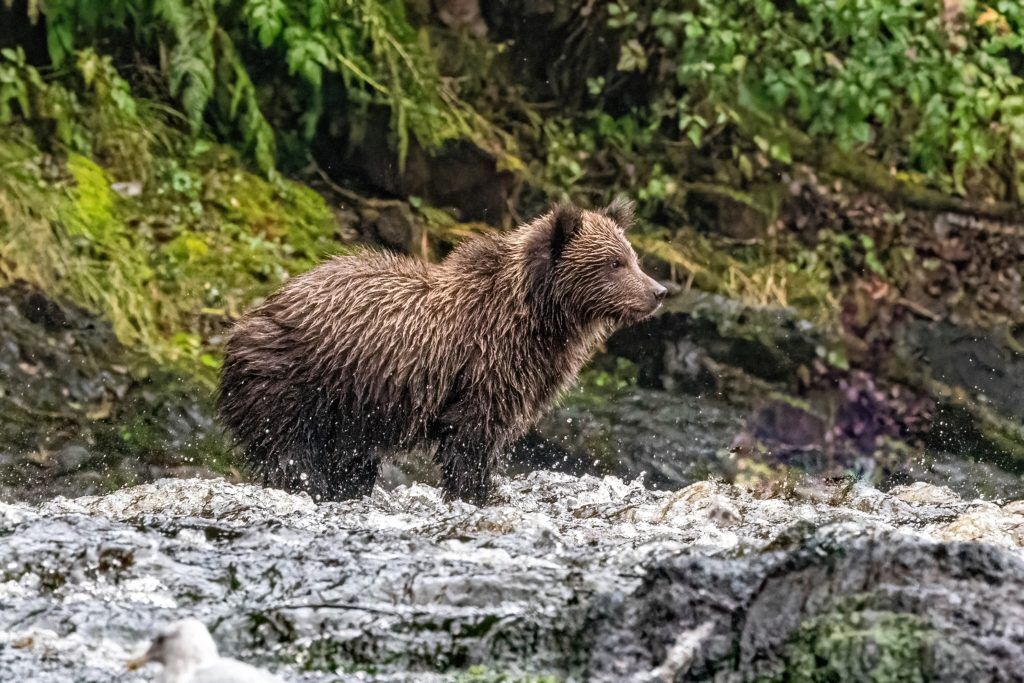
Baby bear Pavlovs Bay Alaska
Photo Credit: Jenn Coleman.

When you travel somewhere wild, certainty disappears almost immediately. Plans turn into loose outlines. Timelines soften. The assumption that you’re fully in control starts to fade — and that’s exactly where the experience opens up.

In Alaska, weather doesn’t politely cooperate. Flights wait. Boats adjust for tides. Trails change overnight. Wildlife appears on its own terms, not when you’re ready with a camera in hand. At first, this unsettles people. We’re trained to optimize travel, to squeeze value from every hour, to move efficiently from one highlight to the next.

Wild places resist that mindset. They force you to slow down and pay attention instead.

Instead of rushing, you find yourself watching clouds crawl across a mountain range or listening for the distant crack of shifting ice. You wait because someone has spotted a bear across the river, and suddenly waiting doesn’t feel like lost time — it feels like the entire point. In wild places, patience isn’t a virtue. It’s a requirement.

Nature Isn’t a Backdrop — It’s the Main Character

Endless Adventures Await-Moose - Alaska Glacier Lodge Palmer Alaska
Photo Credit: Jenn Coleman.

In many destinations, nature plays a supporting role. It’s something you admire between meals and museum visits, a scenic pause before moving on to the next activity.

In wild places, nature is the storyline.

In Alaska, the scale alone recalibrates your perspective. Mountains don’t rise politely in the distance; they loom. Glaciers don’t shimmer passively; they groan, fracture, and move. Rivers aren’t decorative — they’re powerful, cold, and very much alive. Wildlife isn’t something you visit. It’s something you encounter, often unexpectedly, and always on its own terms.

That reality changes how you move through the world. You speak more quietly. You scan the horizon. You learn to read the land not just for beauty, but for meaning — wind direction, cloud movement, water levels. You stop expecting nature to perform for you and start allowing it to lead.

Comfort Looks Different in the Wild

View from my room Homer Inn and Spa
Photo Credit: Jenn Coleman.

Traveling somewhere wild doesn’t mean giving up comfort, but it does redefine what comfort actually means. Luxury here isn’t about excess or polish. It’s about warmth after cold. Shelter after exposure. A solid meal after a long day outside.

Some of our most memorable places to stay in Alaska weren’t remarkable because of opulence, but because of where they were. Remote enough that silence felt complete. Close enough to the land that stepping outside meant being fully immersed — weather, wildlife, and all. Comfort in wild places is practical and intentional, and because of that, it feels deeply satisfying.

You notice and appreciate the basics more. Dry socks. Hot coffee. A sturdy roof during a storm. These aren’t assumed; they’re earned. And because you’re more present, they land differently. They feel grounding in a way that polished luxury sometimes doesn’t.

Your Senses Wake Up

Matanuska Glacier, Alaska
Photo Credit: Deposit Photos.

One of the quieter gifts of wild travel is how it reactivates your senses. In daily life, we filter relentlessly just to get through the day — noise, movement, light, information. Wild places strip that filter away.

You smell rain before it arrives. You hear ice shifting miles off. You notice how light changes minute by minute. In Alaska, even the air feels sharper, cleaner, alive. You become aware of your body in space — where you step, how fast you move, what’s happening around you.

This heightened awareness isn’t stressful. It’s calming. It pulls you into the present without effort or instruction. It’s mindfulness without the app, presence without performance.

You Remember What Adventure Actually Means

Hatcher Pass - Gold Cord Lake Trail Alaska
Photo Credit: Jenn Coleman.

Somewhere along the way, adventure became a marketing word. But real adventure, especially in wild places, isn’t about adrenaline or bragging rights. It’s about curiosity, humility, and uncertainty.

Adventure means not knowing exactly how the day will unfold. It means trusting guides and locals. It means adapting instead of controlling. In Alaska, that might look like hiking through mist, unsure if the clouds will lift. Kayaking through ice-dotted water where seals surface nearby. Boarding a small plane knowing weather could change everything.

And when things don’t go according to plan, that doesn’t diminish the experience — it becomes the story. Wild places remind you that the goal isn’t perfection. It’s participation.

Time Feels Different Out Here

Yllas Ski Resort Finland
Photo Credit: Jenn Coleman.

Wild destinations stretch time in ways that are hard to explain until you experience them. Days feel full without feeling rushed. Hours pass unnoticed when you’re fully engaged. Evenings arrive gently, not abruptly.

Without constant stimulation or packed schedules, your nervous system settles. You sleep more deeply. Wake earlier. Feel less urgency to check your phone. In Alaska, the light itself reshapes time, lingering late into the evening in summer, quietly reminding you that clocks are human inventions, not natural laws.

That shift doesn’t disappear when you leave. You return home more aware of how often urgency is manufactured — and more protective of your time because of it.

You Feel Like You’ve Earned the Experience

Kayaking Glacier Bay Alaska
Photo Credit: Jenn Coleman.

There’s a quiet satisfaction that comes from traveling somewhere that isn’t effortless. Wild places often require extra steps — small planes, ferries, long drives, patience. But effort creates investment.

When you arrive, you don’t feel like you stumbled into the experience. You chose it. And that choice creates respect — for the land, for the people who live there, and for the experience itself. In Alaska, simply reaching some destinations comes with stories before the stay even begins.

Wild travel doesn’t hand itself to you. It asks something in return.

Why We’re Drawn to the Wild Now More Than Ever

Waterfall Cove Alaska
Photo Credit: Jenn Coleman.

The pull toward wild places isn’t accidental. After years of constant connectivity, crowded destinations, and carefully curated experiences, many travelers are craving something real. Something grounding. Something that doesn’t ask them to perform.

Wild places offer perspective. They remind us that the world is bigger than our inboxes, that discomfort isn’t dangerous, and that awe still exists — no explanation required. Alaska sits at the heart of this longing, but it isn’t alone. You feel it in remote coastlines, high deserts, northern forests, and far-flung mountain towns around the world.

What unites them isn’t geography. It’s restraint. These places haven’t been overly softened or simplified. They still ask you to meet them where they are.

What You Take Home From a Wild Place

Hikers hiking, enjoying the view of Famous Patagonia Mount Fitz
Photo Credit: Deposit Photos.

You don’t return with just photos. You come back quieter, more observant, and more comfortable with uncertainty. You gain a clearer sense of what you actually need — and what you don’t.

Traveling somewhere that still feels wild recalibrates your sense of scale and self. It reminds you that not everything needs improvement, explanation, or monetization. Some things are powerful simply because they exist.

And once you’ve felt that — once you’ve stood somewhere that didn’t care whether you were there or not — it changes how you travel going forward. You start seeking places that ask something of you. Places that feel alive. Places that leave room for surprise.

Because wildness, in the end, isn’t something you conquer.

It’s something you experience — and carry with you long after you’ve left.

Hi! We are Jenn and Ed Coleman aka Coleman Concierge. In a nutshell, we are a Huntsville-based Gen X couple sharing our stories of amazing adventures through activity-driven transformational and experiential travel.


Source link